
Ready-Made Sauna vs Building from Scratch
Sauna buying guide
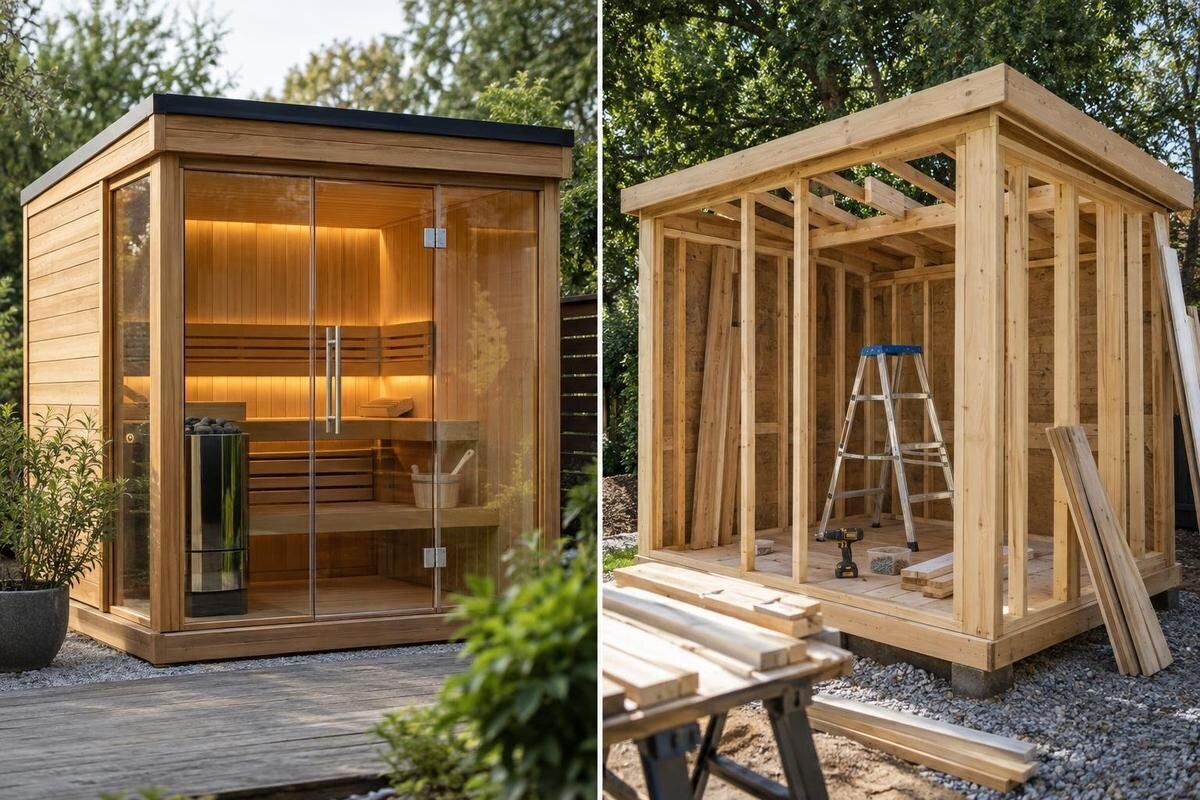
A ready-made sauna and a sauna built from scratch can look similar once complete, but they put different work in your hands. With a designed product, much of the form and specification is already settled; you still need to confirm what is supplied, how it reaches the site and who prepares and installs it. A scratch build offers more control over layout and components, but also leaves more design, sourcing and coordination decisions to you or your project team. A supplied kit sits between those options: its parts and design are defined, while assembly is a separate responsibility to confirm.
Ready-made and scratch-built saunas: what the terms mean
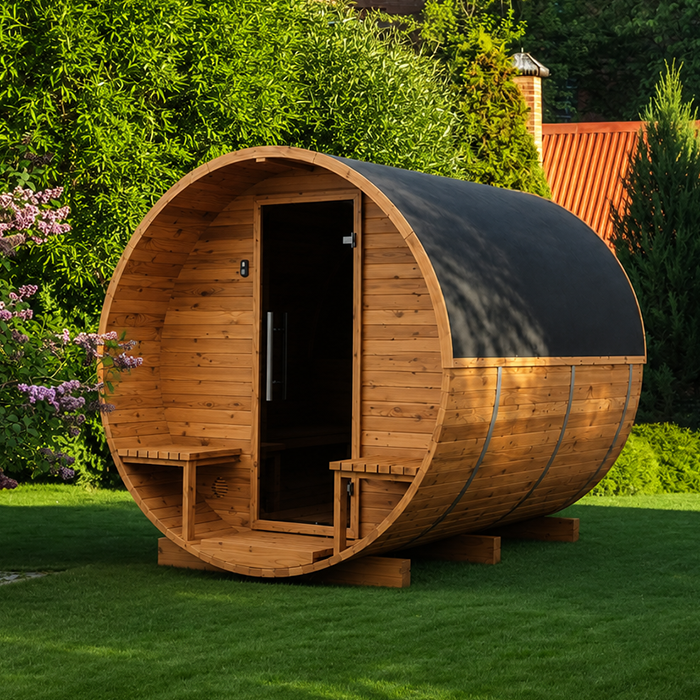
Ready-made here means choosing a sauna whose basic design and product specification have already been developed, rather than commissioning every design decision for your project. It describes where the design work begins; it does not promise that the product will arrive assembled, include all equipment or be installed. There may still be choices within a defined range, plus separate work to prepare the site and connect services. Ask the seller to separate the sauna itself from delivery, site preparation, installation and any additional equipment. If options are available, ask whether they affect the specification, price, lead time or installation requirements. A clear written scope prevents a product purchase being mistaken for a finished project.
Building from scratch means developing a brief and arranging the design and components around it. You might commission plans and have trades complete the work, or take on more coordination yourself; it does not necessarily mean doing all the physical work by hand. More choices remain open, and someone must resolve how the pieces fit together. A named catalogue option such as Sauna LCF-300 gives you a point of comparison when discussing what is already specified. The model name alone does not establish its supply format, inclusions or suitability for a particular site. Agree who can approve changes after drawings are settled, as a late decision may require revisions to the agreed scope.
Planning a sauna build from scratch
A scratch build needs a written brief before you contact a designer, builder or component suppliers. Record the intended location, available footprint, likely number of users, preferred layout and appearance, and practical limits such as the access route or nearby services. Mark each item as essential, flexible or undecided. This helps everyone respond to the same requirements and exposes clashes early: a preferred layout may conflict with the space available or with how materials can be brought in. Attach a sketch or photographs if helpful, but treat these as briefing aids, not measured plans. Give fixed access and placement constraints priority over preferences such as finishes. Use the brief to compare your needs against an established option such as Sauna S-140, then ask for the current drawings before relying on it.
Assign design and purchasing tasks rather than assuming they will happen automatically. Decide who prepares and checks drawings, selects each material and component, confirms compatibility, places orders, books trades, receives deliveries and tracks changes. If one builder or designer is coordinating the job, confirm what their fee and scope cover and who makes decisions outside it. If you are the coordinator, keep an approvals and decision log with dates and named owners; add unanswered questions and identify which ones hold up the next order. Review the log before each purchase, while choices can still be changed, rather than after a mismatch appears. These records are especially useful when separate suppliers use different product descriptions or when a late substitution could affect another part of the build.
Where a supplied sauna kit fits
A supplied kit is neither the same as a fully assembled sauna nor the same as a blank-sheet build. Its design and specified components have been selected in advance, so it can reduce some design and sourcing work. But a kit may still arrive as parts that must be assembled and may leave site preparation, service connections or other work outside its supply scope. The exact boundaries depend on the package, so confirm the component list, delivery format and assembly instructions rather than relying on the word kit alone. Ask whether items such as the heater, seating, controls, fasteners and finish products are included or handled separately, and whether tools are specified. The key distinction is what is supplied versus who completes the work.
For a buyer, the kit route can make sense when the chosen design is suitable but assembly is to be organised or carried out separately. It still requires a realistic plan for people, time and competent help where needed; the instructions should make clear what assembly involves. If you hire someone, ask them to review the exact kit and confirm what their work covers, rather than assuming they will manage site preparation or services as well. Also confirm who arranges any missing items or handles a damaged component. A scratch build gives more control over component choices but leaves more work to coordinate between suppliers and trades. A ready-made product may reduce assembly work only if its confirmed supply arrangement does so. Compare actual inclusions, assembly responsibility and site work, not the category label, to see where the effort sits.
How much design freedom do you need?
A ready-made design offers a bounded set of choices: its overall form and specified details are determined before you buy, while any available variations need to be confirmed for the exact model. That can help when a standard design suits the space and your intended use. It is less forgiving if the brief depends on unusual dimensions, a particular opening, a non-standard finish or integration with another structure. Do not assume a catalogue design can be altered without a revised drawing or supplier approval. Ask which options are documented, whether changing one affects other components and which requests would count as a custom change. Separating functional needs from appearance preferences can help you decide which changes are worth exploring.
A scratch build lets the design respond to the site and your priorities, but flexibility is useful only when someone turns preferences into a coordinated specification. A change can affect material selection, lead times, interfaces or work already completed, so make a short priority list and settle major choices before ordering. Compare your brief with a defined product such as Sauna HC-150 to identify what truly needs custom treatment. If the difference is only cosmetic or available as a documented option, a bespoke project may add work without solving a meaningful problem. Ask the designer to explain the practical consequence of each special request, not just whether it can be drawn.
How the timeline can differ
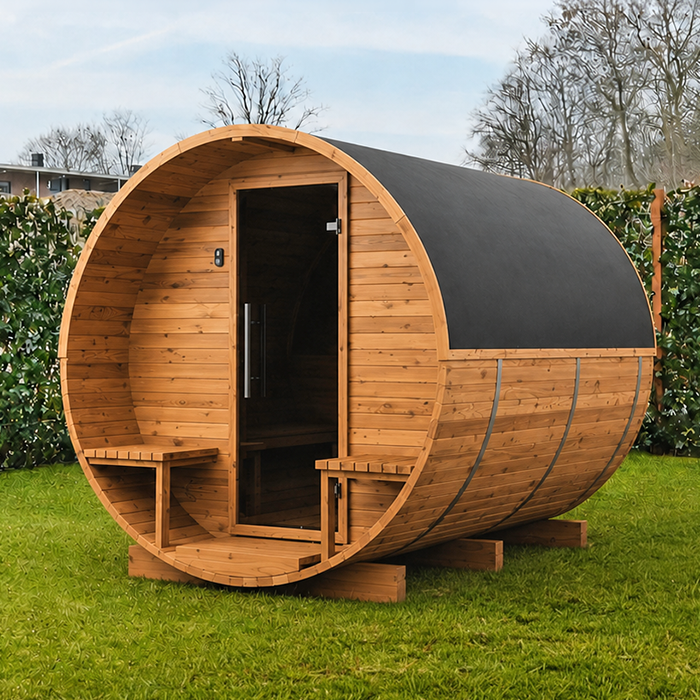
With a pre-designed product, much of the design and specification work has been completed before you order, which can remove some early decisions. It does not make the whole project immediate: current availability, the confirmed configuration, freight, site readiness and installer scheduling all affect when work can proceed. Ask for separate estimates for ordering, delivery and on-site work, and confirm which dates depend on your own preparation. For an option such as Sauna HC-225, request a current written timeline tied to the actual model and supply scope rather than treating a catalogue listing as a delivery promise. Distinguish dispatch, arrival and completion; they are different milestones.
A scratch build adds decisions that may occur in sequence: a brief must be turned into a design, the design checked, components selected and sourced, and trades booked around the work. Some activities can overlap, but delayed choices or an unavailable component can hold up later tasks. Build a simple schedule with dependencies and an owner for each milestone; ask suppliers and trades for realistic estimates rather than guessing a completion date. Set dates for decisions as well as construction, and leave room for approvals or revisions where relevant. A bespoke build is not automatically slower in every case, but it usually has more stages for you or a lead contractor to coordinate.
Who is responsible for each part?
Buying a designed sauna does not automatically make one company responsible for every part of the finished installation. The manufacturer, retailer, freight provider, site contractor and installer may have different roles, depending on the quote and agreements. Before committing, ask who supplies each item, arranges unloading, reports transit damage, prepares the site, installs the product and handles questions after installation. Get exclusions and handover points in writing, along with a named contact for each stage. Check when responsibility passes between parties, particularly if unloading and installation are arranged separately. This is less about assigning blame than preventing a gap: each party might assume someone else is arranging a task that nobody has actually accepted.
In a scratch build, responsibilities can be spread across a designer, builder, separate trades and product suppliers; alternatively, a project lead may coordinate several of them. Make the decision chain clear: who approves a design change, who checks compatibility, who verifies completed work and who provides documents for handover. Structural, electrical or other specialist work should be assessed by appropriately qualified professionals; ask which local requirements apply to your project. Do not treat a product listing or informal advice as a substitute for a professional's site-specific assessment. If the owner is coordinating the job, they need to keep the parties aligned without taking on work that should be assessed by a qualified person.
Comparing project costs fairly
Compare a defined product quote with the cost of a complete project, not with a loose estimate for materials. For a ready-made sauna, list the product separately from transport, unloading, site preparation, installation, connection of services and optional extras; confirm what is actually included. For a scratch build, allow for design work, materials from multiple suppliers, wastage, delivery, labour, tools or hired equipment, project coordination and removal of packaging or offcuts. Ask whether the quote assumes that you have prepared the site or arranged a trade. No line should be assumed to cover work that has not been named in the scope.
Ask for itemised figures against the same brief, with exclusions, quantities, assumptions and provisional allowances clearly marked. A lower starting figure may leave more work outside the quote, while a detailed custom estimate can change when drawings or component choices change. Keep a record of variations and ask how each one affects both price and schedule before approving it. If an estimate depends on unfinished drawings, record which assumptions still need to be confirmed before comparing it with another quote. When requesting a quote for a named option such as Sauna N-210, ask for product and installation costs to be itemised separately if both are offered. A model name is not an installed-project total. Compare the scope, assumptions and risk carried by each quote, not just the first number.
Site and service planning
Both routes need a site that can accommodate the sauna and the work required to place and use it. Check the available footprint and height against the manufacturer's current drawings, then consider the route for people and materials, access constraints, drainage and exposure, privacy, and space for maintenance. A location may suit the finished footprint but still lack a workable delivery path, so assess both. Note nearby doors, windows and services that could affect layout, without guessing at technical clearances. Establish how the base or support is to be designed rather than assuming every product needs the same preparation. These are site questions, not details that can be settled by a product photograph or model name. Have relevant plans reviewed by a suitable professional before committing to permanent work.
A standard design may have specified placement requirements, while a scratch design can account for site conditions from the outset; either way, the actual requirements need verifying. Ask what clearances, supporting surface, ventilation and service connections the selected configuration requires, then have appropriate trades assess the site and services. For a model under consideration such as Sauna N-250, request the current drawing and installation information before using it in a layout. Do not estimate structural or electrical requirements from a general article. In Australia, confirm any project-specific requirements with the appropriate authorities and qualified professionals, using the documentation for the selected design.
Documents and support after installation
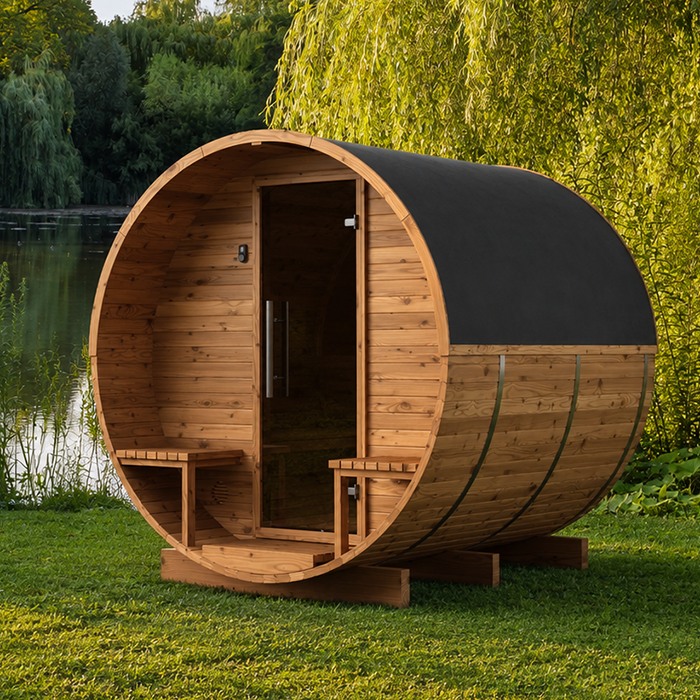
Before choosing a ready-made product, request the current specification and drawings for the exact configuration, plus a written list of included equipment and work excluded from supply. Ask for the relevant manual, care instructions and information on who to contact for product or installation questions. Read any warranty and support terms directly; their scope is not established by the product name. If a listing points to a model such as Sauna LC-260, verify that the documents you receive match the version quoted, rather than relying on a similar-looking image or older description. Ask how approved changes will be reflected in the final paperwork.
A scratch build needs a similar paper trail, assembled from separate suppliers and contractors. Keep approved drawings, product specifications, receipts, care instructions, service details and records of substitutions or changes in one accessible place. Ask the project lead who will provide as-built information, if applicable, and who owns unresolved questions after handover. When components come from different sources, do not assume one supplier supports the entire assembly or that one component's service arrangements extend to others. Clear records help you plan maintenance and identify the right contact if something needs attention. Label records by model and revision so later service queries relate to the item actually installed, and give the folder to whoever will look after the sauna day to day.
Which route suits your project?
Choose a ready-made sauna when a verified design matches your brief closely enough and you value a defined product scope over control of every detail. Choose a scratch build when the site or design brief genuinely calls for a bespoke solution and you have a person or team willing to coordinate the drawings, sourcing and work. A catalogue model such as Sauna HCF-300 can be compared against your written requirements, but do not infer dimensions, inclusions or suitability from its name alone. Ask whether documented options could meet the need before expanding the project into a custom design. Base the decision on the specific requirement that a custom design would solve.
If you mainly want to take responsibility for assembly while avoiding a blank-sheet design, a supplied kit may be the more relevant comparison. Whichever path you choose, decide who owns each task, how site work and services will be handled, and what documents must be delivered at completion. There is no universal winner: a ready-made product can reduce design decisions without removing installation planning, while a custom build can solve specific requirements at the cost of more coordination. Be realistic about the time you can devote to decisions and follow-up, not only whether you have DIY skills. The best comparison is between the scope you need and the work you are prepared to manage.
Frequently asked questions
Does ready-made mean the sauna arrives assembled?
No. The term describes a pre-designed product, not its delivery or installation format. Ask the seller to confirm whether it arrives assembled or in parts, what unloading and assembly are included, and which site and service work you need to arrange.
Is building from scratch always a DIY project?
No. You can commission a designer and hire a builder or qualified trades. The important question is who owns the design decisions, sourcing, coordination and handover tasks under your agreement; physical work and project responsibility are separate.
Is a sauna kit the same as building from scratch?
No. A kit has a pre-defined design and specified components, while a scratch build involves arranging more of the design and sourcing independently. Assembly can still be your responsibility with a kit, so compare its component list, instructions and exclusions with the other options.
Which option is quicker?
There is no dependable answer without current supply and site details. A pre-designed product may remove some design work, but delivery and installation still take time; a scratch build has additional design and sourcing stages. Ask for a milestone-based timeline for the exact scope.
What documents should I request?
Ask for current drawings and specifications for the quoted configuration, inclusions and exclusions, delivery and installation scope, relevant manuals and care information, and any warranty or support terms. Have a qualified professional review site, structural or service questions.
Choosing between a ready-made sauna and a scratch build is as much about who does the work as it is about the finished design. A ready-made sauna can narrow the decisions, but you still need to establish what supply and installation cover. A scratch build gives you room to shape the design around your brief, provided someone has the time and responsibility to manage design, sourcing and construction. Treat a supplied kit as a separate option, and choose the route that meets your needs with a workload you can realistically manage.
