
Selecting Timber for Sauna Benches and Backrests
SAUNA MATERIALS GUIDE
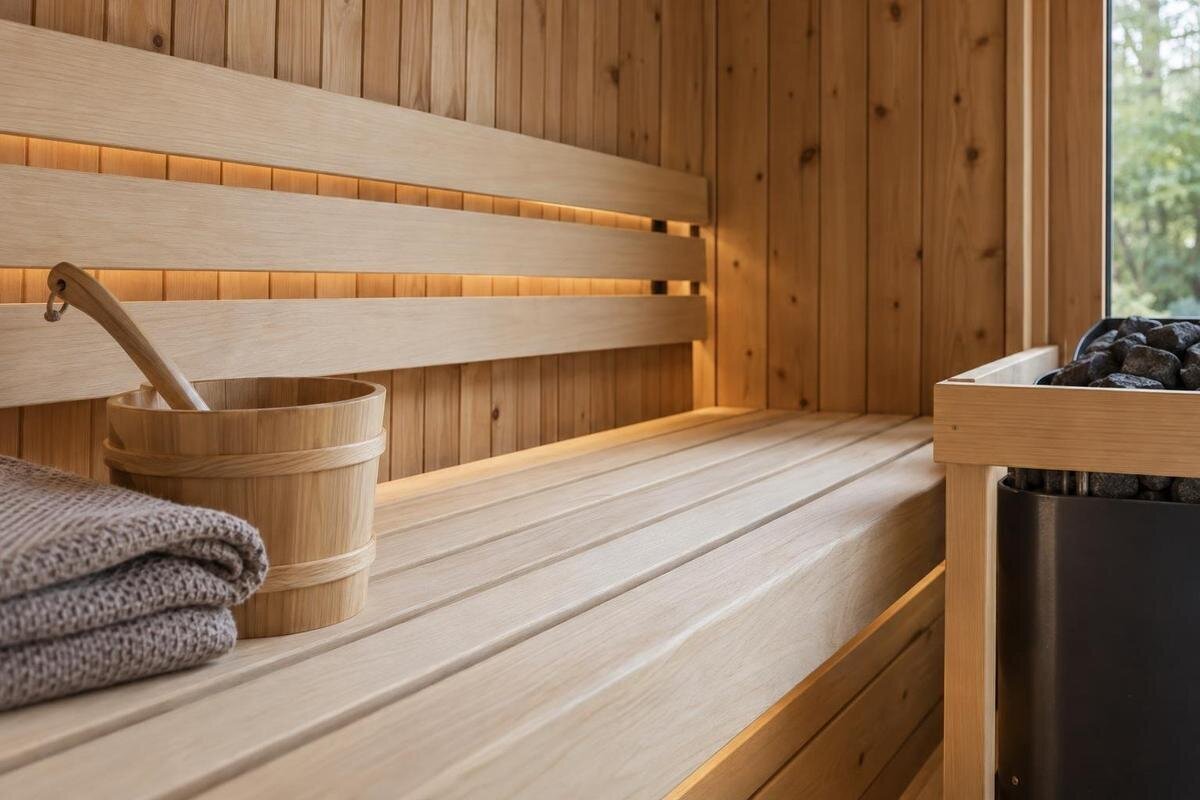
Choosing timber for a sauna bench or backrest is a materials decision about the surfaces people actually touch. A product name, an exterior cladding description or a photograph cannot tell you which wood is used on the seat slats, whether those pieces have a finish, or how they should be cared for. Ask for those details by component and for the exact model you are considering. Then assess the surface, construction and care instructions together; a familiar timber name on its own is not enough to compare two saunas.
Before you buy 1
Separate contact surfaces from the sauna shell
A sauna's shell and its contact surfaces are different parts of the materials question. Depending on the design, contact surfaces may include seat slats, seat edges, backrest slats, armrests, a step or footrest; supports and hidden framing may use different materials. For a multi-level bench, list each level and any step separately; a general label may not cover every surface. Ask what is fitted to each part rather than accepting a single label such as 'interior timber'. Even where components look alike, do not assume they share a timber or finish. The supporting frame may matter for construction, but it is not a substitute for identifying the boards that touch you.
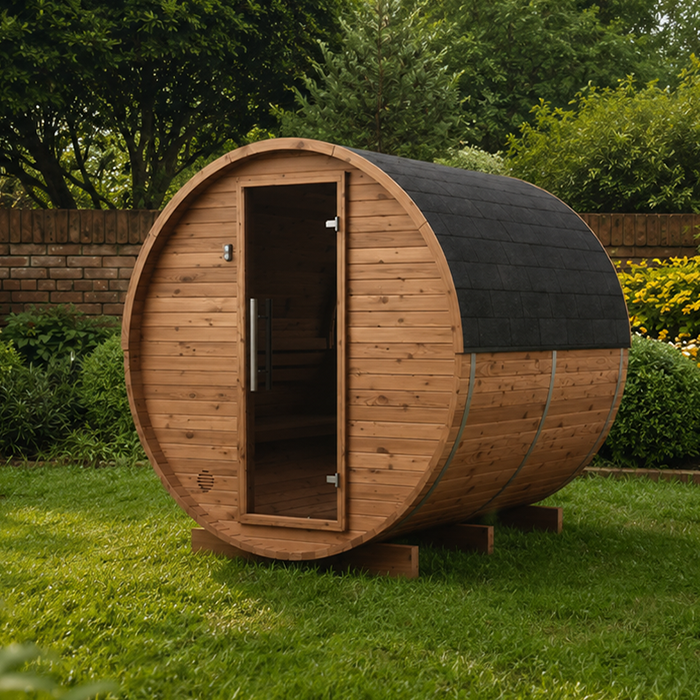
Make a short list of the surfaces you expect to use, then match it to a model-specific specification or drawing. The LC-260 Thermowood Barrel Sauna listing identifies the model you mean; the model name does not establish which timber is fitted to the seat or backrest, or whether those parts match. Ask the seller to confirm the supplied configuration and distinguish contact boards from supports and trim. If a side edge or another face remains exposed, include it in the question. That way, an answer about a frame is not mistaken for information about the surface you sit on or lean against.
Ask for a component-by-component timber description
Ask for a component-by-component description with four details: timber species or exact trade name, grade or selection, surface condition, and any treatment or finish. If the supplier says 'timber bench', clarify whether that means seat boards, backrest, supports or all three. Ask whether any finish is factory-applied and which pieces receive it. Where relevant to the construction, clarify whether the parts are solid timber or another material. A useful answer names both the wood and the component; phrases such as 'natural timber' or 'premium wood' leave important questions open. It should also say whether a stated grade or selection covers every slat or only certain visible pieces. Ask whether each stated treatment is part of the supplied configuration or an optional extra.
When enquiring about the HCF-300 sauna, ask a specific question: 'What timber is used on the seat and backrest, what grade or selection applies, and is either surface finished?' Ask for an answer that covers the exact configuration being supplied, not just the product family. If a term is unfamiliar, ask the seller to explain it in plain language and identify the component it applies to. If the seat and backrest differ, request both descriptions separately. A written, component-level answer gives you a consistent basis for comparing models.
Before you buy 2
A timber name is only one part of the specification
Common names such as aspen, alder, cedar, spruce and pine can help narrow a choice, but they do not describe everything about a board. Commercial names can be broad, so ask for the species the supplier means and, where available, its botanical name. Separate species from grade, processing and surface finish: those are different facts and may change how the timber looks or what care is specified. A name you recognise from another sauna is not enough to assume two products use the same selection or have the same appearance. If you compare samples, make sure each is labelled with the named species and finish, not chosen by similar colour alone. If the description says only 'hardwood' or 'softwood', ask what specific timber that label refers to.
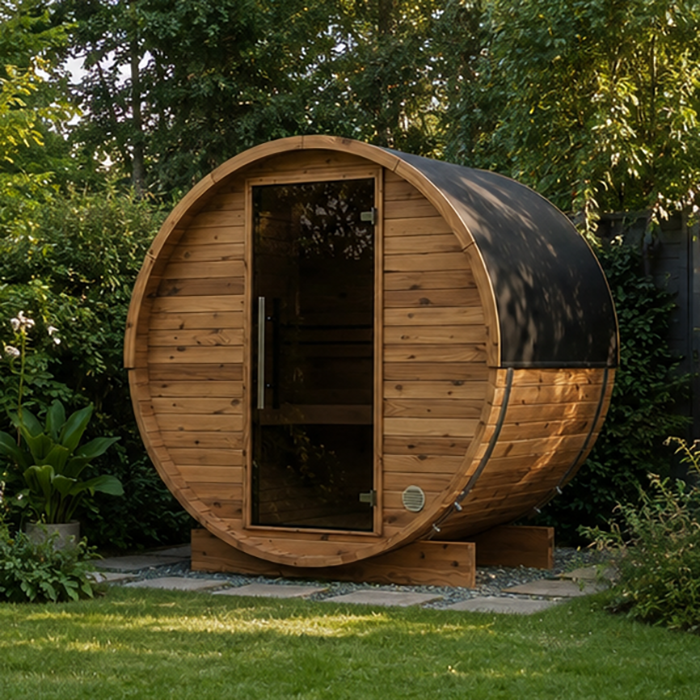
Broad terms such as 'solid timber' still need context; they are not a complete description of the contact surface. For the Thermowood Barrel Sauna LCF-300, record the exact model beside the supplier's material answer, then ask what wood is used for the seat and backrest. If the answer gives only a general category, treat the species as unconfirmed rather than guessing from the product title or photographs. That does not mean the timber is poor; it means you do not yet have comparable information. If it is unclear whether a trade name describes a species or a processing method, ask the supplier to explain.
Check grade, grain and machining
Once the species is identified, ask how the timber is selected. Is the grade stated, or are knots, small checks, resin pockets and natural colour variation allowed? These features are not automatically a fault, but they affect the appearance and can matter where a board is a direct contact surface. Ask whether selection criteria apply to every seat and backrest slat or only to visible faces. If you prefer an even appearance, confirm how much variation to expect rather than relying on a catalogue image, which may show one example. Photographs can be affected by lighting, so use them for general character rather than expecting an exact colour match. Ask about sanding and edge machining too: a species name says nothing about how smooth the finished board is.
Inspect an actual sample or display if one is available: check the top face, front edge, corners, end grain, gaps and any exposed fixings for rough patches or splinters. View the wood in ordinary light if colour matters to you. A sample can show grain and colour, but it cannot establish the consistency of the whole assembled bench unless it is tied to the specified material. If a sample is offered for the S-140 sauna listing, ask whether it matches the grade and finish intended for its seat and backrest. Close-up photographs can help when a sample is unavailable, but they cannot replace written detail about selection.
Before you buy 3
Compare the bench and backrest as contact surfaces
Timber choice is only one part of how a seat and backrest feel. Their shape, slat spacing, edge treatment and position determine which surfaces meet the body; the seat's front edge and the points where backrest slats meet you deserve attention too. Check the bench and backrest separately, because they may not use the same wood, grade or finish. A sample of attractive timber cannot show whether the assembled profile suits your posture or whether exposed edges are comfortable. Consider the whole contact area, not just the central top face of a single board.
If you can assess a display, sit in your normal position and notice the seat edge, backrest contact and any exposed fixings; compare the dimensions with the available space. If you cannot try it, use a dimensioned drawing and ask for close views of the actual contact surfaces. When asking about the HC-150 model page, request the drawing or component schedule for that exact model, not just a general sauna image. Keep the questions separate: fit is about dimensions and profile, while timber identity and finish need their own confirmation.
Confirm any finish before applying one
Treat the finish as a separate specification, not something you can identify reliably from colour. A bench may be untreated or have an applied treatment; ask whether anything is factory-applied, what the product is called and which faces and components it covers. Confirm whether the seat and backrest receive the same treatment. Ask whether any coat covers all faces or only exposed surfaces, and whether the written care changes accordingly. A finish can alter appearance and surface feel and can affect care instructions, so 'timber bench' does not answer whether the wood is oiled, coated or left bare. If a seller says 'natural', ask whether that refers to the wood, colour or absence of an applied finish.
Do not assume a household varnish, decking oil, stain or timber cleaner is appropriate for a heated interior contact surface. Ask the manufacturer which products, if any, are approved for those specific components and how they should be applied or renewed. For the HC-225 Thermowood Barrel Sauna, request bench-finishing instructions for that exact model rather than borrowing instructions for exterior timber. If no finish is specified, confirm that the surfaces are supplied untreated before adding anything; follow the supplied care guidance instead of experimenting with a generic coating. Ask whether maintenance differs between the bench and backrest.
Before you buy 4
Separate exterior Thermowood from bench timber
Thermowood describes a thermal modification rather than naming a timber species. It can tell you something about how timber is treated, but it does not by itself identify the underlying species, grade, finish or component. Exterior cladding and structural parts have roles and exposure conditions different from an interior bench or backrest; a description of the outer structure is therefore not a specification for the contact surfaces. Even if similar timber appears in both places, the selection and finish should be confirmed for each. Exterior care instructions are not a substitute for the bench's cleaning guidance. Keep these material questions in separate columns when comparing a sauna.
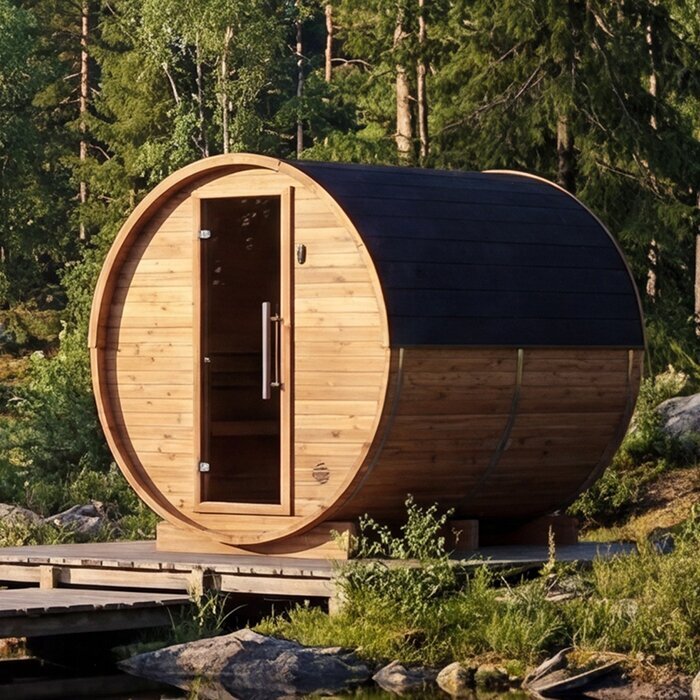
A listing such as Thermowood Barrel Sauna N-210 still needs a separate answer about seat and backrest timber. Ask whether Thermowood refers to the exterior parts, whether any contact surfaces use the same modified timber, and what finish is on those surfaces. If any contact surfaces are thermally modified, ask for the species and treatment details for those boards rather than relying on the specification for the exterior timber. Do not infer that the benches are thermally modified, untreated or suitable for a particular cleaning method from a description of the outer structure or the product name.
Match care instructions to the timber and finish
A care guide should match the timber and finish actually supplied. Look for clear directions about routine cleaning, drying and ventilation after use, approved cleaners, surface repairs or re-treatment, and when a mark or rough patch needs manufacturer advice. Ask whether the seat and backrest follow the same routine, and whether any removable section can be taken out for cleaning, but only if the design permits it. Instructions for the outer cladding or general cabin should not automatically be treated as bench-care instructions. A useful guide should say what not to use as well as what routine it recommends. Ask how to address sweat or water marks rather than improvising.
Request care advice specifically for the contact surfaces in the N-250 sauna and keep it with the model information. A towel can provide a simple barrier between skin and bench during use, but it does not replace the stated cleaning routine. Avoid soaking, abrasive pads or strong household chemicals unless the manufacturer explicitly permits them, since these may affect the wood or a finish. If a mark or rough patch appears, ask whether sanding or re-treatment is allowed before doing any work; instructions can differ by surface.
Before you buy 5
Check documents against the exact model
Use documents to check the answer rather than relying on a general label. Compare the exact model on the retailer listing, manual, assembly drawing and written material specification; they need to refer to the same variant or configuration. Look for bench and backrest parts identified by name, with timber and finish attached to each. A drawing can show shape without naming species, while a material description can name wood without stating which part receives it, so you may need both. If a drawing numbers parts, check that its legend uses the same names as the material schedule. A photograph or generic brochure for a product family cannot resolve either gap.
Save the supplier's answer with your notes and record the model or option it covers. If the product page, manual and written reply use different terms, ask which description applies to the current item and request clarification before comparing. Confirm current local availability and the configuration actually offered; a page title or thumbnail may not identify every included option. Treat a conflict as an open question rather than evidence that the timber is unsuitable. When details are missing, ask the seller or manufacturer instead of filling the gap by inference. If documents have revision dates, check that they apply to the version under consideration.
Compare options using the same questions
Put the same questions into a small comparison table: which contact components are covered, exact timber name, grade or selection, treatment or finish, expected natural variation, and care instructions. Apply it to every sauna you are considering. If one description names the species and another says only 'softwood', those entries are not equally specific; mark the second as unknown rather than ranking it on assumptions. This makes the comparison about documented surfaces, not whichever page uses the most persuasive wording. Record what you saw in a sample separately from what the supplier confirmed. Keep confirmed facts distinct from your preferences, such as a particular colour.
Once the information is clear, weigh the things that matter to you: colour and grain, a smooth and comfortable profile, ease of cleaning, and whether the care routine is practical for your household. A sample helps you judge appearance and touch; a drawing helps you assess the layout; neither replaces a written material schedule. Keep outer-shell timber in its own entry, so the word Thermowood does not stand in for an answer about benches. Choose on the documented combination of surface and care, not on a species name alone. If an important detail remains unanswered, record it as unresolved before ordering.
Frequently asked questions
Does Thermowood mean the benches are made from Thermowood?
Not necessarily. Thermowood describes a thermal modification process, but a product name or exterior material description does not specify the seat or backrest timber. Ask for component-by-component confirmation, plus the finish and care guidance, for the exact model.
Is one timber species always best for sauna benches?
No single species name settles the choice. Compare the exact timber, grade or selection, surface finish, machining and care instructions. If colour or grain matters to you, request a representative sample, and assess the seat and backrest shape separately.
Can I oil or varnish sauna benches myself?
Only if the manufacturer approves the exact product and method for that contact surface. A finish can change appearance and care needs, and products intended for exterior timber should not be assumed suitable. Ask what finish is already applied before adding anything.
What should I look for in a timber sample?
Confirm that it matches the timber, grade and finish specified for the bench or backrest. Check the grain, colour, edges and surface for roughness or visible defects. A small sample cannot show the full assembly, so use it alongside the material specification.
How should sauna bench timber be cleaned?
Follow the care instructions for the timber and finish supplied. Ask which cleaners and repairs are permitted; do not assume exterior cladding guidance applies to the benches. Avoid abrasive pads or strong household cleaners unless the manufacturer allows them.
Choosing timber for sauna benches and backrests involves more than finding an appealing species name. Consider the timber used in each component, the finish and workmanship, and the care routine for the seating. Keep those details separate from exterior Thermowood specifications so you can choose based on the surfaces you will actually use.
