
Choosing a Sauna for Daily Use or Occasional Weekend Sessions
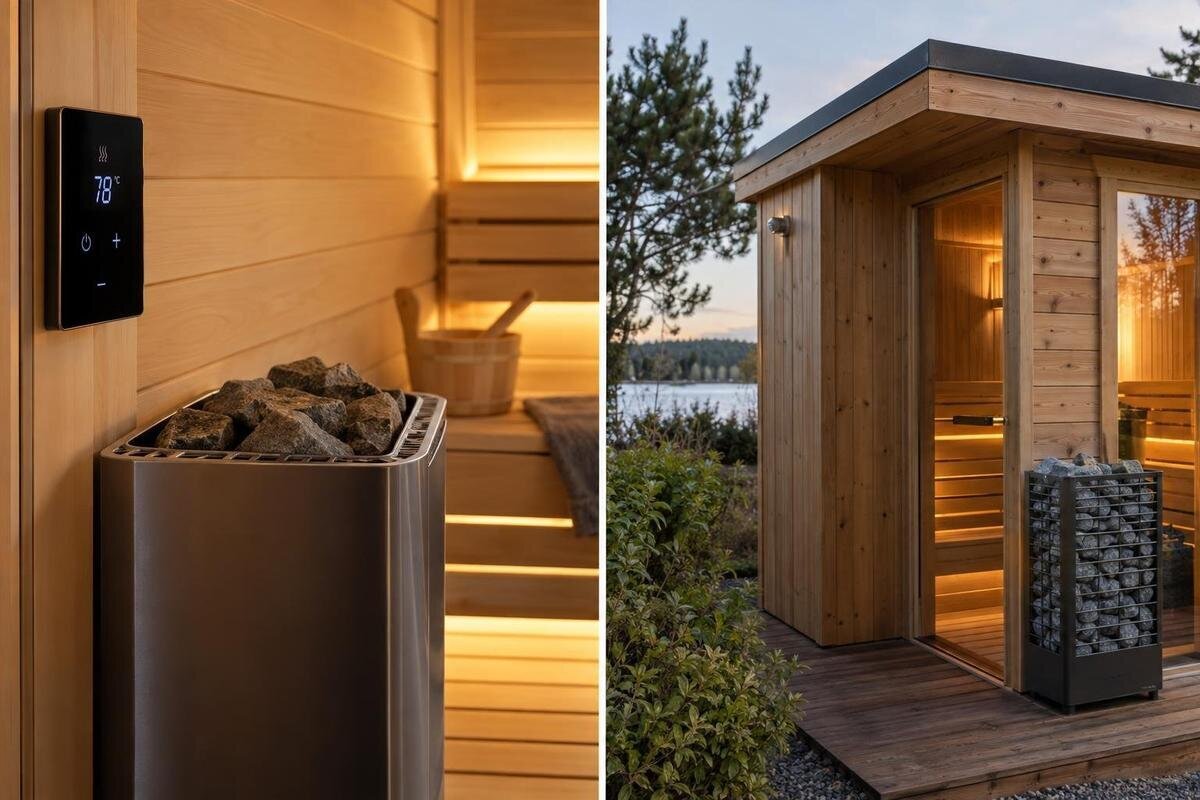
SAUNA PLANNING
Choosing a sauna for daily use or occasional weekends is mainly a question of fit. Frequent use makes preparation, controls and cleaning part of an ordinary routine; longer gaps call for a dependable restart and sensible checks. The best match is the one whose setup and care you can keep up, not simply the schedule you hope to follow.
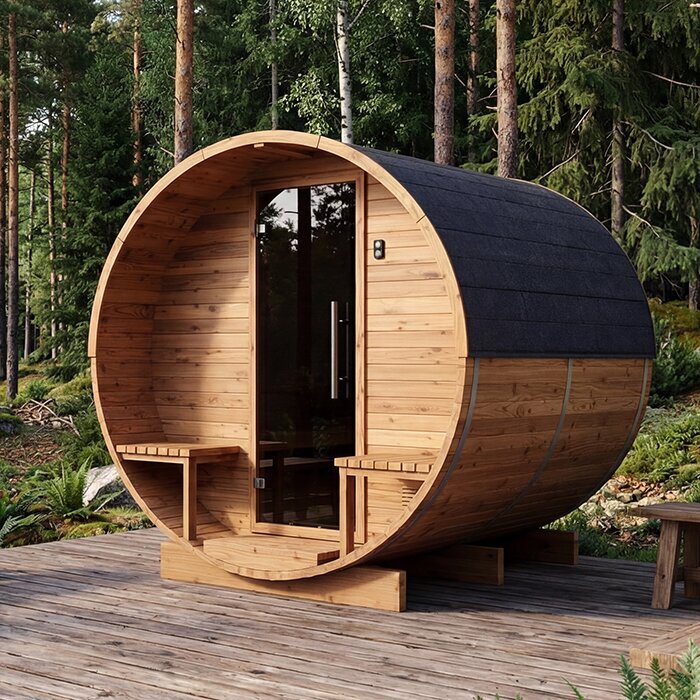
Buyer checklist 1
How often will you realistically use the sauna?
Write down a likely month rather than choosing between abstract labels. Record which days are realistic, whether use would usually be after work or at a planned weekend time, and who would prepare the sauna. Using it five days a week creates a different workload from using it every day; a weekend routine might mean one predictable session each week or several irregular visits. Include how often another person joins, whether sessions are planned ahead and what must happen immediately beforehand. Consider whether other household activities need the same space at those times. Convenience comes from fitting the whole sequence into your day, not simply choosing a target number of sessions.
Include less ideal weeks: travel, work peaks, changing weather and competing household plans. For several weeks, note when you would genuinely have used the sauna and what got in the way. Separate the routine you want from one you are likely to maintain. If frequent use depends on one person preparing and cleaning every time, treat that as a constraint; if weekend visits tend to be spontaneous, a setup with too many dependent tasks may be frustrating. A short task list can expose bottlenecks such as misplaced towels or a control sequence only one person understands. The aim is to identify the workload the sauna must fit around, not to prove a schedule.
Daily use makes preparation part of the day
Frequent use changes how preparation feels because small steps recur. List the sequence from deciding to use the sauna through to entering it: reaching the controls, clearing the path, bringing in towels, completing any required checks and allowing time for the heater to warm up as directed. The time to allow depends on the exact sauna, heater and starting conditions, so use their manuals rather than a generic estimate. If a step means crossing a busy yard or finding equipment stored elsewhere, it may matter more across an ordinary week than on a carefully planned Saturday. Note which steps can be completed ahead of time within the maker’s directions.
Consider everyday access as part of the setup: the door approach, a dry place for towels, suitable lighting and a convenient spot for the instructions all contribute. Check these against actual drawings and site measurements, not assumptions from a product photograph. The HC-225 product listing gives 4.4 m² as a comparison point, but it does not replace checking dimensions, access and clearances for the selected configuration. Distinguish the listed area from the space needed around the sauna. Ask whether the complete route will still feel straightforward when you are tired, carrying towels or sharing the area with other household tasks.
Buyer checklist 2
Preparing for a session after time away
An occasional sauna does not automatically need more preparation, but it benefits from a clear restart process after time away. Before a planned weekend, leave enough time to consult current instructions and check that the sauna and surrounding area are ready. Depending on the site, surfaces may have collected dust or other debris, and users may have forgotten the usual control sequence. A brief visual check and a clear route can make the return easier; neither replaces the maker’s maintenance requirements or professional attention to a fault. Do not assume a unit is ready simply because it worked at the previous session. A realistic buffer helps avoid discovering a problem at the last minute.
Keep the manual and chosen user-facing steps accessible rather than relying on memory or assuming every controller works the same way. For a candidate such as the N-210 model listing, confirm the exact sauna, heater and control configuration before writing a restart checklist; the model name alone does not confirm every supplied component. This matters when one person uses the sauna regularly and another joins only now and then. Keep the checklist short enough to use each visit, and make it cover ordinary operation rather than DIY repair. If you spot damage or a control fault, do not improvise a fix to keep weekend plans on track; seek appropriate qualified service.
Match the layout to people and movement
Use frequency to think about users and movement rather than treating area as a proxy for comfort. A regular solo routine may benefit from an unobstructed route and somewhere nearby to put towels; occasional sessions with family or friends may need room for people to change, wait and move without blocking the entrance. Compare the manufacturer’s drawing for the chosen layout, including the door approach and any required clearance. Do not infer capacity, bench arrangement or access from an area figure or a styled photograph. Measure the path from the house and the space needed to use the entrance, not only the sauna itself.
The N-250 product page lists 5.27 m², a published figure to note alongside other candidates, not a complete answer about seating or site fit. Check what the stated area measures and compare it with the current plan. Then ask how often any extra space would actually matter, and whether it adds a longer route or a larger area to clean. A weekend host may value flexibility for visitors, while a daily household may prefer an unobstructed layout; neither conclusion follows from area alone. Verify any stated capacity against product documentation instead of estimating from the number of people in a photograph.
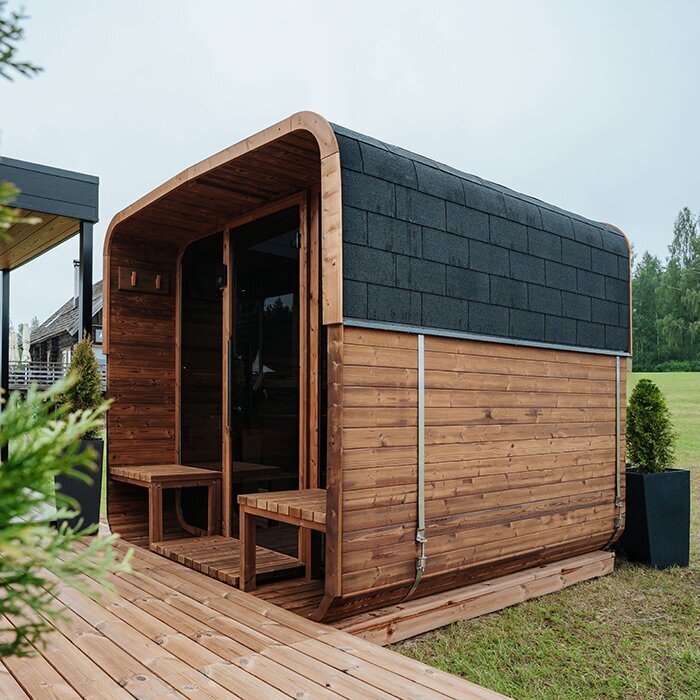
Buyer checklist 3
Choose controls people can use consistently
Controls affect how repeatable the routine feels. For daily use, ask whether the people using the sauna can find the approved controls, understand the sequence and leave them in the state the manual requires. Note any steps the controller asks you to perform each time, whether settings need to be rechecked and whether the control location is convenient without crossing other household traffic. Do not assume a timer, app, preset or remote-start feature is included simply because the model is a sauna; confirm the exact heater and controller package. Convenience should mean fewer avoidable steps, not bypassing manufacturer directions.
When comparing candidates, record the heater and controller supplied with each one so you can compare the operating steps rather than just feature names. The LC-260 listing does not, by its model name alone, establish which controls are included. A weekend user may value an interface that is easy to understand after a gap; a frequent user may value a familiar sequence with clearly displayed settings. In either case, distinguish confirmed functions from optional or unconfirmed features. If several people share the sauna, agree who starts and shuts it down, and how responsibility passes between users when they are not all finishing at the same time.
Clean after every session, whatever the schedule
Cleaning is a task after every use, not a benefit reserved for either schedule. Follow the sauna and heater makers’ instructions for the interior, benches, floor, glass and other supplied surfaces; materials and finishes can call for different approaches. Use the routine the manual specifies, and do not assume a household spray, oil or abrasive is suitable. Towels can limit direct contact with surfaces, but they do not remove the need to clean or dry the sauna as directed. In a daily pattern, a short routine that everyone can repeat is more reliable than an elaborate one that gets postponed. Decide where the required supplies will be kept, following any storage instructions.
For weekend sessions, plan the clean-up as part of the visit rather than leaving it until you next want to use the sauna. For a candidate such as the HCF-300 model page, base your choice of cleaning products and methods on the care instructions for the exact model and supplied surfaces, not just the catalogue name. Divide the work clearly if several household members use it: decide who cleans the surfaces, who deals with reusable towels and who notes anything needing attention. This avoids arriving the following weekend to find unfinished tasks. Allow time to leave the sauna as directed, especially when the session is the last activity before everyone heads home.
Buyer checklist 4
Plan maintenance from the manufacturer’s instructions
Cleaning and maintenance are related but not interchangeable. Cleaning is repeated care after use; maintenance covers the scheduled checks and service specified for the sauna and heater. Follow the relevant manuals, including any requirements for inspecting components, ventilation or controls, and do not create an interval from a general rule. More sessions create more occasions to notice a change; long gaps can make a gradual issue less obvious. Neither observation sets an inspection timetable—the maker’s instructions do. If they call for an inspection or service beyond routine owner checks, arrange it with an appropriately qualified professional rather than improvising.
Keep a simple record of dates used, cleaning completed and maintenance actions, noting any unusual noise, damage or control issue for follow-up. This is more useful than guessing that an occasional-use sauna needs little attention or that daily use automatically requires service at a particular frequency. The LCF-300 product listing can help keep model identity straight when seeking the right documentation; confirm the heater and configuration rather than relying on a product-family name. For a fault involving electrical or heating components, stop using the unit and have it assessed by an appropriately qualified professional instead of opening or altering it yourself.
Check the site before comparing convenience
Where a sauna sits affects preparation and care. If the location is exposed to rain, dust, falling leaves or strong sun, ask the maker what placement, protection and inspection the particular model requires. A daily-use layout needs a route you are comfortable using in the conditions where you live; a weekend-only routine can leave more time between visits for debris or visible wear to go unnoticed. Use approved plans and product instructions when considering the base and surroundings, and obtain qualified help where site suitability is unclear. A product image alone cannot establish that a proposed location is suitable.
The S-140 product page lists the model at 1.93 m². Treat that as one published comparison point, not the total site area or an installation guide: confirm dimensions, access and clearances in current documentation. For routine planning, also consider the path when the ground is wet, where cleaning tools can be stored and how you will check the site after a gap. These details help show whether a weekend plan is genuinely convenient without implying that a garden sauna is suitable for every surface or location. If the site involves unusual construction, ask a qualified installer to assess it before selecting a model.
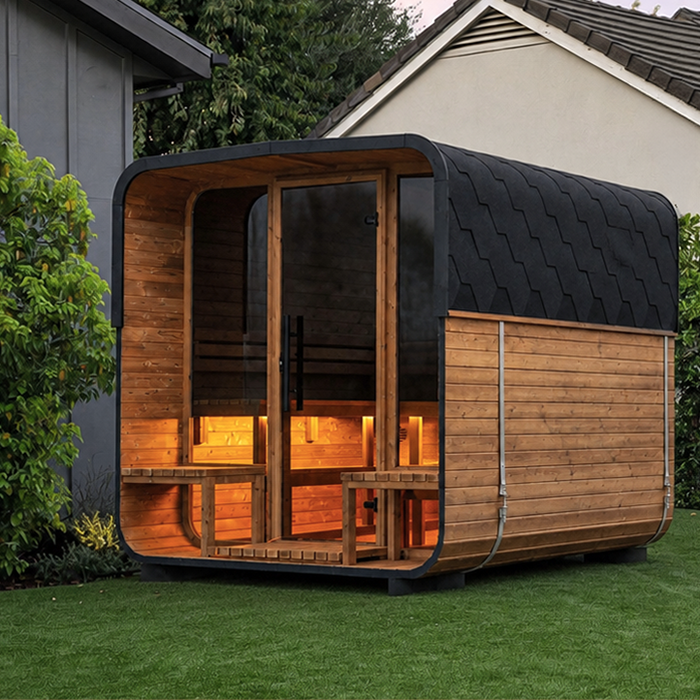
Buyer checklist 5
Make shared use easy to hand over
More people make a consistent handover important. Agree who prepares the sauna, who follows the control instructions, where towels are kept and who completes the post-use clean. For daily use, a straightforward shared routine helps prevent tasks being duplicated or missed; for a weekend gathering, one person should know the actual shutdown and cleaning instructions rather than relying on guests to guess. Keep household notes factual and aligned with the manual. A checklist may help coordinate ordinary tasks, but it is not a substitute for the maker’s safety directions. If use rotates between people, make sure the instructions are accessible to everyone.
For a shared-use shortlist, record the seating plan and stated capacity alongside each model’s listed area. The HC-150 listing gives 2.97 m²; use the drawings and current configuration to establish how the available space would work for your group. Think beyond seating: privacy, changing space, towel storage and a clear way to leave the sauna tidy all affect the handover between users. Consider what happens when one person arrives as another finishes, rather than planning only for everyone entering and leaving together. If only one household member is willing or able to manage preparation and cleaning, account for that workload instead of assuming guests or other users will share it.
Compare a realistic week with a busy one
Before deciding, run a paper test. Write two versions of the week: the ordinary pattern you expect and the less-frequent pattern you could maintain during a busy period. For each, list the actions from arranging the space to cleaning afterwards, then mark any task that is inconvenient, needs another person or depends on a controller setting. Check the exact manual and dimensioned plan for each shortlisted model, and separate confirmed features from questions still to answer. This compares practical work rather than a vague promise to use the sauna often. If possible, review the list with the person who will share the routine.
If the daily version only works when everything is perfectly organised, identify which tasks make it fragile. Would preparation clash with another commitment, or would cleaning regularly fall to someone who is unavailable? For weekend use, consider whether a missed visit would leave a longer gap than you first planned, and include the checks required before returning. Keep the comparison flexible enough to cover an extra session or a missed week. After the first few sessions, compare your notes with what actually happened: which tasks took more effort than expected, which responsibilities were unclear and whether the planned schedule still suits the household.
Frequently asked questions
Does daily use require a different sauna model?
Not automatically. Daily use describes your expected routine, not a special feature of a model. Compare the exact sauna and heater configuration, access, controls and care instructions with that pattern. A realistic weekly routine is a better buying guide than an ambitious daily schedule your household cannot sustain.
How should I plan for warm-up time?
Use the current instructions for the exact sauna and heater, and account for the stated starting conditions. Warm-up time is not universal, so avoid relying on a figure from another model or a product photograph. Build the manufacturer-approved sequence into your routine.
Does weekend use mean less cleaning?
Fewer sessions may mean cleaning less often overall, but each session still needs the care specified by the maker. A longer gap may also call for checks before the next use. Follow the manual for what to inspect and how to leave the sauna between visits; occasional use does not remove those responsibilities.
Can a listed area tell me how many people will fit?
No. A stated area does not by itself establish capacity, bench layout, door clearance or changing space. Check the verified drawing and any stated capacity for the exact configuration, then consider the access and movement your household needs.
What should I compare before choosing?
Note how often you expect to use the sauna, who will prepare and clean it, how straightforward the controls need to be, and what the manufacturer requires during longer gaps. Check the exact model’s layout and instructions against those practical needs.
Daily and occasional use place different demands on the routine: frequent sessions benefit from easy access and familiar controls, while weekend use needs straightforward preparation after time away. Neither schedule removes the need to clean after use or follow the maintenance instructions for both the sauna and heater. Compare the work involved across a normal week and a busy one, then choose the setup your household can keep up with when the novelty has worn off.
