
Thermowood vs Untreated Timber for an Outdoor Sauna
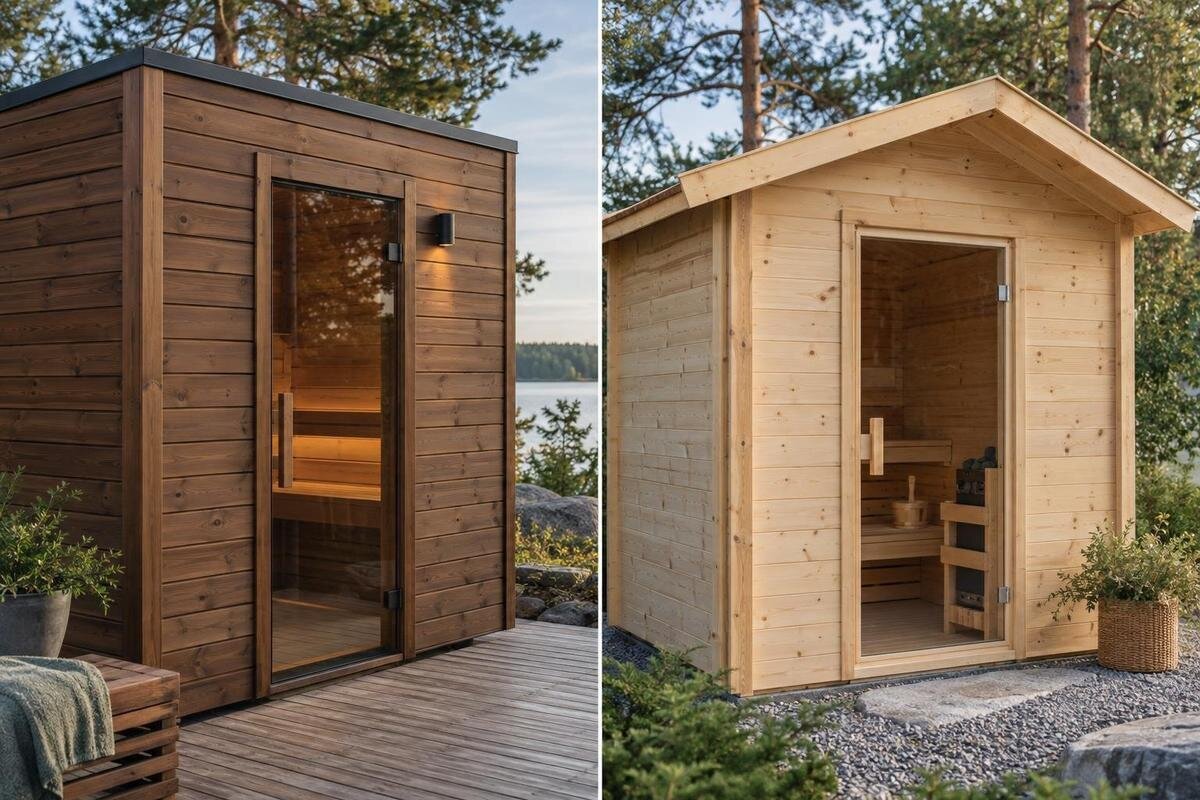
Outdoor sauna timber
Choosing timber for an outdoor sauna involves more than comparing material names. Thermowood generally describes heat-modified timber, while untreated can mean different things in a supplier’s catalogue. Neither term alone explains the species, which sauna parts use the material, how the exterior is expected to cope with your site’s weather or what care it needs. The useful comparison is between documented materials and the exact exterior construction you plan to buy.
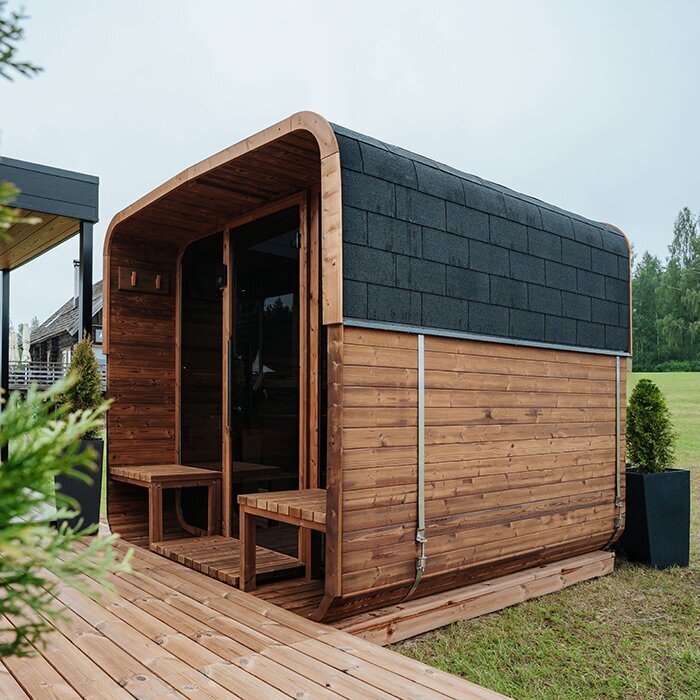
Questions for the supplier 1
What do Thermowood and untreated timber mean?
Thermowood is commonly used for timber modified through a controlled heat process. The word identifies a material category, but it does not necessarily reveal the exact process, timber species, grade, finish or performance of the boards in a particular sauna. Ask whether the supplier is naming a specific manufacturer’s process or using a broader description, and request the document that supports the wording. Two products sold under similar labels are not automatically equivalent: the timber, process and stated use may differ. A product-page heading, even when it looks precise, is not a complete technical specification.
Untreated needs the same scrutiny. It may mean that timber has not been thermally modified, has not received a preservative, or has no factory-applied finish; these descriptions are not interchangeable. A supplier may be referring only to the timber’s treatment status, not whether a coating will be applied later. Ask what has and has not been done, and whether the answer covers exterior cladding or every exposed timber part. When considering the HC-150 Thermowood Barrel Sauna, record the material description separately from the model name. Use separate entries for thermal modification, preservative treatment and surface finish, so a statement about one does not become an assumption about the others. Apply the same distinctions to the untreated option.
Which parts of the sauna use each timber?
List the components before comparing material names. An outdoor sauna may include exterior wall boards, framing, roof or upper cladding, floor elements, trim and doors. The internal lining and benches are separate considerations again. A claim made for the external boards does not automatically apply to the frame, roof, floor or hot-room surfaces. Nor does an exterior timber description tell you how other parts of the sauna are built. One product can use different materials, finishes or treatment levels across its components, so a single label may describe only part of the construction.
Ask for a drawing or written materials schedule that identifies the timber used on each relevant part, whether it arrives coated, and which parts are exposed to sun or rain. Confirm that the details apply to the exact model and configuration in the current offer, including any selected options. For the HC-225 Thermowood Barrel Sauna, organise your questions by component: exterior boards, framing, floor, trim and doors. Leave a component marked as unspecified if the listing does not identify its material. This avoids treating an omission as confirmation that all parts use the same timber. It also makes the comparison fairer when one supplier describes individual components and another uses a single material label for the sauna.
Questions for the supplier 2
What documentation supports a Thermowood claim?
For a Thermowood claim, request the named process or manufacturer’s data sheet, the timber species and grade, and confirmation that the process applies to the material supplied for your model. Ask whether the information covers all relevant boards or only a sample product. A sales phrase such as “more stable” or “weather resistant” is not enough to compare two choices unless its scope and supporting evidence are clear. Check which material was tested, the test method and conditions, and whether the stated result relates to exterior use. Data for a different species or product do not automatically describe your sauna.
Ask what exterior use the manufacturer specifies, what limitations apply, and how the timber is expected to be installed and maintained. If the supplier cites a durability classification, certification or other performance claim, request the original document and check that it names the material and application in question. Do not rely on a badge or a general brochure statement to fill in missing details. When reviewing Sauna N-210, keep any claimed benefit beside the information explaining its scope. Note whether it concerns the timber itself, a finished board or the assembled exterior. That distinction helps you avoid extending a narrow claim to the whole sauna. Keep the relevant information with the model-specific drawings and care instructions.
How to assess untreated timber fairly
Untreated timber is not one uniform alternative. Ask for the exact species and grade rather than accepting “natural wood” as a specification. Where relevant, check whether the material includes heartwood, sapwood or both, and what evidence supports any claim about natural durability. If the seller cites a durability classification, ask which timber it covers and where the classification comes from. Do not assume that untreated means poor quality, but do not assume it means suitable for long-term outdoor exposure either. The claim needs to relate to the actual timber and the way the sauna will be exposed.
A timber described as untreated may be intended to weather without a finish, to receive a finish after installation, or to be used in a more sheltered position. Those are different care plans. Ask whether the exterior can remain uncoated, what appearance changes to expect, whether a finish is recommended, and how the supplier wants repairs handled. If guidance for cut faces or replacement boards differs, get that in writing too. Without model-specific instructions, you cannot infer a maintenance schedule from the word untreated. Choose an approach whose documented care requirements suit the attention you can give the exterior.
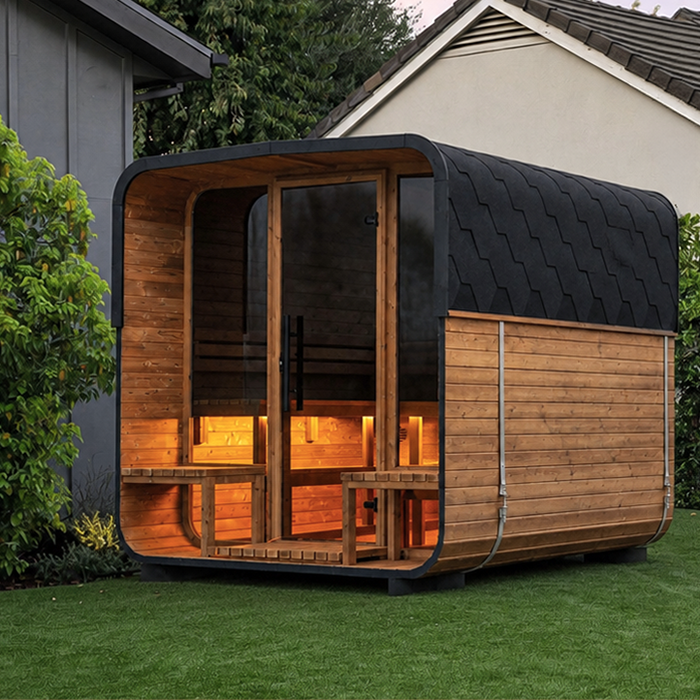
Questions for the supplier 3
What weather exposure will the sauna face?
Assess the actual site rather than relying on a broad climate label. Note where direct sun falls, how rain reaches the sauna, whether wind can drive water onto a face, where roof runoff lands, and whether lower boards may be exposed to splashback or damp ground. Look for surfaces or landscaping that could keep moisture close to the structure, and consider whether the proposed position allows it to dry. A screened, sheltered corner and a fully exposed location can create different demands on the same property. A simple site sketch showing sun and water paths can make your questions to the supplier more specific.
Ask the manufacturer to describe the exposure conditions for which the exterior timber and finish are specified, and whether your planned shelter, drainage and installation fit those instructions. If you are considering Sauna N-250, describe the proposed position rather than asking only whether the model is suitable outdoors. Include which faces would be sheltered, where rain could reach the lower boards and whether you can access each side for care. This gives the supplier a clearer basis for answering than a general description such as a sunny garden. If the location is particularly exposed or difficult to keep dry, seek advice from the manufacturer or a suitably qualified installer before choosing. Do not try to resolve a mismatch with a coating unless the supplier confirms that it is appropriate.
Compare the maintenance instructions
Base the maintenance comparison on written care instructions, not the assumption that one treatment removes upkeep. Ask how often the exterior should be inspected, what signs call for cleaning or refinishing, which products are permitted, and how a coating should be renewed if one is used. Request any limits on pressure washing, abrasive cleaning or solvents rather than improvising. The appropriate schedule may depend on both the product and its exposure, so avoid borrowing one for a different species or sauna. If exact intervals are not given, ask what condition should prompt maintenance and who can confirm the suitable treatment.
Clarify whether the sauna arrives factory-finished, bare or treated in another way, and whether assembly or site cuts change the recommended care. Do not assume that a general-purpose deck oil, stain or preservative is suitable; the manufacturer needs to confirm compatibility with the specific timber and finish. Keep the exterior-care plan separate from instructions for the hot-room lining and benches, where different conditions apply. For the LC-260 Thermowood Barrel Sauna, use the care instructions to distinguish work required after assembly from routine inspection and any later refinishing. Compare those tasks with the untreated alternative, including preparation and access, rather than judging upkeep by the number of products needed. A care plan should tell you what work you are accepting, not simply name a coating.
Questions for the supplier 4
Construction details affect timber exposure
Species and treatment are only part of the comparison. The way the sauna is assembled and positioned affects whether water can collect at joints, edges, trim or the base, and whether the timber can dry. The actual risk depends on the design and site, so do not infer construction details from a product photograph. Ask how exterior boards meet at openings, what instructions apply to cut faces, and how the design manages places where water might otherwise remain. The manufacturer’s drawings and installation information should explain the details relevant to that model rather than leaving you to guess from a timber label.
Before ordering, confirm who is responsible for assembly and what the manual requires for the base, drainage, clearances, access and ventilation. Avoid inventing a gap, foundation or overhang based on generic advice; use the sauna’s drawings and have a suitably qualified person assess site-specific questions. When reviewing the HCF-300 model, consider maintenance access alongside the installation layout. Check whether you could inspect the lower boards and reach the exterior around nearby fences or landscaping. Also ask which trim or other parts, if any, may be removed for inspection and who should do that work. These questions connect the construction details with ongoing care without assuming that changing the timber treatment will solve an access problem.
Compare complete sauna configurations
Compare the sauna as a whole while keeping the timber decision distinct. Exterior timber does not establish the insulation, heater specification, ventilation, internal finish or energy use. Nor does a timber label prove that every wall or roof component is weatherproof. For a fair comparison, use the same categories for each option: exterior components, species and treatment, supplied finish, exposure limits, maintenance and installation requirements. Record other construction differences separately, so an equipment or insulation difference is not mistakenly attributed to the timber. If the configurations differ substantially, identify which differences matter to you before trying to rank the materials.
If a listing gives only a brief material label, obtain details for the current configuration before drawing a conclusion. Use the LCF-300 sauna listing to identify the version you want to compare, then distinguish standard inclusions from any separately shown finish, trim or option. Check that the relevant manual applies to the version being supplied. Keep optional items in a separate part of your comparison until their inclusion is confirmed; otherwise, you may be assessing one sauna as supplied and another with additional features. Product descriptions and images can help identify a model, but the written materials information and assembly instructions explain its exterior construction. Compare equivalent configurations rather than similar-sounding marketing terms.
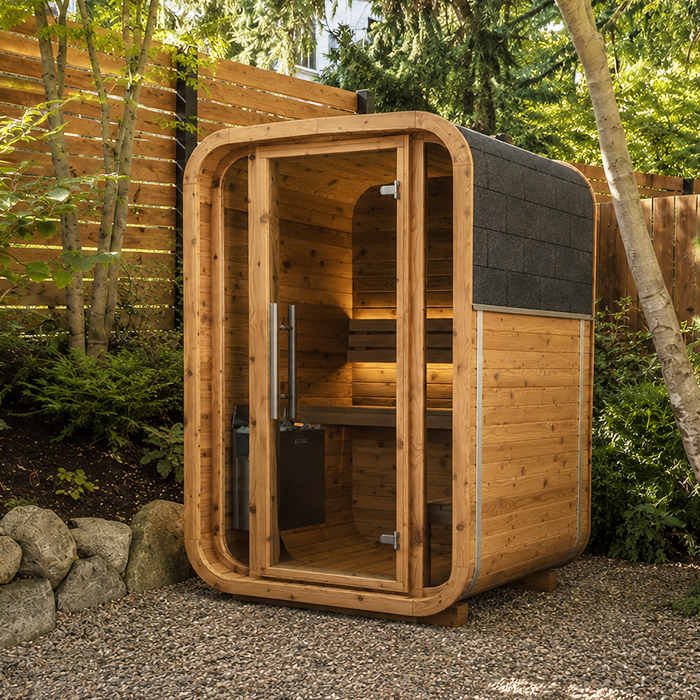
Questions for the supplier 5
Consider appearance and future repairs
Appearance can influence the choice, but a photograph cannot predict exactly how an exterior will look after years outdoors. Ask what colour and texture to expect at delivery, what changes are normal under the stated exposure, and whether a finish is needed to maintain a particular appearance. Species, thermal process, grade and coating may all be relevant, so do not assume that two products will age alike because both are called timber or Thermowood. If appearance matters, request a sample or a description tied to the exact timber and finish supplied. Ask whether the sample is representative of the grade and coating you will receive.
Consider future repair as well as the initial appearance. Ask whether replacement boards can be specified by the same species, grade, profile and finish, how to identify the original material later, and whether refinishing can be local or needs broader attention. For the S-140 Thermowood Barrel Sauna, keep any answer about replacement parts with the original timber specification. Distinguish the ability to identify a matching board from a promise that it will be available later or blend into an aged exterior. These are separate questions, and a model name answers neither. If a uniform appearance is important to you, ask how the manufacturer recommends handling a visible repair before making that expectation part of your choice.
Resolve information gaps before choosing
Put the answers into a written comparison. For each option, record the timber species and grade; what Thermowood or untreated means in that supplier’s wording; which components are covered; the guidance on exterior use; site limitations; and required care. Add the model-specific drawings and manual, and mark unanswered questions beside the relevant item rather than leaving blank spaces. Separate confirmed details from your own preferences, such as retaining a particular colour or avoiding frequent refinishing. If one supplier documents the whole exterior and another names a treatment without identifying the timber or parts, you do not yet have information on an equivalent basis.
Ask the supplier to resolve the gaps that could change your choice: whether the material suits the exposure you have described, what finish is supplied or permitted, how the exterior should be maintained, and who can confirm assembly details for your site. If an essential claim remains unsupported, leave that option unranked rather than filling the gap with an assumption. A well-documented untreated timber may be easier to assess than a Thermowood claim without matching data, while a fully specified Thermowood option may suit different care priorities. The relevant comparison is the documented use and upkeep of the exact sauna.
Frequently asked questions
Is Thermowood always the better choice for an outdoor sauna?
No. The name alone does not establish how a particular timber will perform in your location. Compare the specified species, process, exterior-use guidance, construction details and maintenance instructions with those for the untreated option. Thermowood is worth considering when its documented properties and care requirements fit the sauna and site; the label is not a performance guarantee.
Does untreated timber mean it needs no maintenance?
No. Untreated may refer to the absence of a preservative, thermal modification or factory-applied finish, and each has a different implication. The timber may be intended to weather, may require a finish after installation or may be suited only to certain exposure conditions. Ask for the care instructions for the exact species and exterior parts.
Does the Thermowood name mean the timber has no chemical treatment?
Do not infer that from the name. Thermowood commonly refers to heat-modified timber, but the product may have other treatments or a surface finish. Ask the supplier to identify any preservatives, coatings or additional processes and provide documentation that applies to the timber supplied for your sauna.
Can I apply an oil, stain or paint to the sauna exterior?
Only do so if the sauna manufacturer confirms that the product is suitable for that exact timber and exterior surface, and explains when and how it may be applied. Do not transfer exterior-care advice to the hot-room lining or benches. Check the manual before changing a supplied finish or applying a coating after assembly.
What documents should I ask the supplier for?
Request a model-specific timber schedule or drawing, the species and grade, a clear description of any treatment or finish, and guidance on exterior use and maintenance. If a performance claim is important, ask for the supporting data and its test conditions. Keep the relevant installation manual with those records.
Thermowood versus untreated timber is best settled by the material records, the exterior parts they cover and the care instructions for the sauna’s actual location. When those details sit side by side, the label becomes one factor rather than a substitute for information. If a claim cannot be tied to the exact timber and its intended use, the comparison is still incomplete.
