
Traditional Sauna vs Infrared Sauna: Which Experience Suits You?
Sauna buying guide
Traditional and infrared saunas both provide warmth in an enclosed cabin, but they produce that warmth differently. The heating method affects the feel of the air and surfaces, the equipment you need and what to check before installation. Compare the experience you actually want, rather than relying on health claims or broad promises about speed or running costs, and match it to the model's documented configuration.
How traditional and infrared heating work
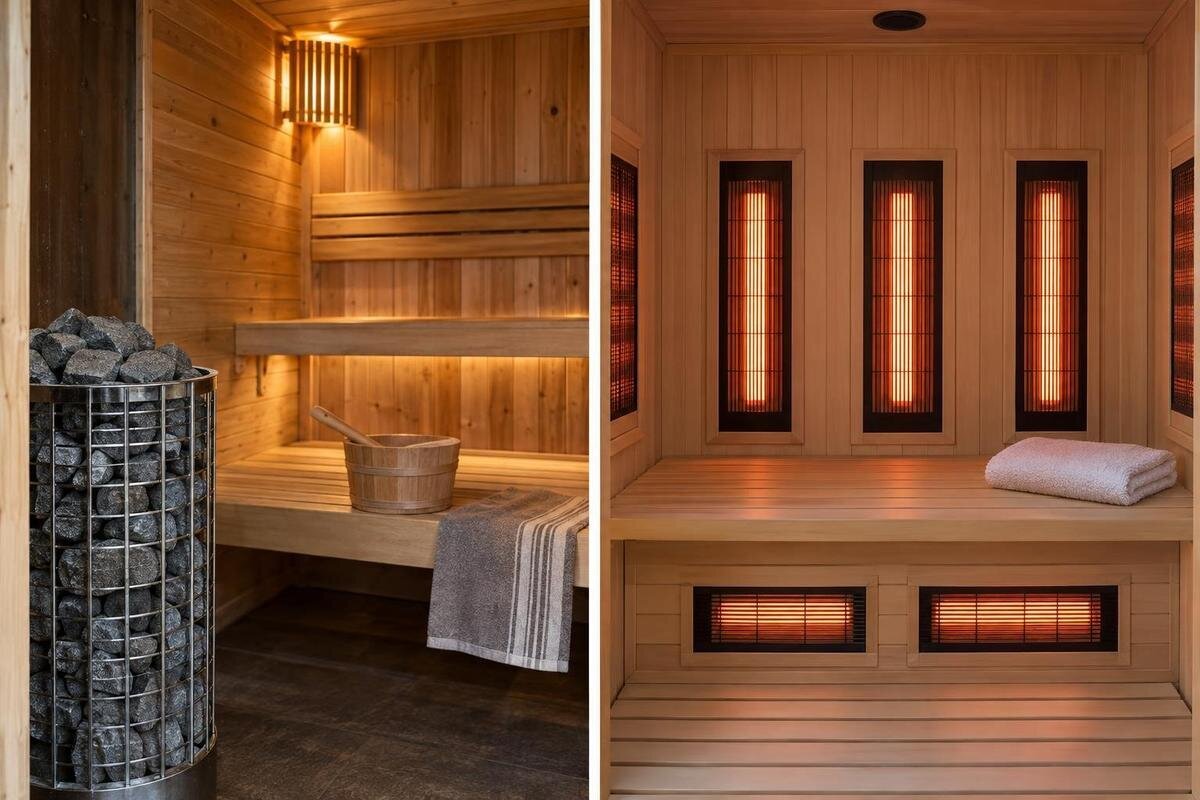
In a traditional sauna, the heater warms a mass of stones and the surrounding cabin; the stones hold heat and transfer it into the room. The air and interior surfaces therefore form a large part of what you feel, with conditions varying as warm air circulates and from one seating level to another. Traditional heaters may be electric or wood-fired, depending on the model, but fuel choice is separate from the basic distinction between traditional and infrared. Water may be poured onto the stones only where the particular heater's instructions allow it. That can create a brief rise in humidity, rather than changing the underlying heating method.
An infrared sauna uses emitters or panels to direct radiant energy towards people and nearby surfaces. Its main heating method is not a stone heater warming the room in the same way, although the cabin air can still warm during use. The feel depends on emitter position, cabin layout, controls and where you sit. The term infrared does not identify a particular panel design or performance, just as traditional does not specify one set temperature. Neither label guarantees that a sauna will feel hotter, heat faster or suit everyone better; compare the actual model's design rather than the category name.
How the heat feels during a session
Traditional heat is often experienced as warmth across the cabin: hot stones, warm air and, when the heater permits water, a temporary wave of humid heat. The effect depends on the amount of water, the stones, airflow and the room, and it fades rather than turning the sauna into a steam room. If you enjoy a session that includes that change in atmosphere, the water option may be important. If you prefer a steadier feel, you can simply choose not to add water; the heater's directions still govern operation.
Infrared warmth is more connected to radiant exposure: sitting close to an emitter or facing a different panel arrangement can change the sensation from one seat to another. That does not mean the cabin air stays cool, or that all infrared models feel alike. Panel placement, interior surfaces, ventilation and control settings contribute. If you can try one, pay attention to how warmth reaches your preferred seat and whether you like the overall room atmosphere. For a fair comparison, ask what conditions were used in a demonstration; descriptive terms such as mild or intense do not replace information about the heating arrangement.
Heaters, emitters and controls
Traditional equipment centres on a heater and stones, with controls that may be integrated or separate. Electric and wood-fired versions require different equipment and have different installation considerations, so do not assume one is included or that a cabin can be converted later. Confirm the heater supplied, the control system, the stones and any other components in the quoted package. Electrical work, fuel arrangements and heater placement must follow the manufacturer's documentation and be assessed by an appropriately qualified installer. A category label alone is not a complete installation specification, and photographs cannot show every inclusion.
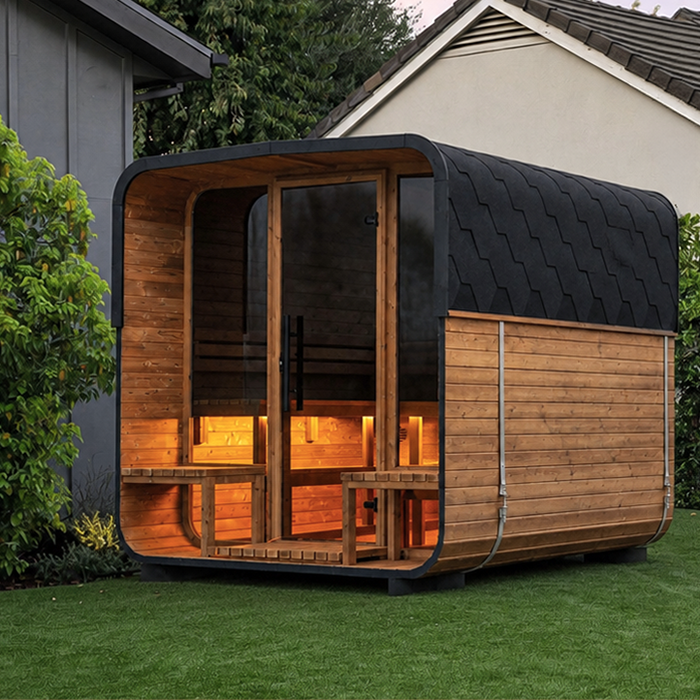
Infrared equipment instead centres on emitters, their arrangement and the controller that operates them. Check whether panels and controls are included, what settings are available, the stated supply requirements and what the manual specifies. The store listing for Sauna N-210 identifies it as a Thermowood Barrel Sauna and gives 4.43 m²; that information does not identify its heater or included controls. Establish the exact configuration from the current product information and manufacturer documentation before assigning it a heating type or assuming it is ready to use. Compare complete equipment packages, rather than treating the cabin listing as a description of everything supplied.
Warm-up time and everyday use
Warm-up is part of day-to-day use, but there is no universal time comparison between the two types. A traditional sauna must bring its heater, stones and cabin towards the operating conditions given in its instructions; the wait depends on the equipment and conditions at the site. Infrared systems use a different arrangement and control sequence, but their timing also depends on the specific unit and environment. Look for start-up guidance for the exact model rather than assuming that infrared means instant use or traditional means a fixed wait. A brochure statement may use conditions unlike yours. Ask what the manufacturer means by ready, such as a control indication or a particular cabin condition.
Think about when you are likely to use the sauna. If you want to start at short notice, compare the manufacturer's warm-up guidance with how much advance planning suits your routine. If you usually plan a session ahead of time, consider how preheating would fit around that schedule. Everyone who will use the sauna should also be comfortable operating the controls and recognising when it is ready. The listing for Sauna N-250 gives a 5.27 m² figure, but area alone cannot establish preheat time or energy demand. Ask for the heater details and the conditions behind any timing claim so you can judge how relevant it is to your intended use.
Seating, layout and capacity
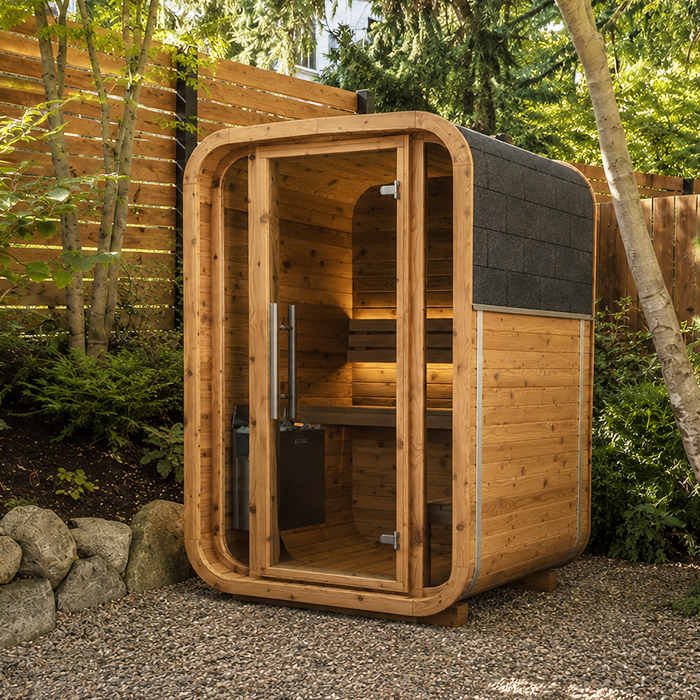
Heating method does not tell you how many people can sit comfortably. Compare the interior bench arrangement, usable bench length, headroom, door position, and heater or emitter locations against the way you plan to sit. In a traditional sauna, height differences can affect how warm bench levels feel; in an infrared cabin, the position of the seats relative to the panels can matter. These are model-level questions, not guaranteed benefits of either type. A dimensioned interior plan or a clear view of each bench is more informative than an outside photograph or a capacity figure without a stated seating arrangement. Think about shoulder room as well as the nominal number of seats.
The product listing for Sauna LC-260 states 5.12 m². Treat that figure as one comparison point, not as proof of a particular seat count or the amount of clear bench space. Ask whether it refers to floor area, internal area or another measurement, and compare like-for-like drawings where available. Picture the session you want: one person stretching out, several people sitting upright, or a mix of both. Then check how users enter and settle into each position. The heating method should be considered alongside that layout, not used as a shortcut for judging comfort or capacity.
Water, humidity and ventilation
Water is a feature to verify, not an automatic part of every traditional sauna. Some stone heaters are designed for water, while others may restrict it; follow the instructions for the exact heater and never assume that the presence of stones is permission. Infrared models do not normally offer the same hot-stone water ritual, so if that detail matters, ask the manufacturer whether a particular configuration is designed for it. Avoid comparisons that treat a temporary humidity change as equivalent to a separate steam-room system. Water use, if allowed, is only one part of the experience; the room's air exchange also affects comfort.
Both styles need an appropriately designed cabin and ventilation arrangement, but the applicable guidance depends on the full cabin-and-heater configuration. There is no universal opening plan to copy from a general comparison article. The Sauna HCF-300 listing states 6.89 m², but that figure alone cannot tell you what ventilation arrangement or clearances a specific installation requires. Compare the manufacturer's instructions with the proposed location and ask a qualified installer to assess site-specific work, particularly where the cabin sits within an enclosed space or existing services complicate access. This practical check cannot be settled by sauna type alone.
Choosing by session preference
Your preferred sauna routine can help narrow the choice. If you enjoy heating the room, sitting in the warmed cabin and, where permitted, changing the atmosphere by adding water to the stones, a traditional sauna may suit those priorities. If you would rather focus on radiant warmth from panels and do not need a stone-and-water ritual, infrared may be closer to what you want. Neither type is inherently more relaxing, more serious or more authentic; those are personal judgements, not technical advantages. When comparing them, notice the air temperature, radiant sensation, humidity, seat position and how much attention you want to give to adjusting the experience.
Trying both before choosing can help because a brochure cannot reproduce how the heat feels at your preferred seat. If you visit a showroom or public sauna, confirm which heating system is installed and compare ordinary sessions rather than unlike conditions. Make a short note of what mattered: the feel of the air, panel exposure, any humidity change, bench support and ease of controls. This is more useful than asking which type is generally best. For example, Sauna HCF-300 and Sauna LCF-300 are both listed with a 6.89 m² figure; the shared number alone does not show that they have the same heater, layout or session experience.
Installation needs and site access
The proposed location may limit which heating options are practical. Traditional electric and wood-fired systems can have different service and installation requirements; infrared equipment also has its own power and installation requirements. Check that the exact cabin and heater are specified by the manufacturer for the intended setting; do not assume outdoor suitability from a barrel shape or a timber description. Consider the delivery and assembly route as well as the final position, then ask a qualified local installer to confirm the proposed services, clearances and site conditions. Assess the complete proposed installation, rather than choosing a heating method without considering where it will go.
The Sauna S-140 listing gives 1.93 m², but the supplied figure does not, by itself, define the installation footprint, access space or route into the site. Ask for full external and internal dimensions, plus any required clearance information in the model's documentation. Measure doorways and turns along the delivery path, not just the place where the sauna will stand; if components arrive separately, confirm their size and the space needed to assemble them. A small area figure is not proof that a difficult site will accommodate a sauna. Have the site checked before relying on a model's compact appearance.
Running costs and ongoing care
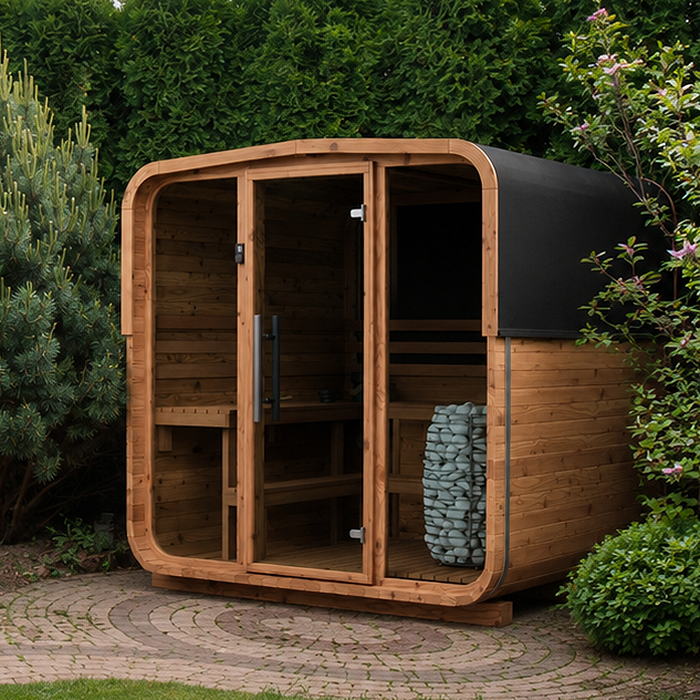
Do not assume infrared will cost less to run or a traditional heater more. Consumption depends on the heater or emitter specifications, preheat, cabin insulation, outside conditions, frequency and duration of use, and local electricity prices; a wood-fired setup raises a different fuel question. Compare published information for the exact configuration and use the same session pattern when reviewing estimates. Ask what conditions sit behind a quoted estimate instead of extrapolating from sauna type or area. Purchase cost is only one part of ownership: installation, site preparation, delivery, servicing and replacement components can also affect what you spend over time. No type label provides a reliable total on its own.
Maintenance depends on what is actually supplied. Traditional heaters and stones have manufacturer-specified inspection and care; infrared panels and controllers have their own cleaning and service requirements. Cabin surfaces also need care under their own instructions, while moisture should be managed as directed rather than by a one-size-fits-all routine. The listing for Sauna HC-150 identifies a Thermowood Barrel Sauna and gives 2.97 m², but neither its name nor that figure reveals heater upkeep or consumption. Compare the current manual and warranty terms for the exact configuration, including which maintenance tasks belong to the owner.
A practical checklist for comparing models
Before shortlisting, record the heating method, the heater or emitter make and model, what is included, the control type, stated electrical or fuel requirements and installation instructions. Then compare cabin dimensions, bench layout, ventilation guidance, intended location, assembly responsibilities and access for servicing. Ask for the manual and dimensioned drawings for the model and configuration being considered, not just a generic category brochure. If information is missing, treat it as an unanswered question rather than filling the gaps from a photograph or from a similar sauna. This prevents unlike packages being compared and keeps attention on the session and practical work you actually want.
Keep unanswered questions beside each model on your shortlist so that missing details remain visible during the comparison. For example, Sauna HC-225 is identified as a Thermowood Barrel Sauna and has a listed figure of 4.4 m². Your comparison should record that information separately from details still to be established: its heating configuration, included equipment, seating capacity and suitability for your site. The linked barrel sauna listings should not be taken as evidence that the store offers infrared models. Compare each candidate against the same priorities, distinguishing between features you need for your preferred session and practical requirements the installation must meet. This gives you a clearer basis for choosing than a list of model names and area figures.
Frequently asked questions
Does an infrared sauna heat the air?
Its main method is radiant energy from emitters, rather than a stone heater warming the cabin. The air and interior surfaces can still warm during use, and the amount depends on the model and conditions. Check the manufacturer's description instead of assuming the cabin stays cool.
Can I pour water onto the stones in any traditional sauna?
No. Only do so if the instructions for that particular heater allow it. The presence of stones does not automatically mean water is permitted. If the instructions do allow water, expect a temporary change in humidity, not a separate steam-room system.
Which type warms up faster?
There is no universal answer. Warm-up depends on the specific heater or emitters, cabin design and conditions at the site. Compare manufacturer guidance for the exact models and check what each source means by ready; a general claim about either sauna type is not enough.
Is an infrared sauna cheaper to run?
Not necessarily. Running costs depend on the equipment, how often and how long you use it, preheating, cabin conditions and your local energy prices. Ask for an estimate based on the exact configuration and comparable use, rather than assuming the heating method determines the cost.
Does the stated area tell me how many people a sauna seats?
No. An area figure alone does not describe the bench layout, usable seating space or comfort for the people using it. Compare the internal dimensions and seating plan, and check whether the arrangement suits your intended use. Do not infer capacity from a model name or area alone.
The better fit is the one whose heat, ritual and layout match how you want to use a sauna, and whose documented equipment suits the site. Traditional and infrared describe different heating approaches; they do not settle warm-up, running costs, capacity or what a particular package includes. Compare those details model by model, then decide whether the experience itself is the one you want.
