
Estimating Wood-Fired Sauna Fuel Use and Costs
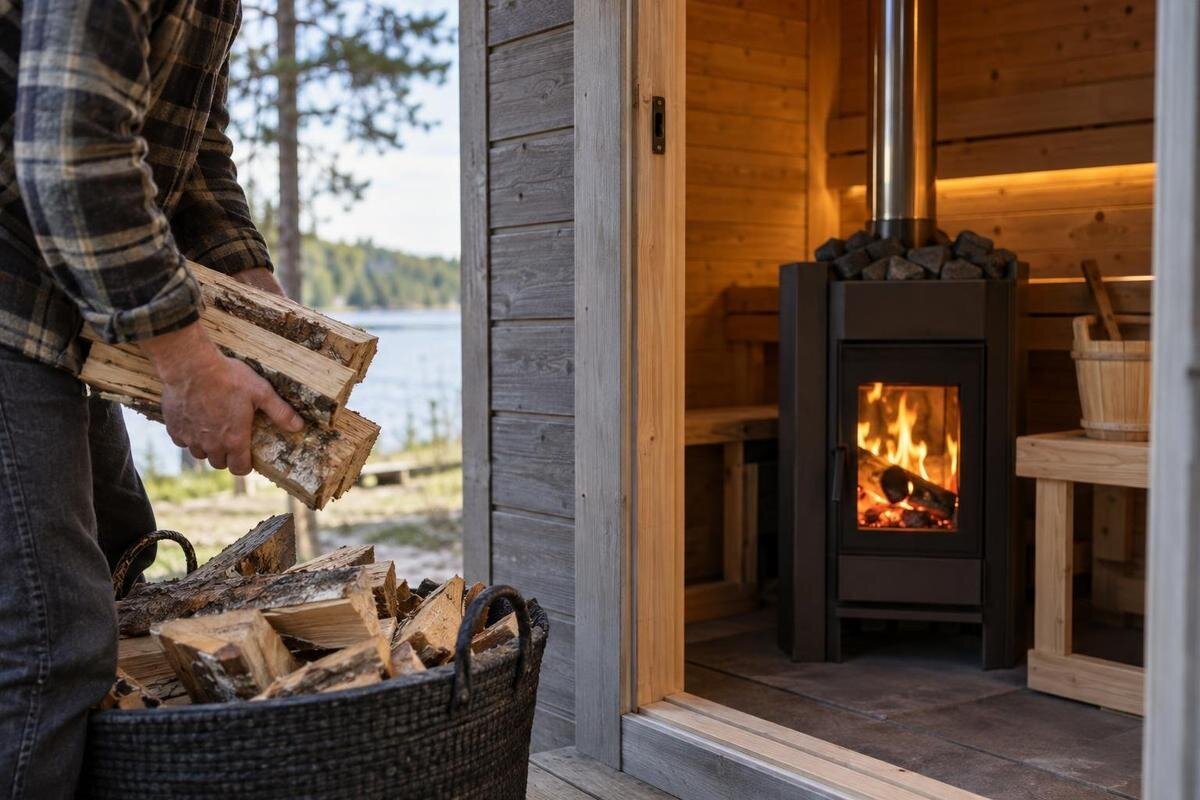
Sauna running costs
Wood-fired sauna running costs are easiest to estimate from the wood you actually burn, not from a generic allowance or the price of a delivery alone. Measure the quantity used across a complete firing, match it to the unit and amount on your local firewood invoice, then calculate the share of that bill consumed in each event. The result is a personal estimate, not a universal rate: starting conditions, fuel, firing pattern and the price you pay all matter. This guide focuses on recurring firewood expense, with optional ignition fuel shown separately.
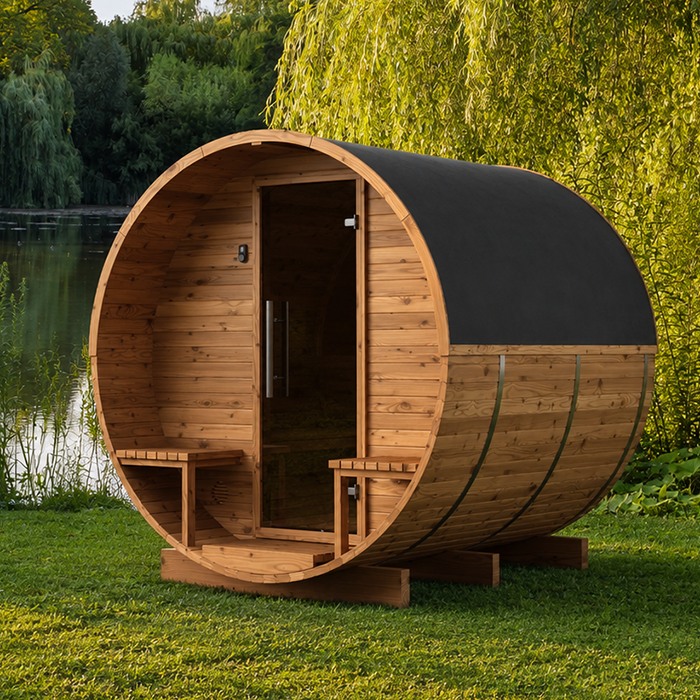
What to record 1
Define one firing before costing it
Decide what one session means before counting logs. For a fuel estimate, the clearest unit is one firing event: from lighting the first fire through the warm-up, bathing period and the end of that burn. Wood used to bring the sauna to the condition you choose for ordinary use belongs in the cost, even though no one is bathing during that part. Several bathing rounds that share one fire are not several complete heat-ups. Record the cabin and the wood-burning heater as separate parts of the setup. A listing such as Thermowood Barrel Sauna HCF-300 can identify the cabin being considered, but its name alone does not establish what heater is supplied or how much wood a firing uses.
Keep a wood-only result distinct from a broader fuel total. Firewood alone is one figure; kindling and purchased firelighters can be added if you want the cost of all ignition fuel. Include a delivery charge in the wood batch cost when it was paid for that load, or show it separately and state how you treated it. If a charge covers several items, allocate only the part you can justify. The cabin, heater purchase and other one-off project expenses should not be folded into the cost per firing. A fixed definition makes your records useful over time, even if wood prices or session lengths change.
Measure the wood used in a firing
For a mass-based record, weigh the wood as it goes into the fire, using a container with its empty weight removed, or weigh each log before loading. Add every top-up from the first lighting through the end of the event. Write down the unit and method; one basket is useful as a measure only if its fill is consistent and you have established its weight. If unburned pieces are returned to stock, do not count them as consumed; subtract them when you can measure them safely. The aim is a repeatable quantity, not laboratory precision. If your method is an estimate rather than a direct measurement, label it that way.
One recorded firing is a starting point, not a dependable average. Keep entries from several ordinary events and mark longer, colder or otherwise unusual sessions rather than letting an outlier define the whole budget. If you cannot weigh every log, use a repeatable measured container or supplier unit and label the result approximate. If you are considering the Thermowood Barrel Sauna LCF-300, leave the consumption field in your planning sheet blank until you have data for the intended setup. Keep any provisional allowance clearly separate from measured results so that an early budgeting assumption does not later get mistaken for recorded use.
What to record 2
Match the price to the quantity you use
Use the invoice or receipt for the amount you actually paid, along with the quantity stated for that delivery. If the wood is sold by mass and you measure each firing in kilograms, divide the total batch cost by the usable kilograms. Include a delivery fee attributable to the wood, or show it as a separate cost. Record the purchase date and the supplier’s unit as well as the total: a past quote, an advertised rate or a price from a different delivery may not match what you paid locally. Keep different batches separate when their prices or stated quantities differ.
If wood is sold by bag, crate or volume, retain the supplier’s exact unit and measure use on that same basis where possible. Do not assume a general conversion between volume and weight: how wood is stacked or packed and its condition can change the relationship. Drying also changes mass, so the mass on delivery may not be the mass available to burn later. For a cost per burn-ready kilogram, divide the total batch cost by its usable mass when ready, then measure firing use on that basis. When budgeting for the Thermowood Barrel Sauna S-140, record the firewood price and its unit separately from the cabin price so you can update either without confusing purchase and running costs.
Calculate the wood cost per firing
Use a simple formula. Let B be the amount paid for a batch and U the usable quantity in the same unit. The unit cost is B ÷ U. If a firing uses u units, its wood cost is u × (B ÷ U). For example, if the batch and the firing are both measured in kilograms, U and u are both in kilograms and the result is a currency amount. The same method works with another consistent unit, such as a supplier’s stated bag quantity. Keep your working figures until the end so rounding does not distort the result.
When a firing draws on several batches with different prices, calculate the cost of the amount used from each batch and add the results. If you cannot identify which batch supplied each log, use a clearly stated average rate across the usable stock rather than presenting the estimate as exact. Add kindling or firelighters only if they are part of the total you intend to report; show them separately from firewood if that makes the figure easier to interpret. Save the result against the setup you measured, such as a worksheet row labelled Thermowood Barrel Sauna HC-150, so the calculation can be traced to its own use and price records.
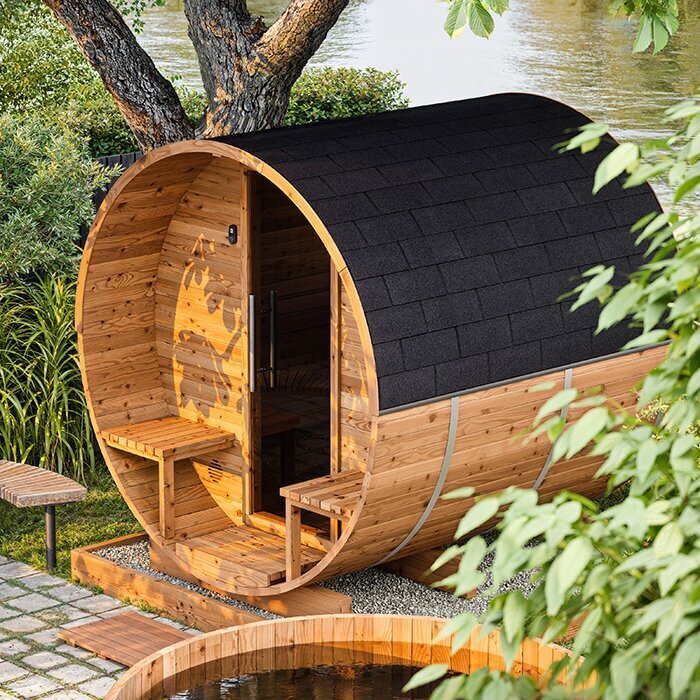
What to record 3
Include warm-up and shared firings
A session cost should cover more than the logs added while people are bathing. Include the wood used to start the fire, bring the sauna up to the condition you normally use and maintain the fire during the event. If you leave out warm-up fuel, the result will describe only part of the firing and will understate the cost of an ordinary visit. Note the start and end of the event consistently, including any extra wood added after the first heat-up. Do not estimate fuel by multiplying bathing time alone; it leaves out the fuel used before and between rounds.
If several people take turns on one fire, calculate the total cost per firing first. A cost per person or per bathing round is a separate allocation: divide only if that is the comparison you want, and state the number of people or rounds used. When one ongoing fire serves more than one gathering, make clear where you have drawn the boundary and avoid charging the same wood to two events. For a planned purchase such as the Thermowood Barrel Sauna HC-225, distinguish the number of bathing rounds you expect from the number of separate firings. That keeps your usage forecast consistent with the unit used to calculate fuel expense.
Record the conditions that affect wood use
A measured firing is specific to its conditions. Wood species, moisture and log size can affect how a load burns, while a cold start may differ from a later firing when the heater is already warm. Outside temperature and exposure, the length of the event, the way the fire is managed and how often more wood is added can also change the amount used. These are reasons to keep a record, not reasons to apply a standard allowance. Use the heater’s instructions for its operation; do not change how it is run just to make two sessions appear comparable.
Add brief notes beside the quantity: date, wood batch and condition, whether the start was cold or warm, approximate event length and any unusual weather or firing pattern. Compare similar events when working out a typical rate; keep unusually long or short ones visible rather than silently excluding them. If the sauna or heater setup changes, start a separate record instead of carrying over the old rate. If you select the Thermowood Barrel Sauna N-210, identify the chosen heater alongside it in your log. This keeps results for that particular combination together while preserving the notes needed to explain differences between its firings.
What to record 4
Allocate bulk loads and leftover stock
A bulk delivery is not the cost of the first firing that uses it. Divide the total amount paid by the quantity that is usable for burning, then allocate each event its share according to the amount it uses. Keep track of fuel received, fuel used and stock remaining so you do not charge the full bill to one session or count leftover wood as consumed. If some of a load cannot be used, record that separately: the cost per usable unit will be higher than a calculation based on the entire delivered quantity. This is especially relevant when a delivery lasts across many firings.
If you source wood yourself, distinguish a cash-only figure from a fuller estimate of what the fuel costs you. Record out-of-pocket items such as purchased supplies, transport or processing separately, and include your own time only if you choose a stated basis for valuing it. Avoid calling the wood cost-free when the figure simply leaves those inputs out. When budgeting for the Thermowood Barrel Sauna N-250, keep existing firewood stock separate from future purchases. Record the quantity you already hold and the cost assigned to it, so using that stock does not disappear from the fuel estimate simply because no new delivery was needed.
Turn firing costs into a monthly or seasonal budget
Once you have a representative cost per firing, estimate a period’s fuel expense from the number of firings you expect in that period. Use your own likely pattern, including quieter months and busier stretches, rather than assuming the same number of sessions every month. If firing costs vary noticeably, group similar events or use a range instead of multiplying one unusually high or low result across the whole season. Keep the assumed number of firings visible in the calculation; the cost per firing does not tell you how often you will use the sauna.
Separate the cost of wood consumed from the cash paid for a delivery. A bulk load can create a large outlay in the month it arrives while its fuel is used gradually over later months. For a consumption budget, allocate the batch cost across usable stock; for cash-flow planning, record when each payment is due. Refresh the unit rate when you buy at a different price. If you are preparing a budget for the Thermowood Barrel Sauna LC-260, show the assumed cost per firing and expected number of firings beside the period total. You can then revise the price or usage assumption independently as your plans become clearer.
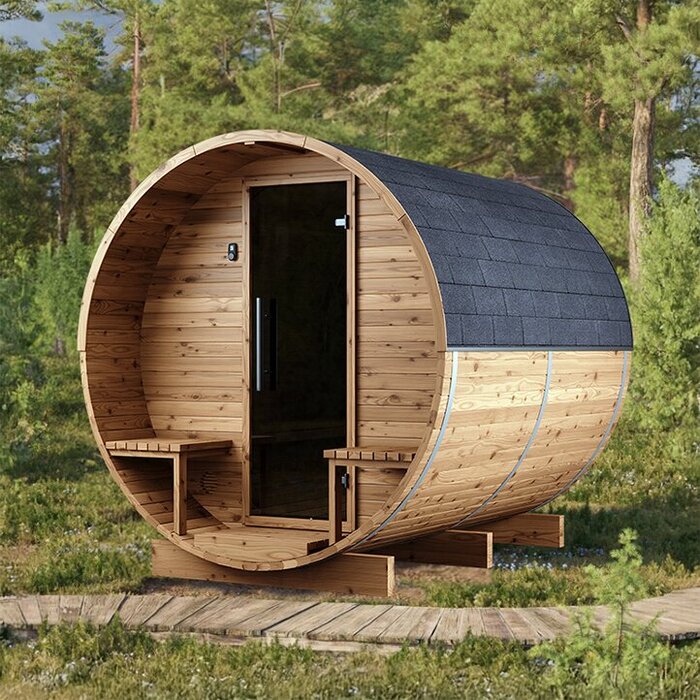
What to record 5
Compare like with like
When comparing suppliers, use the same basis for each quote: the actual price, quantity and unit, the condition of the wood and any delivery cost. A price per kilogram cannot be compared directly with a price per bag unless you know the quantity represented by that bag. When comparing sessions, use the same firing boundary and include the same parts of the event. If one estimate includes warm-up and another starts at bathing time, the totals do not describe the same service even if both are labelled cost per session.
A lower price per unit does not automatically mean a lower cost per firing; the amount used matters as well. Compare the calculated event cost and keep the inputs beside it, so a change in firewood price can be updated without repeating the entire estimate. If wood type, storage condition or firing routine differs, note that difference rather than treating the result as a controlled comparison. Do not assume wood heating is always cheaper: the conclusion depends on your measured consumption, the local price you pay and the scope of costs included.
Keep a record you can update
A simple log makes the estimate repeatable. For each event, note the date, cabin and heater identifiers, the start and end of the firing, the wood batch, quantity and unit, and the price basis used. Add a short note about the wood’s condition, starting conditions and any unusual pattern. Keep kindling or other ignition-fuel costs in a separate column if you want to report them. A notebook or spreadsheet is enough; the important part is that the same fields and measurement method are used each time.
For an observed average, add the allocated wood costs for the recorded firings and divide by the number of complete firing events. Keep the range visible as well: a typical event and an unusually long one can both be useful when planning, but they answer different questions. Recalculate when the fuel source, local price, heater setup or way you use the sauna changes. With the batch cost, measured amount and session boundary recorded, the estimate stays transparent rather than relying on a guessed allowance.
Frequently asked questions
How do I calculate firewood cost per sauna session?
Divide the amount you paid for a usable batch by its usable quantity, using the same unit you use to measure wood for a firing. Multiply that unit cost by the quantity used in a complete firing, including warm-up and top-ups.
Should I count the warm-up wood?
Yes. If you are working out the cost of one firing, include the wood used from lighting through warm-up and the rest of that burn. The time spent bathing is only part of the firing event.
Can I convert a volume of firewood into kilograms?
Avoid a generic conversion. The relationship depends on the particular wood and how it is measured and stored. Use the supplier’s stated volume unit for both purchase and use, or base the calculation on a measured quantity from that batch.
Why does one firing use more wood than another?
Starting conditions, outside weather, wood type and condition, log size, the firing pattern and the length of the event can all differ. Record these details and compare similar firings rather than treating one result as a universal allowance.
How should I cost a bulk delivery used over several months?
Allocate the bill across the quantity that is usable for burning, then charge each firing for the amount it uses. Keep that consumption estimate separate from the cash outlay in the month the delivery is paid for.
A useful wood-fired sauna estimate ties three things together: a clearly defined firing, a measured quantity of usable wood and the amount you actually paid for that fuel. Record the whole event, including warm-up, and keep the purchase unit consistent with the unit used for consumption. After several ordinary firings, you can calculate a more representative cost and update it when your fuel price or routine changes. That gives you a figure grounded in your own use rather than an assumed quantity or a broad claim about what wood heating costs.
