
15 Aluminium Pergola Ideas for Patios and Gardens
Bloomcabin Blog
15 Ways an Aluminium Pergola Can Shape Your Patio or Garden
Use this practical source of inspiration to plan a patio or garden pergola, whether you want a small hideaway, an eating space, a relaxed seating area, contemporary styling or the right Bloomcabin format for life outdoors.
What this guide can help with
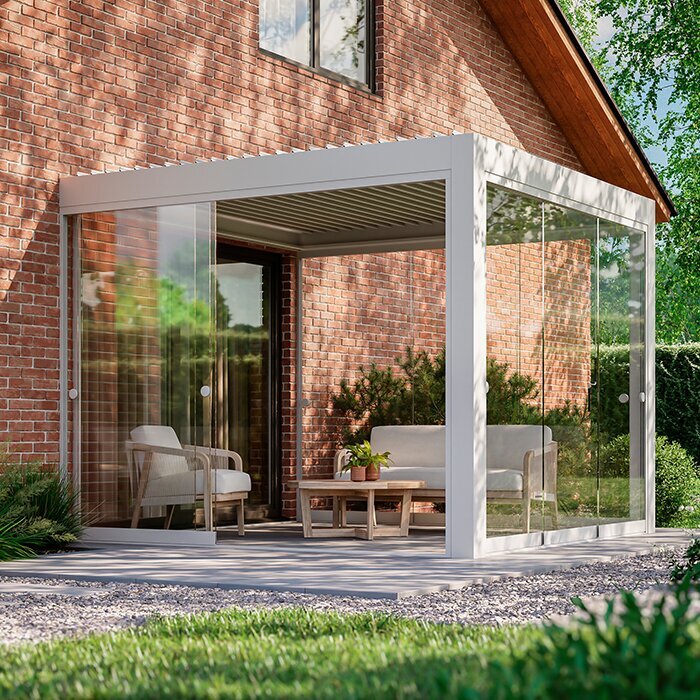
Explore practical pergola directions for compact patios, dining areas, lounge zones, modern homes, family gardens and more refined outdoor-living settings.
The aim is not simply to admire pictures, but to match each visual direction with suitable dimensions, intended use and structure.
Shade is only one contribution a thoughtfully chosen pergola makes. It can alter the entire character of a patio, giving an otherwise vacant surface the identity of an outdoor living space.
The right aluminium pergola can give an unused area a place for open-air meals, a peaceful seating corner, an inviting setting for company or a neatly composed garden escape. Their appeal comes from combining crisp architectural form with robust, easily maintained materials and a refined presence outdoors.
When looking for fresh ways to plan a patio or garden pergola , look beyond attractive photographs and consider how the setting will serve daily life. Limited patio space calls for another approach than an expansive garden, while family meals impose different needs from quiet lounging. Where paving adjoins the home, an wall-mounted pergola, while an open garden may benefit more from a freestanding pergola .
For Irish customers, Bloomcabin presents three clear directions: a traditional standalone aluminium structure, an attached model that continues the home’s lines, and a bioclimatic pergola for a more sophisticated level of outdoor comfort. Browse all solutions in the greenhouses and conservatories category.
If you are just starting, the general guide Planning Your Aluminium Pergola is a useful first read. To compare types, see Bioclimatic or classic pergola and Attached Pergola or Standalone Design. For detailed planning, the pergola size guide, pergola foundation guide and aluminium pergola FAQ are also especially useful.
Find the right Bloomcabin option quickly
Want to compare suitable products and guides rather than simply collect ideas? These internal pages can support your next decision.
Idea 01
Create a compact patio retreat with a small pergola
A pergola need not extend across an enormous outdoor space.
On a modest patio, consider forming a snug escape that accommodates a pair of comfortable seats, a small occasional table and some welcome breathing room. The result can suit coffee before the day begins, a quiet drink later on, time with a book or simply a more resolved-looking patio.
Careful scale is central to this arrangement. A compact aluminium frame chosen in proportion to its surroundings can look poised rather than imposing on limited paving. It marks out somewhere distinct to sit while leaving the remainder of the terrace visually and physically open.
For a smaller patio, start by reading the pergola size guide. Use it to assess dimensions alongside your furniture, clear walking routes and the proportions of the paved area.
Idea 02
Make outdoor meals the focus of the patio
A much-loved approach in gardens is to let the pergola mark out a recognisable place for eating outside.
It is particularly effective on paving close to the rear of a home, where the structure provides a visual transition from interior rooms into the garden. Meals acquire a more comfortable, intentional setting, and the patio gains a clear centre of activity.
The orderly lines of aluminium frame a dining table especially neatly. Compared with temporary forms of shade, the arrangement can appear established and architecturally considered. If regular family meals or evenings with friends are central to your plans, dedicating the covered area to dining is a particularly convincing direction.
For meals, consider the classic Bloomcabin pergola when the table will occupy open paving or a separate garden position. Where dining takes place against the building, the Bloomcabin wall pergola may be the more logical option.
Allow generous dimensions for this arrangement. Correct proportions make dining comfortable; insufficient clearance around a table can make an otherwise appealing layout difficult to use. Consult the pergola size guide can help.
Idea 03
Arrange a relaxed seating space rather than a dining setting
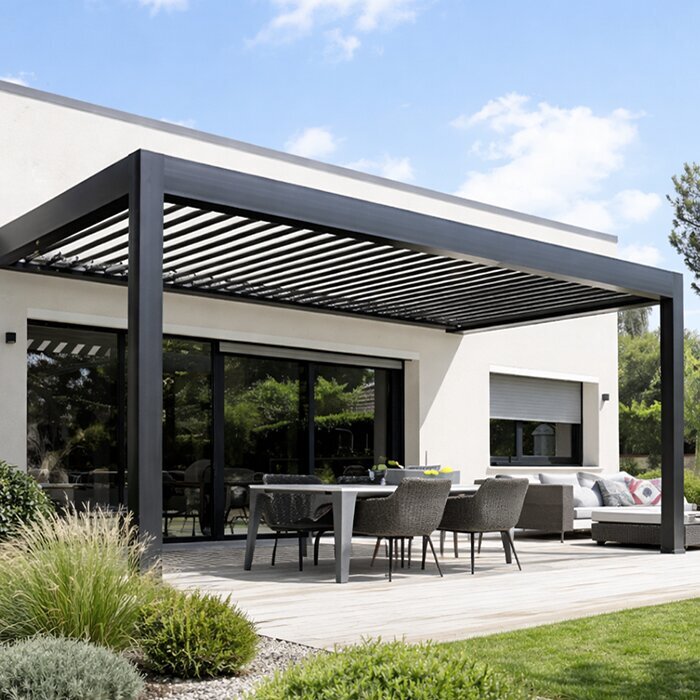
Many homeowners automatically picture a dining table beneath a pergola. Some of the most appealing patio pergola ideas are designed around lounging instead.
Instead, imagine a sofa paired with two easy chairs, a low table and softly layered illumination. This combination has a different character altogether: it is quieter, less formal and centred more clearly on relaxation and everyday ease.
Choose this approach when unwinding is more important than serving meals to company. It can also suit a spot selected for its outlook across planting, even when that position lies farther from the house.
For a pergola planned chiefly as an open-air sitting room, consult Bioclimatic or classic pergola is helpful, as comfort, light control and future additions become particularly important.
Idea 04
Continue the home’s architecture with an attached pergola
A particularly effective scheme can make the exterior setting feel like a continuation of the home’s architecture.
That is where an attached pergola deserves consideration. Fixed alongside the building, it can read as an intentional extension of the paved area rather than an isolated object. The arrangement is especially compelling outside the principal sitting area, kitchen or indoor dining space.
This can be a considered choice for many properties because the building’s architectural rhythm appears to continue into the garden. Instead of looking newly placed against the façade, the structure can feel integral to the overall composition.
To link the patio directly to the house, view the Bloomcabin wall pergola . To decide between an attached and freestanding design, see Attached or standalone pergola? .
Idea 05
Mark out a separate garden destination with a standalone pergola
While wall pergolas suit patios beside the house, freestanding models can make an even stronger statement in open garden settings.
With no wall determining its location, a standalone model allows greater choice. Position it in the centre of paving, deeper among the planting, alongside a border or wherever an outdoor destination would be most useful. It then serves as its own practical feature while also contributing a deliberate visual landmark.
A freestanding aluminium pergola works particularly well for creating clear zones in a larger garden. It can organise the landscape, anchor an open patio or define a purposeful place for sitting, dining or unwinding.
For a self-contained garden area, the freestanding Bloomcabin pergola is a fitting option. As planning becomes more detailed, consider both the size guide and foundation guide .
Idea 06
Use a dark pergola for a distinctly modern look
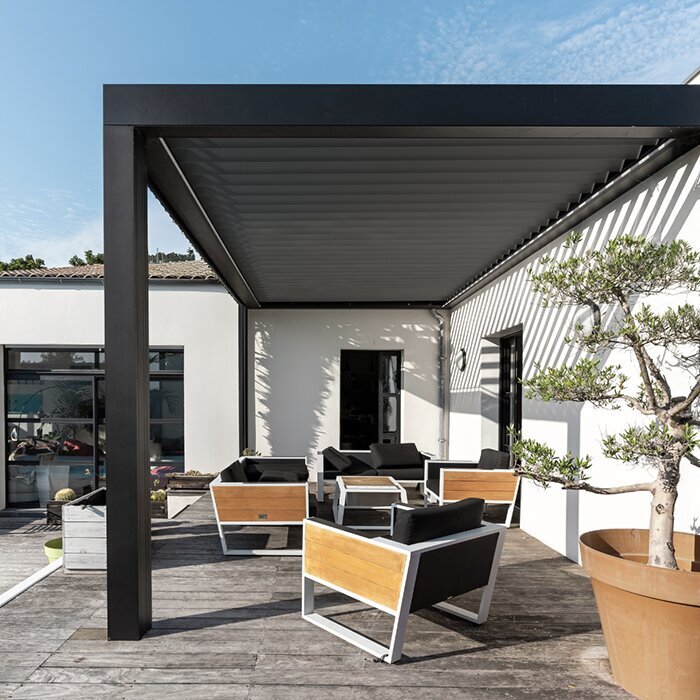
Dark pergolas are among today’s strongest contemporary pergola ideas.
Against pale render, light paving, abundant planting or a pared-back layout, deeper-coloured aluminium can create a crisp contrast. The darker outline lends definition to the exterior composition and can give the whole installation a stronger architectural quality.
Contemporary buildings lend themselves naturally to this treatment, although a traditional terrace can also gain contrast and elegance from it. Where the desired character is assured, uncluttered and current, a deep finish is well worth exploring.
Colour and proportion should always suit the house. Bloomcabin pergola pages show how different RAL colours, sizes and aluminium profiles can change a patio’s character, especially for the classic pergola, wall pergola and bioclimatic pergola.
Idea 07
Use a pale finish to keep the patio bright and welcoming
Deep, dramatic colour is not the only successful treatment for a pergola.
A brighter finish can be the better answer when you want the patio to appear open, easy and inviting. On limited paving or in a space receiving plenty of sun, paler aluminium may keep the frame visually light while still giving the arrangement definition.
This is particularly effective with light façades, warm stone surfaces or softer, Mediterranean-inspired and light-led outdoor spaces. A pale aluminium pergola can feel fresh and refined with calm outdoor furniture and clear garden planting.
To weigh up darker and brighter finishes, browse the ranges for the Bloomcabin pergola, wall pergola and bioclimatic pergola.
Idea 08
Give a long, narrow patio better structure
A patio may have an elongated footprint instead of a balanced square shape, making its layout harder to resolve.
A pergola can bring order to that type of footprint by dividing an otherwise indistinct stretch of paving into a purposeful area. Placed thoughtfully along a long terrace, its frame establishes a visual centre and helps the surrounding exterior composition appear calmer and better proportioned.
That makes it an especially practical idea for awkwardly proportioned patios. Rather than treating the shape as a problem, use a pergola to make the space feel purposeful and coherent.
For long or narrow patios, selecting the right size is crucial. The pergola size guide helps plan length, depth, furniture and circulation space.
Idea 09
Plan a family-friendly pergola setting
Some pergola ideas are primarily stylish. Others stand out because they work well every day.
Designing for family life means allowing comfort, circulation and practical daily activity to coexist. You might provide ample clearance around the table, give adults somewhere to sit while children have room nearby, or combine active and restful uses within one arrangement without allowing it to feel congested.
In a family garden, visual drama is rarely as valuable as day-to-day usefulness. Favour an arrangement that makes time outside more convenient and enjoyable. A structure that supports the way everyone actually uses the terrace will generally prove more rewarding than one selected chiefly for appearance.
Where relatives and visitors are likely to gather regularly, address the model, its dimensions and the supporting base together from an early stage. Begin with the practical pergola guide and then review the pergola foundation guide.
Idea 10
Create a pergola for guests and sociable evenings
For anyone who often entertains, plan the covered area as a recognisable setting for company and conversation outdoors.
A hospitable arrangement needs to feel spacious, open and straightforward to circulate through. It might hold a generous table, a cluster of conversational seating or a blended plan that lets people stand, sit and pass one another naturally during an evening together.
Overly compressed schemes are less comfortable when company arrives. Give the structure enough breadth and visual openness to accommodate both the number of people expected and the relaxed or lively mood you hope to establish.
Larger pergola sizes, quality equipment and sound preparation become important here. The pergola size guide and frequently asked aluminium pergola questions are helpful.
Idea 11
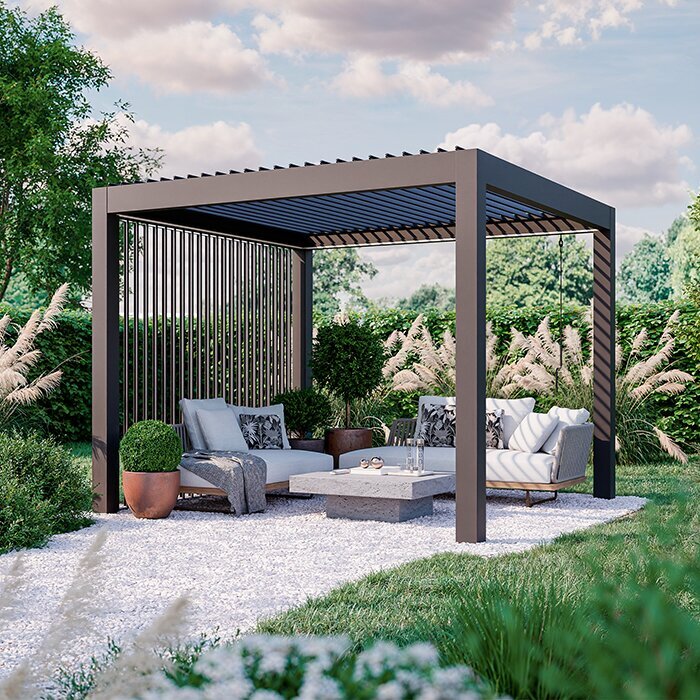
Put comfort first with a bioclimatic pergola
Some pergola ideas are chiefly visual; others aim to create a more sophisticated outdoor experience.
Where shade alone is not enough and the aim is a more adaptable, highly finished patio, consider the bioclimatic format. Its adjustable louvres, refined framework and scope for compatible additions give the covered space more of the character and versatility associated with an outdoor room.
It is an appealing route for homeowners seeking greater adjustability, an extended period of outdoor use and a more luxurious overall atmosphere. For this higher-comfort approach, the Bloomcabin bioclimatic pergola is the key product page. For a direct comparison, also read Comparing Classic and Bioclimatic Pergolas.
Idea 12
Plan illumination for enjoyable evenings beneath the pergola
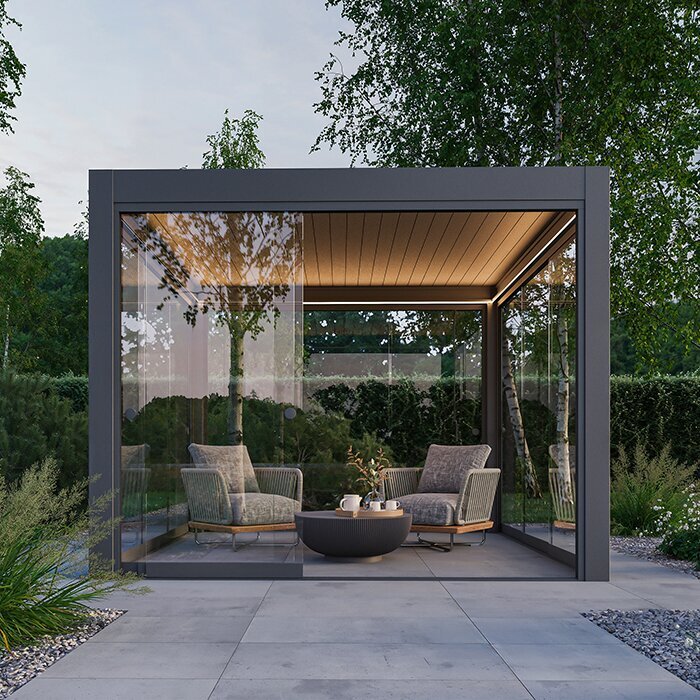
Some of the loveliest pergola ideas are not designed solely for daytime use.
Evening use can add significantly to what the space offers. Carefully planned illumination changes the patio’s atmosphere once daylight fades, helping the area feel warmer, easier to use and more inviting for a quiet night or time with guests.
These comfort ideas suit more refined outdoor-living concepts especially well. Alongside the bioclimatic pergola review the general advice in useful information.
Idea 13
Introduce side features for screening and stronger spatial definition
Much of a pergola’s appeal comes from remaining open and airy. Yet some ideas become even better with a little more shelter and enclosure.
Available side features vary with the pergola and its options, but they may provide additional privacy, greater screening from breezes and a more enclosed sense of place. They deserve particular consideration in exposed Irish settings or where the garden arrangement would benefit from a more sheltered character.
This approach suits bioclimatic pergolas and more premium outdoor concepts. Compare the bioclimatic pergola with the guidance in useful information.
Idea 14
Make the pergola the garden’s design focal point
Some pergolas are supporting features; others should become the real focal point of the whole outdoor area.
On a generous terrace or within a substantial garden, the pergola can become the leading architectural gesture rather than a secondary addition. Begin the wider landscape composition with its position and proportions, then organise paving, furniture and planting around that decision.
A standalone structure placed at a purposeful focal position is especially effective for this idea. It provides an organising point for the wider setting, allowing planted areas, hard landscaping, terrace furniture and routes through the garden to relate to one clear feature.
If the pergola is to become the garden’s focal point, first compare the freestanding pergola, wall pergola and bioclimatic pergola.
Idea 15
Select an arrangement that reflects how you live outdoors
Visual impact alone does not determine a successful pergola scheme. Lasting value usually comes from matching the design to your routine.
An impressive structure over paving that receives little use offers less than a modest arrangement enjoyed throughout the week. The most considered plans therefore begin with real habits—how, when and with whom the exterior space will be used—before turning to visual treatment.
Frequent open-air meals point towards a dining arrangement, while quiet downtime may favour comfortable lounge seating. An attached structure can continue the home’s architectural lines onto the patio. Where adjustability and a more highly finished outdoor setting matter most, the bioclimatic format may provide the better answer.
If you are still undecided, use your pergola guide collection: the general buying guide, size guide, comparison articles, the foundation guide and aluminium pergola FAQ.
Finding the pergola arrangement that belongs at your home
Being attracted to several directions is entirely understandable. Do not decide solely on which scheme appears most impressive by itself. Instead, identify the arrangement that responds convincingly to the dimensions of your paving, the architecture of the property and your normal routine outside.
Ask yourself these honest questions:
What is the pergola’s main purpose?
Once the furniture is positioned, how much usable patio area remains?
Would an attached structure or an independently positioned pergola work better?
Do I want restrained, elegant framing or a more highly finished room outdoors?
Will I use the pergola mainly for dining, relaxing, guests or all of these?
Clear answers to those practical questions will usually reveal which pergola direction makes the most sense.
To narrow the direction further, these pages are especially useful:
Relevant Bloomcabin guides and product pages
As the scheme takes shape, use these internal resources to consider the product format, dimensions, supporting base, comfort features and future planning together.
Conclusion: the best pergola idea fits your everyday life
Cover is only one part of what a pergola contributes. A well-judged structure orders the exterior layout, makes garden space easier to enjoy and can give the relationship between home, terrace and planting a more complete and considered appearance.
For a simple, clear option, the Bloomcabin pergola offers an uncomplicated starting point. For a patio adjoining the house, the Bloomcabin wall pergola suits an attached setting. For greater comfort, flexibility and a more refined outdoor-room feel, the Bloomcabin bioclimatic pergola is the suitable direction.
Find further decision support in useful information or on the about us page.
