



Classic or Bioclimatic Pergola: Finding Your Best Fit
Use this informed comparison to weigh classic aluminium against a bioclimatic design. It examines appearance, comfort, likely use, cost and the distinctions that shape a sound choice.
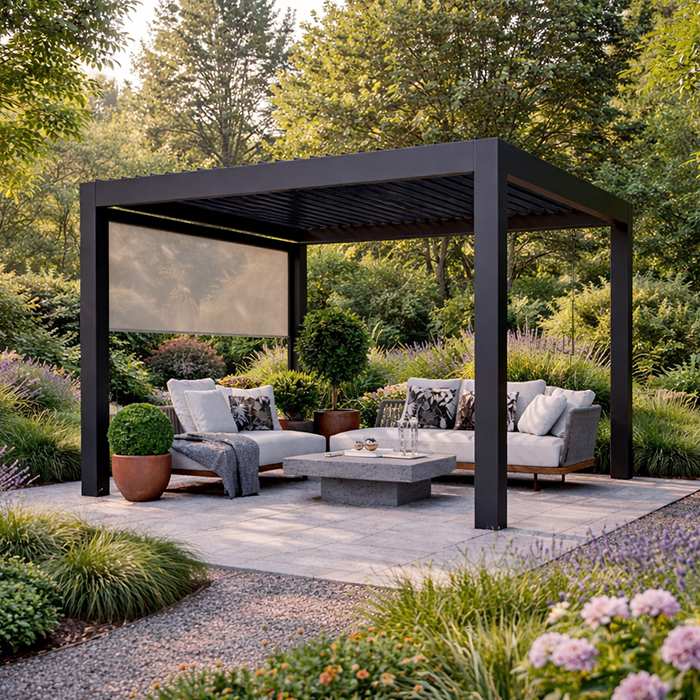
Perhaps you have already decided that a pergola belongs on your patio, yet remain torn between classic aluminium and a bioclimatic format. The points below help you judge which direction matches your space and routine.
Rather than asking which sounds more advanced, consider what you will genuinely use. Irish sites vary in exposure, so everyday habits, shelter and drainage deserve a place beside appearance when you make the decision.
Both approaches appear in the Bloomcabin range: Bloomcabin Pergola and Bloomcabin Bioclimatic Pergola. Looking at their different strengths will help you reach a considered conclusion.
Where does the practical difference between these pergolas lie?
Appearance is only one part of it; the useful dividing line is the amount of control and adaptability you expect in ordinary use.
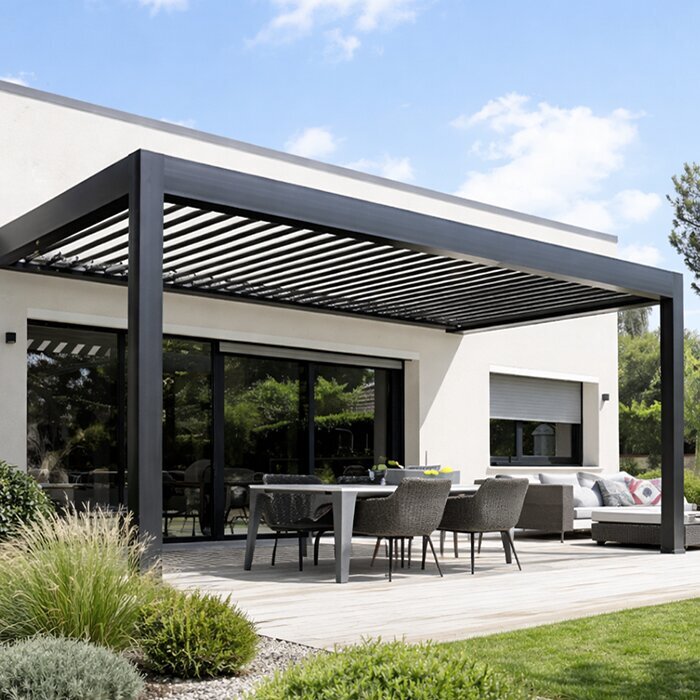
With a classic aluminium design, visual order and longevity take priority. Its clean structure can define a patio or garden elegantly, giving the setting a finished architectural character without introducing needless intricacy.
The bioclimatic alternative is intended for owners who expect their patio to play a bigger part in daily life. Its technical character favours adaptability and a higher-comfort experience rather than serving mainly as an attractive overhead feature.
Where is a classic aluminium pergola most at home?
The classic route works well when you want a polished, thoughtfully designed outdoor feature while keeping the project and the eventual ownership experience refreshingly straightforward.
It tends to appeal to buyers who:
- favour crisp lines and contemporary restraint;
- put lasting materials ahead of added complexity;
- want excellent quality without turning the purchase into a complicated exercise;
- hope to give their outdoor area an elegant structure.
Where modern looks, solid quality and uncomplicated daily ownership carry the most weight, the classic pergola is often the more logical answer.
What makes the bioclimatic alternative worthwhile?
A bioclimatic pergola deserves consideration when improving how the patio feels and functions matters just as much as giving it a more refined appearance.
It particularly suits people who:
- spend time outdoors on a regular basis;
- would welcome added comfort and greater choice from day to day;
- are drawn to a more technical, elevated solution;
- regard the patio as another living area rather than an occasional seat.
Households that spend plenty of time on the patio are more likely to appreciate the added possibilities and refined experience that the bioclimatic format provides.
How does everyday comfort compare?
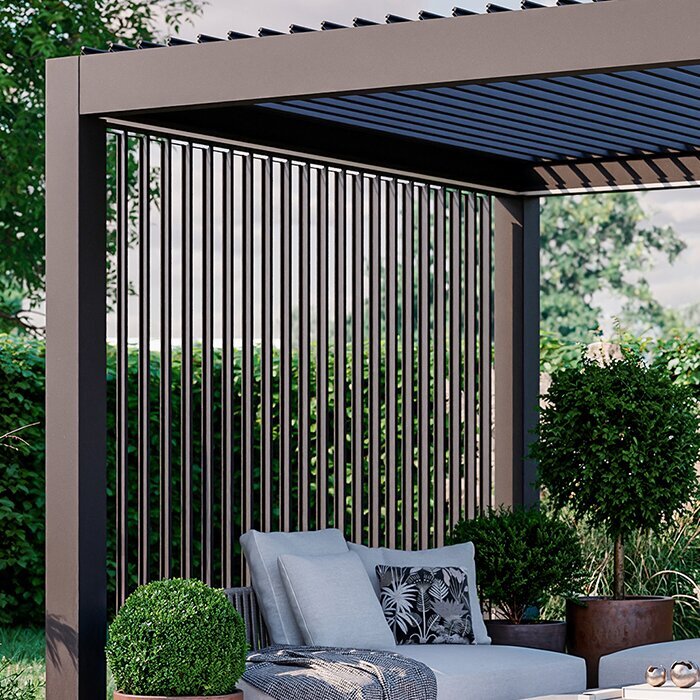
Judged solely by adaptable comfort, the bioclimatic model generally comes first. That is not a verdict against the classic design: each answers a different expectation and can be the sounder purchase in the right setting.
A classic structure answers the need for an orderly, attractive and useful patio feature. The bioclimatic route makes more sense where the area is used intensively and additional control will earn its place in the household routine.
Instead of ranking the two designs in the abstract, ask yourself: “What part will this patio really play in my week?”
How does each option sit beside a modern house?
Either design can complement contemporary architecture, but each creates its own visual mood.
The classic version usually gives a composed and architecturally disciplined impression. It is especially effective where clean geometry, minimal detailing and an understated exterior define the house.
By contrast, the bioclimatic version tends to feel bolder, more technical and more luxurious. It belongs naturally in a scheme that combines modern styling with a conspicuously elevated outdoor experience.
What role should the budget play?
Do not reduce the comparison to “lower priced” against “higher priced”. A better way to judge value is to ask: Which capabilities will genuinely earn their keep in my routine?
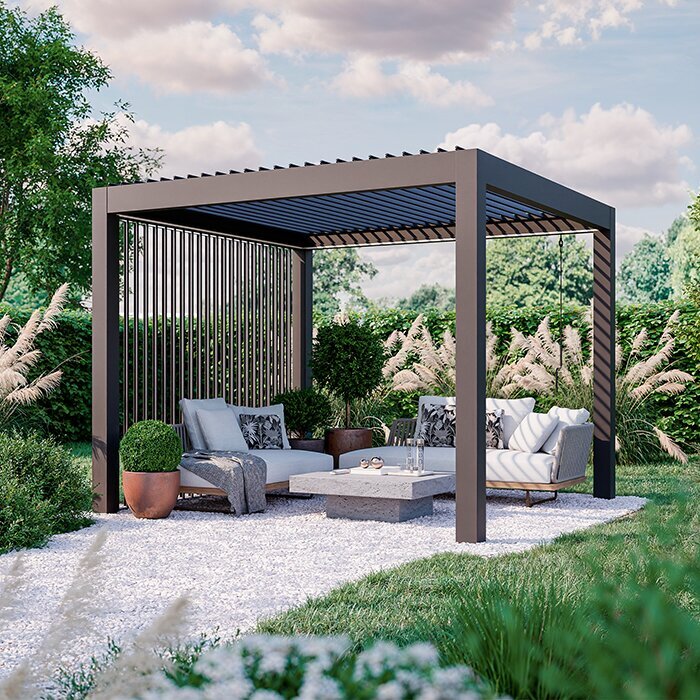
When your aim is a durable, attractive and contemporary patio setting, the classic option can strike the stronger balance between expenditure and practical benefit.
Where frequent outdoor living makes added comfort and adaptability genuinely useful, allocating more of the budget to a bioclimatic design may be easier to justify.
Choices that can lead you astray
- letting appearance decide before considering ordinary routines;
- treating the bioclimatic version as the default answer for every project;
- dismissing the classic design as overly simple when its restraint may suit the setting perfectly;
- comparing purchase cost without examining the benefit you will use;
- planning around an imagined patio lifestyle rather than a realistic one.
A successful choice reflects the way you actually spend time outdoors, rather than an ideal occasion that may rarely happen.
Which description matches your plans?
The classic design may suit you when…
your priorities are durable materials, clean styling, an uncomplicated decision and an elegant setting for the patio.
The bioclimatic design may suit you when…
added adaptability, everyday comfort and a distinctly more premium outdoor character matter to you.
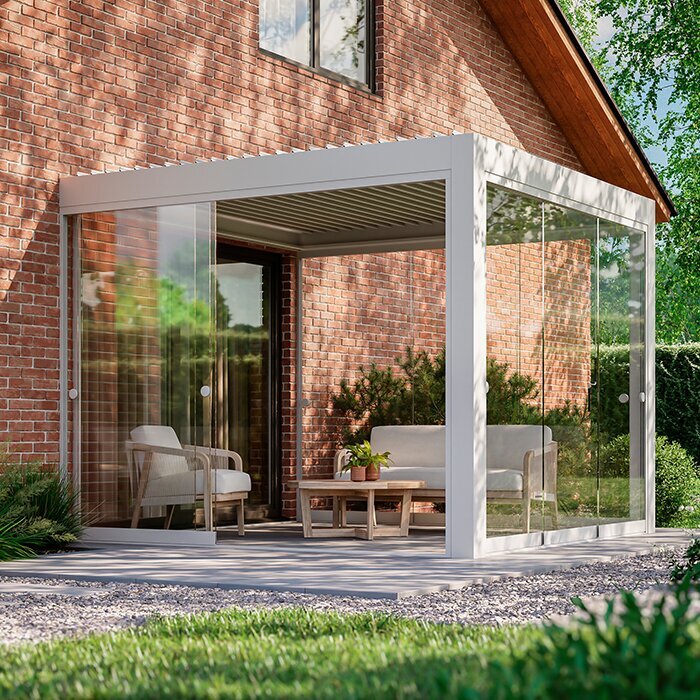
For a concise rule of thumb, frame the decision this way: the classic route favours architectural simplicity, whereas the bioclimatic route gives greater weight to adaptable comfort.
Questions buyers often ask
Does the bioclimatic option always come out ahead?
Not at all. Extra adaptability does not make that design correct for every household. Its advantages carry most weight when they will be used regularly; many patios are better served by the clarity and simplicity of a classic pergola.
What works well on a smaller patio?
For limited space, the classic format is often entirely adequate, particularly when the main objective is a neat, stylish setting. The more revealing consideration is how regularly and in what way the patio will be used.
Can the classic design still feel upmarket?
Certainly. Classic aluminium can produce a refined, contemporary result. A premium impression comes from balanced proportions, sound material quality and thoughtful integration with the house and patio, not simply from adding more functions.
Who gains most from choosing the bioclimatic format?
It makes particular sense for people who spend substantial time on their patio and will appreciate the added comfort in practice. As the area becomes a more regular part of the routine, those benefits become more relevant.
Can either style be visually coordinated with the home?
Yes. Each type can form a coherent relationship with the building. Appropriate scale, careful positioning and a balanced visual connection among the pergola, façade and patio are what bring the overall composition together.
Set the priorities before selecting a design
Popularity is not the useful test. Look instead for the pergola that answers your patio layout, daily habits and the degree of comfort you will genuinely appreciate.
