



How much space should your patio pergola cover?
Use this detailed sizing guide to compare 3x3, 3x4, 3x5, 3x6, 4x4, 4x5 and 4x6 pergolas, allowing for furniture, movement and everyday use on your patio.
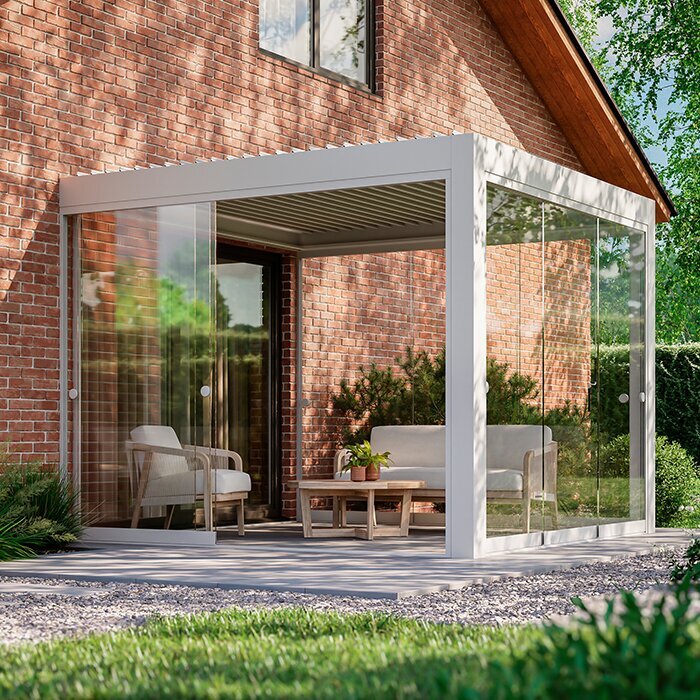
Choosing the footprint is one of the earliest decisions when planning a patio in Ireland. Style, colour and pergola type may attract attention first, but dimensions usually have the greatest effect on how balanced, comfortable and welcoming the finished outdoor area feels.
Insufficient cover can make a terrace feel confined, while an oversized pergola may dominate the garden, upset the overall proportions or appear less natural than expected. Suitable dimensions must fit the available area, yet they should also reflect how you plan to spend time outdoors, from quiet mornings to meals with guests.
Comparing a 3x3, 3x4, 3x5, 3x6, 4x4, 4x5 or 4x6 pergola is therefore about daily practicality as well as measurements.
Bloomcabin offers aluminium pergolas in several dimensions, with each footprint creating a different kind of setting. A 3x3 pergola can frame a compact seating corner, while a 4x6 version allows far more space for meals, relaxation and visitors. The right choice depends on what you want the covered patio to achieve every day.
For a broader comparison of pergola styles and layouts, start with Selecting an aluminium pergola: a practical guide. To weigh adjustable features and comfort levels, continue with Bioclimatic or standard pergola: how should you choose? If the remaining choice is between attaching the structure to your home and placing it elsewhere, see Lean-to or freestanding pergola? This guide focuses instead on the dimensions that will make practical sense for your patio.
Why the pergola footprint deserves attention
A pergola does more than cast shade: it shapes space.
The covered zone could contain a dining setting, lounge furniture, a quiet place for coffee, an area for visitors or simply a patio that feels more deliberate and orderly.
Alter the dimensions and the character of that entire zone changes with them.
A modest footprint can form an intimate retreat. Mid-sized designs allow more varied arrangements, while a broad structure may give the garden terrace the character of an outdoor living room.
Choosing the largest outline that fits the empty terrace is rarely enough. Sketch the intended furniture first, including the room needed to pull back chairs and walk between zones. Then consider whether everyday movement, serving and conversation will still feel relaxed beneath the pergola.
Searches for 3x3, 3x4, 3x5, 3x6, 4x4, 4x5 and 4x6 pergolas usually point to a practical layout problem. The measurements matter because they shape how comfortably the completed patio will function.
Set the purpose before choosing a size
Start your sizing decision with one simple question:
What must the pergola accommodate in everyday use?
That answer gives the bare measurements a meaningful context.
Where only two chairs and a modest table need shelter, either a 3x3 or 3x4 pergola may provide all the room required.
Plans centred on a dining table often benefit from the extra capacity of 3x5, 3x6 or 4x4.
Where you want separate places for dining and lounging, the additional capacity of 4x5 or 4x6 will usually be more practical.
Reserve circulation space from the outset. A pergola must accommodate more than the furniture itself: people need to walk past, chairs need room to move, and food must be served without obstruction. An unfurnished plan can look generous, only to feel unexpectedly tight once every table, seat and route is included.
3x3 pergola – 9 m²
On a smaller terrace, the square 3x3 format forms a neat, proportionate covered area without taking command of the entire setting.
Its 9 m² footprint is generally better suited to a comfortable outdoor nook than to an extensive space for entertaining several groups.
The 3x3 format may suit:
- a terrace where space is restricted
- a close, comfortable seating group
- a pair of armchairs beside a small coffee table
- an uncluttered and simple garden look
- anyone seeking shelter that will not command the whole terrace
A search for a 3x3 or 9 m² pergola often reflects this brief: a proportionate setting for conversation, reading or coffee, with simple lines and a comfortable sense of enclosure.
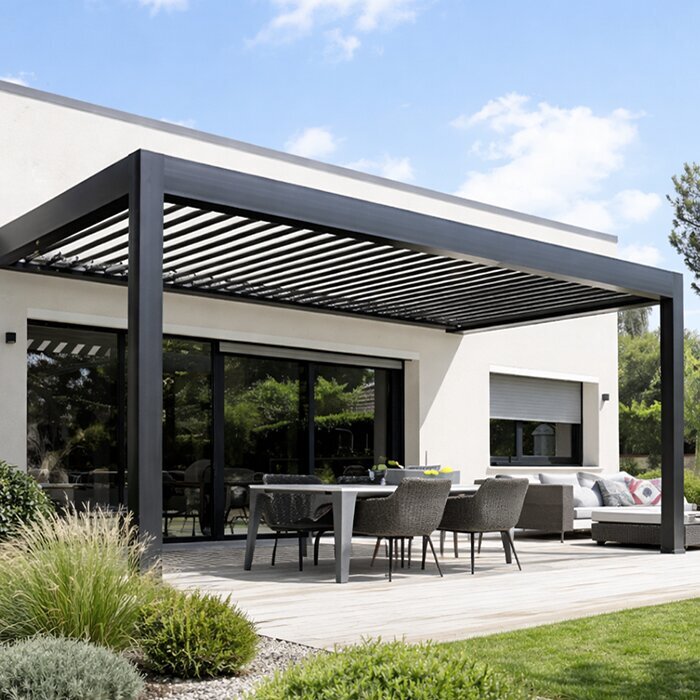
3x4 pergola – 12 m²
The rectangular 3x4 footprint introduces useful flexibility while remaining manageable on many modest patios.
At 12 m², it provides a noticeable increase when 3x3 leaves too little clearance. Furniture can be arranged with greater freedom, and movement becomes easier, without immediately committing the patio to a large structure.
A 3x4 pergola deserves consideration when:
- the lounge corner needs some extra breathing room
- a small dining arrangement
- the terrace is modest but should retain an open feeling
- additional usable area is needed without stepping into a much larger format
This footprint occupies a useful middle position among the compact choices. It accommodates more than 3x3 while remaining straightforward to place on a smaller garden terrace.
3x5 pergola – 15 m²
At 3x5, the covered area starts to support a much broader range of day-to-day patio activities.
The 15 m² footprint has practical room for a dining arrangement, deeper lounge furniture or a plan with less congestion. It suits households seeking meaningful shelter and flexibility without moving immediately to the broadest options.
A 3x5 pergola is especially suitable for:
- a dining table with comfortable space to walk around it
- a family terrace arranged for comfortable daily use
- terraces where visual appeal and everyday usefulness are equally valued
- a mid-sized footprint that must blend into the existing terrace
For many patios, 3x5 marks the point where the cover begins to create a genuinely versatile setting. It provides enough area to arrange furniture with purpose while remaining easier to integrate than the largest pergola formats.
3x6 pergola – 18 m²
The long proportions of a 3x6 pergola can answer the constraints of a narrow or extended patio particularly effectively.
Across 18 m², dining can occupy one end while the opposite end remains available for circulation or another activity. This arrangement makes good use of sites where length is plentiful but width is more restricted.
The 3x6 format is worth assessing when:
- the patio follows an elongated rectangular shape
- your dining layout benefits from extra length
- unobstructed paths beside the furniture are important
- generous shelter is wanted without extending the width to 4 m
Square structures may come to mind first, but an elongated alternative can use a narrow site far more efficiently. A comparison of 3x6 and 18 m² pergolas often begins with the need to gain useful length.
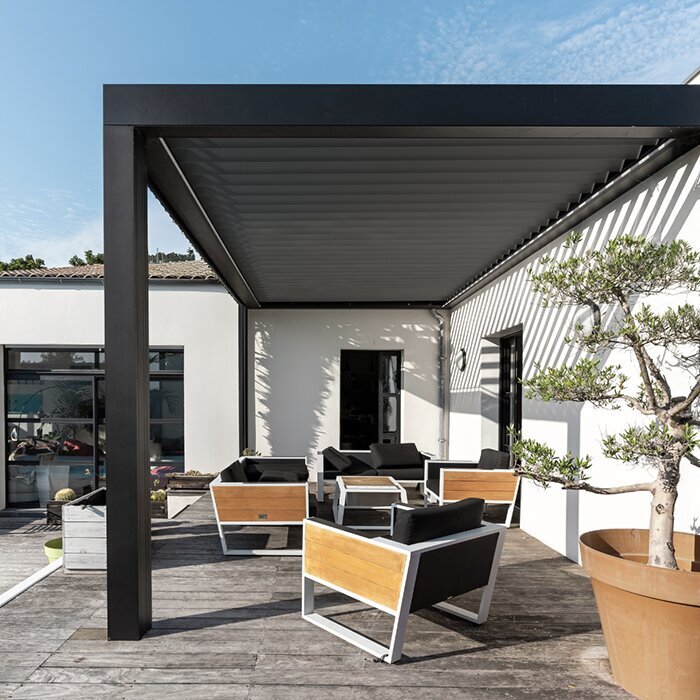
4x4 pergola – 16 m²
In contrast to the longer 3x5 and 3x6 formats, the 4x4 layout establishes a centred, square outdoor zone.
The symmetrical 16 m² outline often complements a square or almost square terrace. Its balanced width and depth can organise the patio around a central dining or lounge setting and give the covered area a strong, orderly presence.
Consider a 4x4 pergola for:
- terraces with broadly even width and depth
- centrally positioned dining furniture
- balanced layouts of lounge furniture
- a medium or generous pergola that should make a visual statement
Once furnished, 4x4 can seem more generous than expected because its width opens up the setting in both directions. It is a useful option when symmetry, lateral space and a centred arrangement are priorities alongside total floor coverage.
4x5 pergola – 20 m²
A 4x5 footprint gives the sheltered section of the patio the presence of a clearly established outdoor room.
Across 20 m², there is scope for a complete furniture arrangement on a larger terrace. The format offers noticeable architectural presence while retaining comfortable space for seating, circulation and the practical routines of outdoor dining and relaxation.
A 4x5 pergola may be appropriate where:
- a dining table needs ample surrounding space
- substantial lounge seating is planned
- people must move easily between each item of furniture
- the sheltered terrace needs to support several different activities
Compared with the compact formats, 4x5 creates a noticeably more substantial covered setting. People considering 20 m² are often planning a fuller patio transformation with several furniture pieces and a wider range of uses.
4x6 pergola – 24 m²
At 4x6, this is the largest footprint covered in the guide and suits projects where the pergola is intended to become a major feature of the outdoor area.
Its 24 m² allows for elaborate layouts, bigger groups and more than one outdoor activity. Instead of covering a single seating arrangement, it can form a spacious setting for dining, unwinding and spending extended periods in the garden.
The 4x6 format may suit the project when:
- there is ample patio space or a broad garden area
- dining and lounging require their own distinct zones
- welcoming guests is a frequent outdoor activity
- the pergola should become the visual and practical centrepiece outdoors
Interest in a 4x6 or 24 m² pergola often indicates a well-developed plan. At this stage, buyers generally know that their chosen seating, dining arrangement and intended uses need a broad area of cover.
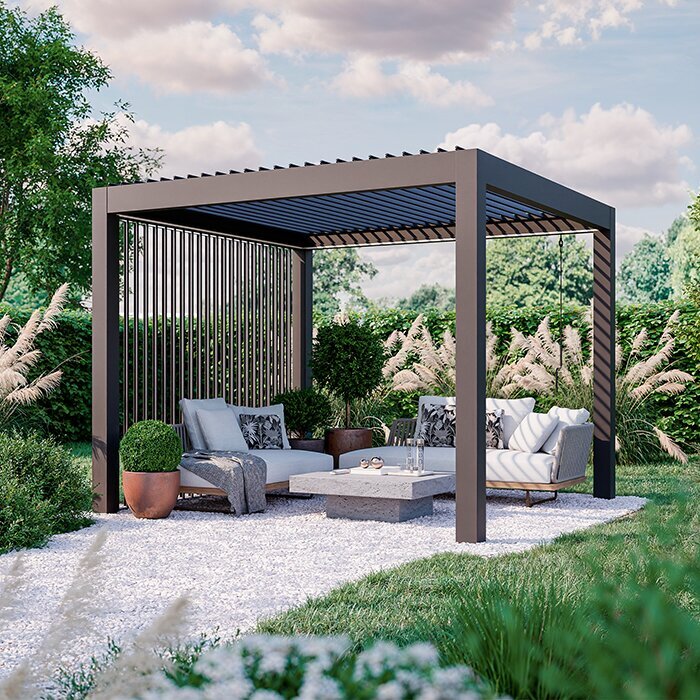
Choosing between compact, mid-sized and expansive
A quick first step is to sort the available footprints by how much furniture and activity each one must accommodate, rather than concentrating on measurements alone.
Compact pergola footprints
The 3x3 and 3x4 formats are suited to modest patios, uncomplicated furniture arrangements and relatively light use.
Mid-sized pergola footprints
The 3x5, 3x6 and 4x4 options balance useful room, pleasing proportions and practical everyday placement on many terraces.
Expansive pergola footprints
The 4x5 and 4x6 formats support schemes where the covered zone becomes a prominent part of life in the garden.
Grouping the choices this way discourages an undersized purchase made merely because the most compact structure can be squeezed inside the available boundaries.
Which dimensions suit each use?
For a quiet reading or coffee corner, begin by assessing the proportions offered by 3x3 and 3x4.
A household dining area will usually warrant a close comparison of the 3x5, 3x6 and 4x4 footprints.
For a generous lounge or a patio serving several purposes, assess 4x5 and 4x6 before choosing a smaller footprint.
If your terrace adjoins the house and you are considering an attached design, compare the two placements in Lean-to or freestanding pergola? It offers useful guidance on that decision.
If roof adjustment, additional comfort and a more premium configuration also matter to you, turn to Bioclimatic or standard pergola: how should you choose? It provides another useful comparison.
Sizing errors worth avoiding
Measuring only the vacant floor overlooks everything that will occupy or border the covered zone.
Furniture scale is particularly easy to underestimate. A deep lounge set, dining table and pulled-back chairs can consume the apparently ample gaps shown on an unfurnished plan.
Circulation also needs a specific allowance. A comfortable terrace depends on keeping routes between the seats, house and garden unobstructed.
Concern about overwhelming the patio sometimes leads to a choice that is needlessly small. When the complete furniture plan is visible, a slightly larger footprint may actually look more balanced and settle more naturally into the surrounding terrace.
Selecting dimensions before establishing the purpose puts the process in the wrong order. Set out the intended activities and furniture first, then compare the footprints against the actual site.
Pairing dimensions with Bloomcabin designs
Consider the pergola's dimensions and construction style at the same stage of your planning.
If you want freedom to position the pergola away from the house, consider the Bloomcabin Pergola as the freestanding route.
When the patio adjoins your home and you prefer a more integrated setting, the Bloomcabin Lean-To Pergola could suit the site more effectively.
If adjustable features, extra comfort and a more premium finish appeal, review the Bloomcabin Bioclimatic Pergola among the available choices.
A practical order for reaching a decision is:
- work out the area your furniture and routine demand
- choose the pergola type appropriate to its location
- then refine the arrangement, comfort options and practical details
Pergola sizing questions
Will a 3x3 pergola be spacious enough?
It can be, particularly for compact seating or another simple patio arrangement. The square dimensions are well suited to a clearly defined outdoor corner, although they are less appropriate for an extensive entertaining area.
Is 3x4 a practical pergola size?
Often, yes. It adds valuable clearance when 3x3 feels restrictive, yet it remains compact enough for terraces that would be crowded by one of the substantially larger formats.
What size pergola works for family use?
Start with 3x5, 3x6 and 4x4. Your best option will depend on the terrace shape, the furniture you intend to use and how much circulation space the household needs.
Does a 4x5 pergola feel large?
Yes, it is a generous format. It can accommodate an extensive dining set or lounge arrangement and turn the covered section into a clearly defined outdoor living area.
When might 4x6 be too large?
A 4x6 pergola need not be excessive when the patio or garden is sufficiently spacious and the planned layout genuinely uses the 24 m². Sketching the full arrangement will show whether its scale suits the site.
Do side measurements or square metres matter more?
Both are useful. Dimensions such as 3x3 and 4x6 show whether the footprint is square or elongated. Areas of 9 m², 12 m², 15 m², 16 m², 18 m², 20 m² and 24 m² indicate how much ground is covered, helping you assess the genuinely usable space.
Making your decision
The right pergola is not simply the largest or smallest model that fits the terrace. Its footprint should make the planned furniture, movement and outdoor activities feel comfortable.
A 3x3 or 3x4 format is suitable when you want an elegant shelter for a compact setting.
For family life on the terrace, 3x5, 3x6 and 4x4 often provide a useful balance of flexibility and clearance.
Move towards 4x5 or 4x6 when you need enough covered space for meals, relaxation, visitors and a more complete outdoor living layout.
Well-judged dimensions allow furniture to sit comfortably, keep walking routes clear and make the whole patio noticeably easier and more enjoyable to use.
The aim is to look beyond measurements alone and select a pergola size that fits how you genuinely enjoy your time outdoors.
Browse freestanding pergolas Browse lean-to pergolas Browse bioclimatic pergolas
