



Should Your Pergola Meet the Wall or Stand Alone?
Use your patio plan to weigh an attached pergola against a freestanding frame, considering appearance, everyday use, siting and the final buying decision.
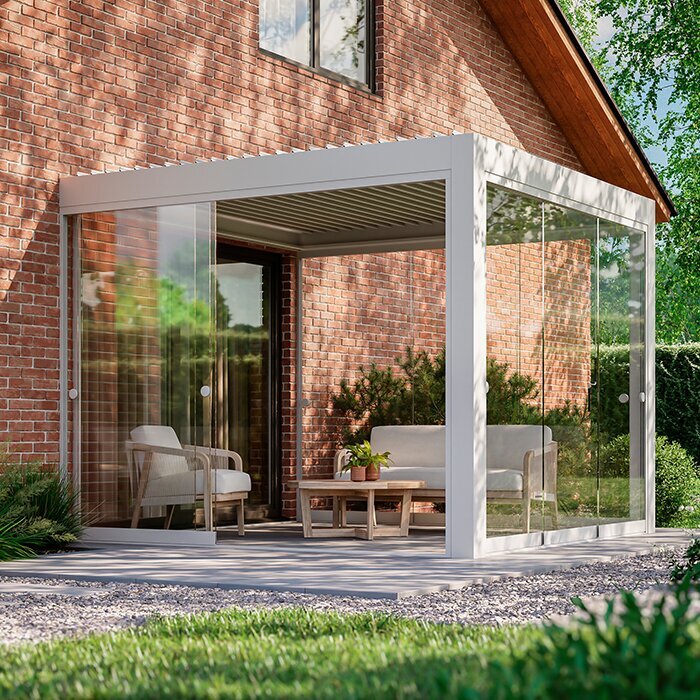
The first issue in patio planning is structural position: should the pergola connect to an outside wall, or stand entirely on its own?
At first glance, the options seem comparable. Both provide shade, shape an outdoor space and improve a patio or garden, yet suit different homes, layouts and routines.
That practical context matters more than a favourite catalogue photograph. For an Irish garden, orientation, local exposure and drainage also deserve attention alongside the way the patio connects with the home.
For customers in Ireland, Bloomcabin covers either arrangement. Select the Bloomcabin Pergola where an independent frame suits the plan, or the Bloomcabin Wall-Mounted Pergola when the structure should meet the building. If adjustable comfort and flexibility carry extra weight, examine the Bloomcabin Bioclimatic Pergola.
For a fuller overview of pergola planning, read Planning the Right Aluminium Pergola in Ireland. To consider comfort as a separate choice, read Classic or Bioclimatic Pergola: How Do You Choose? for a focused comparison of comfort and function.
How does wall attachment change the pergola plan?
The construction method does not tell the whole story; more important is how you want it to relate to the house.
Fixed to an exterior wall, the attached version can extend the home's visual lines across the patio. A self-supporting structure has no wall connection, allowing its position to be chosen more freely.
As a practical rule:
- Consider a wall-mounted pergola if the main patio adjoins the home and you want the structure to read as part of the architecture.
- Choose a freestanding pergola if flexible positioning matters or you want to create a distinct outdoor area.
Where does an attached design earn its place?
This arrangement suits a patio adjoining the home, especially when outdoor dining or relaxation should feel closely linked with the room inside.
Aligning the roof with the house often produces an orderly, integrated composition. It can also make movement through adjacent doors feel seamless while giving the patio edge nearest the home greater definition.
The wall-mounted format deserves particular consideration when:
- the principal patio runs beside the house;
- a unified building-and-garden composition appeals to you;
- existing architectural lines should continue outdoors;
- the edge nearest the house needs clearer definition;
- meals and other outdoor activities naturally begin at an interior room.
This arrangement can feel especially coherent with contemporary architecture. Start your product research with the Bloomcabin Wall-Mounted Pergola for this purpose.
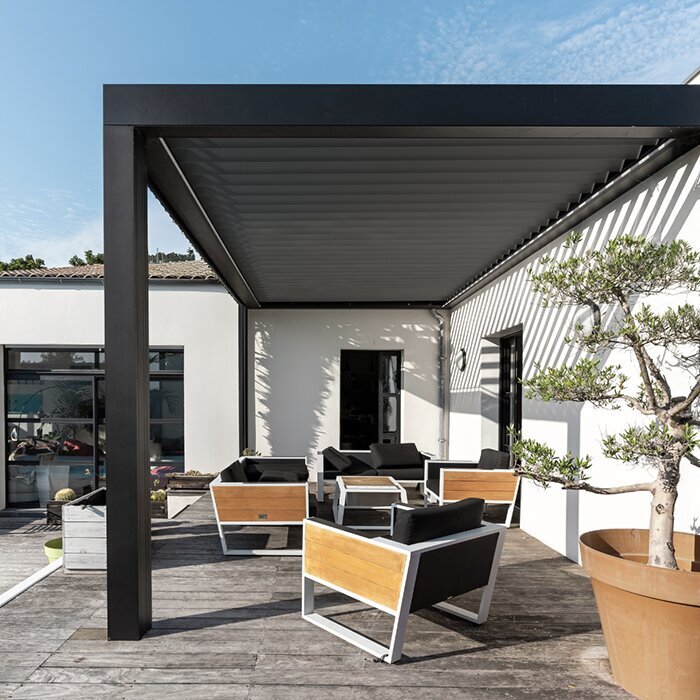
Where does a self-supporting frame work better?
An independent structure allows the most useful garden position to shape the project. The sitting area, view or patio arrangement can guide its location without requiring an exterior wall to dictate the plan.
This approach can shape a distinct lounge, dining spot or peaceful corner, placed on a spacious patio or another area prepared for the structure.
The freestanding format is worth prioritising when:
- the structure needs greater freedom of position;
- a suitable connection cannot be made at the patio wall;
- you want a separate gathering area;
- following the building line would restrict the arrangement;
- a larger patio or garden would benefit from a clearly marked outdoor zone.
For a project led by this kind of independence, explore the Bloomcabin Pergola range first.
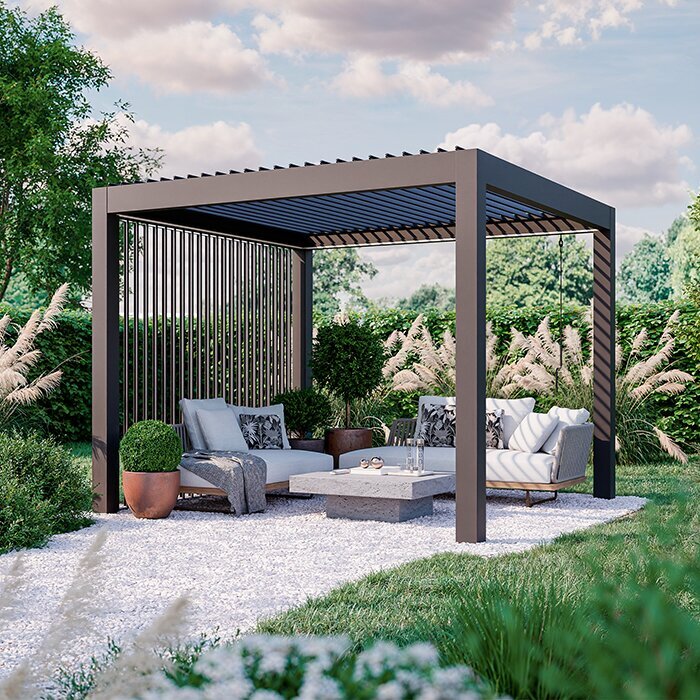
How should the pergola look within the property?
Neither format is automatically more attractive. Scale, position and the surrounding architecture decide whether the completed patio feels balanced.
With an attached frame, the wall, doors and terrace can form a restrained, continuous composition. This often suits projects where the home and outdoor area should appear deliberately connected.
By contrast, an independent frame can command its own area. Across a sizeable terrace or garden, it may organise seating and use while allowing the house to remain visually separate.
Rather than judging either model alone, picture its footprint, proportions and sightlines across the property where it will actually stand.
Which arrangement better supports everyday life?
Follow the household's normal movement through the space.
Choose attachment when meals and everyday activities regularly move through the doors nearest the terrace. A sheltered area immediately outside makes the journey between indoor space, outdoor table and seating straightforward.
For reading, meals, entertaining or unwinding in another part of the garden, a freestanding frame may be the practical answer. You can position it according to the activity and setting you have in mind.
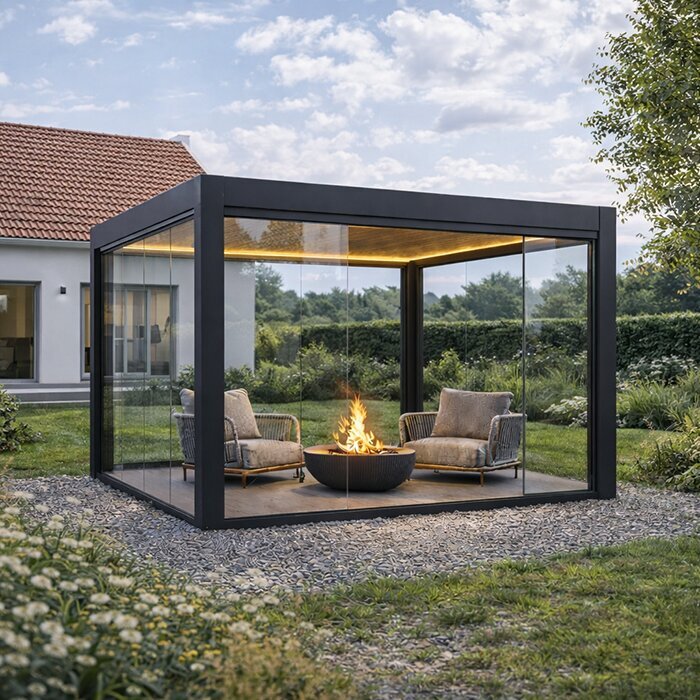
How do comfort features affect the choice?
It helps to treat this as a second, distinct decision.
Whether the structure uses an attached or independent layout is chiefly a question of siting. Selecting classic or bioclimatic construction instead determines more about operation, comfort and function.
Both layouts are capable of looking polished and substantial. If easier adjustment, closer control and a more luxurious way to use the terrace are priorities, add the Bloomcabin Bioclimatic Pergola in your comparison.
To compare those comfort and operating differences, see Classic or Bioclimatic Pergola: How Do You Choose?. It keeps roof operation and comfort separate from the initial siting question.
Practical points to review before choosing
Walk through the patio and consider these points before deciding:
- Does the main outdoor area begin at the building, or sit farther into the garden?
- Should the frame continue the home's architectural lines, or establish a visual identity of its own?
- Are you improving the space immediately outside a room, or planning another place for people to gather?
- Is visual unity with the house more important than having freedom over position?
- Will regular activities happen beside the house, or in a garden seating area arranged for a particular purpose?
Clear answers usually reveal which basic format serves the patio most convincingly.
For product details on care, guarantees and the available ranges, consult Aluminium Pergola Questions: Models, Care and Guarantees.
Common questions
Does a patio adjoining the home always require an attached pergola?
Not always, although it is frequently a natural arrangement. Where household activity flows through doors onto the patio, attachment can create a particularly direct and cohesive connection.
Does an independent frame allow more siting freedom?
Usually. Because no wall attachment fixes the position, a freestanding model offers more freedom for a broad terrace or a separate garden area.
Is one arrangement more contemporary?
Both may look convincingly modern. Your preference rests on whether a continuous extension from the house or an independent garden feature better fits the setting.
Must a freestanding pergola sit far from the building?
No. It may remain structurally independent while standing nearby, provided that position makes sense for the patio arrangement and the intended use.
When should a bioclimatic model enter the comparison?
Add it to the shortlist when adjustability, greater control and a more premium outdoor experience matter. Decide on the basic location first, then compare comfort and function.
Let your terrace needs determine the pergola
A striking brochure photograph should not make the decision for you. Look instead for a layout that complements the house, makes sensible use of the terrace and fits your normal outdoor routine.
View Wall-Mounted Models See Freestanding Options Compare Bioclimatic Designs
