
Aluminium or Cedar Greenhouse: Ownership and Care
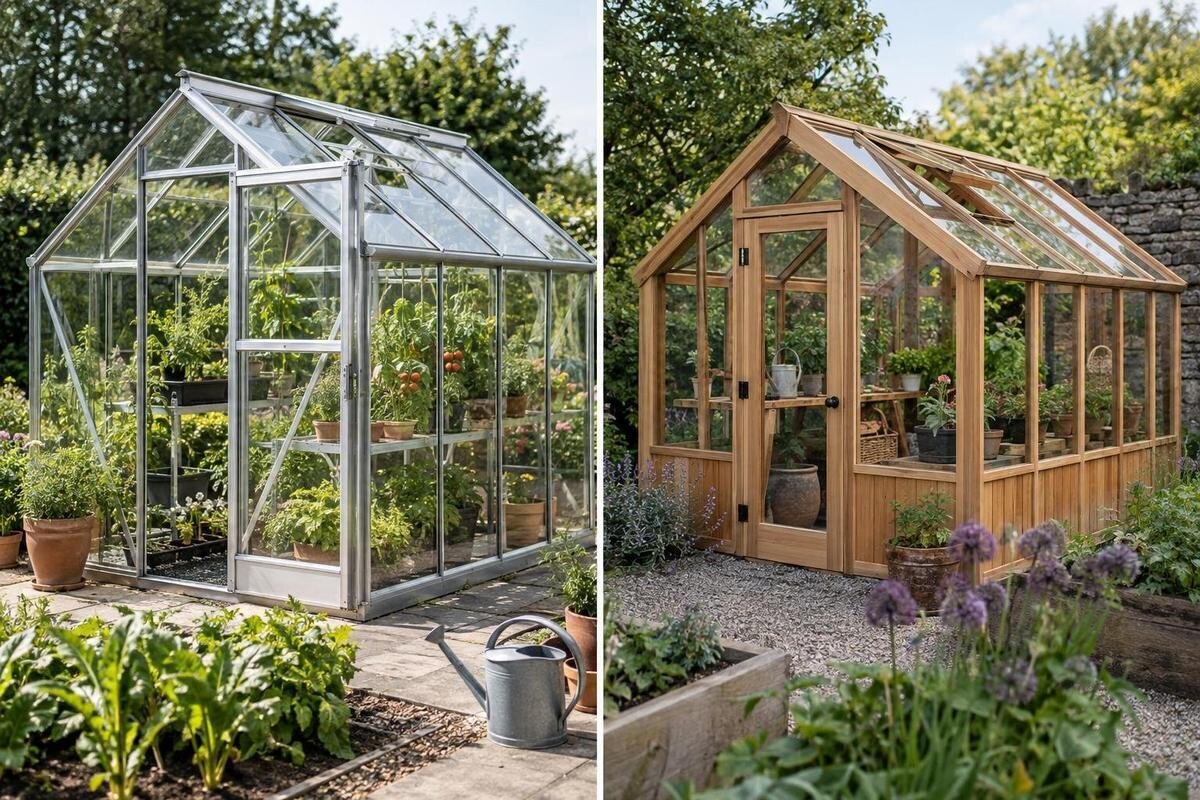
Greenhouse material guide
Choosing between aluminium and cedar greenhouses also means choosing the maintenance tasks you are willing to repeat. Aluminium avoids timber-specific treatment, but still needs cleaning and inspection; a cedar frame may need a particular finish or treatment, depending on its specification. Neither material is maintenance-free by definition. The useful comparison is between two complete, like-for-like structures and their written care schedules, not two material names on a product page.

01
What changes when the frame material changes?
Material affects the type of work, not the whole maintenance burden. An aluminium frame does not call for timber preservative or a timber coating, while a cedar frame may have a finish or treatment requirement set by its maker. Both still sit alongside glazing, doors, vents, fixings, drainage and a base, each with its own cleaning or inspection needs. A material label cannot tell you the full schedule, likely time commitment or cost. If a description says “low maintenance”, ask whether that means no timber treatment, fewer inspections or simply a finish that is easier to clean; those are different claims.
Compare complete, named models rather than an aluminium frame against an unspecified timber alternative. Get drawings and written specifications for the size, finish, glazing and included components you intend to buy; establish which parts are cedar and which are another material. If you shortlist the Classic aluminium greenhouse, record its chosen configuration alongside the cedar model you are considering. Include the care requirements for each finish and component in that comparison. A difference in included gutters, vents or glazing can otherwise be mistaken for a material effect. Ask whether recommended care affects any warranty or guarantee coverage, and get the answer in writing.
Routine care for an aluminium frame
Aluminium avoids timber-specific preservation, but it should not be treated as maintenance-free. Dust, pollen, soil splash and other deposits can cling to the frame and glazing, while dirt may gather around joints and moving parts. Use the cleaning method approved for the exact finish; a soft cloth or brush and suitable mild cleaner may be appropriate, but check the manual before adding detergent. Do not assume an abrasive pad, solvent or pressure washer is safe for every surface. Regular, gentle cleaning also makes it easier to notice a change in the coating, debris around a fitting or a loose connection.
During an inspection, look at connections, fasteners, corners where debris gathers, the surface finish and the operation of doors and vents. If the coating is scratched or marked, do not assume that any paint or repair product will be compatible; ask which finish system applies and how damage should be handled. If you are considering a Lean-to aluminium greenhouse, use that exact model when requesting cleaning and inspection guidance; a general statement about aluminium will not cover its finish and fittings. If you find a loose fitting, follow the manual or ask the supplier rather than improvising a repair. Keep the instructions with the greenhouse records if someone else may carry out the work.
02
What cedar care depends on
With cedar, first establish what the supplier means by the material description. Ask which cedar species and grade are used, which components are timber, and whether surfaces arrive unfinished or with a factory-applied finish. A frame sold as cedar may still include non-timber components, and care can differ between exposed and protected areas. Do not choose a stain, oil, paint or preservative from the word “cedar” alone: the compatible system depends on the supplied finish and the manufacturer’s instructions. Ask whether any preparation or treatment is required before first use, rather than assuming the product arrives ready for a particular coating.
Request the treatment schedule in writing, including how to clean and prepare the surface, which products are approved, and what signs mean it is time for attention. The answer should say whether routine work is intended for the owner or whether particular changes call for a professional assessment. Inspect joints, cut ends and places where water or debris can remain, but do not diagnose a structural problem from colour change alone. Ask which appearance changes are expected and which need attention. The schedule should say whether care applies to all surfaces or only particular areas. If a finish wears, cracks or peels, follow the maker’s guidance before recoating; incompatible products can create extra work rather than solve it.
How to compare written care schedules
A documented care schedule turns words such as “easy to maintain” into comparable tasks. Request the schedule for the exact model, finish and configuration, not a general brochure for a product family. It should name each task, when or under what condition it is due, what cleaner or treatment is permitted, and whether any work depends on the glazing, hardware or base. For cedar, look for explicit finish and treatment instructions; for aluminium, ask about cleaning, coatings, joints and fittings. Check whether the document covers preparation before use as well as ongoing care, and whether installation or location changes an instruction. A list of tasks without timing is not enough to forecast the work.
Put both schedules side by side and record the interval or trigger, estimated time and materials, and who is expected to do each task. Separate routine cleaning from periodic refinishing and from an inspection prompted by damage or severe weather. Do not fill a gap with a universal annual rule: no interval can be assumed for every timber finish or aluminium coating. For a shortlisted model such as the Limited Edition aluminium greenhouse, make sure the schedule corresponds to the finish and options in your quotation. If written guidance is unavailable, treat the workload as unknown, not zero. Using the same headings for both products will make gaps and differences easier to spot.

03
Compare equivalent construction quality
A fair material comparison begins with equivalent construction quality. Ask for drawings and specifications for both structures at a comparable size and layout. Review the frame sections and connections, how doors and vents are arranged, the glazing type and how it is held, plus the base, fixings and drainage details. Timber and aluminium use different profile and joint designs, so matching a visual thickness or relying on a seller’s broad description is not enough. Compare what each complete build provides for the same use; otherwise, an apparent maintenance difference may come from different fittings, glazing or finish rather than the frame material.
Ask each supplier to confirm the exact material grades, finish or treatment, included components and any site limits for the model being quoted. Where suitability depends on exposure, loads or ground conditions, rely on verified specifications for that model and a qualified professional’s advice; a material label cannot establish suitability. If the T-shaped Orangery Greenhouse is your aluminium reference, compare its drawings and specifications with a cedar design of similar intended size and layout. Keep the glazing and intended use consistent in the comparison, and note differences in the quoted configurations. This helps distinguish the effect of the frame material from differences in the overall design.
Glazing, fittings and moving parts need their own care
The frame is only one part of the ownership routine. Glazing needs cleaning in a way that suits its material; doors and vents need to move as intended; and seals, handles, tracks, fasteners and gutters, where fitted, can collect dirt or show wear. These elements may not share the frame material, so a cedar greenhouse can include non-timber fittings, while an aluminium greenhouse can have components with their own finish requirements. Ask which parts are included and what care applies to each instead of looking for one rule for the whole structure. Glazing and fittings may need different products or checks from the frame.
Check the schedule for practical access as well as task names. Can you reach the glazing, gutters and upper frame from the ground, or does the design require a suitable access arrangement? Does the supplier specify how to clean around seals and moving parts without damaging them? Do not add lubricant or adjust hardware unless the manual recommends it. When considering the Pyramid Greenhouse, include access to each component in your review of its care instructions. Keep frame care separate from glazing and hardware instructions where they differ, so whoever carries out the work can identify the appropriate method. If a panel or seal appears damaged, consult the instructions rather than treating routine cleaning as a repair.
04
How the site affects ongoing care
The site can change how often you notice dirt and how easy care is, even when two frames use the same material. Nearby trees may add leaves or sap; a sheltered corner can retain damp; an exposed position may bring more debris or call for checks after rough weather. These are reasons to discuss the planned location with the supplier, not grounds for inventing a new treatment interval. Keep the manufacturer’s schedule as the baseline, and record any site-specific advice for the exact finish and installation. A note of the areas where debris gathers also makes routine inspections more consistent.
Look at access around the greenhouse, where rainwater drains, and whether leaves can collect against the frame or block gutters. Include room to reach the glazing and upper frame when you plan the location, using an access method suitable for the task. Keep the base and surrounding area in the condition recommended for the build; a metal base does not remove every ground-level maintenance task. If you are comparing the Prestige Greenhouse with a metal base, include its full base arrangement and associated care in your assessment of the site. For cedar, ask which timber surfaces are most exposed at your site and what the schedule says to do about them. Awkward access can add time regardless of frame material.
Estimate time and cost over ownership
Ownership cost is not just the purchase price, and “low maintenance” is not a usable cost figure. Estimate the work over the period you expect to keep the greenhouse: cleaning products, timber treatments if specified, occasional finish repairs, replacement parts and paid labour if you will not do the work yourself. Record time as well as money; a task involving preparation and careful application has a different practical burden from a quick clean, even if its materials cost little. Include access and clean-up time, and use current quotes and product instructions rather than assuming a cost from the material alone.
Compare models of the same scale and configuration, since size and the number of components can affect effort. The Spacious Greenhouse is listed from 47 to 70 m², so use the actual size you are considering when comparing it with a cedar structure. Floor area alone does not tell you how much glazing or frame surface there is to clean, how long access takes or how often care is needed. Ask for an itemised estimate of routine work and recommended products for the exact build. Use the written intervals to plan recurring tasks, and keep possible repairs separate rather than inventing replacement dates. Compare both materials over the same ownership period against your own time and budget.

05
Plan for repairs and replacement parts
Good ownership planning includes repair, not just cleaning. Ask what happens if glazing cracks, a door fitting wears, a coating is damaged or a timber component needs attention. Check whether the manufacturer can identify and supply the relevant replacement part, whether a repair can be done without disturbing adjoining components, and what care should follow. Ask how to identify a part by model or drawing, since a greenhouse may have different configurations. These questions avoid assuming that one material is easier to repair; access, joinery, parts availability and installation may matter as much as the frame. Clarify whether individual components can be replaced or whether a larger section is involved.
Ask which changes should be referred to the supplier or a qualified repairer, and whether routine checks need any special tools. If an added feature affects access or has its own surfaces, include it in the care plan. For example, ask whether the storage section on the Limited-Edition greenhouse with built-in storage has separate cleaning, inspection or replacement guidance; do not assume the main-frame schedule covers every component. Keep the order specification, drawings, part references and instructions together so future maintenance is not delayed by uncertainty over what was supplied.
Choose the material whose care plan suits you
Choose aluminium if its written care plan suits you and you would rather avoid the timber-specific treatment tasks that a particular cedar model may require. That does not mean choosing a greenhouse you can ignore: make sure routine cleaning, finish checks and component care are jobs you will do. Choose cedar if timber’s appearance matters to you and you are comfortable following the exact finish instructions. Neither choice is a shortcut to durability; construction, site, components and ongoing care remain part of the decision. Think about the person who will do the work, not only the person who chooses the frame.
Before ordering, write down the work you are prepared to repeat and compare that list with each supplier’s schedule. Look for clear tasks, intervals or triggers, approved products, access requirements and repair guidance; ask for missing details to be clarified against the final configuration. If another person will maintain the greenhouse, share the schedule with them as well. Where two plans differ, consider whether the extra work is acceptable rather than treating the lighter one as automatically better. If one candidate has a clear schedule and the other does not, weigh that uncertainty too. The right greenhouse is the one whose specification and upkeep you understand and whose care fits your time, experience and preference for timber or aluminium.
Frequently asked questions
Is an aluminium greenhouse maintenance-free?
No. Aluminium avoids timber-specific treatment, but the frame finish, joints, doors, vents and glazing still need cleaning and inspection. Use products approved for the exact model and follow its care instructions. The frame material alone does not provide a complete maintenance schedule.
How often should a cedar greenhouse be treated?
There is no interval that applies to every cedar greenhouse. It depends on the timber, the finish supplied, the design and the maker’s instructions. Ask for a written schedule covering the timing or triggers, preparation and compatible products. If no schedule is available, do not assume that treatment is unnecessary.
Which material is cheaper to own, cedar or aluminium?
You cannot tell from the frame material alone. Compare equivalent specifications, planned cleaning and finish work, replacement parts and any paid labour over the same ownership period. Use current quotes and written care schedules; fewer timber-specific tasks do not automatically mean a lower overall cost.
What should a greenhouse care schedule include?
It should list each task, when or under what conditions it is due, approved cleaning or treatment products, and who is expected to do the work. It should also address the frame finish, glazing, fittings and base where relevant, and explain when to seek supplier or professional advice.
Does the frame material determine how long a greenhouse lasts?
No. Material alone cannot establish a greenhouse’s service life. Construction, finish or treatment, glazing, fittings, installation, site conditions and ongoing care all matter. Ask for specifications and guidance for the exact model rather than relying on a general lifespan claim about cedar or aluminium.
A useful final comparison is not which material needs less attention in theory, but which exact structure has the clearest and most manageable care plan. Aluminium avoids timber-specific treatment, while cedar may bring the look of timber alongside the care specified for that build. When the construction is genuinely comparable and the written schedules are side by side, you can choose with a realistic view of the work ahead—and a material you will be happy to maintain.
