
What Can Make Greenhouse Cucumbers Taste Bitter?
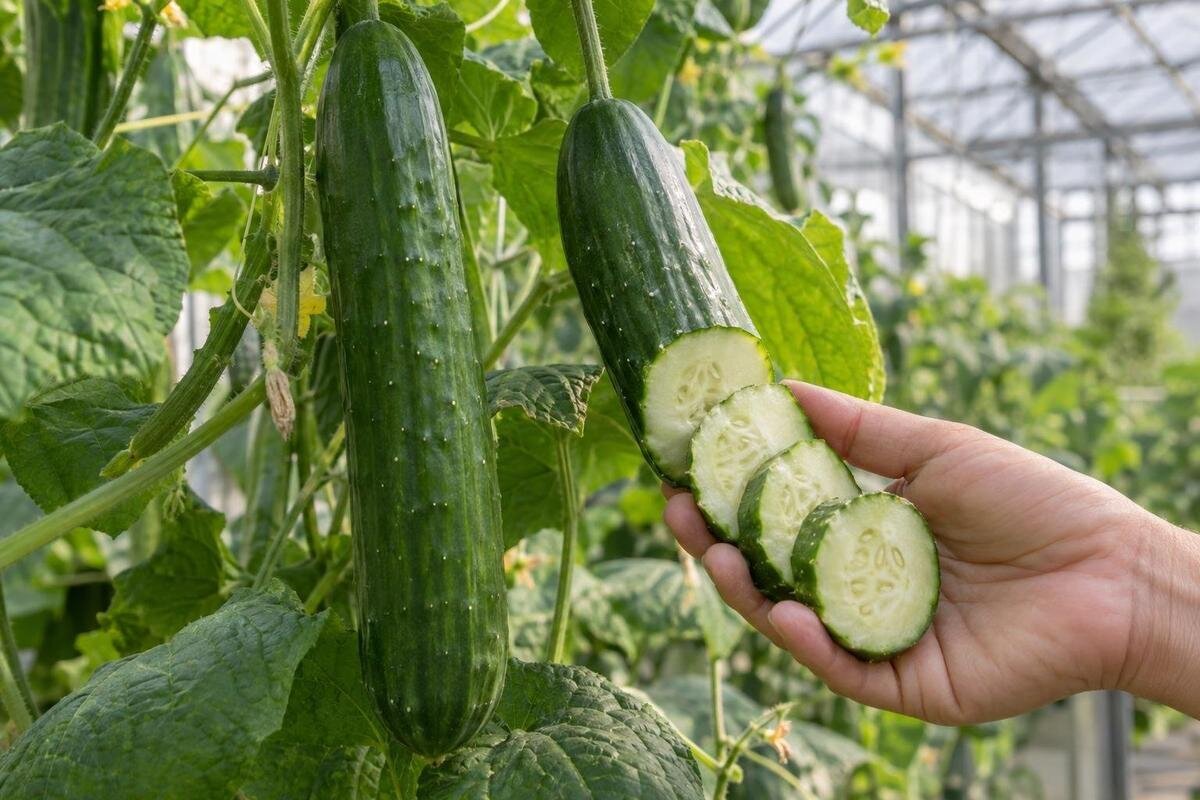
Greenhouse cucumber guide
Greenhouse cucumbers can taste bitter for several different reasons, and one fruit rarely identifies the cause by itself. The taste is associated with cucurbitacins: the cucumber’s genetics play a part, while growing conditions may also matter. Heat, uneven moisture and fruit maturity are worth checking, but none is a diagnosis on its own. Compare the cultivar, plant condition and pattern across the crop before deciding what to change.

Why cucumbers taste bitter
Bitterness in cucumbers is associated with cucurbitacins, naturally occurring compounds in the cucurbit family. Cucumber bitterness is linked especially to cucurbitacin C. Many cucumbers bred for fresh eating are selected for mild flavour, but their tendency to produce bitter fruit can still differ by cultivar and growing conditions. The amount is not visible: a cucumber may look green and sound yet taste bitter, while healthy-looking leaves cannot confirm that its fruit will be mild. Even two fruits on the same vine may taste different. Flavour is a warning clue, not a measurement of cucurbitacins or a way to identify exactly what caused them.
Several influences can overlap, so treat a bitter cucumber as an observation rather than a diagnosis. It does not prove that the vine was too hot, short of water, over-fertilised or diseased; each explanation needs separate evidence. Temperature readings, watering notes, unusual growth and visible changes to leaves or stems can help build a picture. The pattern matters too: one fruit, several fruits on one plant or fruit across the greenhouse raise different questions, though none confirms a cause by itself. If a cucumber is clearly bitter, stop tasting it and discard it rather than sampling the crop to map the problem. A visible plant symptom may show stress, but it still cannot confirm the fruit’s taste.
The cultivar may be the first clue
Variety is often the first sensible check because cucumber cultivars differ in their tendency to produce bitter fruit. Many cultivars intended for fresh eating have been selected for low bitterness, but that is not a guarantee for every cucumber in every crop. Read the exact cultivar name and supplier’s description rather than relying on a broad label such as “greenhouse cucumber”. Keep the packet or label with your notes. A description of mild or low-bitterness fruit gives you a useful baseline for comparison, not a promise about every harvest. Fruit size, shape and colour are not reliable ways to identify its flavour chemistry.
If you grow more than one variety, keep each plant labelled and record the cultivar beside its harvest notes. Note whether bitterness appeared once or recurred on the same vine, and whether similar fruit from another plant tasted normal. Repeated bitterness in one cultivar makes the seed description worth revisiting, but does not rule out heat or water stress affecting that plant. One bitter fruit is weak evidence against a whole seed packet. Keep notes for each variety rather than grouping all greenhouse plants together, and avoid deliberately tasting every fruit to test the theory. A clearly bitter cucumber should be discarded; crop observations do not require eating it.
Heat stress in the growing area
Conditions under glass can differ from the outdoor forecast: the crop area may warm quickly in direct sun and remain warm after the air outside cools. A prolonged hot spell, especially where ventilation is limited or plants are also drying out, can place a cucumber under stress. Excessive heat may contribute to bitterness in some situations, but warmth alone is not a diagnosis; cultivars and the duration of stress differ. A plant that wilts or develops scorched leaves during the hottest part of the day provides useful context, not proof that heat caused the taste. Readings near the vines can be more useful than a temperature recorded elsewhere in the greenhouse.
Use a thermometer in the growing area, out of direct sun, and note readings at the times when the greenhouse feels hottest. A maximum–minimum thermometer can show peaks missed by occasional checks; compare those records with watering and harvest dates. Check that vents and doors can be used as intended for the structure, and repeat observations on both hot and milder days. If planning a new growing space, compare the openings available in each size of the Classic Aluminium Greenhouse range, listed from 3.77 to 28.08 m². Floor area and ventilation are separate considerations: look at the selected model’s opening positions alongside the proposed position of your cucumber vines.
Keep root-zone moisture consistent
Moisture swings are another plausible stressor. A cucumber vine may be put under strain if its root zone repeatedly dries out and then receives a large amount of water, or remains saturated because drainage is poor. The surface can dry faster than the soil below, so check near the roots rather than watering by surface appearance alone. There is no useful single watering calendar for every greenhouse: soil type, bed or container, plant size and weather all affect how quickly moisture is lost. Aim for consistent, appropriate moisture instead of keeping the root area constantly wet. If leaves wilt in heat, check the soil before adding water, as heat can also cause temporary wilting.
Keep a brief record of watering dates, recent weather and how the root zone feels, particularly before and after a hot period. This can reveal that a plant was dry for a stretch, or that extra watering followed midday wilting without a soil check. If water distribution seems uneven, confirm that each plant is reached before changing the amount or adding fertiliser. When planning where to keep watering equipment, you can compare the Limited-Edition Greenhouse with Built-In Storage, listed from 5.52 to 28.08 m². Check the selected model’s storage details and access against your intended layout. Equipment storage is a practical consideration, while consistent soil moisture still depends on checking and watering the plants.

Check the plant for other signs of stress
Look beyond the fruit if the plant itself is changing. Wilting, scorched or spotted leaves, weak new growth, damaged stems, visible pests or persistently wet soil are reasons to inspect the crop and root area. They do not identify the cause of bitterness, and a plant may have several issues at once. Nutrient problems can affect growth, but a bitter cucumber alone is not evidence that more feed is needed. Before applying fertiliser or a pesticide, identify the separate symptom and use a reliable diagnosis; treating an assumed cause can add stress without improving the fruit. If symptoms persist or spread, dated photographs and notes may help a horticultural adviser assess them.
Conditions can differ between positions in a greenhouse: one end may receive stronger sun, while another is shaded by a nearby structure or planting. Compare plants in different places and at the same stage of growth before attributing a repeated problem to the whole crop. Draw a simple map showing plant positions, nearby shade and where you notice symptoms. If you are considering the Lean-to Greenhouse range, listed from 3.69 to 14.34 m², assess the intended position in relation to those observations. Compare ventilation and access to water as well as floor area. The useful question is how the proposed growing space would fit your garden, rather than whether its format explains bitter fruit.
Fruit maturity changes eating quality
Fruit left on the vine beyond its recommended harvest size may become oversized, seedy or less pleasant in texture. Those changes can lower eating quality, but they do not prove that age caused a bitter taste; cultivar and growing stress still need consideration. Check the seed packet or supplier guidance for the expected picking stage, because cucumber types are not all harvested at the same size. Look beneath leaves and along the vine regularly, where fruit can be easy to miss. Note whether a bitter cucumber was markedly larger or older than the rest, but do not treat that difference as a confirmed cause. Larger seeds can indicate a mature fruit, not explain its bitterness.
Good access makes timely picking and close inspection easier. The Spacious Greenhouse range is listed in sizes from 47 to 70 m²; use the selected model’s plan to work out where beds, paths and trellises would go. Consider whether you could walk along the rows and reach fruit beneath the leaves before deciding how many vines to plant. A vine hidden behind dense growth can leave fruit unpicked, even where the greenhouse has a generous floor area. Include a clear route for inspecting plants without disturbing them. Harvest at the size recommended for the cultivar and note the date, so fruit age can be considered separately from heat or moisture stress.
Look for a pattern across the crop
Look for a pattern across the crop, not just a single striking fruit. Mark the plant or row, note the cultivar, fruit size and harvest date, and add recent temperature and watering notes. If bitterness recurs on one vine while nearby plants of the same variety remain normal, a plant-specific difference is worth investigating. If several plants are affected after the same hot or dry spell, shared conditions deserve attention. Neither pattern proves the cause, but comparing like with like helps narrow what to check. Record whether affected plants are in the same area of the greenhouse, as well as whether symptoms appear on their leaves or stems.
Photographs can support your record when leaves or stems show a visible change. Take a dated picture of the whole plant and close-ups of affected leaves or fruit, include the plant position and cultivar, and repeat from the same angle if symptoms progress. Images may show spots, wilting or growth changes, but cannot capture taste or measure cucurbitacins. For a new growing space, consider access for routine observation as well as planting space. The Prestige Greenhouse with Metal Base listing spans 3.77 to 28.08 m²; compare the chosen layout with the rows and paths you intend to use. Your photographs will be more useful alongside notes about how each plant was grown.
Manage the greenhouse climate
Ventilation and spacing can make it easier to manage heat and inspect the crop, but they are not a cure for bitterness on their own. Use vents and doors according to the greenhouse maker’s guidance, and observe conditions during warm weather rather than relying on the outside forecast. Avoid letting foliage become so crowded that developing fruit and visible plant symptoms are hard to reach. Shade can reduce strong sun exposure in some setups, but excessive or poorly timed shade can limit the light available to the crop. If you use shade, follow the material’s instructions and check how the plants respond. Avoid changing shade and ventilation together if you want to understand which adjustment mattered.
When comparing a greenhouse, consider the actual openings, access and usable layout. The T-Model Orangery Greenhouse listing gives sizes from 16.52 to 30 m². Compare the specifications for the size you are considering, rather than assuming every option has identical features. Look at where openings would sit in relation to the planted areas and where you could monitor conditions near the vines. These details are more useful for climate planning than the shape or floor area alone. A greenhouse can make conditions easier to manage, yet the crop environment still depends on the site, weather, ventilation and day-to-day use. Keep those factors in view when comparing different layouts.

When a greenhouse change is worth considering
Changing the greenhouse is rarely the first answer to bitter fruit. Before investing in a different structure, review the cultivar, harvest stage, root-zone moisture and temperature records. Identify the practical difficulty those records reveal: excessive heat, awkward access to ventilation or plants that are difficult to reach. If the problem concerns how the growing space is arranged or used, consider a layout change before deciding whether another structure is needed. Keep the crop question separate from the purchase decision. No greenhouse type guarantees non-bitter cucumbers, because a new structure cannot change the cultivar or remove the need to manage water and temperature.
Turn the difficulty you have identified into a specific point of comparison. For ventilation, compare the listed openings; for access, examine the proposed paths and planting positions. The Limited Edition Aluminium Greenhouse range is listed from 3.77 to 28.08 m², so select an area option before assessing how its layout would fit your plot. Check the relevant specifications rather than inferring features from the model name or photographs. Keep a note of which existing constraint each option would address, and which aspects of crop care would remain unchanged. This gives you a practical basis for comparing structures without treating a purchase as a treatment for bitterness.
Use crop records to assess changes
For the next crop, organise your notes so you can compare harvests from the same plant. Choose a variety with clear information about low bitterness if available, label each vine, and record its harvest dates and fruit sizes alongside hot periods and watering patterns. Date any adjustment to layout, ventilation, shade or watering. Where practical, change one main factor at a time; otherwise it becomes difficult to tell what made a difference. Compare several harvests rather than judging the result from the first fruit. Note whether bitterness recurs under similar conditions, without deliberately tasting fruit to test the theory. The aim is a useful record of changes, not a guaranteed diagnosis.
If your recorded observations lead you to consider another structure, retain them as a baseline for the next crop. The Pyramid Greenhouse range is listed from 5.53 to 18.9 m²; compare its exact options with the ventilation, access or siting constraint you have identified. After a move or layout change, continue recording the cultivar, root-zone moisture, temperatures and picking dates in the same way. Note which conditions have changed and which remain similar, so a different harvest is not automatically credited to the structure. This keeps the comparison focused on growing conditions and helps you decide whether the practical problem that prompted the change has actually improved.
Frequently asked questions
Are bitter greenhouse cucumbers safe to eat?
If a cucumber is clearly bitter, stop eating it and discard it. The taste can signal elevated cucurbitacins, which can cause illness. Peeling or cooking is not a reliable way to make a distinctly bitter cucumber safe.
Does heat alone make a cucumber bitter?
Not necessarily. Excessive heat may stress a plant and contribute to bitterness, but the cultivar and other growing conditions matter too. A hot spell is a clue to record, not proof of the cause.
Can uneven watering cause bitter cucumbers?
Moisture swings can stress a cucumber plant, so they are worth investigating. They do not establish why a particular fruit is bitter. Check the root-zone moisture and compare watering notes with the weather and other plant symptoms.
Does an overgrown cucumber become bitter?
Fruit left too long may become oversized, seedy or less pleasant in texture, but age alone does not explain bitterness reliably. Check the harvest guidance for the cultivar and consider other clues as well.
Can a photograph show why a cucumber tastes bitter?
No. A photo can help document visible changes to leaves, stems or fruit, but it cannot show taste or measure cucurbitacins. Dated images and crop notes can still help someone assess other symptoms.
When a greenhouse cucumber tastes bitter, treat the flavour as a clue rather than a complete diagnosis. Check the cultivar, note the timing of heat and watering, and consider how mature the fruit was when picked. Those details can help you investigate without blaming one cause too quickly. If the cucumber is distinctly bitter, discard it; then use your crop notes to make a measured change for the next harvest.
