
Why Extra Fertiliser May Not Fix Tomato Blossom End Rot
Greenhouse tomato care
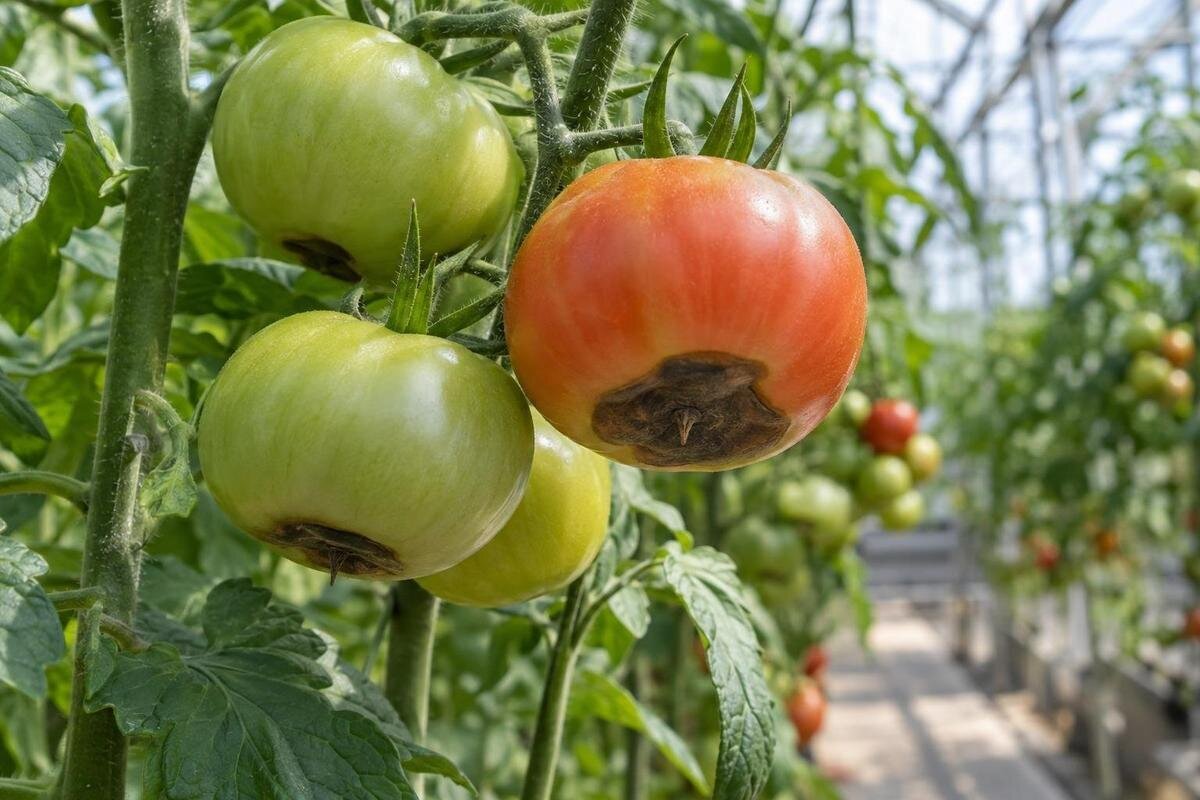
A dark, sunken mark at the base of a tomato can look like a call for calcium, but greenhouse tomato blossom-end rot often reflects a failure to deliver enough calcium to developing fruit, not a simple shortage in the soil. Adding more fertiliser without checking root-zone moisture, drainage and nutrient balance may do nothing and can make uptake harder. The lesion's position and texture, the pattern across fruit, and recent watering history provide a more reliable starting point.

Before adding fertiliser 1
What blossom-end rot looks like
The classic sign is a round or irregular patch at the blossom end of a tomato, opposite the stalk. It may begin as a pale, water-soaked or slightly translucent area, then turn brown to nearly black as the affected tissue collapses. The patch often becomes sunken, dry or leathery and can enlarge while the fruit is developing. It may be visible while the rest of the tomato is still green. Some fruits on a plant can be affected while others remain sound; that uneven pattern does not, by itself, rule blossom-end rot in or out. Once tissue is damaged, it will not regain a normal surface after watering improves.
Blossom-end rot is a physiological disorder, not an infection spreading from one tomato to another. However, damaged tissue can be invaded by decay organisms, making an old lesion softer, wetter or mouldy. A black area alone is not a complete diagnosis: note its position, edge, depth and texture, and look at the rest of the fruit, leaves and stems. Photograph the whole fruit and a close view before removing it, then compare affected and unaffected fruit. This record is more helpful than treating every dark mark as a calcium shortage. If the patch is not at the blossom end or its appearance is atypical, keep other causes open.
Why calcium in the soil may not reach the fruit
Calcium helps build and stabilise cell walls and membranes. Roots take it up in water, and it moves mainly through the xylem with the transpiration stream. Calcium is not readily redistributed from older leaves to fruit, so a developing tomato needs to receive enough while its tissues are expanding. Fruit transpire less than leaves, which makes their calcium supply sensitive to how water moves through the plant and where the calcium is delivered. This explains why a plant can have calcium in its soil or growing medium and still develop fruit tissue with too little available calcium at a critical time.
That distinction matters: a test showing calcium in a sample describes the material tested, not the uptake history of each fruit. Root activity, water supply, salts, pH and the balance of other nutrients can all affect availability or transport. Fast fruit growth may also make supply less able to keep pace with demand. The result can be local damage in susceptible fruit, not necessarily a general shortage that makes every leaf look unwell. Nor does one affected tomato tell you which factor changed. Look for evidence at the root zone and across the crop before choosing a correction.
Before adding fertiliser 2
How uneven moisture disrupts calcium uptake
Tomato roots need a reasonably even supply of moisture to keep taking up water and dissolved nutrients. If the root zone dries markedly and is then soaked, uptake can be interrupted or fluctuate just as fruit is expanding. This does not mean keeping soil or compost permanently wet: saturation deprives roots of air, while repeated drying stresses them. A dry surface can also mislead, because the moisture deeper around the roots may be different. Check at root level, taking account of whether plants are in beds, pots or grow bags, and compare several plants rather than judging by the surface alone.
Look at the watering system as well as your routine. A blocked dripper, a leak, uneven delivery between containers, or a timer that runs unchanged through very different weather can leave some plants dry and others wet. Check whether outlets deliver water consistently during a normal cycle, and keep brief notes of watering, bright or warm spells and when new symptoms appear. If you are planning a growing space in a Pyramid Greenhouse, mark the beds, containers and irrigation outlets on your layout. Its size options range from 5.53 m² to 18.9 m². Allow access to check each outlet and reach the plants at the back, rather than planning only how many tomatoes will fit.
When wet or damaged roots limit uptake
Water is not useful to roots if they cannot function. Soil that stays saturated, compacted planting beds, blocked drainage holes or standing water around containers can reduce oxygen and damage roots. Root disease or recent disturbance may also interfere with uptake. In those conditions, the plant may wilt or grow poorly even though the ground feels wet; adding more water is unlikely to help. Conversely, potting mix can look wet near the surface while the root ball has dried unevenly. Check the container base, drainage route and moisture at more than one point, and note whether the same problem affects pots, grow bags or in-ground plants.
Salt build-up in a container or bed can make it harder for roots to take up water, particularly after repeated feeding or where drainage is poor. Avoid digging around a tomato just to inspect its roots; disturbance adds another stress. Instead, check for persistent waterlogging, poor drainage, sudden wilting and a history of heavy feeding. When planning a greenhouse layout, mark where containers will drain and keep those points accessible for inspection. If you are considering the Limited-Edition Aluminium Greenhouse with Built-In Storage, include both the growing area and storage area in that plan. Check that stored equipment will not obstruct access to container bases or the drainage routes you need to inspect.

Before adding fertiliser 3
Why extra fertiliser can make things worse
A standard tomato fertiliser is not automatically a calcium correction. Check the product label: formulations differ, and adding a general feed does not ensure that calcium reaches the fruit. More fertiliser can raise the concentration of soluble salts around roots; at high levels, those salts make water uptake harder and may injure roots. Too much nitrogen may also encourage excess leafy growth, but it will not repair damaged fruit. Do not increase the rate, combine feeds or add a calcium product simply because a blossom-end lesion is dark. Feeding without diagnosis adds another variable and can make it harder to work out what changed.
If the same pattern keeps appearing, have the soil or growing-medium pH and nutrient status assessed rather than guessing from the fruit. A suitable test may also consider soluble salts and, where relevant, irrigation water; sampling method matters, especially in containers or grow bags. Calcium availability can be affected by an imbalance or excess of other nutrients, including potassium, magnesium or ammonium, but that does not prove any one is the cause in your crop. Ask how to sample areas with different feeding histories before combining material. For a planned crop in a Bloomcabin Prestige Greenhouse, identify the separate beds or containers on the layout so results can be matched to the area sampled. Do not add another nutrient to correct an assumed imbalance without results and competent interpretation.
What greenhouse conditions can tell you
Conditions inside a greenhouse can change between a bright afternoon and a cool, dull spell. Heat can raise evaporation and the plant's demand for water, while high humidity can reduce transpiration; root uptake, leaf growth and fruit development do not respond in identical ways. Ventilation, shade and foliage influence the local environment, but there is no single temperature or humidity reading that diagnoses blossom-end rot. Avoid treating one hot day as proof of calcium deficiency. Consider whether your watering routine matched recent conditions and whether symptoms are concentrated in one area or appear across the greenhouse.
Take readings at plant height and near the crop, and compare positions rather than relying only on a sensor beside the door. Note the time and location of each reading so comparisons are meaningful. If you are considering the Spacious Greenhouse, with listed sizes from 47 to 70 m², include monitoring locations in your crop plan rather than assuming one reading represents the whole growing area. Decide how you will reach those locations once the plants have grown, and compare the conditions recorded there with moisture checks nearby. Ventilation can help manage the environment, but changing it alone cannot restore fruit tissue already damaged.
Before adding fertiliser 4
Distinguishing blossom-end rot from other fruit damage
Several problems can create dark or damaged tomato skin, so use the whole pattern. Sunscald usually affects an exposed side and can look pale, papery or blistered rather than forming the typical sunken patch at the blossom end. Cracks, rubbing or a puncture have a different shape and may follow contact with a support or tool. Some fruit rots are soft or spreading and may show concentric markings, mould or lesions elsewhere on the plant. These clues point towards other possibilities, but no single surface sign is definitive; secondary decay can change a blossom-end lesion.
Compare several fruits at different stages, note whether damage is at the blossom end, and check leaves and stems for separate lesions or wilting. A disorder affecting fruit alone does not prove a disease is absent, and an unusual lesion merits a broader diagnosis. When using a horticultural diagnostic photograph, compare position, border and texture rather than colour alone; an image cannot reveal root conditions. Access also matters when planning tomato rows in an Aluminium Classic Greenhouse: leave room to inspect fruit and photograph lesions without disturbing neighbouring plants. Sketch the mature crop layout, not just the position of young plants, and make sure fruit in the back rows will remain accessible for comparison.
Keep a short record while fruit develops
Write down a small set of observations while fruit is developing: when each watering took place, whether the bed or container was dry, evenly moist or saturated, and which plants or trusses show lesions. Add recent feeding, drainage issues, unusual bright or warm spells, and changes to vents or shade. A simple map of beds, containers and drippers can reveal a dry corner or wet line that a general impression misses. Record when you first notice damage and the stage of the affected fruit, because a lesion noticed today may reflect a water or root problem from earlier in fruit development.
Keep the record practical: use the same moisture-check method and note observations in comparable locations. Do not change watering, feeding, shade and ventilation all at once; simultaneous changes make it difficult to tell what helped. If you are planning an Aluminium Lean-to Greenhouse, use the proposed layout as the basis for a simple crop map. Give each bed, container group and water point a clear label, and use those labels in your notes once planting begins. Recording which truss has affected fruit will make later comparisons more useful than an entry saying only that the greenhouse has blossom-end rot. Keep the notes short enough that you can maintain them throughout fruit development.

Before adding fertiliser 5
Correct the cause and assess new fruit
Correct the clearest management issue first. If a bed cycles between very dry and saturated, adjust how and when water is supplied so the root zone stays evenly moist while still draining. If outlets are uneven, deal with the faulty part; if containers remain waterlogged, address drainage before increasing irrigation. Make changes gradually, especially where roots may be stressed. Do not add calcium to the soil, spray leaves or raise the fertiliser rate as a reflex. Calcium treatments may have limited effect when transport to fruit is the real problem, and foliar applications are not a reliable substitute for healthy roots and steady water uptake.
Fruit with an established sunken patch will not heal, even if conditions improve; it may continue to ripen, but the damaged area can remain or decay. Judge a correction by fruit that develops afterwards, not by expecting a marked tomato to recover. Remove fruit that is badly decayed and watch for new symptoms. If difficult access has contributed to missed watering checks, note that for your next planting layout. When comparing a Limited Edition Aluminium Greenhouse, assess the space needed for beds, containers and access rather than choosing solely by total area. A new structure is not a treatment for blossom-end rot; the useful planning question is whether the layout will let you maintain and inspect the crop consistently.
When to test the growing medium or ask for advice
Ask for a soil or growing-medium test if symptoms continue despite more consistent moisture, if several nutrient issues appear, or if you are considering a corrective feed. Tell the laboratory or adviser whether tomatoes are in native soil, pots, grow bags or another medium, and provide the fertiliser and water history. A test result needs context: calcium concentration alone may not explain uptake, and a pH or salt issue can change what roots can use. If root disease, persistent wilting or expanding lesions are present, a plant diagnostic service or experienced horticultural adviser can help distinguish physiological stress from infection.
Bring photographs of the fruit and whole plant, your watering and feeding notes, and the labels for fertilisers already used. Include a simple crop plan showing where affected plants stand and whether neighbouring plants share the same water supply or growing medium. If you are planning a T-Shaped Orangery Greenhouse, keep the proposed layout separate from the record of your current crop, so it is clear which observations describe existing conditions. Ask the adviser which findings would help distinguish the possible causes and which changes are justified by what you have observed. Symptoms overlap, and fruit may have more than one problem, so a bare description of a dark patch may not identify a definite cause.
Frequently asked questions
Does blossom-end rot prove there is too little calcium in the soil?
No. It points to too little calcium reaching developing fruit, which can happen because uptake or transport is disrupted. The soil or growing medium may contain calcium and fruit can still be affected. A suitable test helps show whether a shortage is part of the problem.
Will an affected tomato recover if I change the watering?
The damaged tissue will not heal. The fruit may continue to ripen, but the sunken patch usually remains and can deteriorate. Make any correction for fruit that develops afterwards, and judge the result by new symptoms rather than by expecting an old lesion to disappear.
Can overwatering cause blossom-end rot?
Persistently saturated soil can damage roots and interfere with uptake. Repeated drying and soaking can also disrupt the steady water supply the plant needs. The issue is root stress, not simply whether you watered too much or too little; check both moisture and drainage.
Should I use a calcium spray or feed?
Not automatically. Check the fertiliser label and consider testing the growing medium first. A spray may not deliver enough calcium to the fruit, and extra feed can raise soluble salts around the roots. Correcting water or root conditions may be more relevant.
How can I distinguish blossom-end rot from an infection?
Blossom-end rot typically starts at the end opposite the stalk and becomes dark, sunken and dry or leathery. Other rots can overlap in appearance, and secondary decay can change the lesion. Photograph the fruit and whole plant; ask a horticultural adviser if the signs are unusual or spreading.
Blossom-end rot is a reason to investigate how water and calcium reach developing fruit, not an automatic instruction to feed more. Confirm that the lesion is at the blossom end, review moisture and drainage around the roots, and check the fertiliser and growing medium before changing inputs. Look for improvement in fruit that forms after a well-supported correction; old damage is not a reliable measure of whether it worked.
