
Planning an Irish Greenhouse for Cacti and Succulents
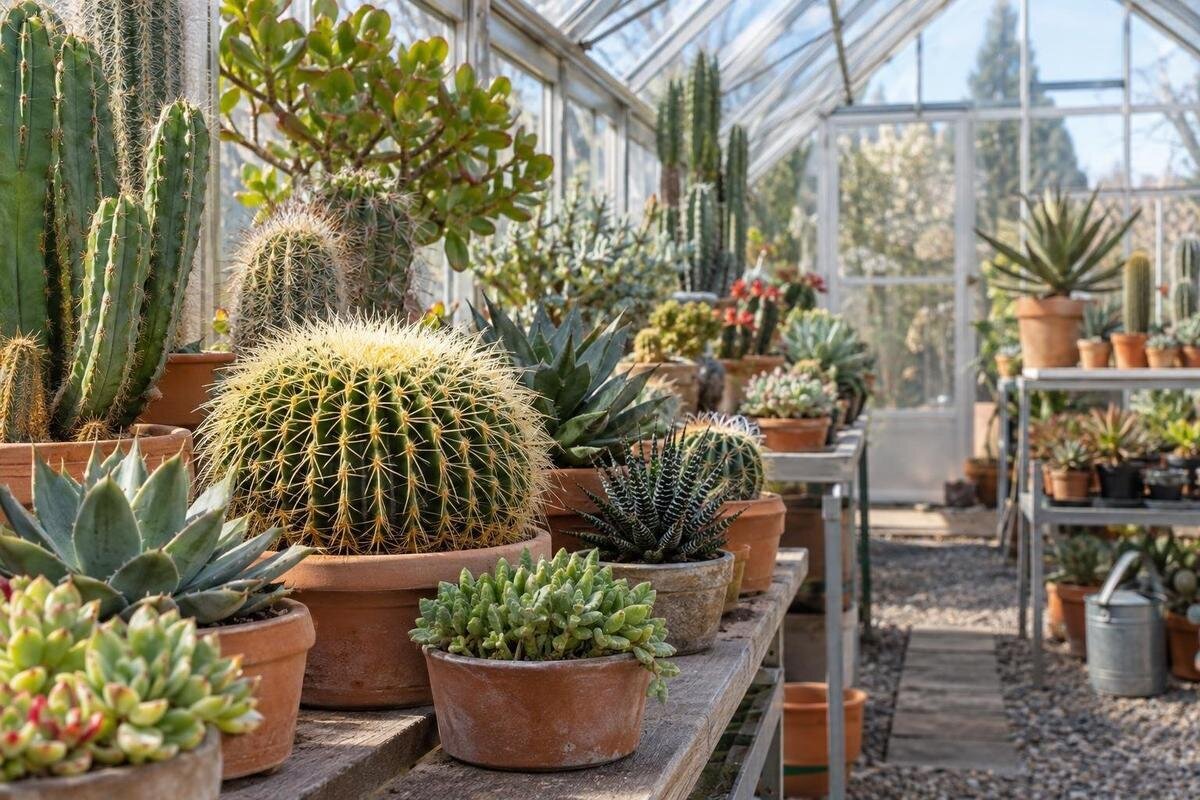
Cacti and succulent growing guide
An Irish greenhouse can give a cactus collection a bright place protected from direct rain, but warmth alone will not suit every succulent. Some need strong light and a cooler, drier rest; others come from woodland or can tolerate cool outdoor conditions. Plan around the plants you own, then choose a position, ventilation arrangement and working layout that can support their different needs through changeable weather.

Different growing needs within the collection
A greenhouse for cacti and succulents is best understood as a roofed growing space, not a ready-made desert. “Succulent” describes plants that store water rather than one set of growing conditions: a desert cactus, an Echeveria rosette and a Christmas cactus (Schlumbergera) differ in their light, watering and winter needs. Glazing can keep direct rain off pots and make daylight easier to use, but an unheated greenhouse can still cool sharply overnight. On a sunny day it can also warm quickly. The aim is to manage those changes, not to assume they are automatically favourable.
Before deciding where plants will go, make a short inventory. Note each botanical name if known, its growth pattern, its light preference and its cold tolerance, using reliable plant-specific guidance. A tag that says only “cactus” or “succulent” may not be enough to plan winter care. Group plants by their needs, not just by size or family name. Make the inventory useful for arranging the greenhouse: distinguish plants that can share a watering routine from those that need separate attention, and identify which will need to move indoors for winter. Keep labels with the individual pots so these differences remain clear when you rearrange a bench. If you cannot identify a plant confidently, keep it easy to move while you find suitable advice rather than copying the routine for a different plant.
Match light to the species
Many desert cacti need bright conditions. Echeveria often stays more compact in good light, while a plant that becomes stretched may not be getting enough. These are useful clues, not a substitute for identifying the species. Acclimatise plants brought from a dim room to stronger light in stages: a sudden move into direct sun behind glass can scorch foliage. Check the greenhouse on clear days as well as overcast ones. It can heat up even when the outdoor air feels cool, so do not assume that Irish weather will prevent excessive sun or warmth.
Schlumbergera is a helpful contrast. It is an epiphytic cactus from woodland rather than an arid desert, so bright filtered light and a different moisture routine suit it better than a hot, very dry regime. Houseleeks (Sempervivum) are often better suited to outdoor conditions than a warm greenhouse. These examples do not cover every cultivar, but show why “cactus” is not a complete care instruction. If your collection includes different types, keep pots movable or organise separate areas so one plant’s light and watering needs do not set the conditions for all the others.
Choose a bright, accessible site
Look at the site at different times of day and consider how shadows change through the year. A nearby building, wall, hedge or tree can block light, and the low winter sun may reach a different part of the garden from the summer sun. A bright position is generally a better starting point for sun-loving cacti than a permanently shaded corner, but the amount of direct sun should still suit the plants you plan to keep there. If possible, observe the proposed site before you commit to a layout. Note which parts receive direct sun in the morning and afternoon, rather than describing the whole site simply as sunny. Use those observations to decide where the sun-loving group could go and where plants needing filtered light might fit. Consider the proposed bench positions too, not just the centre of the greenhouse footprint.
Access matters as much as the view from the garden. Check that you can reach the door, bring pots in and out, and ventilate the greenhouse without a wall or stored items getting in the way. If a wall-adjacent layout is on your shortlist, compare the Lean-to Greenhouses range after checking how the wall affects light and access. Its listed configurations run from 3.69 m² to 14.34 m², but the area range cannot tell you whether a particular wall or position will suit your collection.
Managing heat and moisture with ventilation
Ventilation matters in cool, damp weather as well as on hot days. Moist air from compost and plants can condense on cooler glazing; if air remains still around crowded pots, surfaces may stay damp. Opening doors or vents when conditions allow brings in fresh air and can help the greenhouse dry out. It cannot make persistently wet compost drain properly, so do not treat ventilation as a replacement for suitable pots and careful watering. On bright days, ventilation also helps limit excessive heat, while cold, wet or windy weather calls for a balance suited to the plants inside.
Check the actual openings available on the exact greenhouse configuration you are considering, rather than inferring airflow from its shape or name. For a format such as the Pyramid Greenhouse, verify the product details for the chosen size before deciding whether the openings will work with your site and routine. Consider how you would reach and operate them once benches are in place, and whether nearby objects would obstruct them. Think about who will adjust ventilation when you are away during the day; an arrangement that depends on frequent attention needs to fit your routine. A minimum-and-maximum thermometer placed near the plants can reveal how warm the greenhouse gets by day and how cool it becomes overnight. One reading at the door may not represent conditions at a distant bench.

Plan benches, pots and storage together
Individual pots make it easier to give plants different watering routines, inspect them and move tender specimens for winter. Use a stable bench or shelf that leaves room to reach plants at the back, and avoid crowding rosettes and spiny specimens together. Space helps you inspect the collection and work without knocking pots over. Consider the height of mature plants as well as their current size, and leave enough clearance to lift them out without catching leaves or spines on an upper shelf. Before settling on shelf depth, try arranging a representative group of pots on a table. Check whether you can lift the back row out without passing it over a tall or spiny plant. Put plants that need frequent attention within comfortable reach, and allow room to set down a pot while inspecting it.
Plan where labels, hand tools and watering equipment will go before filling the greenhouse with benches. Storage can reduce clutter, but its location and footprint affect the space left for plants and access. If you want storage as part of the greenhouse, compare the Limited-Edition Aluminium Greenhouses with Storage listing and confirm the arrangement for the configuration you are considering. Keep the growing area and storage area distinct in your plan; a storage label does not tell you how much usable bench or walkway space remains.
Water by growth and compost conditions
Avoid a fixed weekly watering schedule. A plant’s needs depend on its species, whether it is actively growing, the light and temperature, and how quickly its potting compost dries. The surface can look dry while the lower part of the pot remains damp, so check below the surface when you can do so without disturbing the roots. For a plant that needs a thorough watering during active growth, let excess water drain away rather than leaving the pot in a full saucer. Checking the collection does not mean watering every pot: work through each care group and leave plants alone when they do not need water. Keep pots with different requirements clearly labelled, especially if someone else will look after them. Give that person plant-specific instructions rather than a single watering day for the whole greenhouse.
Use a freely draining potting compost suited to the plant, and make sure the container allows surplus water to escape. Cool, dim conditions can slow drying, so the same interval that worked during a bright spell may be unsuitable later in the year. As you choose a greenhouse size, think about the route from the door to each pot and the space needed to water without moving spiny plants. The Aluminium Greenhouses range is listed from 3.77 m² to 28.08 m²; compare the stated area with your plan, then check the details for the configuration you have in mind.
Set winter care by cold tolerance
Do not assume an unheated greenhouse will remain frost-free. Its overnight minimum can approach outdoor conditions, and the air temperature may not be the same at every bench. Check the requirements of the exact species or cultivar and, if plants will stay in the greenhouse, use a thermometer near them to understand the conditions there. Aloe vera is frost-sensitive, and many Echeveria types also need protection, though limits vary. If forecast or measured temperatures could fall below a plant’s cold-tolerance limit, plan to move it to a protected place. Decide where those plants will go before cold weather arrives, allowing for their light needs and the space available. Check that the pots can be carried along the intended route without awkward lifting. Keep the plants that will need moving accessible, rather than placing them behind specimens that can remain in the greenhouse.
Winter does not mean the same thing for every succulent. Many desert cacti grow more slowly in cooler, dimmer conditions and need less water, while a woodland cactus such as Schlumbergera should not be put on the same dry-rest routine by default. Sempervivum often has much greater outdoor cold tolerance, but its needs still depend on the particular plant and its growing conditions. When comparing the Limited Edition Aluminium Greenhouses range, use the listed size as a space-planning detail; it is not evidence that a configuration will provide a particular winter temperature.
Size the greenhouse around the collection
Count the pots you have, then allow for likely growth and the space needed to work. A greenhouse that fits the current collection exactly may leave no room for new plants, temporary winter staging or moving a group away from strong sun. Include benches, a clear route through the space and enough room to reach pots at the back. A large floor-area figure on its own does not tell you how much useful bench space remains once shelves and access are planned. Measure the space occupied by the plants as well as their pots: spreading rosettes and projecting spines need room in the arrangement. Separate permanent display space from space needed only for seasonal moves. This helps you judge whether a larger footprint is useful throughout the year or whether a more flexible bench arrangement would meet your needs.
A simple sketch can help compare arrangements before you choose a size. Mark the door, benches, the route to each group and any area needed for potting or temporary storage. The T-Shaped Orangery Greenhouse is listed in configurations from 16.52 m² to 30 m²; if you are considering that scale, check the actual plan for the selected size rather than treating the headline area as usable growing space. Choose a layout that you can reach and manage, not merely one that holds the highest number of pots.

Rain protection and damp conditions
A greenhouse reduces direct rainfall on pots, but it does not remove humidity from the air. Condensation can form on cool glazing, and wind-driven rain may still reach plants depending on the site and openings. During prolonged cloudy or damp spells, compost can take longer to dry than it does in brighter weather. Keep an eye on how quickly pots dry and avoid responding to a dull-looking plant by watering without checking the compost and its needs.
Choose a structure with the site as well as the collection in mind. A product name or stated area is not a frost or wind-performance rating, and a greenhouse should not be assumed to provide the same conditions in every garden. When comparing a model such as the Bloomcabin Prestige Greenhouse, check the details for the precise configuration and follow the maker’s installation guidance. If you are unsure how the site or base should be assessed, ask a qualified installer; do not infer suitability for an exposed position from a model name.
Allow for collection growth and routine checks
If the collection is likely to expand, decide how much space you genuinely need for display, working access and winter moves. A large greenhouse can be useful only if its footprint and layout suit your plants and routine. The Spacious Greenhouse range is listed from 47 to 70 m², a substantial area to consider only when the collection and planned use justify it. Compare the published size with a practical plan for benches, paths and seasonal staging rather than buying space on the assumption that every future plant will need it.
Keep simple records of watering, greenhouse temperature and changes in plant position. Notes can help explain why one bench dries more slowly than another and make seasonal adjustments easier to review. Inspect new plants before placing them beside the collection, and check leaf bases, joints and undersides for common pests such as mealybugs or scale insects. If you make a change to shade, ventilation or watering, record it and observe the result before changing several other conditions at once. The aim is to learn what works for each plant in your own greenhouse.
Frequently asked questions
Can cacti and succulents share one greenhouse?
They can share a greenhouse, but they may not suit the same bench or care routine. Group plants by light, watering and winter requirements. For example, a desert cactus and a woodland cactus such as Schlumbergera have different moisture and light preferences; keep them in separate zones or make their pots easy to move.
Will an unheated greenhouse protect plants from Irish frost?
Not reliably. An unheated greenhouse can cool considerably overnight, so do not assume it stays above freezing. Check the cold tolerance of each plant and use a minimum-and-maximum thermometer near the pots. Move frost-sensitive plants to a reliably protected place if conditions may fall below their limits.
How often should I water greenhouse cacti?
There is no useful single interval for every cactus. Watering depends on the species, its growth stage, the compost, pot size and how quickly conditions dry out. Check beyond the surface of the compost and take account of recent weather; cool, dim conditions usually slow drying and growth. Treat a regular reminder as a prompt to inspect the pots, not an instruction to water them all. If one pot remains damp when neighbouring pots have dried, assess it separately rather than keeping the whole group on the same schedule.
Do I need shade netting in a cactus greenhouse?
That depends on the plants, the greenhouse position and how intense the light becomes. Introduce plants to brighter conditions gradually and watch for signs of scorching or poor growth. If only one group needs protection, adjust its position or shade that area rather than automatically reducing light for the whole collection.
Does Sempervivum need a greenhouse?
Often it does not. Many houseleeks (Sempervivum) are well suited to outdoor growing, provided their conditions and drainage are appropriate. A greenhouse may be useful for other plants in the collection, but warmth and shelter are not automatically an improvement for every succulent. Check the requirements of the particular species or cultivar.
A successful cactus greenhouse is not defined by peak warmth or the number of pots it holds. It is a space where light, airflow, drainage and winter temperatures can be managed for the plants actually in the collection. Identify each plant, group those with similar needs and leave room to move the less tolerant ones. That approach makes a greenhouse useful without forcing every cactus and succulent into the same routine.
