
Growing Carnivorous Plants in an Irish Greenhouse
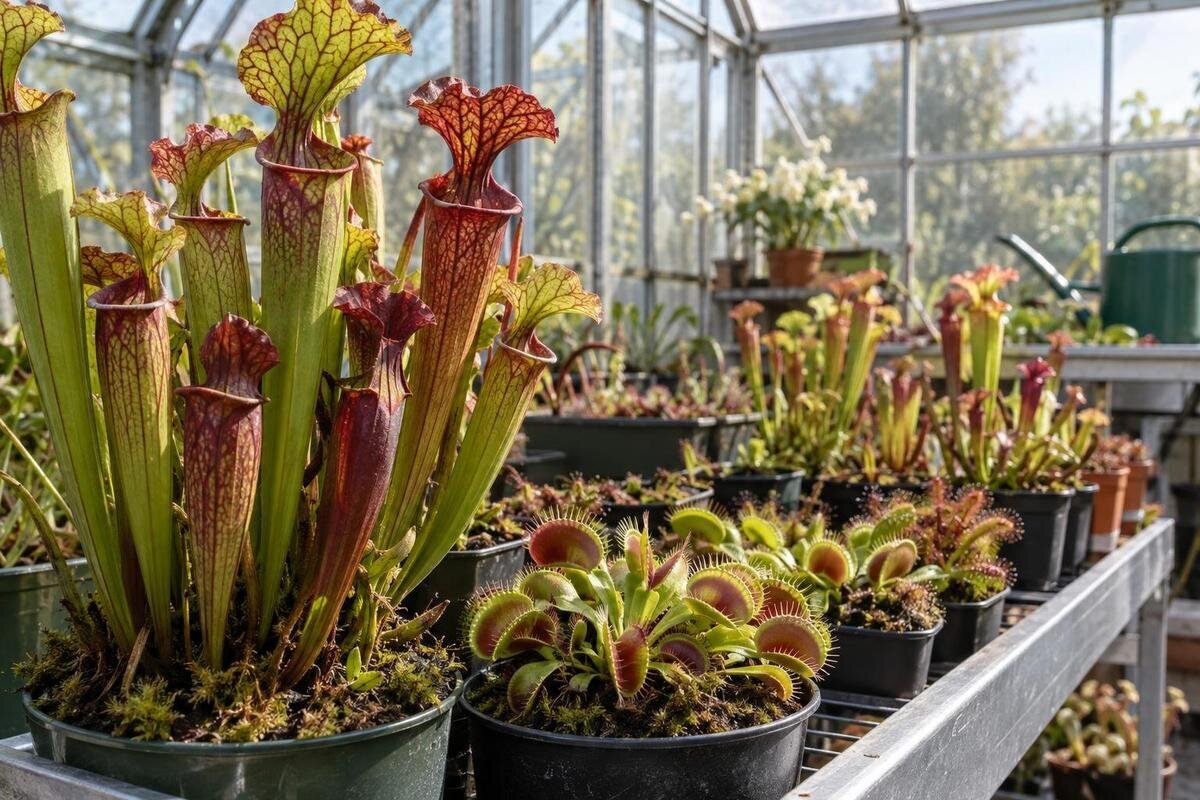
Carnivorous plant growing guide
Growing carnivorous plants in an Irish greenhouse is a question of matching each plant to its origin and seasonal cycle, not creating one uniformly warm, humid space. Venus flytraps and many Sarracenia need strong light and a cool winter rest; tropical pitcher plants have different night-temperature needs, and even Nepenthes species vary. Low-mineral water matters across most collections, but watering routines still differ. A greenhouse offers shelter and a way to organise plants, yet daytime warmth does not guarantee suitable nights, winter temperatures or ventilation.

Temperature changes inside a greenhouse
A greenhouse can warm rapidly when sunlight reaches it, then cool markedly after sunset; glazing does not make an unheated structure frost-free. For an Irish greenhouse, plan for changeable outdoor conditions rather than assuming a steady cool or warm season. What matters is the temperature where the pots sit, not whether the house feels mild at the door. A high shelf, a spot beside an opening and a position close to the ground can experience different light and air movement. Record day highs and night lows at plant height before deciding which groups can share a zone.
Light and moisture also change with the weather. A bright spell can heat still air quickly, while a wet, dull period may leave the greenhouse cool and humid. Opening vents helps release excess heat and stagnant air, but a position in a cold draught may not suit every tropical species. A thermometer in each likely zone is more useful than a single reading near the door; note readings over several days, including overnight lows. Recheck after changing a bench position or adding shade. Treat shade, ventilation and any supplementary heat as parts of a plant-specific plan, not settings for the whole collection.
Identify each plant before setting its care routine
Start with the full name on the label. “Carnivorous plant” covers several growing patterns: Dionaea muscipula (Venus flytrap) and many Sarracenia are temperate bog plants; Nepenthes are tropical pitcher plants; Drosera includes temperate, subtropical and tropical species; and Pinguicula includes temperate and Mexican types. The common name or a label that says only “sundew” is not enough to decide winter care. Cultivars and hybrids can differ, but a trade name does not remove the need to identify the plant’s temperature and light requirements. When comparing plants for sale, distinguish an identification from a care description: “pitcher plant” names a broad group, while “suitable for a greenhouse” leaves the intended growing conditions unclear. Record the full name before buying and compare its requirements with the space you have available. This is particularly useful when adding to an established collection, as a plant that looks similar to those you already grow may need a different position or winter routine.
Group pots by their actual care calendar, not just by appearance. Keep labels with plants after repotting and note whether each one should slow down, form a winter rosette or remain in active growth. When buying, ask for the species or named hybrid rather than relying on a broad genus label. If identification is uncertain, check a reliable species-level growing reference before changing watering or moving the plant into winter conditions. This helps avoid warming a plant that needs dormancy or chilling one that cannot tolerate the greenhouse’s winter lows.
Flytraps and Sarracenia need strong light and a cool rest
Venus flytraps and many Sarracenia grow best with very bright light. Give them the sunniest practical position and acclimatise plants gradually if they have been kept in lower light. In a greenhouse, take care that closed-up summer air does not become excessively hot. Both groups are adapted to nutrient-poor, wet habitats, so use low-mineral water and a suitable carnivorous-plant medium rather than ordinary compost. During active growth, a shallow-water tray can keep bog pots consistently damp. This routine is for plants that suit bog conditions, not a rule for every carnivorous plant.
These are not tropical houseplants to keep warm throughout the year. Venus flytraps, Sarracenia and some temperate sundews have a seasonal winter rest: growth slows, and some leaves may brown or die back. They need a cool season, but cold tolerance varies by species and by the conditions around a container. Do not infer frost protection from the glass; compare recorded greenhouse lows with the plant’s requirements and protect or relocate pots if needed. The Aluminium Classic Greenhouse range is listed from 3.77 m² to 28.08 m². Use the footprint to plan trays and access, then check the selected model’s actual layout and openings.
Nepenthes need temperatures suited to their type
Nepenthes pitcher plants need a different temperature plan. The genus includes lowland, highland and intermediate-growing species and hybrids: lowland types generally need warmer nights, while highland types are adapted to cooler nights. As a broad guide, highland forms are often grown with daytime temperatures around 20–25°C and nights around 10–15°C; lowland species usually need nights nearer 20°C or above. Nepenthes ampullaria is a lowland example, while N. ventricosa is commonly treated as a highland species. Use these ranges as illustrations, not universal limits: species and hybrids vary.
Provide bright light and moving air, adjusting light to the species rather than placing every plant under unfiltered midday sun. Acclimatise a plant gradually if it has been kept in lower light. Humidity alone cannot compensate for unsuitable night temperatures, and stagnant air is not a substitute for ventilation. If you are considering the Aluminium Lean-to Greenhouse, its stated area range is 3.69 m² to 14.34 m². Compare the usable height with your intended plant positions, including any hanging pots, and check how those positions relate to the ventilation openings. Plan for the required winter night temperatures separately from the choice of footprint.

Sundews and butterworts vary by species
Drosera and Pinguicula need species-level sorting too. Drosera rotundifolia is a temperate sundew, while D. capensis is usually grown as a subtropical species; their winter responses are not the same. Mexican butterworts such as Pinguicula moranensis can form a compact, succulent winter rosette, whereas temperate P. vulgaris follows a cold-season cycle. These are examples, not instructions for every cultivar. Check the plant’s name and reliable growing guidance before changing its light, moisture or temperature, particularly when its leaves change shape as the seasons turn.
A bench plan can keep a wet tray for bog species separate from pots that need a drier seasonal phase. Keep labels visible, leave room to inspect the plants and avoid crowding leaves where airflow is poor. For sundews and butterworts, include the expected winter routine in your notes rather than arranging pots solely by genus. A collection of several species may need more than one watering group even if the pots are small enough to fit in a single tray. Make each group accessible without having to move unrelated plants, so a change in one plant’s seasonal care does not disrupt the rest. The Limited Edition Aluminium Greenhouse range is listed from 3.77 m² to 28.08 m². Compare the exact footprint and layout with the number of separate trays you need. Include the space between trays in your sketch, not just the area occupied by pots.
Use low-mineral water and tailor watering to the plant
Low-mineral water is important for most commonly grown carnivorous plants because minerals can build up in the growing medium and affect sensitive roots. Rainwater collected from a clean source, distilled water and reverse-osmosis water are commonly used options. Tap-water quality varies, so do not assume it is suitable based on taste or a general rule about where you live. Check your supplier’s report or use a conductivity or TDS meter to assess dissolved minerals. Avoid softened water and mineral water unless you have confirmed that their composition is suitable. Decide which source you will use for routine watering and what alternative you will have if that supply runs short. If you use more than one source, label the containers clearly rather than treating all stored water as interchangeable. Keep a note of the source alongside any readings, so you can distinguish a change in water supply from a change in the plant’s watering routine.
Collect and store rainwater cleanly, and prevent fertiliser or other runoff from contaminating it. Watering still depends on the group: keep bog pots moist during active growth, but reduce standing water where a plant’s seasonal cycle calls for drier conditions. Nepenthes generally need a moist, free-draining medium rather than a permanent water tray. The Limited-Edition Aluminium Greenhouse with Built-In Storage range is listed from 5.52 m² to 28.08 m². If its storage is part of your plan, check the usable dimensions and whether a clean water container can be kept separate from growing supplies.
Choose a low-nutrient growing medium
Use a medium made for carnivorous plants, with low nutrient content and moisture retention suited to the species. Ordinary multipurpose compost, garden soil, manure and fertilisers can introduce nutrients or salts that sensitive roots are not adapted to. Mixes differ, so check the label rather than assuming one recipe works for every group. Peat has environmental costs; look for a suitable peat-free carnivorous-plant medium where available, and do not substitute general-purpose peat-free compost without checking its ingredients. Use clean pots with drainage, and keep plants in separate labelled containers if their moisture needs differ.
Repotting time also depends on the plant’s cycle, so do not disturb a dormant plant simply to follow a general calendar. Many greenhouse-grown carnivores catch insects naturally; routine feeding is not necessary for every pot. Never offer meat or fertiliser to a Venus flytrap, and resist repeatedly triggering its traps for display. Leave a clean work surface for repotting and keep used medium out of water trays. The T-Model Orangery options are listed from 16.52 m² to 30 m²; compare that floor area with the benches, access routes and work area you need, then check the selected dimensions.
Balance light with ventilation
Strong light is essential for many carnivorous plants, but the useful level varies. Flytraps and many Sarracenia benefit from direct sun after gradual acclimatisation; Nepenthes may suit bright, filtered light, depending on the species. A greenhouse can make it easy to underestimate midday intensity and heat. Move newly acquired plants into brighter conditions in stages, and check conditions near the leaves during bright spells. If you add shade to manage heat, remember that it also reduces light; review the plant’s response rather than treating every change as a sign that it needs more humidity.
Ventilate to release accumulated heat and keep air from becoming stagnant, while retaining the moisture each species needs. Use readings at plant height when judging conditions: air near a roof opening can differ from that around a bench. When comparing a Pyramid Greenhouse, the listed size range is 5.53 m² to 18.9 m². Treat the footprint and name as starting points only; inspect the exact model’s opening positions and usable height rather than assuming a ventilation pattern from its shape.

Plan the layout around mature plants and access
Before choosing a greenhouse, sketch the collection at its expected size: count pots, measure trays and allow for any climbing or hanging plants. Some Nepenthes produce long shoots, while flytrap and Sarracenia pots need accessible bench space. Plan a route for watering and inspecting labels, and leave room to repot without working over the plants. Keep groups with conflicting winter or moisture needs in separate zones where possible. A single shared bench may be awkward if it forces every plant to use the same tray or position. Draw the arrangement from above, then check the height available at each proposed position. Include hanging pots rather than counting only those resting on benches. Allow space to remove a tray or carry a plant to the work area without having to move much of the collection.
Floor area is only one part of the comparison. The Bloomcabin Prestige Greenhouse with Metal Base range is listed from 3.77 m² to 28.08 m². Check the exact dimensions, entrance, ventilation openings and headroom against your plan. Make sure the entrance accommodates the trays you intend to carry through it and that the benches leave a clear route to the work area. If you want tropical and temperate plants under one roof, work out how you will meet their different seasonal needs before choosing a layout.
Prepare a separate winter plan for each group
Plan winter care around the plant’s natural cycle. Let temperate flytraps and Sarracenia follow their seasonal slowdown, keeping the medium from drying out while adjusting the level of standing water to suit their winter needs. Check each species’ cold tolerance and protect containers from severe exposure. Do not move a dormant plant into a warm, low-light room simply because some leaves have browned. Tropical Nepenthes need night conditions suited to their type; an unheated greenhouse may not provide them. Decide in advance whether you can maintain the required temperatures or need another growing space.
Use your temperature records alongside notes on watering and growth to review the winter arrangement. One warm afternoon tells little about overnight conditions, so compare the recorded lows with the requirements of each group. When a plant changes, consider its species and seasonal cycle before altering its care. Review water quality, light and ventilation as well, rather than changing several things at once and losing track of what helped. The Bloomcabin Orangerie is listed from 47 to 70 m². For a collection needing different winter conditions, compare the proposed growing zones within that space; greater floor area alone does not provide separate climates.
Frequently asked questions
Can every carnivorous plant grow in an unheated greenhouse?
No. Many Venus flytraps and Sarracenia need a cool winter rest, while tropical pitcher plants may need nights warmer than an unheated greenhouse can provide. Highland and lowland Nepenthes differ too. Check the requirements of each named species or hybrid against temperatures recorded in the position where it will grow.
Can I water carnivorous plants with tap water?
Only if its mineral content is suitable for the plants. Tap water varies, so check your water supplier’s report or use a conductivity or TDS meter; taste is not a reliable test. Rainwater from a clean source, distilled water and reverse-osmosis water are commonly used low-mineral alternatives.
Should a Venus flytrap have a winter rest?
Yes. Venus flytraps are temperate plants and need a seasonal period of slower growth and cool conditions. Some leaves may brown or die back as the plant rests. Keep the medium from drying out, but do not assume the greenhouse is frost-free or use the same summer watering routine without adjustment.
Can Nepenthes and Sarracenia share the same bench?
They can share a bench only if the conditions suit both plants; they should not automatically share a watering tray. Sarracenia generally need strong direct light and a cool winter rest, while Nepenthes need conditions suited to their particular temperature group. Separate trays and positions make it easier to manage watering, light and seasonal care.
Do carnivorous plants need feeding in a greenhouse?
Usually not. Plants may catch insects naturally, and regular feeding is not necessary for every pot. Never feed a Venus flytrap meat or fertiliser, and avoid triggering its traps for display. Use fertiliser only if you are following a species-specific method for a confirmed need.
Successful greenhouse growing starts with plant labels and a record of conditions. Keep temperate bog plants bright and seasonally cool, give tropical pitchers the temperatures their type calls for, and use low-mineral water. Separate trays and positions make those routines easier to manage, but glass alone does not create a suitable microclimate. When the layout reflects the collection’s different growth cycles, care is easier to adjust through both summer heat and winter lows.
