
Growing Celery in an Irish Greenhouse
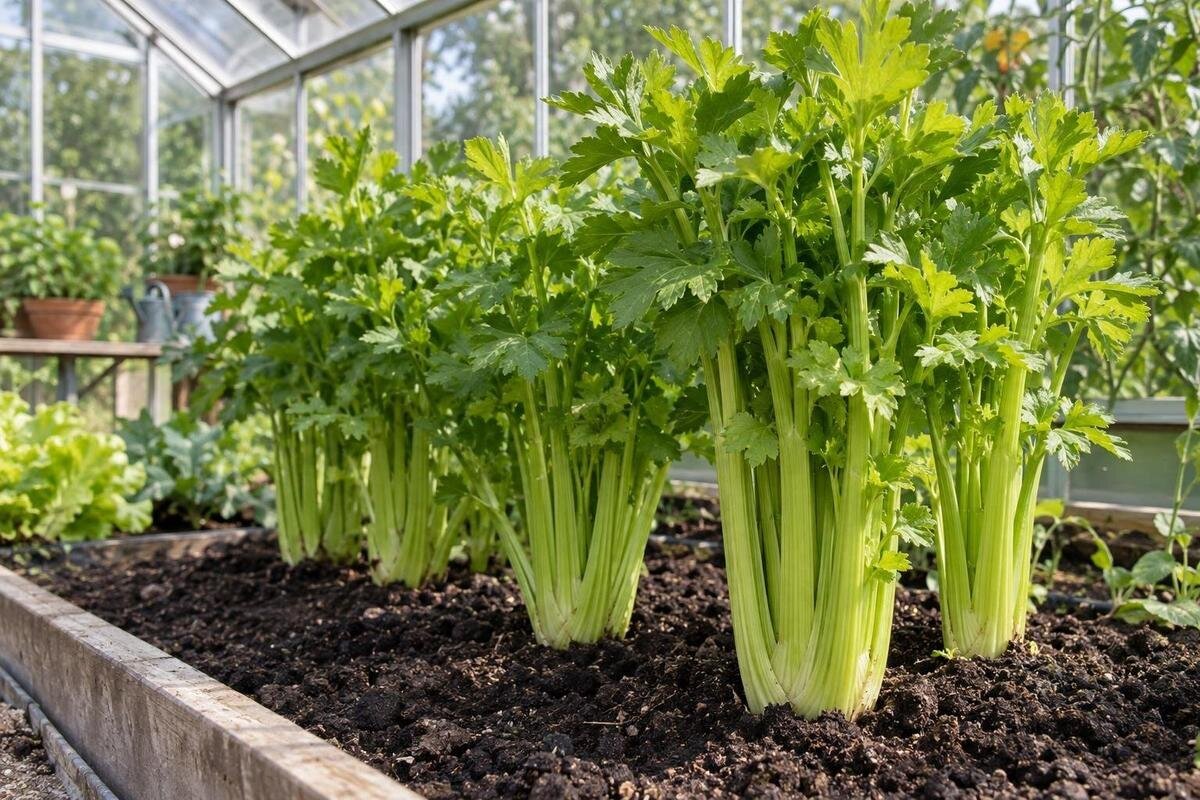
Greenhouse growing guide
Celery is possible under glass, but it asks for more than a sunny corner. The crop takes months to mature, occupies a bed through much of the growing season and can suffer if its roots repeatedly dry out. In an Irish garden, an unheated greenhouse can shelter plants and make watering easier to monitor, but it also keeps off rain and can become very warm in bright weather. Decide whether you can maintain a cool, evenly moist bed for the full crop before giving celery valuable space.

What to check when choosing a greenhouse 1
Is a greenhouse a good fit for celery?
Celery is a cool-season crop, so moderate growing weather can suit it, but conditions under glass are not automatically gentler. Rain is kept off the bed, and direct sun can raise temperatures quickly even when the air outside feels mild. A greenhouse changes the crop’s water and heat balance; it does not remove weather risk or guarantee an earlier harvest. Shelter can help where wind or prolonged wet weather makes the crop awkward to manage, but the same cover means you have to replace rainfall with careful watering.
Compare a greenhouse bed with a well-prepared outdoor one before sowing. If outdoor soil holds moisture and remains workable, celery may need no protected space at all. In an unheated greenhouse, night temperatures still fall with the weather, cold snaps can reach the plants, and spring sunshine can create a hot afternoon. Growing under glass is worthwhile when it solves a real problem, such as providing a sheltered, accessible bed or extending the useful harvest window, and you can water, ventilate and inspect it over several months. If the small greenhouse is needed for other crops, a short celery row can be a more sensible trial than filling the bed.
Choosing a stalk-celery cultivar
Check the seed packet for the crop being sold. Stalk celery is grown for its fleshy leaf stalks; celeriac is selected for its swollen root, while leaf celery is mainly harvested for foliage. They belong to the same broader crop group but are not interchangeable plants. For stalks, choose a cultivar suited to the harvest you want and the time available under glass. Buying seed labelled simply “celery” without checking whether it is a stalk or leaf type can leave you with the wrong crop for the bed you planned.
Stalk cultivars are commonly described as self-blanching or trenching. Self-blanching varieties are selected to produce paler inner stems with less earthing-up; the seed instructions still matter for spacing. Traditional trenching varieties are blanched by gradually drawing soil up around the stems as they grow, which calls for room along the row and enough loose soil. Green types can be harvested without blanching and remain more strongly coloured. Choose the approach before laying out the bed: blanching affects the access you need, not just the colour of the finished stems.
What to check when choosing a greenhouse 2
Allow several months from sowing to harvest
Celery is slow from seed, so work back from the harvest period and leave the bed allocated for months rather than weeks. In suitable conditions, allow roughly four to five months from sowing to usable stems; the cultivar, the size of plants set out, and the warmth and light of the season can shift that estimate. Late-winter or early-spring sowing is common for a late-summer or autumn crop, but an unheated Irish greenhouse may be too cold for reliable early germination. Sow shallowly in a bright, reliably warm place and follow the seed packet for timing and sowing depth.
Pot seedlings on as they become large enough to handle and avoid letting them become crowded or drawn. Harden young plants gradually before moving them into the greenhouse bed, especially if they have been raised indoors. A prolonged cold spell while seedlings are young can encourage premature bolting in some cultivars, so do not treat the greenhouse as frost-proof or rush a very early transplant. If cold nights are forecast, delay planting or provide suitable protection rather than assuming sunny afternoons will balance them. This long growing period also affects how you allocate space. Limited-Edition Aluminium Greenhouses with Storage are listed in sizes from 5.52 m² to 28.08 m². On the selected model’s plan, distinguish the temporary seedling area from the bed that celery will occupy until harvest, and allow for storage and a clear path.
Prepare a fertile, moisture-retentive bed
Prepare the whole celery bed so it holds moisture evenly, not just the planting holes. A fertile, friable soil enriched ahead of planting with well-rotted compost gives roots a consistent place to grow and improves the bed’s ability to retain water. Break up compaction and remove persistent weeds before setting out plants; later hoeing close to stems can damage roots. In a greenhouse, the bed gets little or no direct rain, so a loose surface over dry soil is not enough. Check moisture a few centimetres down before planting, and soak the bed if it is dry.
Moisture retention should not mean waterlogging. If water sits in the bed after watering, improve drainage or choose a different position rather than compensating with yet more irrigation. Celery can also grow in containers if the growing volume stays evenly moist; small pots and exposed grow bags can dry quickly in a warm greenhouse. When comparing the Bloomcabin Prestige Greenhouse range, listed from 3.77 m² to 28.08 m², decide whether you intend to use a fixed bed or containers. Check the chosen model’s plan and ground preparation requirements with that arrangement in mind. Include the bed’s dimensions or the containers’ footprints, as well as the walkway, rather than treating the whole floor as planting space.

What to check when choosing a greenhouse 3
Spacing and access around the celery bed
Give each plant a measured share of the bed. About 25–30 cm between stalk-celery plants is a useful initial allowance, but follow the cultivar’s instructions, particularly for self-blanching or trenching types. Do not squeeze plants together to increase the count: a dense row is harder to inspect, water and harvest, and leaves less room for the chosen blanching method. Leave enough length for the rows and enough width to reach each plant without standing on the soil. Celery may look small at transplanting, so mark the mature layout before placing other crops nearby.
Plan access as carefully as the bed. You need to bring water to the crop, reach the base for weeding and blanching, and carry stalks out without brushing through neighbouring plants. A greenhouse shared with taller summer crops can become much more crowded than it looks in spring; allow for their mature canopy and competing irrigation needs, not only the space that is empty on planting day. The Bloomcabin Orangerie Spacious Greenhouse is listed from 47 to 70 m². When considering a larger layout, place the proposed celery rows on the plan alongside the other growing areas. Check that each row remains reachable without stepping into another bed or moving containers every time you tend the crop.
Keep moisture even at root level
The practical aim is steady moisture through the root zone, not a fixed number of watering days. Check the soil below the surface, especially after sunny weather, ventilation or a period of rapid growth; the greenhouse can dry a bed while the garden outside is wet. Water enough to moisten the whole planted strip rather than wetting the top lightly and leaving roots in dry soil. A watering can or irrigation line can work if it reaches the full row. For containers, check more often because the limited soil volume can lose moisture faster than a bed.
Do not wait for repeated wilting before watering. Celery responds poorly to stop-start growth, and dry periods can leave stalks smaller or tougher than a consistently grown crop. Equally, keep water moving through the soil rather than leaving roots in standing water. If you use a timer or drip line, inspect the plants and soil yourself: a blocked outlet or uneven run can leave one end of the bed dry while the schedule appears normal. Aluminium Classic Greenhouse options are listed from 3.77 m² to 28.08 m². For the size you are considering, sketch how water will reach the planted strip, including its far end. With a watering can, check where you can stand; with an irrigation line, leave access to inspect the outlets along the row.
What to check when choosing a greenhouse 4
Manage heat and ventilation
Celery grows best in cool, steady conditions, but greenhouse temperatures can climb sharply on a bright day. This matters even in a cool Irish spell: glass and direct sun can make the crop much warmer than the outdoor air, while the bed loses moisture faster. A maximum–minimum thermometer near plant height, shaded from direct sun, can reveal the actual day and night pattern. Open available doors or vents before heat has built up, adjusting to the weather and the site rather than waiting for leaves to wilt.
Ventilation is not a reason to leave plants exposed to a cold draught all night; balance fresh air with the temperature, and do not assume a closed greenhouse offers dependable warmth. Humid, still air around dense foliage makes inspection and drying slower, so spacing and openings both matter. If comparing a lean-to form, Aluminium Lean-to Greenhouses are listed from 3.69 m² to 14.34 m². Check the selected model’s openings alongside the site’s sun and shelter. Consider where the celery foliage will sit in relation to those openings and whether you can reach their controls once neighbouring crops have grown. Assess conditions beside the particular wall rather than assuming that a lean-to will provide the temperature pattern you need.
Blanching methods and feeding
For a self-blanching cultivar, use the packet spacing and let plants shade their inner stems; do not pile soil over the heart. For trenching celery, draw soil gradually around the stems once the plants are established, taking care not to bury the growing point. The aim is to exclude light from the stalks, not to cover the leaves or crown. If blanching feels too labour-intensive, choose a green or self-blanching variety rather than improvising a trench in a shallow bed.
Support the long crop with steady, not excessive, fertility. Celery benefits from fertile soil, so incorporate compost before planting and use fertiliser only as directed for the crop and product. Adding more by habit will not compensate for dry roots or a poorly prepared bed. A narrow or shallow bed can make a trenching method impractical. Limited Edition Aluminium Greenhouses are listed in sizes from 3.77 m² to 28.08 m²; compare the proposed bed arrangement within your chosen size before allocating a trench row. Allow room for the loose soil you will draw around the stems and for access along the row. If that arrangement crowds the path or neighbouring plants, reconsider the blanching method before sowing.

What to check when choosing a greenhouse 5
Harvest in stages and watch for crop problems
Harvest timing depends on the cultivar and sowing date; wait until stems are well formed rather than judging by the calendar alone. For a continuing harvest, take a few outer stalks from each plant and leave the central heart intact. If you want a whole plant, cut it at the base when the stems are at the size you need. Keep the bed evenly moist during harvest so remaining plants can continue growing. As autumn advances, pay attention to frost forecasts: an unheated greenhouse can still become cold enough to damage an exposed crop.
Check the crop while harvesting. A flower stalk rising from the centre signals bolting; it is usually better to use any sound stems promptly than expect the plant to resume normal stalk growth. Inspect leaves for celery leaf-miner damage and look around the base for slugs, especially where foliage is dense. Remove damaged material and identify the cause before choosing a treatment; a discoloured heart or stalk can have more than one cause and is not, by itself, proof that a particular fertiliser is needed. T-Shaped Orangery Greenhouse models are listed from 16.52 to 30 m². On the chosen plan, trace the route from the celery bed to the door and check where you can stand to examine the plants. Keep that working space available through harvest, rather than filling it with temporary pots.
Choose a greenhouse around the celery bed
Choose the structure around the conditions you can actually provide. Before committing a long-season crop, note the hours of direct light at the intended bed, where water will reach, how you will ventilate on bright days and where a path can stay clear as plants mature. Avoid placing celery behind a taller crop that will block access or compete for the same regular watering. For an unheated greenhouse, plan a sowing date that respects cold nights rather than relying on shelter to make an early season warm. If outdoor soil already provides a suitable moist bed, protected space may add little.
Use product area as a first comparison only, then review the actual footprint, door and opening positions, and internal bed arrangement. The Bloomcabin Oasis Pyramid Greenhouse is listed from 5.53 m² to 18.9 m²; that range does not establish how many plants fit or whether the bed is reachable. For celery, the deciding question is whether the model leaves a moist, ventilated growing strip and room to tend it throughout the season. If those conditions do not fit the available structure, use the greenhouse for a crop that suits the space and grow celery outdoors instead.
Frequently asked questions
Can celery grow in an unheated greenhouse?
Yes, if you time sowing and planting for the conditions you can provide. An unheated greenhouse is not frost-proof: cold nights can damage plants, and a prolonged cold spell when seedlings are young may encourage bolting.
How often should I water greenhouse celery?
There is no reliable fixed schedule. Check the soil below the surface and water when the root zone is drying, taking account of sun, ventilation and the size of the bed. Keep it evenly moist, not waterlogged.
How much space should I leave between celery plants?
About 25–30 cm between plants is a useful starting allowance for stalk celery, but follow the cultivar’s instructions. Include room to reach the plants, water them and carry out any blanching the variety requires.
Does all celery need blanching?
No. Green types can be grown without blanching, while self-blanching cultivars need less earthing-up than traditional trenching types. Check the seed packet before planting, as the method affects the bed layout and care.
Is a greenhouse better than growing celery outdoors in Ireland?
Not automatically. A greenhouse keeps rain off the soil and can heat up on sunny days, so it needs attentive watering and ventilation. If outdoor soil stays moist and workable, a protected bed may offer little advantage.
Treat celery as a long-season bed crop rather than a quick filler. If you can keep its soil evenly moist, ventilate the greenhouse on warm days and leave enough room to tend and harvest the plants, it can earn that space. If those conditions are difficult to provide—or outdoor soil already holds moisture well—a greenhouse is not essential for growing a useful crop of celery.
