
Diagnosing Long, Leggy Seedlings in the Greenhouse
Greenhouse growing guide
A seedling can be tall without being healthy, but length alone is not a diagnosis. Look at the spaces between leaves, the stem’s firmness and the direction of growth, then compare the tray’s light and temperature conditions. In a greenhouse, warmth may keep growth moving while daylight is limited; crowded leaves can add another layer of shade. Working through these factors separately helps you decide what can be corrected now and which plants may be too weak to recover.

What leggy seedlings look like
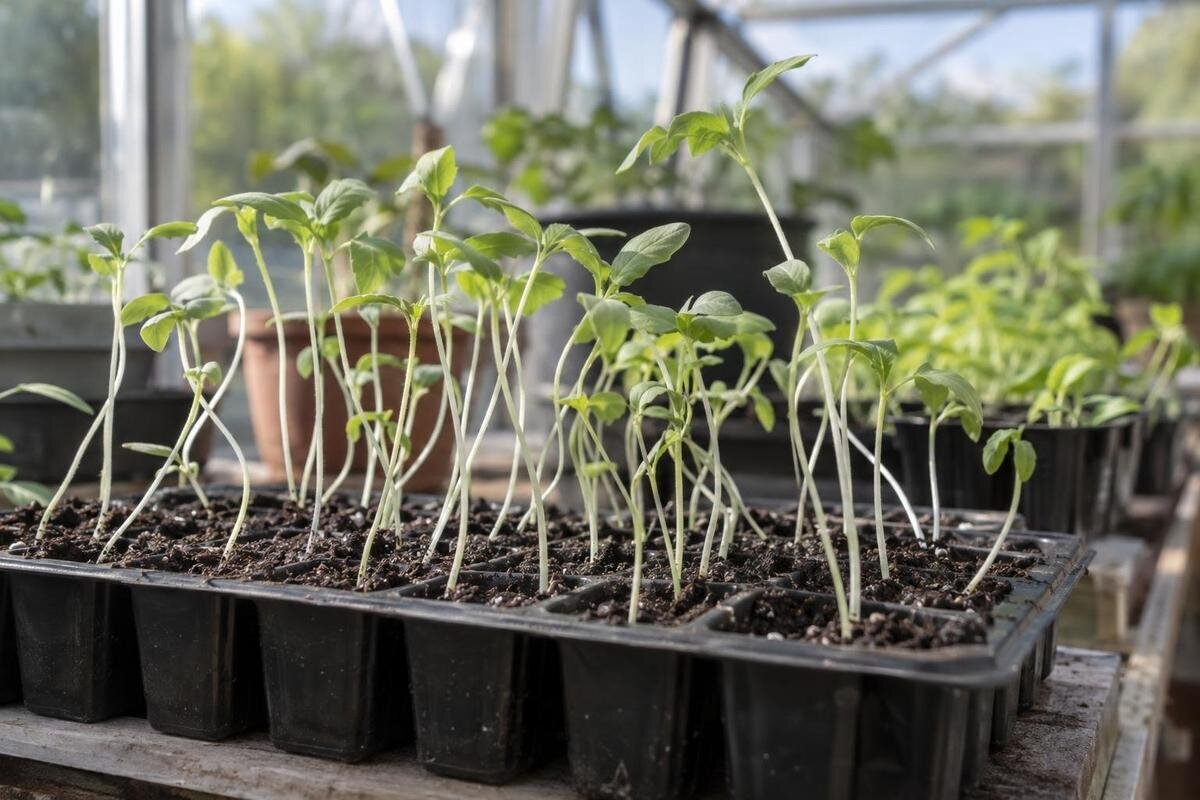
Leggy seedlings usually have unusually long gaps—known as internodes—between sets of leaves, along with a thin stem and a weak or leaning habit. They may look pale, but colour alone does not identify the cause. Compare plants of the same species at a similar developmental stage: some naturally make longer stems, and early growth may not resemble the mature plant. The concern is a stretched, poorly supported seedling relative to what is usual for that crop, not simply one plant being taller than a neighbouring crop. Note the gaps in relation to leaf size, whether the stem holds its leaves upright, and whether the latest growth is still stretching. These observations give you a clearer basis for comparison than overall height alone.
Check whether the stem is firm and intact, whether leaves are developing, and whether the whole batch leans in one direction. A shared lean towards a clear side suggests directional light; similarly stretched stems across the tray may point to generally low light, too much warmth for the available light, or close sowing. If only a few cells are affected, look for local shade and competition before changing the whole greenhouse. A long, green stem is different from one that has suddenly darkened, pinched or collapsed at compost level; the latter needs a separate assessment, as changing the light will not repair damaged tissue. The stem base can offer useful clues as well as the growing tip.
What a tray-wide pattern can reveal
Before moving trays, make a quick record of the crop and variety, sowing date, emergence date, tray position and which seedlings are affected. Emergence date is useful because plants sown together may be at different stages if they germinated at different times. Compare the centre and edges of one tray, then trays at different heights or on different sides of the greenhouse. Note whether new leaves are compact, whether stems lean, and whether one batch is worse than another. A sketch or dated photograph can make subtle changes easier to judge after you adjust conditions.
Follow the light around the greenhouse at several times of day rather than relying on a bright spell at midday. A nearby wall, tree, shelving or another tray may cast shade for much of the day; glazing bars and the house’s position also affect where light falls. If you are planning a dedicated propagation area, the Limited-Edition Aluminium Greenhouses with Storage listing gives area options from 5.52 to 28.08 m². That range describes overall area, not the daylight reaching a particular bench, so assess the site and intended tray position as well.
Light reaching the seedlings
Light is often the first factor to investigate because a plant receiving too little can elongate as it grows towards a brighter area. The gaps between leaves may become pronounced, and seedlings can lean even when the greenhouse looks bright to a person. Day length, cloud, external shade and the tray’s position within the house all matter; light at glazing level can differ from light on a lower bench. Check the crop’s own light needs before moving it, as a bright location for one seedling is not automatically suitable for every species. Seasonal changes can also alter the light reaching the same bench.
Move affected trays to a brighter suitable position and remove avoidable shade; then judge the new growth, not the old stem. Turning a tray may even out a one-sided lean, but it cannot make an overall dim position brighter. Where natural daylight remains inadequate, a purpose-made grow light may help if used according to the maker’s instructions and the crop’s requirements; lamp output, placement and duration vary, so do not guess one universal distance or timetable. When comparing greenhouse footprints, the Bloomcabin Prestige Greenhouse is listed from 3.77 to 28.08 m². Consider where you would put the seedling bench within your chosen footprint, including shade from shelving or other trays.
Warmth after germination
The warmth needed for germination may differ from the conditions seedlings need for growing on. Some seeds are started in a warm place, but keeping emerging seedlings too warm when light is limited can encourage rapid, soft growth. This does not mean they should be chilled: each crop has its own suitable temperatures, and an abrupt cold change can stall or damage tender growth. Check the seed packet or dependable crop-specific guidance for post-emergence conditions rather than applying one temperature to every tray. If you used a heated propagator, reassess its setting or the tray’s location once shoots appear. Keep this distinction in mind when comparing newly emerged seedlings with plants that are further along.
Measure at seedling height and, if possible, note the warmest part of the day and the cooler period; outside weather alone does not show conditions inside the greenhouse. A sunny spell can raise temperatures even when light is uneven across the benches. Adjust warmth gradually and ventilate when outside conditions allow, without exposing tender seedlings to a cold blast. The Spacious Greenhouse listing gives options from 47 to 70 m². If you are planning several growing areas, include a place to monitor conditions beside the propagation trays. Compare readings from their intended positions rather than assuming that every part of the house has the same temperature.

Crowding within the tray
Look closely at sowing density. When seedlings are packed together, leaves overlap and smaller plants receive less light; neighbouring stems may lengthen or lean to escape that shade. A tray can look orderly while several plants share a cell, or rows are close enough for leaves to overlap. The centre can be more congested than the edges, so one batch may contain plants with different levels of stress. Thin or prick out at a stage that suits the crop, before competition becomes severe, and follow the recommended spacing rather than choosing a number that fits the tray alone. Check how quickly each variety fills its available space.
Make the tray layout match the room you can actually use: each batch should be visible and reachable, without one tray shading another. The Aluminium Greenhouses listing gives area options from 3.77 to 28.08 m², a way to compare overall footprints but not bench capacity. In an existing greenhouse, sketch the benches and walking space or place empty trays as a test before sowing a full batch. Account for room to thin and water plants as well as their final tray positions. More trays in a tight area do not create more growing room.
Moisture and feeding as secondary checks
Check moisture and feeding, but do not use either as a shortcut diagnosis. Underwatering can leave seedlings limp, while persistently saturated compost can impair roots and contribute to other problems; these conditions can add to a weak appearance without explaining repeated long internodes on their own. Maintain moisture to suit the crop and container, allow excess water to drain, and check what the compost contains before adding feed. A seedling’s needs change as it develops, so the right approach depends on the plant, compost and stage rather than a universal feeding date. See whether the same pattern affects all plants in a wet or dry patch.
Treat leaf colour, compost condition and wilting as supporting clues. If one tray dries much faster than another, check its position and container; if all the seedlings are stretched, adding fertiliser is unlikely to correct the balance of light and warmth. Too much feed can harm young roots or encourage unbalanced, soft growth. The Lean-to Greenhouses listing gives area options from 3.69 to 14.34 m². When planning the layout, leave enough access to inspect and water each tray evenly, including those at the back of a bench. You should be able to check the compost and leaves without having to reach across or move other batches.
Adjusting conditions gradually
Once you have a likely cause, change the conditions that match it: move a tray out of persistent shade, thin or separate crowded seedlings, and bring the temperature towards the crop’s guidance if the growing area is too warm. If plants are not in immediate danger, adjust one major factor at a time and note what you did; that makes it easier to identify what helped. Avoid moving a low-light tray straight into more intense sun or a cooler spot without a gradual transition. Assess progress by new leaves and stem sections, not by expecting the existing stem to shorten.
Handle seedlings carefully while making changes. Move the tray by its base and hold an individual plant by a leaf rather than squeezing its fragile stem. A small support may steady a plant temporarily if the stem is intact, but tying up every seedling can conceal a problem that still needs better light or spacing. If repeated sowings spill onto temporary surfaces because benches are full, plan a clearer layout for the next batch. The Limited Edition Aluminium Greenhouses page lists area options from 3.77 to 28.08 m². Use empty trays to test your proposed arrangement, allowing access to lift each batch by its base without disturbing neighbouring plants.
How much recovery is possible?
Recovery depends on how far the seedling has stretched and whether it remains sound. The elongated part will not contract, so recovery means that the plant continues with stronger new leaves and shorter, sturdier stem sections. A green, unbroken stem with active leaves may respond after light, warmth or spacing is corrected. A badly bent or snapped stem, a plant with failing roots, or one that keeps collapsing may not be worth keeping, particularly if stronger seedlings are available. Give the healthier plants room rather than allowing weaker specimens to crowd them.
Some crops tolerate being potted deeper, while others can be harmed if the stem or growing point is buried; check crop-specific advice before covering any part of a stem. Do not assume that repotting, staking or extra feed will reverse stretching. When planning room for moving plants from trays into pots, the T-Shaped Orangery Greenhouse listing gives area options from 16.52 to 30 m². Check the actual footprint and bench arrangement before deciding whether propagation and potting tasks can share the space; the listed area alone cannot show how they will fit.

When to thin or pot on
Thin, prick out or pot on according to development, not height alone. The appearance of true leaves—the leaves after the first seed leaves—and a root system beginning to hold the compost together can help indicate readiness, but the right point varies by crop and cell size. Where several seedlings share a cell that should hold one, keep the strongest. If roots are likely to tangle, snip weaker plants at compost level rather than pulling them out and disturbing the plant you want to keep. When lifting an individual seedling, support its root ball and hold a leaf, not the stem; check crop-specific guidance for delicate plants.
Separate weak but intact plants from vigorous ones if they need different care, and do not move an entire tray just to deal with one seedling. A broken stem or a pinched, decaying base is a reason to remove that plant from the group; where disease is suspected, clean trays and tools before reusing them. The Pyramid Greenhouse page lists area options from 5.53 to 18.9 m². For a future setup, allow room for both newly sown trays and plants already moved into pots. Plan where each group will sit so that you can inspect individual seedlings without rearranging the whole batch.
Preventing legginess in later sowings
Prevent a repeat by matching sowing date to the light and growing conditions you can provide after emergence, not just aiming for the earliest possible crop. Follow crop-specific instructions, sow within the recommended spacing, and avoid starting more than you can place in a bright, suitable position. If a heated propagator is part of your routine, decide in advance what happens when shoots appear: germination and growing on can call for different conditions. Small, staggered batches are easier to assess than several crowded trays sharing limited bench space. They also let you refine the timing of later sowings using what you observe in the first batch.
Keep a short propagation record: crop and variety, sowing and emergence dates, tray position, temperature notes and the first sign of stretching. Next time, compare plants from different locations or sowing dates rather than guessing which change worked. Before sowing, check for shade at the planned bench, reserve room for the whole batch and decide whether available daylight is likely to meet that crop’s needs. Regular observation catches a pattern while stems are still sturdy enough to move, space or pot on.
Frequently asked questions
Can leggy seedlings recover?
Often, if the stem is intact and the roots and leaves are healthy. Correcting light, temperature or crowding can help the plant make sturdier new growth, but the stretched part of the stem will not shorten. Keep the strongest seedlings and judge progress by their newest leaves and stem sections.
Will turning the tray stop seedlings stretching?
Turning a tray can reduce a one-sided lean by changing which way seedlings face the strongest light. It will not fix a position that is too dim overall, or correct excess warmth or overcrowding. Look for more compact new growth after adjusting the wider conditions.
Should I lower the greenhouse temperature?
Not automatically. Check the growing guidance for that crop and the temperature beside the seedlings, especially after they have emerged. If the growing area is too warm, adjust it gradually; exposing tender seedlings to a sudden cold change can cause another setback.
Can I bury a stretched stem when potting on?
Only if that crop tolerates deeper planting. Burying a stem or growing point can harm some seedlings, so check crop-specific advice before doing it. Potting on may give roots more room, but it will not make an already elongated stem shorter.
Should I feed a weak, leggy seedling?
Extra fertiliser is not a general remedy for legginess. Check the compost, plant stage and crop requirements first. Too much feed can harm young roots or encourage soft growth, while a shortage of light or excess warmth needs a different correction.
Judge the seedlings by their newest growth and the conditions beside the tray, not by height alone. In most cases, the useful checks are light, temperature and spacing; compost moisture and feeding help rule out additional stress. Correct the cause gradually, protect sound roots and stems, and give healthier plants room. The old stem may stay long, but a seedling with sound new growth can still become a healthy plant.
