
Is Early Greenhouse Beetroot Worth Growing?
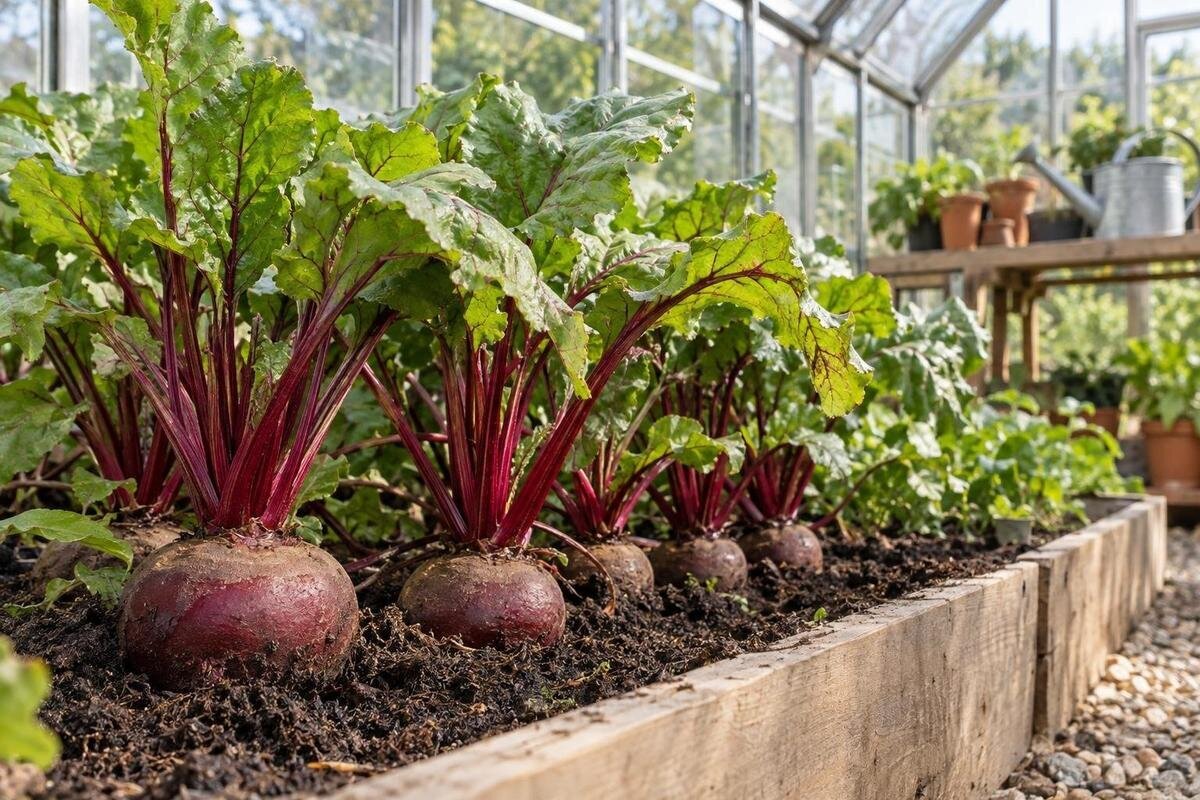
Greenhouse growing
Growing beetroot in a greenhouse is worthwhile chiefly when you want baby roots before outdoor sowings are ready and can spare a bed that will later be cleared. An unheated greenhouse can shelter seedlings and may warm the soil sooner, but Ireland’s changeable spring weather means it cannot guarantee an early harvest: a bright afternoon can be followed by a cold night, and damp soil can remain slow to warm. Beetroot is straightforward to sow outdoors once conditions suit, so the decision is about the size of the head start and the value of the protected space. A short, labelled trial row usually answers that better than moving the whole crop under cover.

Is an early greenhouse sowing worthwhile?
Early sowing under glass can make sense when you want small roots before outdoor beds are ready, have a vacant greenhouse bed or container, and can accept an uncertain harvest date. A greenhouse cover reduces exposure to wind and rainfall and may allow the soil to warm sooner, but it does not turn an unheated house into a heated propagator. On bright days the air can warm quickly while the bed and night-time conditions remain cool. That variation matters to seedlings as they establish, so treat the benefit as a possible advance rather than a promised number of weeks. If the space is already committed to another early crop, beetroot rarely deserves priority simply because it is a root vegetable.
Assess the value against your own calendar: is there a gap between the protected sowing and your first outdoor beetroot, and can you use the roots before a summer planting needs that bed? A few baby roots for an early meal can justify a spare strip more readily than a full bed reserved for a bulk crop. The Oasis Pyramid Greenhouse range is listed from 5.53 m² to 18.9 m²; that area is not automatically available for a beetroot row once access, staging and other crops are allowed for. Sketch those uses before deciding how much of the structure the crop could occupy. Its value rests on a real harvest gap, not on the greenhouse alone.
How baby-root harvesting changes the plan
Harvesting beetroot as baby roots allows you to clear the bed sooner than if you wait for full-size roots. You can harvest some plants while leaving others to grow, so the row need not be cleared all at once. Many varieties can be eaten small, but check the seed packet: some are described particularly for baby harvest, while others are promoted for full-size roots or later sowing. Choosing a suitable variety and lifting at the intended size can make a short growing window useful; a variety labelled as early still needs suitable growing conditions. Smaller roots also mean less weight per plant, so estimate how many you would use in a meal rather than counting plants alone.
Use one short row or a few containers to test how many baby roots you actually eat before committing a whole bed. Do not count one seedball as one guaranteed plant: beetroot seed is often a cluster, and several seedlings can emerge at a single sowing point. The Limited-Edition Aluminium Greenhouse with Built-In Storage is listed in area options from 5.52 m² to 28.08 m². With any layout that includes storage, separate the space set aside for that use from the area available for planting. This makes your expected harvest more realistic and helps keep an early experiment from crowding a later crop.
When to sow beetroot under glass
Late winter into early spring is the usual window people consider for an early covered sowing, but choose by conditions rather than a fixed date. Irish spring weather can turn quickly: the air may feel mild at lunchtime while the soil stays cold or wet. Check the bed itself, follow the variety’s sowing guidance and wait until it is workable rather than sticky or saturated. In an unheated greenhouse, a sunny afternoon reading is not enough to show how cold the bed becomes overnight. A soil thermometer and a record of overnight conditions give more useful evidence than the calendar alone. Cold, wet drills can leave seed slow to emerge, so waiting can save seed and space.
The Bloomcabin Prestige Greenhouse is listed in area options from 3.77 m² to 28.08 m², but a larger area does not by itself make a warmer sowing bed: site, structure, ventilation and whether the greenhouse is heated all affect conditions. Treat listed area as a layout fact, not a measure of sowing temperature. For your first early attempt, sow a modest length and label its date and variety. Follow with an outdoor sowing when that bed is ready, rather than waiting for the covered row to finish before starting the main crop. Staggering makes it clearer whether glass has advanced the harvest or simply shifted the same crop indoors.
Preparing a greenhouse bed for beetroot
Roots need loose, stone-free soil that stays moist but drains freely. Break up compacted ground and remove stones or large lumps through the depth the roots will use; obstructions can make roots misshapen, while hard soil makes watering and lifting less predictable. Beetroot does not need an exceptionally rich, newly manured bed. Mature compost worked in ahead of sowing can help provide a suitable growing medium, while excessive leafy growth is not the aim when you are growing roots. Make the seed drill fine enough for good contact between seed and soil, but avoid reducing the whole bed to dusty powder that dries out quickly.
If the greenhouse floor is paved, a container or raised bed can still work if its usable soil depth, drainage and volume suit root growth. Decide where the growing medium will go before choosing the size of the planted area. The Spacious Greenhouse range is listed from 47 m² to 70 m², leaving a substantial layout to plan if you are comparing these models. Mark out the proposed beds and paths rather than assuming all of that area will be planted. Leave room to thin and lift roots from the side without standing on the soil. For a small early crop, a reachable strip is more useful than a broad bed whose centre is difficult to tend.

Sowing and thinning beetroot seedlings
Beetroot seed is often a corky seedball containing several true seeds, so one sowing point may produce a cluster of seedlings. Some varieties are monogerm, but the packet will say so; do not plan spacing on the assumption that every ordinary seedball gives one plant. Sow at the depth stated on the packet in a shallow drill, cover lightly and water gently so seed is not washed into heaps. For baby roots, plants can be closer than for full-size roots, but close planting is not the same as no spacing: each retained root needs room to swell and enough access for weeding.
When seedlings are large enough to handle, retain the strongest at each sowing point and thin the extras. Snipping unwanted seedlings at soil level is less likely to disturb the root you keep than pulling a tangle of neighbours. Use the seed packet’s recommended distance as your starting point; around 5 cm between plants is a practical guide for small roots, with greater spacing for larger ones. Keep rows far enough apart for your hand and a small tool to pass. If you are comparing the Aluminium Classic Greenhouse range, mark the intended row length on your bed plan and estimate the number of retained plants at that spacing. This gives you a clearer idea of the likely number of roots than counting how many seedballs you can sow.
Watering and ventilation under glass
Water regularly enough to keep the seedbed and developing roots evenly moist, especially when spring sun warms the greenhouse and rainfall cannot reach a covered bed. Check the soil below the surface rather than watering to a timetable: the top can dry while the root zone remains damp, or look fine after the bed has dried out. Avoid waterlogging, which reduces aeration, and try not to let the soil become very dry before soaking it heavily; uneven moisture can contribute to split roots. Steady, moderate watering is more useful than frequent shallow splashes that fail to reach the developing root.
Ventilation matters even for a cool-season crop. On a bright day, temperatures inside can rise quickly, so use the greenhouse’s normal vents or doors according to its instructions and check conditions rather than assuming the outside temperature applies indoors. Closing everything during a sunny afternoon can create excessive heat, even when the following night is cold. Adjust ventilation to the conditions you observe rather than leaving the greenhouse in the same state throughout the day. When comparing models in the Lean-to Greenhouse range, consider how you would reach both the crop and the ventilation controls in your proposed layout. A beetroot row behind another planting should not make either routine watering or ventilation awkward.
Cold weather and bolting
An early sowing can fail to gain time if it sits in cold soil, and exposure to low temperatures may encourage some plants to bolt: they send up a flowering stem before producing a useful root. Risk depends on variety and conditions; a greenhouse reduces some exposure, but an unheated structure cannot rule bolting out. Choose seed whose packet recommends early sowing or notes resistance to bolting, without treating that wording as a guarantee. Watch for a central flower stalk. Once a plant is bolting, its root may become less tender, so harvest it promptly if it is large enough to use rather than waiting for it to reach full size.
Do not respond to every slow seedling by feeding heavily. First check moisture, sowing depth, crowding and temperature; each can affect how the row establishes. If it remains poor, re-sow a short length when conditions improve instead of waiting on plants that have stalled. This is another reason not to make the first attempt your only beetroot crop. Label what you planted, note whether plants bolted and compare the result with an outdoor sowing of the same variety. A record across a couple of seasons can show whether early protected beetroot is reliable in your greenhouse, or whether a later outdoor row gives better roots with less attention.
Clearing the bed for summer crops
Plan the end of the beetroot row before planting. If a tomato, cucumber or other summer crop is due to use the bed, decide when it must go in and work backwards from that date. Baby roots can be lifted progressively as they reach the size you want, freeing some space before the rest of the row is ready. Do not leave the whole crop in place because a few roots are still small; the summer planting may then be squeezed, shaded or delayed. If you want another beetroot batch, use a separate short row or container so it does not tie up the same bed. A succession is useful only if you have a clear harvest window for each sowing.
Show both the early row and the summer planting on the same bed plan. For a Limited Edition Aluminium Greenhouse, use the selected model’s confirmed area to sketch where each crop would go and identify any overlap. If the summer crop needs the exact position occupied by beetroot, lifting a few roots elsewhere in the row will not solve the clash. Mark the part that must be cleared first and keep its harvest deadline separate from any roots you can leave longer. Where space is tight, a short line in an existing border is often a more sensible trial than creating a dedicated beetroot section. The plan should let you harvest useful roots without relying on every plant being ready at once.

Greenhouse beetroot versus outdoor sowing
Outdoor beetroot is a real alternative, not a lesser version of the crop. Once the garden soil is workable and conditions suit the variety, direct sowing outside avoids reserving protected ground and can give you a dependable main crop. A greenhouse may bring the first seedlings on sooner, shield the row from wind and heavy rain, and make tending more comfortable; the size of that advantage varies with site and spring weather. If outdoor sowing can begin soon after the covered row, the two harvests may overlap. The benefit is then a slightly earlier handful, not a dramatically longer season. That can still be worthwhile if an early harvest is your specific goal.
Compare the early harvest with what else you could grow in the same bed. Beetroot need not occupy a greenhouse all season, so a short spring row can fit before longer-season crops move in; if the bed is needed sooner, outdoor sowing is the better use of space. If you are considering a T-Shaped Orangery Greenhouse, include this early crop within the wider growing plan rather than making it the reason for choosing a structure. The range is listed in area options from 16.52 m² to 30 m². For beetroot, the useful comparison is how many early meals the row provides, how much watering and thinning it needs, and whether those meals arrive noticeably before the outdoor harvest.
A simple trial for your own garden
The easiest way to find out is to run a small, labelled comparison. Sow the same variety in a short protected row when the greenhouse bed is workable, then sow a matching outdoor row when the soil outside is ready. If the dates differ, write them down; the point is not a laboratory test but an honest comparison of sowing-to-harvest time in your own garden. Thin both rows as directed and harvest at the same baby-root size. Note when each first produces usable roots, how many plants reach that size and whether either row bolts, splits or develops uneven roots. This shows whether the cover changed the harvest date and quality enough to matter.
Record the space each row occupied and the date it was cleared, not just the first root pulled. A covered row that produces an early meal and leaves the bed free before summer crops arrive may be a good use of otherwise idle ground. If it delays those crops or needs constant attention for only a small advance, grow the main crop outdoors next year or try a later sowing under glass. Once you know the difference in your own garden, you can treat early beetroot as an optional first crop in a planned succession rather than a greenhouse essential. That is a fair basis for deciding whether to repeat it.
Frequently asked questions
Can I grow beetroot in an unheated greenhouse?
Yes. An unheated greenhouse can shelter a sowing, but cold nights may still slow germination and growth. Sow when the bed is workable and follow the seed packet’s guidance; a warm afternoon does not mean the soil has stayed warm overnight.
When should I sow beetroot under glass in Ireland?
Late winter into early spring is the usual window for an early covered sowing, but there is no reliable date for every garden. Check the soil and the variety’s instructions, and record your sowing date so you can compare the result with an outdoor row.
How far apart should I plant beetroot for baby roots?
Around 5 cm between retained plants is a useful starting point for small roots. Leave more room for full-size beetroot and follow the variety’s instructions. Thin extra seedlings carefully, as one seed cluster can produce several plants.
Why have several seedlings grown from one beetroot seed?
Beetroot seed is often a cluster of seeds, so several seedlings can emerge from one sowing point. Keep the strongest and snip the others at soil level while small. Some varieties are monogerm and produce a single seedling more consistently; check the packet.
How can I tell when baby beetroot is ready to harvest?
You can lift a root to check its size. Many gardeners harvest baby beetroot at around 2.5–5 cm across, though the preferred size varies by variety and taste. Lift plants progressively rather than leaving the whole row until every root is large.
For an early meal from a bed that would otherwise be idle, beetroot under glass is a reasonable spring extra. It is less convincing as a dedicated greenhouse crop when outdoor sowings follow close behind or summer planting needs the same bed. Sow a short early row, keep the main crop flexible and let the actual harvest gap—not the greenhouse alone—decide whether you repeat it.
