
Electric or Fuel-Fired Greenhouse Heating?
Greenhouse heating
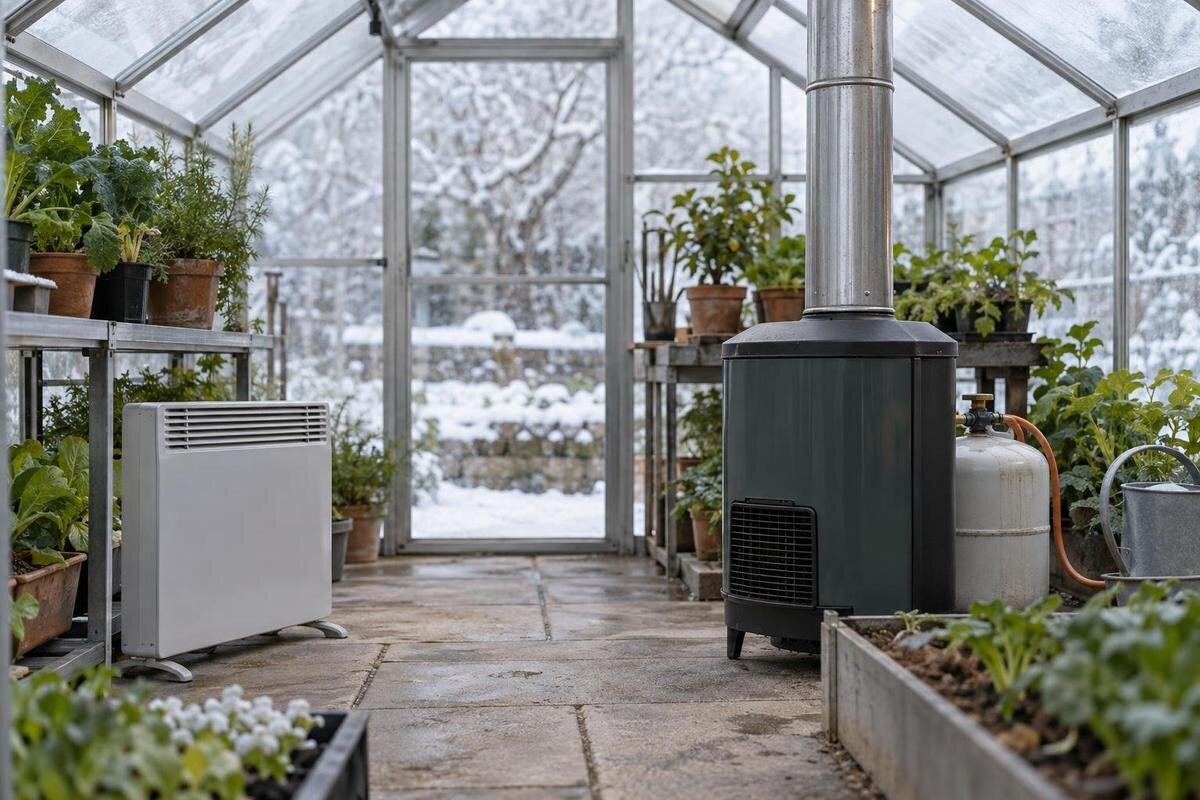
Choosing between electric and fuel-fired greenhouse heating involves more than the energy source. The options differ in what they release into the growing space, ventilation and installation requirements, and the work involved in day-to-day operation. Electric heat produces no combustion exhaust within the greenhouse; a fuel-burning heater may release exhaust there or route it outside, depending on its design. Compare the documentation for the actual heater with the greenhouse’s construction, ventilation and intended use. Neither category is automatically safer, cheaper or more suitable for every set-up.

Buyer checklist 1
Compare the heater with the greenhouse
Treat electric and fuel-fired as starting labels, not a verdict. Compare a particular heater with the particular greenhouse and the job you expect it to do. Holding plants above a frost threshold, keeping a space warm for active growth, or warming a propagation area are different aims; none by itself settles the fuel choice. Heat loss depends on the greenhouse’s exposed glazing and frame, gaps, dimensions, ventilation, weather and nearby shelter. A heater’s rated output alone cannot prove that it will maintain a chosen temperature in that structure. Likewise, an energy source does not guarantee even heat, easier control or a lower bill.
Record the exact greenhouse model and dimensions, door and vent positions, glazing and frame details, and any documented insulation measures. Note the temperature range and hours of use you have in mind. The Classic aluminium greenhouse range is listed in sizes from 3.77 m² to 28.08 m², a span that shows why a family name is not enough for comparison. Check the details for the exact option, then use them alongside the heater’s technical information. Floor area alone does not give heat loss or explain how often a heater will run. If a specification is missing, ask for it rather than assuming that similar-looking structures behave alike.
What fuel combustion releases inside the greenhouse
An electric heater does not burn fuel inside the greenhouse, so it produces no combustion exhaust there. That is a statement about indoor operation, not a claim that electricity has no wider emissions; those depend on how power is generated. A fuel-fired appliance uses oxygen and produces combustion products. With hydrocarbon fuels, these include carbon dioxide and water vapour; incomplete combustion can also generate carbon monoxide. The precise emissions depend on the fuel, appliance design, condition and operation. A label such as gas heater or paraffin heater does not, by itself, tell you how the unit affects air quality in an enclosed growing space. Compare the named fuel and combustion arrangement, not just the category.
The key distinction is whether the appliance is flued. An unflued heater releases its combustion products into the greenhouse; a correctly installed flued appliance is designed to discharge them outside. The instructions for the exact model must state its permitted location, approved fuel, required ventilation, flue arrangement and maintenance. Do not assume a patio, camping or general-purpose heater is suitable simply because its heat output seems adequate. A carbon-monoxide alarm, where used, is an additional safeguard rather than a substitute for selecting and installing a suitable appliance or following its service requirements. If the instructions do not clearly cover enclosed greenhouse use, confirm with the manufacturer or a qualified installer before buying.
Buyer checklist 2
How heating affects moisture and condensation
Unflued combustion adds water vapour to greenhouse air; the quantity depends on the fuel burned and how much the heater operates. This sits alongside moisture from compost and soil, watering, wet surfaces and plants. A flued appliance is designed to carry combustion products outside when correctly installed and working as its instructions require, but it does not remove water already present in the greenhouse. An electric heater adds no combustion water vapour at the point of use, yet it is not a dehumidifier: it adds heat, not a route for moisture to leave. Find out whether a fuel model is flued or unflued before comparing its effect on humidity.
Temperature changes can make humidity readings easy to misread. Warming air may reduce its relative humidity, but it does not remove water from the greenhouse. Condensation can still form when moist air meets glazing or a frame surface cold enough for moisture to collect. A lower reading just after heating therefore does not prove that moisture has been removed or that condensation risk has gone. If damp surfaces are already an issue, consider moisture sources, air exchange and cold surfaces as well as the heater. Include added combustion moisture when assessing an unflued unit; relying on heat alone will not dry the structure.
Ventilation requirements need separate attention
Ventilation has separate purposes that should not be confused. Air exchange can help manage humidity and stagnant air, while a fuel appliance may have specific requirements for combustion air and the discharge of flue gases. Opening greenhouse vents also lets heat escape, so ventilation needs must be considered alongside temperature control. A flue is not a greenhouse vent, and a greenhouse vent is not automatically an adequate flue or combustion-air provision. Do not close required openings or assume that airing the structure at intervals makes an unflued heater suitable. The appliance’s ventilation requirements apply during use, rather than only when you notice damp air.
Map the greenhouse’s actual roof and side vents, doors and other openings, and note whether they can remain unobstructed during normal use. The Lean-to Greenhouses range is listed from 3.69 m² to 14.34 m², but a product name and floor-area range cannot tell you the capacity or location of openings, or establish whether a particular combustion heater is compatible. Consult the exact greenhouse drawings and heater instructions together. If air supply, ventilation or exhaust requirements are unclear, ask a qualified installer to assess the combination. Do not cover or alter vents, create a flue route or improvise a combustion-air supply to balance warmth against airflow.

Buyer checklist 3
Installation constraints for electric and fuel-fired heaters
An electric heater depends on the supply available at the greenhouse. Its rated input, connection type and any fan or control accessories all matter when checking whether the supply is suitable. A nearby socket or a cable route does not, by itself, establish that the connection is appropriate for the heater or its location. Ask a qualified electrician to assess the supply, connection, protection and proposed equipment position. Do not assume that an indoor outlet or temporary lead is suitable as a permanent arrangement in a greenhouse.
Fuel-fired set-ups bring different questions: the exact fuel, availability, delivery or refilling, storage, flue arrangements where required, clearances and service access. Follow the appliance instructions for permitted fuel and storage, and have a qualified heating professional assess whether the model is intended for an enclosed greenhouse. The Limited Edition Aluminium Greenhouse range is listed from 3.77 m² to 28.08 m²; for any greenhouse, confirm the exact footprint and allow for the access and clearances required by the heater documents. A product’s size range does not state those clearances. Make sure the proposed position will not block doors, vents or access to controls.
Heat distribution and day-to-day control
Heat distribution is a property of the particular heater, not something to assume from its fuel. Electric units may use fan-driven warm air or radiant heat; fuel-fired appliances also vary in how they deliver warmth. A circulation fan moves air within the greenhouse but does not exchange it with outdoor air. Check where the thermostat senses conditions, whether a separate probe is available, what control range is documented and how heat is delivered. Position a sensor as the manufacturer directs; direct sunshine, a draught or the heater’s own outlet can affect its reading.
Use a plan to identify where people work, where plants stand and which areas need heat. The T-Model Orangery Greenhouse range is listed from 16.52 m² to 30 m²; use the drawings for the exact option to mark the heater, its sensor and the areas you want to monitor. A minimum-and-maximum thermometer or data logger can reveal temperature swings during normal operation. Compare readings from the areas in use rather than treating the thermostat reading as a description of the whole greenhouse. Keep this monitoring separate from appliance controls: check which sensor options and alarm functions the heater actually provides, and retain all required airflow and clearances.
Buyer checklist 4
Running costs are specific to the set-up
There is no universal cost winner without local electricity and fuel prices and the specific heater’s documented consumption. Electricity tariffs depend on the plan, while fuel costs depend on the fuel and how it is supplied. The hours of use, weather, desired conditions and greenhouse heat loss also affect consumption. Include installation and servicing, and any ongoing work such as fuel storage or refilling, in the comparison. A rated heat output is not the same as energy consumption, so do not use the output figure alone to predict a bill.
Keep running costs separate from indoor air quality and moisture. Electric heat avoids combustion exhaust at the point of use, while unflued fuel heat introduces combustion products; neither distinction tells you which option will cost less. For the Oasis Pyramid Greenhouse range, listed from 5.53 m² to 18.9 m², base the comparison on the exact greenhouse option and the heater’s stated consumption. Record the tariff or fuel price used and keep the same operating assumptions for both candidates. Show installation and servicing separately from energy expenditure, so a lower estimated energy bill does not obscure the other costs of owning and using the heater.
What the heater documentation should say
Read the manual and technical information for the exact heater, not just a product category or headline output. Check the named fuel, rated heat output and energy input, and any stated fuel consumption or electricity use. For a fuel-fired appliance, establish whether it is flued or unflued and what the manufacturer specifies for exhaust, ventilation and permitted locations. For either type, check the documented control functions, intended operating environment, maintenance and installation constraints. If a key figure or instruction is missing, ask the supplier or manufacturer to clarify it before comparing the heater with another model.
Use the installation information to check how the heater would fit into the working layout. The Limited-Edition Aluminium Greenhouses with Storage range is listed from 5.52 m² to 28.08 m². For the exact option, compare the drawings with the heater’s specified clearances and access requirements. Include access to the storage area as well as doors, vents and heater controls; the name alone does not establish whether these can all remain accessible. Note any placement questions that the drawings and manual do not resolve. This gives a professional a defined layout to assess, rather than leaving them to infer the intended arrangement from a product photograph.

Buyer checklist 5
Make a like-for-like comparison
For each candidate, record the exact greenhouse model and size, the intended use and hours of heating, and the heater’s model, energy input, rated output and consumption information. Add its fuel, flue arrangement, stated ventilation needs, control features, installation requirements and service schedule. Compare candidates against the same greenhouse and use assumptions; otherwise, a difference in operating hours or heat loss can be mistaken for a difference between electricity and fuel. This record is not a heater-sizing calculation. Where the required output is uncertain, get a separate assessment based on the actual structure and intended conditions.
Then compare the trade-offs separately: combustion exhaust and moisture, ventilation and flue requirements, electrical supply or fuel handling, running costs, and routine operation. One overall score can hide a drawback that matters to your greenhouse. For the Prestige Greenhouse range, listed from 3.77 m² to 28.08 m², use the same chosen size throughout the comparison. Distinguish requirements that must be met from preferences, such as the amount of routine fuel handling you are prepared to undertake. Mark missing information as unknown rather than treating it as an advantage. This keeps a convenient feature or attractive running-cost estimate from outweighing an unresolved installation requirement.
When professional advice is needed
Get a qualified electrician to assess the supply and connection for an electric heater, particularly where the greenhouse does not already have a suitable supply. For a fuel-fired appliance, ask a qualified heating professional to confirm that the exact model is intended for the enclosed setting and to assess its ventilation, flue, placement and service requirements. Give them the heater documentation and the greenhouse details, rather than asking them to judge from a product name alone. Do not modify a fuel appliance, its flue or its electrical connection yourself.
Make the assessment practical by explaining how you intend to use the space and what access must remain available. The Spacious Greenhouse range is listed from 47 m² to 70 m²; identify the exact option and mark the proposed working and growing areas on its plan. Ask the relevant professional which parts of the proposed arrangement are suitable and which need changing, whether that concerns the electrical supply, appliance position or combustion requirements. Keep their installation advice distinct from your preferences about cost and daily operation. You can then compare the viable arrangements without treating every unresolved question as a general argument for or against a fuel.
Frequently asked questions
Does an electric greenhouse heater remove moisture?
No. It adds heat but does not remove water from the greenhouse. Relative humidity may fall as the air warms, while moisture from plants, watering and growing media remains. Condensation can still form on cold surfaces.
Do all fuel-fired heaters put water vapour into the greenhouse?
No. An unflued hydrocarbon heater releases combustion products, including water vapour, into the space. A flued unit is designed to send exhaust outside when correctly installed. Check the specific appliance and fuel instructions.
Does an electric heater mean I can keep the vents closed?
No. An electric heater has no combustion-air requirement, but ventilation can still matter for managing humidity and air exchange. Follow the greenhouse and heater guidance, and do not assume that closing vents is appropriate.
Can I use a patio or camping heater in a greenhouse?
Only if the manufacturer explicitly approves that exact appliance for the enclosed greenhouse setting and specifies how it must be used. Do not assume that a heater is suitable because it produces enough heat.
Which option costs less to run?
There is no universal answer. Compare local electricity and fuel prices with the specific heater’s documented consumption, controls and use, as well as installation and maintenance costs. The greenhouse itself also affects energy use.
Electric heat avoids combustion products inside the greenhouse, while fuel-fired heaters require closer attention to the fuel, exhaust arrangement and ventilation. That distinction does not decide suitability on its own: moisture, controls, installation, running costs and the exact greenhouse all matter. Compare one heater with one defined greenhouse and intended use, and get qualified advice where electrical or combustion installation is involved. The strongest choice is the one whose documented requirements fit the space without relying on assumptions.
