
How to Identify Parts for a Discontinued Greenhouse
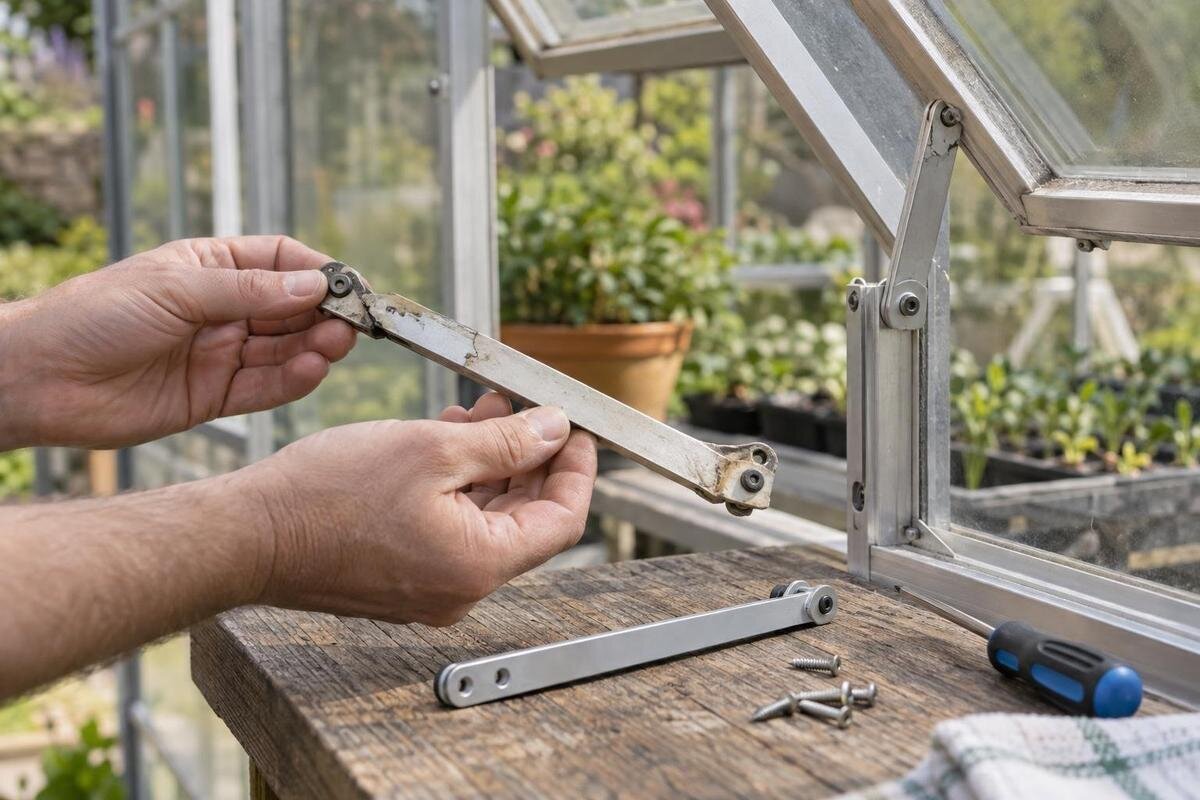
Greenhouse repair
Finding a part for a discontinued greenhouse is usually a matching exercise, not a matter of choosing something that looks close. Everyday names can cover different profiles, fixings or model revisions, and a current product page is not an old parts catalogue. Identify the greenhouse first, then describe the component in its exact position, with photographs and measurements that can be checked against a manual or drawing. Ask the manufacturer, original retailer or an experienced greenhouse installer to confirm the spare-part reference; glazing and frame components need particular care because appearance alone cannot establish a safe fit.

Identify the greenhouse before the part
Identify the whole greenhouse before trying to name one component. Record the manufacturer or brand, model or range, approximate purchase and installation years, original seller or installer if known, and any size shown on the order. Add broad features that help distinguish it: freestanding or lean-to, roof outline, number and position of doors or vents, and whether it has a base or attached storage. Mark each detail as confirmed, estimated or unknown. A greenhouse may have been bought and assembled at different times, so keep those dates separate. If a former owner supplied the details, distinguish their recollection from paperwork. A remembered name or approximate measurement is a clue, not a model code.
Look for a product label or model marking on an accessible frame member, then photograph it in place and transcribe it letter for letter. Check the manual cover, assembly paperwork, invoice, order confirmation, delivery notes and older emails too. Preserve suffixes, punctuation, spaces and revision notation; a faded letter or extra digit can distinguish related models. If a plate shows several numbers, copy each exactly and label it simply as a marking until documentation identifies it as a model, batch or serial number. If the only description is ‘classic aluminium greenhouse’, say that it is informal: the Aluminium Greenhouses product page names a product family; it does not prove that an older frame with a similar description belongs to that range.
Original manuals and order records
Search for the original assembly manual, parts list, technical drawings, service notes and accessory orders. Use the exact model wording alongside terms such as ‘manual’, ‘assembly instructions’, ‘spare parts’ or ‘technical drawing’. If you find a diagram, save the full page and any revision or date information, not only a cropped picture of the component; codes and illustrations can depend on a particular version. A manual for a similar-looking greenhouse is a lead until its model code is checked. An old purchase email can be as useful as a printed booklet. Keep the document title and publication date with the page, and note if it post-dates the installation. Record model wording as printed rather than replacing it with a name used in search results.
If paperwork is missing, contact the original seller, manufacturer or installer, if you can identify them. Give the label text, approximate date and broad model description, then ask for the correct manual, drawing, spare-part identifier and any replacement code that supersedes it. Ask whether that code applies to the precise model or revision, rather than asking only for ‘the same part’. If your search brings up a range such as Limited Edition Aluminium Greenhouses, keep that current range name separate from the wording in your original records. Ask the supplier whether the names are connected. It may be able to help identify the greenhouse even if it can no longer supply the item. Keep the contact name and response with your notes.
Describe the part’s location and function
Describe the component by its position as well as its everyday name. Say whether it is at the ridge, eaves, gable end, side wall, base, doorway or roof vent, and identify which end or side you mean. A simple sketch with the entrance marked and an arrow to the component is often clearer than ‘left roof bar’, since left changes with viewpoint. If both sides are visible from a safe position, say which one faces the entrance. Note whether the item is one of several repeated pieces and how many appear to be affected. This gives a manufacturer or installer a route from the greenhouse layout to the relevant drawing without turning a general term into a confirmed part number.
Use a common component name only when you are confident, then describe what the item touches or does: for example, a glazing bead beside a panel, a runner at the door, a seal at a junction or a bracket at a vent. If you do not know the name, say ‘the narrow strip between these two members’ and point it out in a photograph. Keep descriptions of the whole structure separate from names for individual components. For example, ‘pyramid’, as used on the Pyramid Greenhouse page, describes the greenhouse type rather than the part you need. Photos and a sketch can make your meaning clear where a trade term is uncertain.
Photographs of the part and its surroundings
Take one overall photograph from outside showing the whole greenhouse, then an inside view if it is safe and practical. Add a medium-distance image that shows the component in relation to a door, corner, roof bay or frame junction. Keep enough surrounding structure in view for someone else to locate it; a tight crop can hide whether the piece belongs to a ridge, an end or a later addition. State which side or end each image shows. If several similar parts are present, mark the affected one on a copy of the overview and keep the original unchanged. Good light and a steady, in-focus image are more useful than a heavily zoomed picture. Avoid strong glare, which can hide a joint or line in the profile.
Make close-ups from more than one angle where accessible, especially at the join with another member or panel. Put a ruler beside the component for scale without covering its edge, channel or fixing, and take a separate image of any label. Do not climb, loosen glazing or remove frame pieces just to get a better view; use a safe ground-level angle or ask an installer. If you are comparing the overall outline with a catalogue example such as the T-Shaped Orangery Greenhouse, retain both the overview and the close-ups in your enquiry: they answer different identification questions. Keep the original files; a crop or marked-up copy should be an extra, not the only evidence.

Measurements need labels and units
Measure only what you can reach without dismantling the greenhouse. Write the figures in millimetres, say exactly what each one refers to, and mark whether it is measured or estimated. The overall width of a frame, a clear opening and the length of a replacement member are different dimensions; do not label all of them simply ‘width’. Record the accessible length and width of the part, its location and any relevant fixing-point distance. State where each measurement begins and ends, and repeat it if the points are easy to misread. For a sloping piece, note whether the measurement follows the part. If old paperwork uses different units, keep that figure marked as quoted and retain the original; do not mix it with a new measurement without identifying the units.
For a component beside a wall or base, record the adjoining surfaces and clearances as well as the component; its connection may differ at each end. If the greenhouse is a lean-to, note which side meets the wall and the visible position of that junction, but do not treat a product label as a measurement. The Lean-to Greenhouses page is a type reference only: your wall line, roof junction and opening dimensions still need to be recorded separately. Do not lean over glass or force a tape measure into a narrow gap. If the critical dimension is inaccessible, mark it unknown and ask a qualified installer to measure it.
Profile shape and connection points
Some parts can be distinguished only by their cross-section: the shape of an extrusion, groove, channel, lip or return may matter more than its outside width. Photograph any already exposed end straight on, with a scale beside it, and note which face points towards the glazing or outside. Record visible holes, slots, tabs and edge shapes without filing, cutting, drilling or prising a piece off the frame. Do not dismantle a member to produce a sample. If the end is hidden, say so; a manual drawing or installer’s inspection is a better basis than a guessed profile. Describe apparent material or finish only as an observation, not a specification; colour alone cannot confirm what a part is made from.
Also describe how the component connects to neighbouring pieces: does it slide into a channel, sit against a seal, meet a corner or carry a fitting? These are observations, not a compatibility verdict. Similar-looking profiles can have different grooves or fastening positions, so ask the supplier to match the drawing or exact part code. Record the greenhouse range separately from the component reference. For example, Bloomcabin Prestige Greenhouse is a range name, whereas a parts enquiry also needs to identify the particular item within that greenhouse. Keep any printed code separate from your own descriptive label, and ask whether the reference covers one piece or an assembly.
Glazing and frame parts need separate records
Treat glazing as a separate identification question from the frame. Record which panel is affected and where it sits, its visible outline and any information in the manual or original order about glazing type. If you cannot establish from records whether it is glass or another material, say that instead of guessing from a photograph. Do not remove a cracked, loose or overhead panel to measure it, and do not order replacement glazing from an approximate opening size alone. A qualified installer should confirm the panel specification, edge details, fit and safe replacement method before work is arranged. If the panel or frame has already been replaced, note that too. A panel’s visible size may not be the specification needed for ordering.
Note options and changes that might distinguish one version from another: extra vents, a different door layout, opening hardware, added storage, replacement seals or repairs made since installation. Say which features seem original and which were added later, if known, and photograph them. Catalogue wording can help you describe a configuration: Limited-Edition Aluminium Greenhouses with Storage, for example, explicitly names the storage feature. In your own records, distinguish built-in storage from an addition made later, rather than identifying the model from that feature alone. Mention previous repairs because an assembly drawing may not show the present arrangement.
Verify compatibility before ordering
Before ordering, ask for a compatibility check against the exact model, revision and location, not just a visual match. Cross-check the spare-part number with the manual or drawing, and ask whether it is an exact replacement or a documented superseding part. Confirm relevant dimensions, profile, fixing positions and orientation from the supplier’s reference rather than assuming they are interchangeable. If a part is handed left or right, ask which viewpoint defines that description. If it is supplied as a set, check which components are included. If the supplier cannot verify a match, ask which further photograph or measurement would settle it. Keep the reply with the manual and enquiry so the next person can see what was confirmed.
If no supported part can be identified, separate the repair enquiry from a decision to replace the whole greenhouse. That comparison needs the site dimensions, access, existing base and the features you want in a new structure; an installer can review any connection to the existing base that may matter. When considering a replacement such as the Spacious Greenhouse, compare its documented dimensions and requirements with your site rather than relying on an adjective or a photograph. Note what must remain and what could change. Keep this replacement comparison separate from the search for the original part, and do not alter an existing frame to make an unverified component fit.

When an installer should inspect the greenhouse
Pause the investigation if a frame member is bent or split, a panel is cracked or loose, or a roof or wall section appears unstable. Do not remove further parts or place yourself under the affected area to take measurements. Keep people away from an immediate hazard and arrange an assessment by an experienced greenhouse installer. This is particularly important for glazed components, members that join the main frame, and parts whose removal might affect surrounding elements. A photograph from a safe position and a description of what changed are more useful than a risky close-up. Do not try to hold a damaged piece in place for a photograph.
Do not trim, drill, bend or force a substitute part into place because its shape seems close. A generic assembly video or an old drawing for a different model is not confirmation that an alteration is suitable. Ask the manufacturer or installer to verify the proposed part and work; for glazing or a frame member, have an appropriately experienced professional review the fit and installation. Mention any repairs or alterations, since the original drawing may not show the current arrangement. When you contact an installer, describe what is visibly damaged and share safe photographs; avoid trying to diagnose the structure yourself. If safe access is not possible, leave the area alone until it has been assessed.
What to include in a parts enquiry
Send the information as one organised enquiry rather than a sequence of partial guesses. Put the manufacturer, model wording, approximate dates and any revision on the first line; attach the overall photograph, a close-up showing the part’s location, the label photograph, a small sketch and a numbered list of measurements with units. Include the manual page or drawing number and any existing part code, then state which detail is uncertain. Name the component in plain language, give its location and say how many are needed. Use filenames or captions that connect each image to the sketch. A clear set of information lets a parts adviser or installer compare the evidence with a record and correct a mistaken assumption before anything is ordered.
Ask direct questions: what is the exact spare-part identifier; which model and revision does it fit; is there a documented replacement code; what further evidence is needed; and should an installer review it before purchase or work? Ask about availability separately from identification, since a confirmed part number does not guarantee that the part can be supplied. If no exact match is supported, request a separate replacement or upgrade enquiry instead of an improvised substitute. Keep the reply, drawing and code together. Ask the adviser to distinguish a confirmed match from an estimate. That record can help with later repairs even when the greenhouse itself is no longer in production.
Frequently asked questions
What if there is no model label?
Use the purchase record, approximate installation date, overall dimensions and identifying photographs to give the manufacturer, original seller or installer the best available clues. Mark anything uncertain as an estimate. Ask whether a manual or drawing can narrow down the model; do not assign a code from resemblance alone.
Can I order a part that looks the same?
Not until the supplier or an experienced installer confirms the match. Profiles, fixing positions, orientation and revisions can differ even when two components appear alike. Ask for an exact spare-part identifier or documented cross-reference for your greenhouse’s model and version, and get an installer’s review for glazing or frame-related work.
Which measurements should I send?
Give the measurement, unit and location for each figure, distinguishing the part from the opening or surrounding frame. Include accessible length, width, profile details and fixing positions if relevant. Do not dismantle the structure or remove glazing to measure hidden features; leave these unknown for a qualified installer to assess.
Does discontinued mean no spare parts are available?
No. Discontinued status alone does not tell you whether an exact spare, a documented replacement code or any stock remains. Contact the manufacturer or supplier with the model and part details, and treat availability as separate from compatibility. Do not order a substitute simply because an image looks similar.
When should a greenhouse installer be involved?
Ask an experienced installer to assess cracked or loose glazing, bent or split frame members, inaccessible measurements, and any part whose fit depends on the frame. Have a professional confirm glazing and structural components before removal or installation. If the area may be unsafe, do not approach it to obtain a closer photograph.
A useful parts search ends with a traceable match: the greenhouse model and revision, the component’s location, a drawing or part number, and an installer’s review where glazing or the frame is involved. If that evidence cannot be found, treat the result as unresolved and compare a replacement separately rather than making a close-looking part fit. Keep the photographs, measurements and replies together; clear records make later repairs easier to investigate.
