
Frost Protection or Winter Growing?
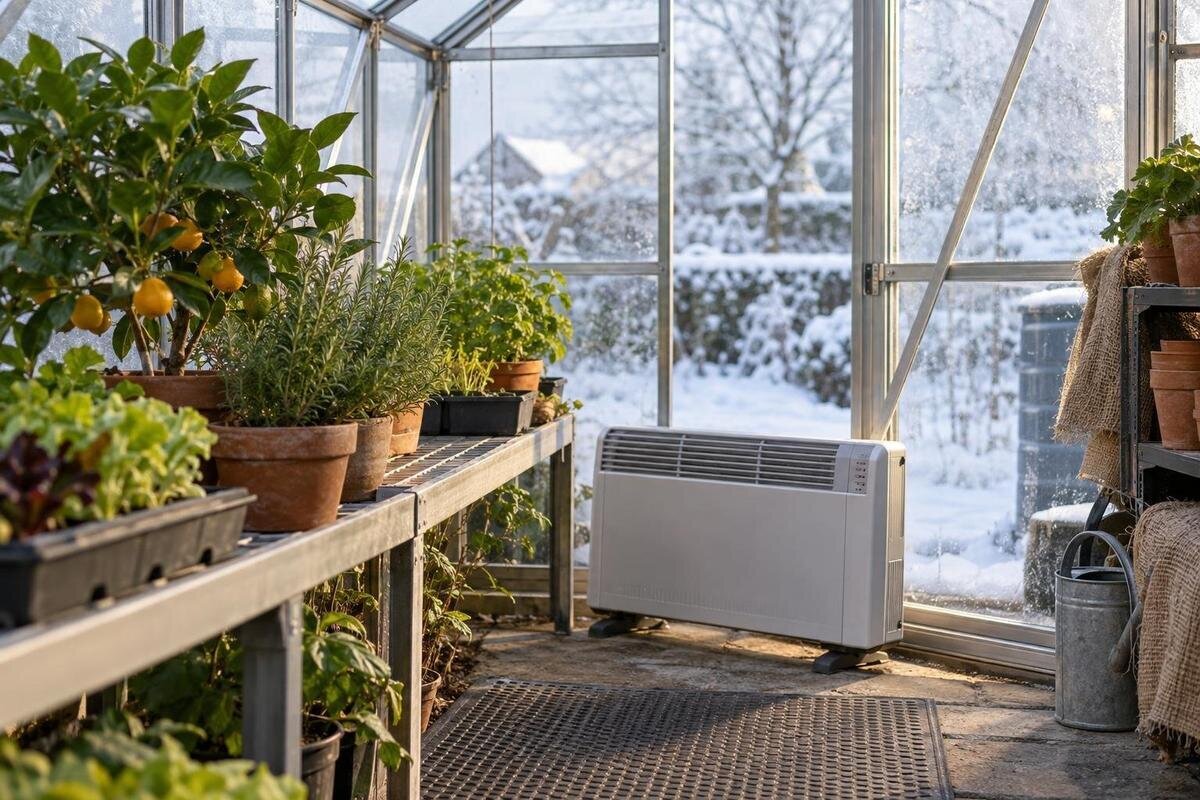
Greenhouse heating and winter energy
Winter greenhouse heating has two different jobs. Frost protection aims to reduce the risk of cold damage to particular plants; winter growing aims to maintain conditions in which plants continue to develop. The second goal can call for more heat, but warmth alone does not guarantee useful growth: species, daylight, ventilation and day–night conditions all matter. There is no single temperature that protects every plant from cold damage or suits every winter crop. Set a target based on the plants and the greenhouse you actually have, then check the air temperature around them during cold nights.

01
Two different aims for winter heating
Frost protection is a preservation goal: you want to reduce the risk of cold damage to plants you are keeping, not necessarily encourage new growth. Overwintering can mean letting a plant rest, keeping a slow-growing specimen alive or carrying a valued plant through to a later season. In each case, heat is there to keep conditions within the plant's acceptable winter limits. Winter growing is a production goal. Plants are expected to put on growth, remain productive or flower, so the environment must suit development over repeated days and nights, not merely avoid one cold dip. A plant can look green and still not be growing actively, so appearance alone is not a useful target.
Write down what you expect the greenhouse to do through winter: hold dormant plants, keep a collection alive, harvest crops or raise young plants. Those aims are not interchangeable. A mixed collection may have very different cold tolerances, and plants intended to grow may have different light and temperature needs from dormant specimens. If one group needs warmer conditions, setting the whole space around it can increase the heating burden without helping every plant. Identify which plants must be protected, the result you want and how much risk you accept. You may decide that one group belongs elsewhere.
Plant-specific winter temperature limits
Check plant by plant, using care instructions from a dependable grower, supplier or reference that identifies the species and, where relevant, the variety. Look for separate wording about minimum winter temperature, frost tolerance, dormancy and preferred conditions for active growth. A survival minimum is not necessarily a recommended long-term temperature: a plant may withstand a brief exposure that it should not face night after night. A preferred growing range describes a different aim. If guidance gives a range or refers to a particular stage, season or exposure duration, do not reduce it to one convenient number. Record exactly what advice applies to the plant you have.
Consider how that plant is being kept. A pot and the ground do not provide identical conditions around roots, while positions beside exposed glazing, an outer wall or the floor can differ from the centre of the greenhouse. A reading at leaf height does not reveal every root-zone condition. Group plants with similar needs, then locate the most cold-sensitive group where it can be monitored and reached without disturbing others. If a stated minimum is uncertain, do not assume that a general 'frost-free' setting, a greenhouse label or a mild afternoon establishes the plant's tolerance. Seek better plant-specific guidance before relying on it.
02
A frost-protection target needs a margin
Treat a frost-protection figure as a control target with a margin, not a guarantee that every part of the greenhouse stays above a plant's lower limit. A thermostat reacts to the temperature at its own sensor; a colder corner can differ, and readings can fluctuate as heating starts and stops. If you set the control exactly at a published minimum, local variation, sensor accuracy or a brief dip may leave no allowance. Choose a buffer in light of the wording in the plant guidance and the level of risk you can accept; there is no universal safe margin. Compare the control reading with an independent thermometer over cold nights, and revise the plan if the measured minimum falls short.
Then compare the area to be protected with the enclosure you plan to heat. The Lean-to Greenhouses are listed in sizes from 3.69 m² to 14.34 m². Use this range to compare footprints and work out where the plants needing protection would sit. A smaller occupied area may be simpler to plan, yet exposure, height, glazing, openings and sensor position still matter. Decide whether the whole greenhouse or only a particular group needs heating. Make sure you can monitor the actual plant zone, including any colder positions, rather than judging the layout solely by how many pots will fit.
Active winter growth needs more than warm nights
Active winter growth needs a different target. Use the plant's recommended growing conditions, not its survival minimum, and consider daytime and night-time conditions separately. A greenhouse may warm in sunlight and cool again overnight, so one thermostat value cannot describe the whole cycle; the plant may need a defined operating range rather than one minimum. Available light, including its duration, also affects whether growth can proceed as intended. Heating a dim space does not supply daylight, so check whether the chosen plants suit the season and the light available at the site. If guidance distinguishes day and night values, preserve that distinction in your plan rather than treating a night-time minimum as an all-day target.
Plan day-to-day conditions around the temperature target, available light, air exchange and access for routine care, then compare the plan with reliable plant guidance. The Limited Edition Aluminium Greenhouses are listed in sizes from 3.77 m² to 28.08 m². Before choosing a size for active cultivation, map the growing area and check that plants can be reached and monitored throughout the season. Review the glazing and ventilation openings alongside any insulation options, since the winter plan must account for light and air exchange as well as warmth. Floor area alone cannot tell you whether a crop will thrive through winter.

03
Greenhouse size affects heat demand
Heating demand is tied both to the conditions you ask the enclosure to maintain and to how quickly it loses heat. As a general physical principle, a larger difference between indoor and outdoor temperatures calls for more replacement heat; exposed surfaces, gaps, door openings, wind exposure, glazing and enclosure volume also affect losses. An area figure cannot capture all of these factors, especially where shape and height differ. Choosing the same thermostat target for two greenhouses does not mean they will need identical equipment or use identical energy. A credible estimate needs transparent assumptions about dimensions, construction, weather and energy source. Any running-cost estimate also needs the local energy tariff and documented heater consumption; a target or area alone is not a cost estimate.
For scale, the T-Shaped Orangery Greenhouse range is listed from 16.52 m² to 30 m². When choosing a footprint, consider how much space the plants need, whether the full enclosure must be heated and how the layout affects door and vent use. A heat-loss estimate needs the actual dimensions, height and construction details for the selected size, rather than just its floor area. If different plant groups need different targets, consider whether they can be separated and monitored. One whole-space thermostat setting does not create two environments, so decide which area the estimate and proposed heating equipment are intended to serve.
Consider insulation and ventilation together
Insulation and air exchange need to be considered together. A documented insulating option can reduce heat transfer through the areas it covers, but any material or fitting must suit the greenhouse glazing and leave the openings needed for ventilation accessible. Coverage may also affect daylight and condensation; do not assume that adding a layer delivers a fixed saving or temperature. Ask for product information on compatibility with the exact model, which surfaces are covered, how it is fixed, how light is affected and whether doors or vents remain usable. If measured performance is not available, treat the energy effect as unknown rather than promising a percentage.
Ventilation remains part of the winter plan, especially when plants are growing and water is being used. Closing every opening to hold warmth may leave the air unsuitable, while opening vents can change temperatures near plants depending on weather and layout. For the Pyramid Greenhouse range, listed from 5.53 m² to 18.9 m², check how the vents operate on the exact model and whether any proposed insulation leaves them accessible. Consider how you will monitor temperatures when ventilation is in use. The winter target needs to accommodate routine air exchange rather than assume the greenhouse can remain sealed in all conditions.
04
Place temperature sensors near the plants
A thermostat tells you about the air where its sensor sits, not every plant. Avoid measuring in direct sunlight, immediately beside a heater or against a cold pane if the aim is representative air conditions: sunlight can warm the sensor, a heater can distort local readings, and cold glass may make the nearby area unrepresentative of the centre. Place a reliable thermometer near the height and location of the plants you most need to protect, then compare readings in other relevant areas. If plants sit at different levels or in separate corners, more than one point may be needed to reveal the lowest temperature they encounter.
Use a minimum–maximum thermometer or logger to record overnight lows, not just the midday reading, and check the device's stated accuracy and operating range. Note when doors are opened or vents are used so you can interpret changes rather than treating every dip as unexplained. For a storage-equipped option, the Limited-Edition Aluminium Greenhouses with Storage are listed in sizes from 5.52 m² to 28.08 m²; check the exact plan to establish how the listed area relates to plant space and where monitoring equipment can sit unobstructed. Keep a brief log alongside outside conditions and heating settings: a single mild night cannot show whether the target is being reached consistently.
Plan for cold spells and interruptions
A target set in mild weather must still be useful during a cold spell or after a disturbance. Compare the outside forecast with the greenhouse's own overnight readings: a forecast is not an inside temperature, and a sunny daytime reading can conceal a cold night. Decide how you will notice if the measured minimum falls below your threshold, who can respond and where vulnerable plants could go if the system cannot maintain conditions. An alert or regular human check is more informative than assuming a heater will always operate as expected. Include access in the plan for times when the weather is poor, and decide in advance whether at-risk plants can be moved to a suitable sheltered space.
When comparing models such as the Bloomcabin Prestige Greenhouse, listed in sizes from 3.77 m² to 28.08 m², keep the enclosure specification separate from the heating system's response to an interruption. The product title identifies a metal base, but does not establish insulation, airtightness or a guaranteed indoor minimum. Check how the proposed heater and controller behave after a power interruption and how you would detect a temperature drop. Relate that information to your plan for the vulnerable plants: which readings would prompt action, who could respond and whether the plants could be moved if heating could not be restored.

05
Match the controls to the chosen target
Select a heater and controller only after stating the target and the area they must serve. Frost protection may call for a control that maintains a lower threshold, whereas active growing may require a stable range suited to the plants; confirm that the selected thermostat can be configured and monitored as intended. A controller's setpoint, a heater's rated output and the temperature measured around plants are different things. Check the manufacturer's documented operating conditions, control range, sensor arrangement and suitability for greenhouse use rather than inferring them from a product label. If installation requirements or electrical suitability are unclear, ask a qualified professional.
A larger enclosure makes it especially important not to treat one thermostat reading as proof that all plant areas meet the same target. The Spacious Greenhouse listing covers 47 m² to 70 m². Relate the controller's sensor arrangement to the area you intend to heat and the positions of the plants within it. Decide which readings you will use to judge whether the chosen control settings are working, rather than relying only on the displayed setpoint. If active growing is the aim, keep the plant requirements and light plan in view when selecting equipment; the target temperature alone is not enough to determine the choice.
Compare the exact model with your winter plan
Before buying, assemble the plant requirements and greenhouse information on one page. Note which plants will overwinter, their recommended minimum temperatures, whether growth is intended, the target or range and where it must be maintained. Then compare the exact model and size: its listed area, dimensions, glazing, doors and vent details, plus any documented insulation or compatible accessories. The Classic Aluminium Greenhouses range is listed in sizes from 3.77 m² to 28.08 m². Across all the ranges considered here, catalogue areas help you compare space; they do not establish winter performance. Base your comparison on the particular model and size rather than a family name or catalogue image.
Use that comparison to decide what level of control you are prepared to maintain through winter. Frost protection can suit plants whose guidance permits a dormant, cooler period; active growth requires conditions that match the species and enough useful light and ventilation as well as heat. If groups need conflicting conditions, separate them in a way that can be monitored or keep one group elsewhere rather than heating the entire greenhouse to an arbitrary temperature. Record the plant guidance behind each target and note any unknowns instead of filling gaps with assumed figures. Revisit the plan when the plants or layout change.
Frequently asked questions
Is a frost-protection setting above 0°C enough?
Not by itself. Some plants need a higher minimum, while others tolerate colder conditions when dormant. Greenhouse temperatures can also vary from one area to another, and the air reading does not describe every root or pot. Use plant-specific guidance and monitor the places where the most vulnerable plants are kept.
How do I choose a temperature for overwintering plants?
Start with reliable guidance for each plant and distinguish a brief survival minimum from recommended winter conditions. Choose a control target that leaves a considered margin, then check the actual overnight minimum near the plants. There is no single setting that suits every species, greenhouse or level of risk.
Does heating alone ensure winter growth?
No. Active growth depends on the plants' requirements and on conditions such as available light and ventilation, as well as temperature. Identify what the plants need through the season before raising the target. A warmer greenhouse cannot make up for unsuitable growing conditions.
Where should I place a greenhouse thermometer?
Place it near the height and location of the plants you most need to protect, away from direct sunlight, a heater and cold glazing. Check overnight lows as well as daytime readings. A second sensor can help reveal colder areas, but check the device's stated accuracy too.
Will a greenhouse heater hold its target during a cold spell?
There is no general guarantee. The actual temperature depends on the enclosure, outside conditions, openings, heater, controls, energy supply and sensor position. Use documented equipment information and readings from your own greenhouse. Monitor cold periods and decide in advance what to do if conditions fall below your target.
The right winter target matches the plants you intend to keep, rather than a temperature borrowed from another greenhouse. For dormant plants, work from their documented cold limits and measure the coldest relevant areas. For active growth, account for the plants' growing conditions, including light and ventilation as well as heat. Your plan should make clear whether you are maintaining plants through a resting period or expecting them to grow. Frost protection and winter growing remain distinct choices, even when the same greenhouse could be used for either.
