
Bubble Insulation for a Glass Greenhouse
Greenhouse heating and winter energy
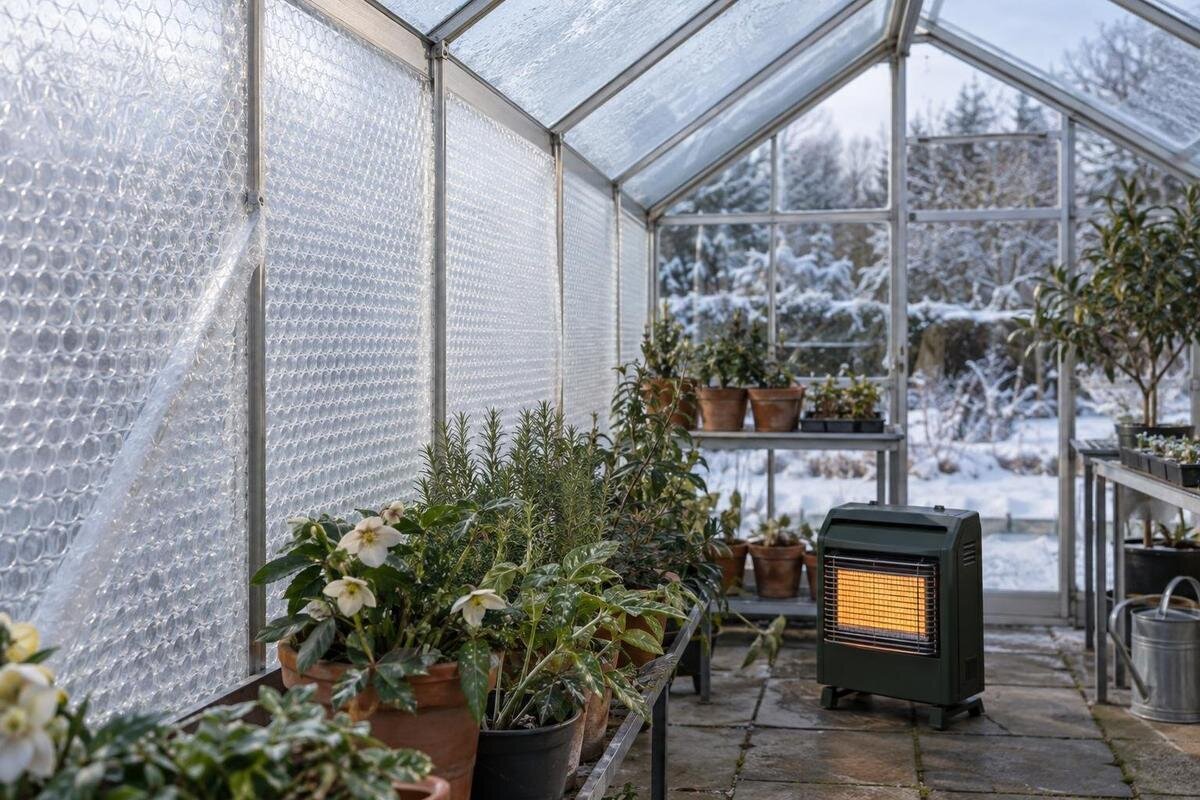
Bubble insulation can help slow heat loss through glass, but it does not produce a standard saving for every greenhouse. Its value depends on the panes covered, the condition of the frame and openings, heater use and weather. It also reduces some incoming light and can change where condensation forms. Compare energy use under similar conditions, and check that a lining can be fitted without blocking vents, damaging glazing or making moisture harder to manage.
What bubble insulation can change
Bubble insulation adds a layer of air pockets between the greenhouse interior and the glass. Where it is suitable and covers glazing fairly continuously, it can slow heat moving out through those panes. It does not seal the greenhouse or turn glazing into an insulated wall: heat can still leave through uncovered glass, frame members, gaps around doors and vents, and places where the lining stops. The result depends on how much glass is covered, the condition of the structure, how closely the sheet fits and the difference between indoor and outdoor conditions. A loose sheet with large gaps is not equivalent to a close-fitting layer, but even a close fit cannot remove every route for heat loss.
There is no single percentage saving, winter temperature or bill reduction that applies to every glass greenhouse. A lining may reduce heater demand in one set of conditions and have little measurable effect in another, particularly if open vents or draughts dominate. Treat it as one change to the greenhouse envelope, not as a heater, thermostat or guarantee of plant protection. When comparing sizes in the Aluminium Greenhouses range, listed from 3.77 m² to 28.08 m², distinguish the space needed for plants from the glazing you plan to cover. The choice of greenhouse size and the assessment of insulation serve different purposes; neither floor area nor a model name establishes thermal performance.
Glazed area and the amount of lining needed
Floor area describes the ground covered, not the total surface through which heat can escape. Roof slopes, side walls and glazed doors add to the exposed area, while a wall or other non-glazed boundary changes the layout. If you are working out how much lining to buy, use the actual panel layout or measure each pane you intend to cover. Include openings and frame bars when planning cuts, overlaps and access. A rough outside length or a greenhouse's footprint alone will not tell you how much material is needed, and it will not provide a reliable heat-loss estimate.
Check the glass and frame before treating insulation as the answer. Note cracked or loose panes, gaps where doors close and whether vents shut as intended. Bubble insulation does not repair damaged glazing or a failed seal; ask the greenhouse manufacturer or a suitably qualified installer about defects. The T-Shaped Orangery Greenhouse is listed in floor areas from 16.52 m² to 30 m², but those figures are not a measurement of its glazed surface. For any model, use the exact size and panel layout when planning coverage rather than converting floor area into a roll estimate.
Measure energy use under comparable conditions
Establish a baseline before fitting the lining. Record energy used over comparable heating periods while keeping the heater, control setting and routine as consistent as practicable. A built-in kWh display can be useful where available. For fixed or fuel-fired equipment, use its approved consumption data or an appropriately installed meter; do not improvise around mains wiring or use a meter that is not rated for the equipment. Note the dates, heating hours, target setting, ventilation and any unusual door opening. This record helps distinguish a change in heater use from a change in how the greenhouse was operated.
After fitting, compare several periods with broadly similar outside conditions rather than one mild night with one colder night. Record changes in wind, sunshine or opening routines, as well as the heater readings. If energy use falls while the target conditions and routine remain comparable, that is an observed saving for those periods, not a universal result. You can express the reduction as a share of the baseline reading, but keep the dates and conditions alongside it. For a cost estimate, apply the current unit rate on your bill to the energy used; use the relevant period's rate on a time-of-use tariff, and keep fixed daily charges separate. Check the heater manufacturer's stated input or fuel consumption rather than confusing energy input with heat output.
Account for reduced daylight
An internal lining screens some of the daylight that would otherwise pass through the glass. The amount depends on the actual material and installation: bubble structure, thickness, layers, overlaps, dirt and condensation can all affect transmission. A sheet that looks clear is not necessarily optically neutral. Ask the lining supplier for a measured light-transmission figure and its test basis; the word transparent alone is not a useful comparison. If a figure is unavailable, a small, reversible trial can show how the particular material affects light in your greenhouse before you cover every pane.
The importance of that reduction depends on what you are growing and whether plants need to keep growing through winter. Seedlings and actively growing plants may need a different light level from plants being held with little growth, so assess the needs of the plants rather than assuming any winter reduction is harmless. Take readings in the same position under similar daylight before and after fitting. A basic light meter can help with relative comparisons; a PAR or PPFD meter is more relevant to plant-usable light than a lux-only reading. When assessing a Pyramid Greenhouse, identify where the plants will stand and use those positions for comparisons rather than relying on how bright the glazing looks.

Condensation and access behind the lining
Condensation forms when moisture in the air meets a surface cool enough for water to collect. Adding a lining changes the surfaces and the space between the sheet and glass; it may alter where droplets appear, but it does not remove moisture from the greenhouse air. Depending on the fit and conditions, water may collect on the glass, the lining or the frame. It can drip onto plants or benches, obscure the pane, or remain out of sight behind a sheet. A fitting that makes the glass impossible to inspect can therefore create a maintenance problem even if it appears tidy from inside.
Plan to check behind the lining and clear water where it collects, following the instructions for the material and greenhouse. Keep doors and vents able to open; do not seal every opening simply to retain warmth. For a Lean-to Greenhouse, map the glazed and adjoining surfaces on the exact model layout so your inspection covers both the panes and the frame around them. Arrange the lining so these areas remain accessible rather than hidden behind a sheet you cannot readily remove. Follow the greenhouse and lining manufacturers' guidance around drainage and ventilation, and check for moisture behind the covering as well as on its visible face.
Use frame-compatible fixings
Choose a fixing method for the actual frame, not on the assumption that any clip or tape will suit it. Follow the greenhouse manufacturer's advice and confirm that the lining and fixings are compatible with the frame finish and glazing seals. Purpose-made clips or a separate support may be possible on some structures, but only where the attachment points and dimensions are approved. A method that pulls on a pane, compresses a seal or obstructs a frame channel is not suitable. Do not drill through a frame or apply adhesive to a pane or seal unless the relevant manufacturer confirms that it is appropriate.
A removable arrangement can make seasonal inspection and cleaning easier, provided it is secure and follows the product instructions. Avoid pulling the sheet tight across glass or leaving loose sections that interfere with doors and vents. When considering the Bloomcabin Prestige Greenhouse with Metal Base, focus fixing enquiries on the glazing bars of the exact version: the named base configuration does not identify a suitable clip, tape or support. An approved accessory list or frame detail can help you establish where the lining may attach. Plan how each piece will be released for inspection or repair before fitting it, rather than discovering that a fixing prevents access to a pane.
Keep openings and access clear
Mark every door and opening before cutting material. Leave the full movement of hinges, handles, roof vents or louvres, where fitted, unobstructed. A sheet that bridges a moving joint may tear when opened or prevent the opening from working properly. Check that you can still reach plants, watering points and equipment without pulling the lining out of place. Where the manufacturer's instructions permit, separate removable pieces around openings are easier to manage than forcing one continuous sheet across a moving part.
Use the exact layout for the chosen size to identify openings and the space needed to operate them. The Limited-Edition Aluminium Greenhouses with Storage range is identified as having built-in storage, but the range name does not show the access points or glazed areas of each configuration. Ask for the relevant plan and mark the doors and vents before ordering or cutting a lining. Keep any heater or electrical equipment clear in accordance with its own instructions; do not estimate a safe separation from a sheet or cover based on appearance.
Check the lining and greenhouse specifications
Ask the lining supplier for roll width and length, usable coverage after overlaps, light-transmission data and instructions for use inside a greenhouse. Check how it should be attached, cleaned and removed, and whether the material has stated limits for its intended location. Do not infer a performance rating from the size of the bubbles or from a clear appearance. If the lining will be near heating equipment, follow the instructions for both products on material limits and separation rather than guessing a safe distance. Do not assume ordinary packaging wrap is designed for repeated use in a greenhouse.
For the greenhouse, confirm the glazing type, frame profile and panel layout for the exact model and size, along with any approved accessory details. Ask whether the proposed attachment could affect glazing seals or access to vents. If you are comparing options in the Limited Edition Aluminium Greenhouses range, separate the catalogue's model and size information from the specifications needed to assess a lining. No product-specific light-transmission, heat-loss or bubble-insulation compatibility figures are supplied here for the named models. Use the exact manufacturer's documentation to answer those questions, and keep the greenhouse specifications separate from the lining supplier's figures so it is clear which component each figure describes.

When a full lining may not be worthwhile
If only a small number of plants need extra protection, covering every pane may reduce useful daylight and add installation work without addressing the area you actually use. Consider whether a removable cover for a defined area or grouping plants in a smaller sheltered space would meet the need, while keeping airflow and access adequate. If the glass is damaged, doors do not close properly or there is a noticeable draught, address the underlying issue first; insulation is not a repair. If the greenhouse is rarely heated, record energy use before buying material so any potential saving has a meaningful baseline.
Compare retrofitting with repair or replacement only when the structure itself is part of the problem. The Spacious Greenhouse is listed with floor areas from 47 m² to 70 m²; that indicates the scale of the range, not the amount of glazing, the energy required or how much lining a particular model needs. For any option, compare the actual layout, glazing details and measured energy use. Include the effort needed to fit, inspect and remove a lining, rather than judging the choice only by the roll's coverage.
Use a trial before covering every pane
Before covering all the glass, try a small representative area with a removable arrangement that does not put pressure on the panes or block an opening. Use the trial to check whether the material stays in place, obscures the plants, changes where condensation collects or makes the frame difficult to inspect. This can reveal fitting and maintenance problems while the area is still manageable. A small trial may be too limited to show a reliable whole-greenhouse energy saving, so do not extrapolate its effect on heater use without a separate comparison over suitable periods.
Keep a simple record of the covered area, dates, light readings, energy input and relevant weather. Judge the result against the greenhouse's actual purpose: did energy use fall when the target and routine were comparable, and was the reduction in light and extra moisture management acceptable? Use the trial to decide whether to retain, adjust or remove the lining, rather than treating full coverage as the inevitable outcome. If product instructions leave fixing compatibility or safe use near equipment unclear, wait for confirmation before fitting it in that location. The useful result may be to line only a defined area, rather than every pane.
Frequently asked questions
How much energy can bubble insulation save?
There is no dependable figure that applies to every glass greenhouse. Compare energy readings before and after fitting under similar weather, heating settings and ventilation, then report the observed difference for those conditions. Use your own tariff if you want to estimate the cost effect.
Does bubble insulation reduce daylight?
Yes, it screens some incoming light, but the amount depends on the material, number of layers, overlaps and condition. Ask for a measured light-transmission figure. If none is available, compare readings in the same position and similar daylight before and after fitting.
Will bubble insulation stop condensation?
No. It can change which surfaces become cold, but it does not remove moisture from greenhouse air. Check behind the lining, manage moisture and keep vents usable so condensation is not simply hidden or trapped.
How should I fix bubble insulation without damaging the glass?
Follow the greenhouse and lining manufacturers' instructions for the exact frame. Use only approved attachment points or compatible fixings; do not drill, pull on panes or apply adhesive to glass or seals unless the relevant manufacturer confirms it is suitable.
Can I cover the doors and vents for winter?
Keep doors, vents and their moving parts accessible and able to operate. Mark openings before cutting the lining, and use separate removable pieces where the fixing instructions allow. Covering a vent can prevent it from doing its job.
Bubble insulation is best treated as a measured retrofit, not a guaranteed winter upgrade. Its value depends on the glazing it covers and the energy the heater uses under comparable conditions, while the trade-offs include reduced daylight, changed condensation patterns and ongoing access. Verify the material and frame-compatible fixing method, preserve ventilation, and use a matched before-and-after comparison to decide whether it suits your greenhouse.
