
Glass Greenhouse or Polytunnel: Which Suits Your Irish Garden?
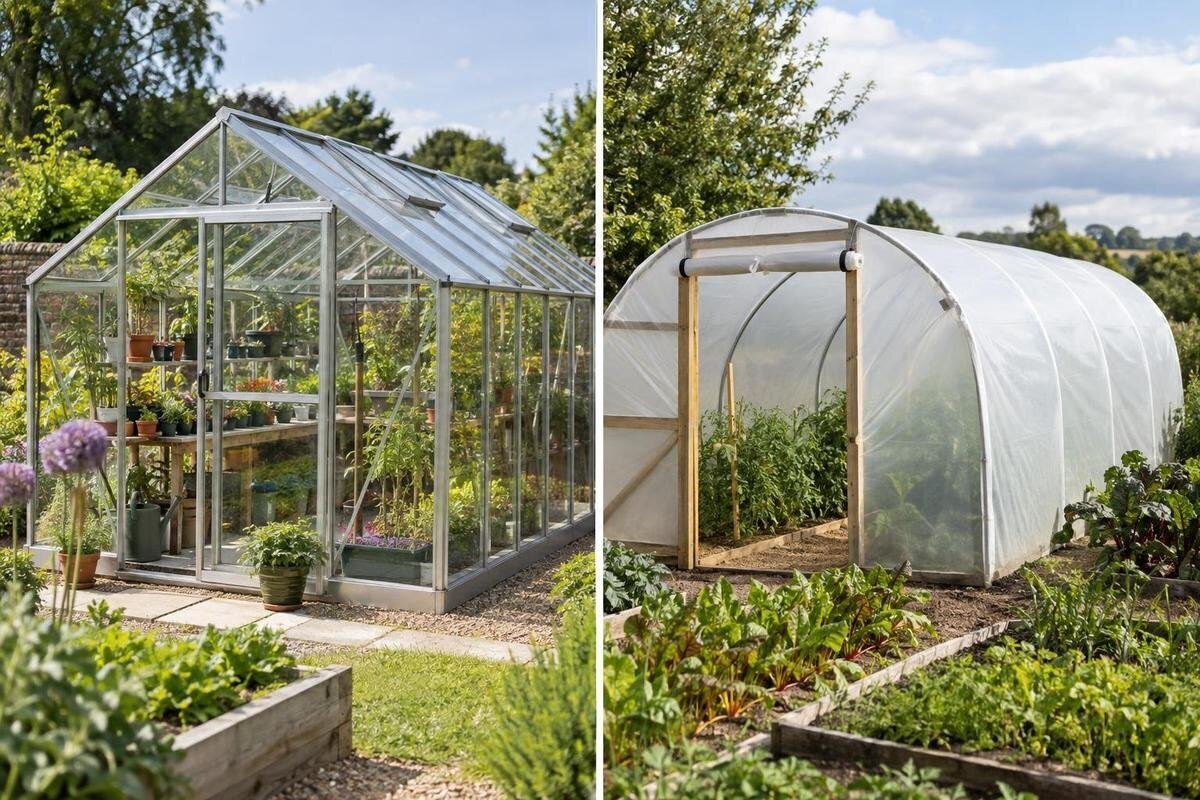
Greenhouse comparison
Choosing between a glass greenhouse and a polytunnel involves more than comparing layouts or purchase quotes. Think about the growing space you want, how long it will stay in the garden and what you are prepared to maintain. A greenhouse uses glazed panels; a polytunnel generally uses greenhouse film over a frame. Both can shelter crops, but neither is automatically the better choice for every Irish garden. Site exposure, drainage, room to work, crop plans and the availability of replacement parts all matter. Compare the exact versions, not only the labels, before deciding.

How glass greenhouses and polytunnels differ
A glass greenhouse is a framed enclosure with glazed panels; a polytunnel generally has a frame covered with greenhouse film. Both shelter crops, but their outer surfaces, construction and eventual repair needs differ. A greenhouse is often selected as a fixed garden feature, while a polytunnel is commonly chosen for its practical growing function. These are broad descriptions, not specifications: frame design, glazing, film, doors, ventilation and anchoring vary by product. Read the details for the exact version rather than assuming every greenhouse or tunnel shares the same layout. Compare component lists as well as descriptions, since frames, covers or accessories may be specified separately.
Neither format is automatically the better growing environment. The cover affects light and how the enclosed space responds to outdoor conditions, but the result also depends on dimensions, openings, the site and day-to-day management. A polytunnel is not simply a rain shelter, and a glass greenhouse is not automatically heated, frost-free or self-ventilating. Begin by identifying the job: protecting crops, extending the growing season, raising seedlings or keeping a dedicated growing area in place. That purpose gives the comparison a useful direction and stops an impressive feature list from overruling basic fit. Include entering, watering and carrying harvested crops in your plans, not only the area under cover.
How permanent should the growing space be?
Think about how long you expect the structure to stay in the same place. A growing space that may remain for years should suit the garden you expect to have, not only the beds you have today. Consider routes, future planting, a compost area and access to work around the outside. Do not assume a polytunnel is easy to move because it has a film cover: its frame, anchoring and installation method still matter. Equally, the word greenhouse does not tell you whether a particular model can be dismantled. Ask about removal and reassembly before you rely on either structure being straightforward to relocate.
Look at exact size choices rather than a model name alone. The Bloomcabin Prestige Greenhouse is listed with areas from 3.77 m² to 28.08 m², illustrating how much the selected configuration can change the space it occupies. Compare the chosen layout with existing paths and planting beds, allowing access around the structure for assembly and maintenance. Check where doors or other openings would be used and whether ordinary garden work could still happen beside it. Include the route from the garden entrance: a position that looks suitable on a plan may be inconvenient if it interrupts your usual access.
Check the site and access
Walk the proposed site at more than one time of day and note where shade falls, which routes stay usable, and whether water collects or runs across the area. These observations do not select a structure by themselves, but they reveal constraints: reduced light may limit some crop plans, a blocked path makes routine care awkward, and poor drainage can affect the surroundings. Look at nearby walls, trees and boundaries too; shade or shelter on one side does not settle every question about exposure. Irish gardens vary in shelter and ground conditions, so a design that works elsewhere is not proof that it will suit this particular plot. If drainage is uncertain, observe the area after rain as well.
Check the installation area, not just the growing footprint: will materials reach it, and can you get to the outside surfaces later without trampling beds? The aluminium lean-to greenhouse listing covers areas from 3.69 m² to 14.34 m², providing one greenhouse size range to consider alongside the space available. For either a glass greenhouse or a tunnel, confirm the manufacturer’s instructions for the base and anchoring. If ground conditions or exposure leave you unsure, ask a qualified installer or relevant professional to assess the proposed installation rather than adapting another structure’s fixings. Include any awkward or inaccessible areas in that discussion.
Match the structure to your crops and season
List the crops and activities you expect to support, not just the months you would like to gain. Seed trays, tall plants, climbing crops and pots all compete for usable height, bench space and access. A tunnel can suit a growing-first plan; a glazed greenhouse may suit someone who wants a more defined enclosed structure. Neither choice alone extends every crop’s season: light, temperature, airflow, water and day-to-day care still matter. If overwintering plants or starting seedlings is central, establish what conditions those crops need and whether the structure and any planned equipment can provide them. A cover should not be mistaken for a guarantee of winter protection. Write down your priorities in order if the same space has to serve several purposes.
Test the layout against your crop list at different stages of the season. The Classic aluminium greenhouse range includes areas from 3.77 m² to 28.08 m², so choose a specific version before deciding where plants and equipment will go. Note which spaces you intend to use for seed trays, pots and mature crops, and whether those uses overlap. Check usable width, height and door access for both the greenhouse and the polytunnel you are considering. If one area must serve several purposes, work out when each needs it rather than assuming everything will fit at once. This makes the comparison about your growing routine, not simply the largest available footprint.

Ventilation and temperature depend on the design
Climate control comes from the complete design and how it is used, not from the word glass or film on its own. Ask what ventilation openings are included, where they are positioned, how they operate and whether you can reach them easily. Do not assume that a greenhouse includes automatic openers, or that every polytunnel has the same side or end openings; arrangements vary. Ventilation also affects moisture levels, so consider how air will be exchanged as part of the growing plan. If the product description does not show these details, request the relevant drawing or specification before using ventilation as a deciding point. Think about whether you can operate the openings as part of your usual routine.
Temperature needs vary by crop and season, so be clear whether you only want shelter or also intend to add heating, shading or other controls. A passive enclosure still responds to sunshine and outdoor weather; it does not hold a chosen condition just because it is enclosed. Compare what the manufacturer says about compatible equipment and the maintenance that equipment adds, without assuming it is included. If you plan electrical or heating additions, have a qualified installer check suitability for the chosen structure and site. That is safer than choosing equipment first and trying to adapt the greenhouse or tunnel around it, and it keeps the comparison focused on a complete, workable setup.
Plan for cover repairs and replacement
Replacement is one of the clearest differences in ownership, but it depends on the exact construction. Glass can crack or be damaged; ask whether an individual pane can be replaced, how its dimensions and type are identified, and whether compatible parts are available. Film can tear, loosen or become worn with age and exposure; a replacement cover may need to match the frame and fitting method. Do not assume either task is quick or inexpensive. Ask what routine inspection is recommended, what help might be needed, and whether a part can be obtained independently rather than only as part of a complete new structure. Easy access to the cover and frame can make routine checks more manageable.
Keep a record of the selected model, size and cover specification so a future repair request is precise. For instance, Limited Edition Aluminium Greenhouses are listed from 3.77 m² to 28.08 m²; record the exact configuration rather than just the family name. For a polytunnel, confirm whether replacement film is available for the particular frame and how fitting is handled. Ask the supplier how damage should be reported and what information they need to identify a replacement component. Keep those details with your purchase information. A general lifespan claim is less useful than knowing how you would deal with wear or damage on the product you choose.
Compare upkeep and total ownership costs
Compare the whole ownership picture rather than trying to guess which format costs less. A quote may treat delivery, site preparation, base, assembly, ventilation or other components differently; ask what is and is not included before comparing totals. Add likely maintenance and cover renewal to your notes, even if no exact future amount can be given. Time is part of the decision too: consider cleaning, inspection, replacing film or panels, and keeping the area around the structure clear. A lower starting figure is not useful if the product does not meet the growing plan or the upkeep is beyond what you want to take on. Check whether quotes assume different levels of assembly or preparation.
Plan where pots, tools, compost and spare materials will go. If everything is left inside the growing area, it can take space from crops or narrow the working route. The greenhouse with built-in storage listing gives a range from 5.52 m² to 28.08 m². Use the drawing for your chosen version to distinguish storage space from cultivation space when comparing it with a polytunnel. Also consider whether your existing shed or another storage area would serve the same purpose. This helps you assess the value of a combined layout without counting all of its stated area as space for plants.
Measure usable area, not just the footprint
Treat advertised floor area as a starting point, not the same thing as usable growing space. Check the outside dimensions and, where available, an internal plan. Allow for beds, benches, staging, pots, door opening, access and the room needed to turn with a tray or watering can. Height matters too if you grow upright crops or want shelves, but compare clear dimensions rather than guessing from a photograph. For a polytunnel, check its actual width and height in the growing area as well as its length; for a glass greenhouse, do the same for the particular configuration. Each design can use space differently. Leave enough room for equipment you expect to handle regularly.
Bloomcabin’s Spacious Greenhouse is listed from 47 m² to 70 m², but a larger floor area still needs a workable internal layout. Sketch a top-down plan with the building outline, paths, doors and intended planting zones, then compare it with the drawing for each candidate. Consider whether you can carry a tray or move a hose through without disturbing plants. Try the same exercise for a smaller greenhouse and a polytunnel, using their exact dimensions. Where a route looks tight, mark it out on the ground and check it with the equipment you normally use rather than judging comfort from the total area.

Consider appearance and garden use
Appearance matters when the structure will be seen from the house, a shared path or a neighbouring garden. Consider how its frame and covering sit beside existing buildings and planting, and whether you are comfortable with it being a prominent feature. A polytunnel’s film-covered look may suit a productive plot; a glass greenhouse may better match a garden where a framed enclosure is part of the intended design. These are preferences, not guarantees of quality or growing performance. Check the outline, colour and visible details for the exact product, and think about whether doors and working access will face the right way for daily use. Consider how the structure will look before surrounding plants have grown.
Shape can affect where paths and beds can run, even when two structures have a similar stated area. Bloomcabin’s T-Shaped Orangery Greenhouse listing covers 16.52 m² to 30 m², offering a different outline to consider alongside rectangular layouts. Mark the chosen shape on the ground or on a plan, then check circulation around it and views from the places you use most. Look at how it relates to nearby planting and whether its position leaves convenient working access. Do not treat a greenhouse as extra living space unless the product specification and intended use support that plan; choose a growing structure for the job it is designed to do.
Make a like-for-like comparison
Use the same comparison sheet for both options: chosen footprint, usable layout, cover and frame specification, openings, anchoring instructions, purchase inclusions, routine care and replacement-part availability. Compare a specific glass greenhouse with a specific polytunnel, not a greenhouse family’s full size range against one tunnel quote. Ask what document supports each claim and note what is still unknown. If durability is important, request product-specific maintenance and replacement information; if climate management is central, request ventilation details. Keep unanswered questions visible: a catalogue name or photograph cannot fill in a missing specification. This approach makes gaps clear instead of filling them with assumptions about glass, film or the Irish weather.
A catalogue entry such as the Oasis Pyramid Greenhouse lists areas from 5.53 m² to 18.9 m², but its name and size range do not establish performance or suitability. Apply the same questions to it as to every other candidate. Once the details are available, rank the trade-offs that matter most to you: the layout you can use, the appearance you prefer, the controls you need and the maintenance you are willing to undertake. If two options remain close, identify the practical difference that would affect your gardening most often. That gives you a firmer basis for choosing than a photograph or headline price.
Frequently asked questions
Is a glass greenhouse warmer than a polytunnel?
Not automatically. Temperature behaviour depends on the exact cover, frame, ventilation, sun exposure and any heating, as well as how the structure is used. An unheated enclosure is not a guarantee against frost. Check product-specific information rather than choosing on the material name alone.
Does a polytunnel cover need to be replaced?
Film may need repair or replacement as it wears or is damaged; there is no single replacement interval that applies to every product. Ask whether a compatible cover is available for the chosen frame, how it is fitted and what routine checks are recommended. Glass replacement also depends on the panel dimensions and system.
Is a glass greenhouse easier to maintain?
Neither is universally easier. A polytunnel calls for attention to its film and how it is attached; a greenhouse needs care for its glazing and frame. Cleaning access, replacement-part availability and how easily you can reach the structure often matter more than the category label. Compare the tasks involved rather than general claims.
Can I grow the same crops in either structure?
Many crops can be grown under either type of cover, but plant height, light, airflow, moisture and seasonal needs determine whether a particular layout works. Make a crop list and check the usable dimensions. A structure on its own does not provide heat or guarantee the conditions a particular plant requires.
Which is better for an exposed site?
Neither format is automatically suitable for an exposed location. Check the manufacturer’s installation and anchoring information against the proposed site, and ask a qualified installer or relevant professional for advice if exposure or ground conditions are uncertain. Do not use another structure’s specification as a substitute.
Choose around the growing job, the site and the upkeep you are prepared to handle. A glass greenhouse may suit a garden where you want a glazed structure to remain in place and are ready to maintain its panels and frame. A polytunnel may suit a crop-focused space where film-cover checks and renewal fit your maintenance plans. The better choice is the exact model whose layout, ventilation and replacement options work for you, rather than the category that sounds more appealing in general.
