
Greenhouse Tomatoes with Hard Green Shoulders: A Diagnosis
Greenhouse tomato growing guide
Greenhouse tomatoes that colour everywhere except for a firm green ring around the stalk can look as though they have stopped ripening. Sometimes this is a normal trait of the cultivar; sometimes uneven ripening is being encouraged by heat or another growing condition. The pattern across fruit, the variety and the rest of the plant all matter. Green shoulders alone are not enough to diagnose a nutrient deficiency or disease.

01
What a hard green shoulder looks like
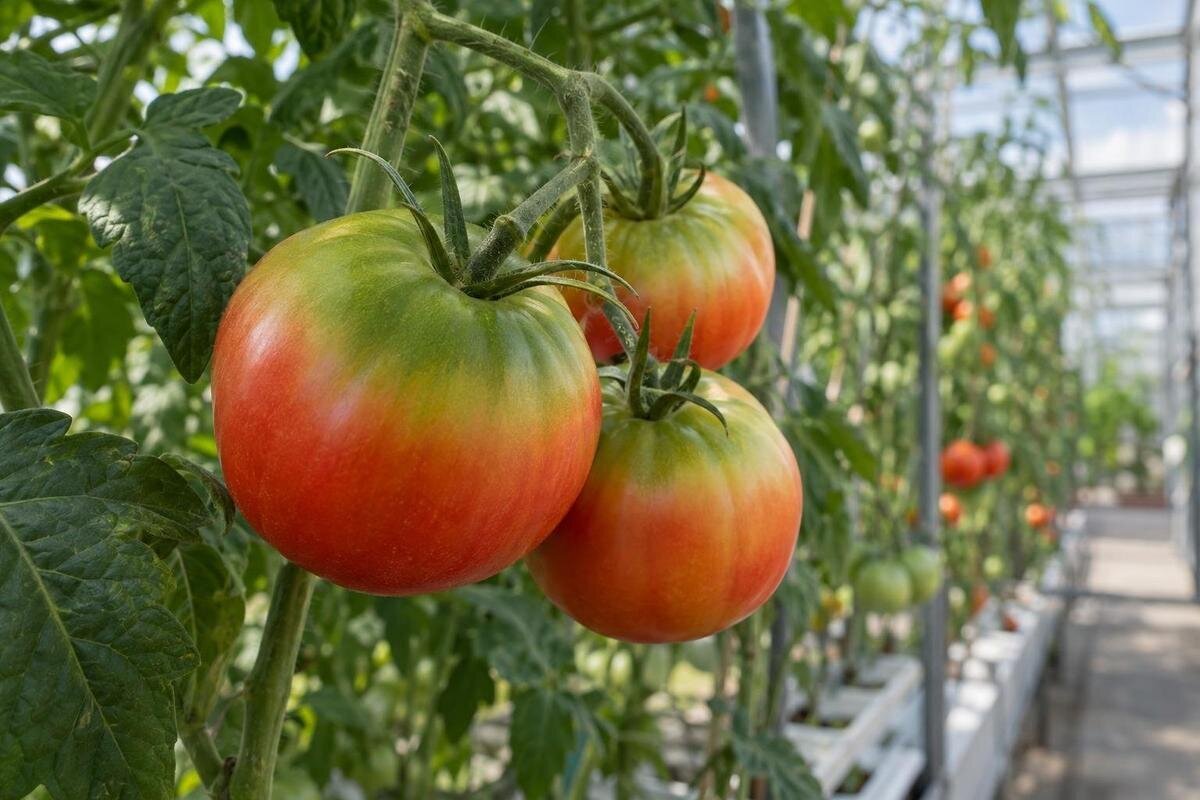
The shoulder is the area immediately around the stem scar, not the blossom end. On an affected tomato, most of the skin may turn red, pink or yellow while the area beside the stalk stays green and feels firmer. The colour can form a neat band or appear in irregular patches; sometimes pale, firm tissue lies just beneath it. The terms green shoulders and greenback are used for persistent green at the stem end, though people may use them a little differently. Note the patch’s position, shape and firmness: a wholly green, immature fruit is a different observation from a ripe-looking tomato with one stubborn area.
As a tomato ripens, green chlorophyll in the skin fades while pigments associated with its mature colour develop. If this change is incomplete at the shoulder, the rest of the fruit can look ready while that part remains green and tough. A firm area inside may accompany the colour, but does not identify why it happened. A green shoulder alone is not proof of infection or a particular mineral deficiency. Treat it as a symptom to compare with similar fruit, rather than a diagnosis made from one tomato.
A green shoulder can be a normal cultivar trait
Variety is often the first clue. Some tomato cultivars naturally retain green colour around the stalk as the fruit ripens; others colour more evenly. This difference is inherited, and relates to how the fruit retains or loses chlorophyll as it matures. If several ripe fruits from one named cultivar show a similar ring, while another variety beside it colours evenly, a cultivar trait becomes more plausible. A consistent shoulder on otherwise typical fruit is less concerning than a new, irregular pattern across several varieties, although neither pattern alone proves its cause.
Check the seed packet, plant label or supplier’s description, and note the cultivar name before changing the growing routine. Compare fruit at a similar stage: a very green, immature tomato cannot show whether its mature colour will be uniform. If the name has been lost, keep fruit from that plant together and see whether the same pattern repeats as more tomatoes ripen. Record the colour of the rest of the fruit as well as the shoulder, so you are not comparing a partly coloured tomato with one that is otherwise fully ripe. Individual fruit can vary, so one exception does not mean the whole crop has a problem. For a future planting, look for descriptions that mention uniform colour development rather than assuming all red-fruited cultivars behave alike. Keep any description of the expected mature colour with your crop notes; it gives you a useful reference when the first fruit ripens.
02
Compare fruit at the same stage and in different greenhouse zones
Take photographs before picking anything. Show the stem end, the side of the fruit and the whole plant; use consistent daylight and avoid filters that could alter the colour. Record the cultivar if known, the date, which part of the plant the fruit came from, and whether the green area is an even ring or a blotchy patch. Include an unaffected fruit from the same plant where possible, rather than photographing only the most striking example. If you cut one representative tomato, note whether firm, pale-green tissue extends beneath the shoulder and how it compares with the flesh elsewhere. Keep the outside and cut-fruit photographs together so the observations remain connected. A close-up without context can be misleading because maturity, fruit size and lighting all affect how a patch looks. Use the same views for later photographs to make changes easier to compare.
Map the affected plants on a simple sketch of the greenhouse. Note whether the pattern follows one variety, one bed or a particularly sunny, warm or crowded area, then compare it with fruit elsewhere. Include recent warm spells, ventilation, leaf removal and changes in feeding or watering in your notes. Mark unaffected plants too: a sketch showing only problem fruit leaves out useful comparisons. Where varieties occupy separate beds, record that limitation rather than assuming the difference must be due to either variety or location. If you are comparing structures for a future growing plan, the Limited-Edition Aluminium Greenhouses with Storage range is listed from 5.52 to 28.08 m². On a proposed layout, distinguish the growing space, paths and storage area so you can see where crop observations would be made. Keep that planning sketch separate from the record of conditions in your current greenhouse.
Heat can delay colour at the stem end
Heat can affect the pigments that give tomatoes their mature colour. In red-fruited varieties, sustained high temperatures can suppress lycopene formation, so fruit may colour more slowly or unevenly while green chlorophyll remains visible. A greenhouse can warm quickly on a bright day, and conditions may vary between crop zones. This is one reason a similar shoulder appearing across several varieties during a warm spell deserves an environmental check. It remains a clue, not proof: cultivar traits, fruit maturity and other growing conditions can produce a similar appearance. Outdoor weather alone is not a reliable guide to the conditions around greenhouse fruit.
Use a max/min thermometer or a reliable sensor at crop level, out of direct sun, and record readings over more than one day. If the pattern seems local, repeat the observation in another part of the greenhouse. Where readings suggest excessive heat, use normal ventilation and shading practices for the structure, without suddenly removing healthy foliage or exposing fruit. Follow the greenhouse’s operating guidance rather than improvising changes. The Bloomcabin Prestige Greenhouse range is listed from 3.77 to 28.08 m²; compare the ventilation details of any option separately, as floor area is not a heat-control specification.

03
Air movement and plant crowding can affect the pattern
Conditions are not always the same in every corner of a greenhouse. Dense foliage or closely packed plants can limit circulation and make it harder to inspect individual fruits; a sunny wall or sheltered area may also warm differently. These are reasons to compare where affected tomatoes are growing, not proof that a particular vent or structure caused the symptom. A pattern concentrated at one end of the greenhouse is worth recording alongside conditions at the other end, especially if fruit from the same cultivar behaves differently across the space.
Keep access to vents and crop rows, and avoid letting vigorous growth become an unmanageable tangle. Prune according to a sound tomato-growing routine; removing large amounts of foliage to cool the crop can expose fruit to direct sun and create another problem. Ventilate when conditions allow, and assess the whole canopy rather than assuming air moves evenly everywhere. Note where foliage overlaps between plants and where you cannot inspect fruit without moving several stems. These observations help identify practical layout problems without attributing every green shoulder to crowding. The Spacious Greenhouse range is listed from 47 to 70 m². When drawing a crop layout for a space of that size, include access to each row and to the openings, not just the area occupied by beds. Consider how you would inspect plants at the far end as well as those near the entrance.
Balance sunlight, shade and leaf cover
Tomato plants need light, but that does not mean every fruit should be exposed to full sun. Fruit that becomes exposed suddenly after heavy pruning can heat up and develop sunscald: a pale or yellow-white patch on the sun-facing skin that may later become leathery. That appearance is different from a regular green ring beside the stem, although both can occur on the same plant. Compare the side of each fruit that faces the sun with its stem end, and note whether affected tomatoes are exposed or protected by leaves.
Keep enough healthy foliage to protect fruit, while maintaining a manageable canopy and good air movement. Do not remove leaves simply to make shoulders ripen; it can increase exposure without addressing the cause. If repeated observations point to excessive heat, use established shading practices rather than making a drastic change. Record where shade falls at different times of day and whether the affected fruit sits in direct sun or beneath leaves. This makes a later comparison more useful than a general note that the greenhouse was sunny. When comparing greenhouse footprints, the Aluminium Classic Greenhouse range is listed from 3.77 to 28.08 m². Place a proposed outline on your site sketch alongside existing sources of shade, then consider the intended tomato positions. Use your observations of the site to assess exposure rather than relying on the footprint alone.
04
Nutrient imbalance needs more evidence than one fruit
Potassium is involved in fruit development, and an inadequate supply can contribute to uneven or blotchy ripening. That makes it one possibility, not a diagnosis from a green shoulder. Other root-zone problems can affect how plants take up nutrients, while a cultivar trait or hot conditions can produce a similar patch. A pattern across several plants, together with other changes in growth, deserves closer attention; even then, leaf symptoms are not specific enough to identify a shortage on their own.
Review the fertiliser record and, if the symptom keeps recurring, consider a soil or growing-media test, including pH where appropriate. Write down the feed used, its dilution and application dates; a note that the plants were fed regularly is less useful when comparing routines. Keep watering reasonably consistent, since root conditions influence nutrient uptake, but do not assume that an isolated green shoulder is a watering fault. Avoid adding potassium or a general fertiliser solely because one fruit looks uneven; excess feed can create further imbalance and will not correct a cultivar trait or heat. If you are also comparing future growing spaces, the Lean-to Greenhouses range is listed from 3.69 to 14.34 m². Sketch where beds or containers would sit and how you would reach each plant for watering and feeding. That practical arrangement belongs in the growing plan, while the nutrient investigation depends on the crop and growing medium.
Respond to a pattern, not to a single tomato
If one fruit has a green shoulder but the plant and other tomatoes look normal, record it and compare further fruit before making a change. If several fruits are affected, check the variety, greenhouse location, recent heat and feeding history together. Change one supported factor at a time, then watch fruit that develops afterwards. A sudden switch in fertiliser, watering, pruning and shade makes it harder to tell what mattered. A change in growing conditions may benefit later fruit, but a shoulder already marked may not become uniformly coloured.
Look more closely if green areas are irregularly mottled, fruit is distorted, leaves show unusual mottling, or the plant is declining. Those signs do not establish a particular disease, but they do not fit a simple cultivar trait as neatly. Photograph the whole plant, several fruits and close views of the stem end, and ask a horticultural adviser for a diagnosis if the problem is spreading. Explain whether the changes appeared together or whether the green shoulders were present first; keep observations separate from your suspected explanation. If you are considering a new structure after repeated environmental problems, the Limited Edition Aluminium Greenhouses range is listed from 3.77 to 28.08 m². Identify the growing-space issue you want to address before comparing options, such as access to crowded rows or the position of openings. Replacing a greenhouse is not a targeted treatment for one crop symptom.

05
Greenhouse size and layout do not predict fruit ripening
A greenhouse’s footprint, name or shape does not by itself tell you the temperature around a tomato plant. When a symptom repeatedly follows one location, review the actual site, crop positions, available openings, access and sources of shade. Those details are more useful than assuming a larger or differently shaped structure will prevent green shoulders. If you are comparing greenhouses, check the information for the specific option you are considering; do not infer ventilation or light conditions from an area figure alone.
The T-Shaped Orangery Greenhouse range is listed from 16.52 to 30 m², which can be used as a footprint reference when drawing a crop plan. Compare the published details for the relevant configuration and think through where beds, paths and monitoring points would go. Draw the proposed rows rather than treating the whole listed area as planting space. Include the routes needed to reach fruit, tend plants and operate openings, then check whether those routes remain usable in your planned layout. This turns a size comparison into a practical assessment of how you would manage the crop. Keep the purchase question separate from the crop investigation: a layout can help you organise observations, but it cannot explain the shoulder colour by itself. Use the same records of variety, fruit maturity and growing conditions when assessing tomatoes in any structure.
Reduce repeat problems in the next crop
Keep the notes and photographs from this season so you can compare them with the next planting. Choose a cultivar with a colour pattern you prefer, and record its name beside the growing location. If you suspect a hot spot, monitor the area during warm spells and review ventilation, canopy and shading before making broad changes. If nutrient imbalance remains a possibility, use test results and the product instructions for the fertiliser rather than treating colour alone. A small, well-recorded comparison between cultivars can be more informative than changing several parts of the routine at once.
Plan crop positions and access before planting, leaving room to inspect fruit and reach the greenhouse’s openings. If you are comparing footprints as part of that plan, the Pyramid Greenhouse range is listed from 5.53 to 18.9 m²; use the relevant published details to work out how beds, paths and monitoring points could fit. Choose observation points you can return to throughout the season, and label plants so cultivar names remain clear as growth fills the space. Carry forward the most useful comparisons from this crop rather than changing the entire routine. A cultivar that naturally keeps green at the shoulder may still do so under good conditions. Notes on heat, fruit position and mature colour will help you distinguish that familiar trait from a new growing problem.
Frequently asked questions
Are hard green shoulders a disease?
Not by themselves. A consistent green ring can be a cultivar trait, while heat and other conditions may affect ripening. Look for additional changes to the fruit or plant before suspecting disease; one patch of green is not enough to identify a cause.
Will the green area turn red if I leave the tomato longer?
It may colour further, but a cultivar trait or heat-affected area can remain green and firm. The rest of the tomato can also become overripe while you wait. Compare several fruits of the same variety rather than expecting every shoulder to change.
Should I add potassium to fix green shoulders?
No, not on this symptom alone. Potassium deficiency can contribute to uneven ripening, but other causes look similar. Review the feeding record and use a soil or growing-media test if the problem repeats before changing the fertiliser.
Should I remove leaves or shade the plants?
Avoid stripping healthy leaves simply to expose the fruit or alter its colour. Leaf cover helps protect fruit from direct sun, while good ventilation helps manage heat. If your observations show repeated overheating, review ventilation and established shading practices for the structure. Record any change so you can compare fruit that develops afterwards.
Does a green shoulder mean the tomato is spoiled?
Green colour at the stem end is not, on its own, a sign of spoilage; the area may simply be less ripe and firmer. Judge the whole fruit, and discard it if there is mould or decay. You can remove the tough section if you dislike its texture.
The clearest clue is whether the same green shoulder repeats on similar fruit. A consistent pattern on one cultivar points towards a variety trait; a change across plants or greenhouse zones makes heat, light or nutrient conditions worth reviewing. Photograph and compare before making changes, and avoid treating one firm green patch as proof that the crop needs extra feed. Green shoulders are a useful reason to look more closely, not a diagnosis on their own.
