
Why Greenhouse Aubergines Are Not Setting Fruit
Greenhouse crop care
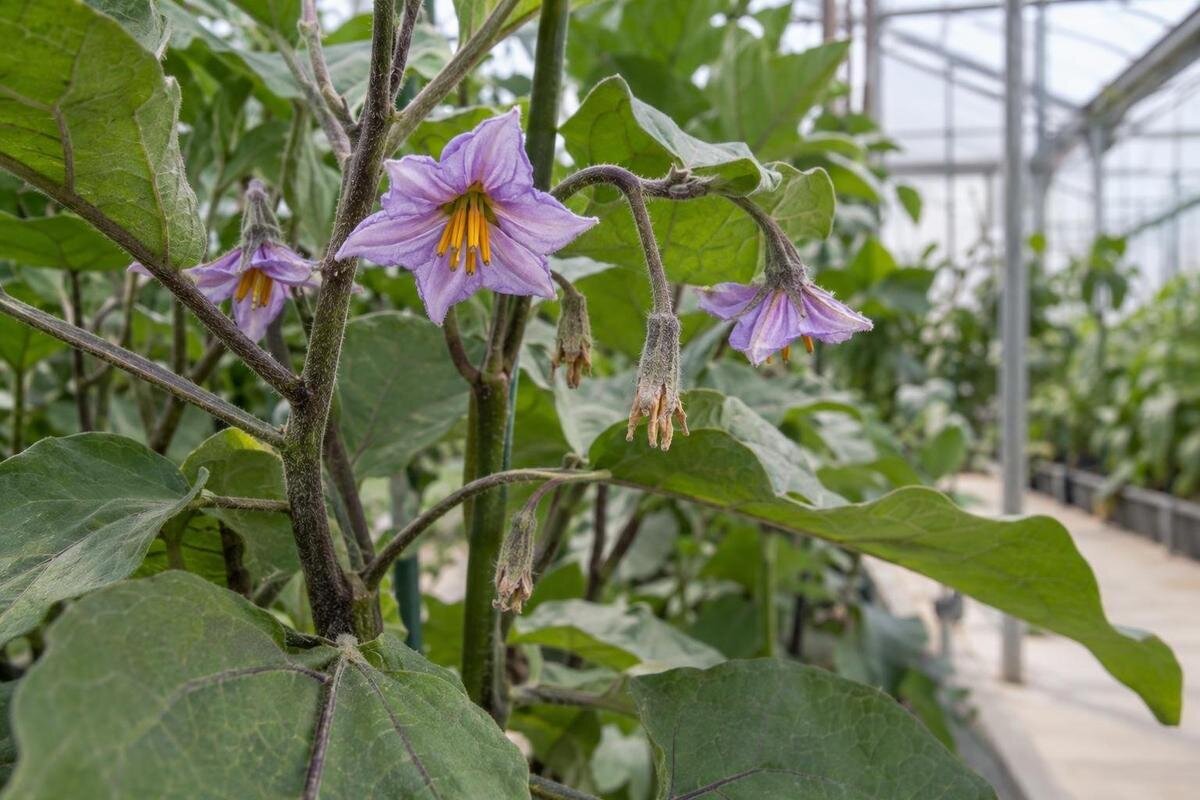
Greenhouse aubergines can carry plenty of open flowers and still produce few fruits. That does not automatically mean pollination has failed: petals naturally fade after a successful set, and some aubergine blossoms are less likely to set fruit than others. Aubergines are self-fertile, but pollen still has to move within each flower. Cool nights, daytime heat, still air or wider plant stress can interfere. Start by looking for an enlarging ovary, then compare flower shape with temperatures at canopy height. A pattern across several flowers is more useful than one fallen blossom.

01
Confirm that the flower has failed to set
After a successful set, aubergine petals usually fade and fall while the green, leaf-like calyx remains around the small ovary. Follow the base of a few flowers rather than judging by the petals. If the ovary begins to swell, an early fruit is forming; a blossom that dries and drops without visible enlargement has probably failed to set. The change can be subtle at first, so look again over several days. Petal drop on its own is not evidence that the whole plant has a pollination problem.
Choose a few blooms that you can find again easily, including some on plants that appear to be setting fruit and some on plants that are not. A loose label on a nearby support can identify the position without handling the blossom each time. Compare the flower bases at similar stages: a newly opened flower and one whose petals have faded do not tell you the same thing. This first check establishes whether fruit is actually missing before you investigate why. You do not need to replace the greenhouse to make these observations. If you are already planning a different growing layout, Limited Edition aluminium greenhouses are listed from 3.77 to 28.08 m². Use the selected model's plan to work out where beds and paths would go, including whether you could inspect flower bases without leaning across another row.
Aubergine flowers are self-fertile, but pollen must move
Each aubergine flower has anthers, which hold pollen, and a stigma, which receives it. The flower is self-fertile, so you do not need a separate male flower, a second plant or another variety for fruit to form. However, self-fertile does not mean pollen always reaches the stigma unaided. The anthers release pollen more readily when the blossom vibrates. In an open garden, insects and air movement can provide that vibration; a still greenhouse may offer less.
Flower shape provides another useful clue. Aubergines can produce long-, medium- and short-styled flowers; the style carries the stigma. Long- and medium-styled blooms are generally more likely to set fruit, while in a short-styled flower the stigma sits low in relation to the anther cone and fruit set is less likely. Look at the blossom from the side without pulling it apart. If the parts are difficult to distinguish, take a close-up rather than assigning a flower type from a quick glance. Compare several fully open blooms, not an open flower with a closed bud. Several short-styled flowers suggest a different explanation from normally formed flowers that repeatedly fail, and style length can also vary with growing conditions. Note the shape alongside the outcome so that a mixture of flower types is not mistaken for a uniform pollination failure.
02
Try gentle vibration on open flowers
In a very still house, try a small, gentle vibration on some fully open, dry flowers. Tap the flower stalk or the nearby supporting stem lightly so pollen is shaken loose inside the blossom. You can also hold the handle of a clean electric toothbrush against the stalk briefly, keeping the brush head away from the flower. Do not press on the anthers or shake the whole plant hard. The aim is to help pollen reach the stigma, not to disturb buds or petals.
Repeat the test on several open flowers over a few days, rather than treating unopened buds or flowers that have already collapsed. Mark some blossoms you vibrate and leave others alone as a rough comparison, then look for ovaries beginning to swell. Choose flowers at a similar stage and note their style where you can see it; otherwise, a difference in flower structure could be mistaken for an effect of vibration. The comparison is not a controlled trial, and one successful flower does not establish that every earlier loss was caused by poor pollen movement. Stop treating a marked flower once its ovary is visibly enlarging. Access matters for this task: you need to reach the stalk without pushing through neighbouring stems. When planning beds in a T-shaped orangery greenhouse, listed from 16.52 to 30 m², use the exact plan to allow for that access rather than filling every available part of the floor with plants.
Measure temperature at flower height
Measure where the flowers are, not just near the roof or beside a door. A min/max thermometer or data logger placed around the height of the flowering foliage can capture the overnight low and the afternoon peak. Keep it shaded from direct sun and away from glazing, heaters or a draught, so it records the surrounding air rather than a locally heated surface. Write down readings while flowers are opening and dropping; a forecast or one midday reading can miss conditions that affected a bloom earlier.
If plants are spread across the greenhouse, compare more than one position, especially where one bed is near a vent and another is more sheltered. Note the plant location and whether doors, vents or shade were in use. Label each measuring position so you can connect a reading with the flowers being observed, rather than treating it as a temperature for the entire greenhouse. If you move a thermometer, record the move; readings from different positions should not be treated as an uninterrupted record of one spot. A sketch showing beds, openings and measurement points makes the comparison easier to follow. For a new layout, the Pyramid greenhouse range is listed from 5.53 to 18.9 m². Use the chosen model's plan to map possible crop positions, then take readings where the plants actually grow; the catalogue area is a planning reference, not a measurement of their conditions.

03
Check both cool nights and hot afternoons
Aubergine is a warm-season crop, so repeated cool nights can interfere with pollen function and flower development. Prolonged hot afternoons can also impair pollen or cause flowers to abort. As warning signs, investigate repeated night readings around or below 15°C and sustained daytime peaks in the low-to-mid 30s °C. These are not pass-or-fail limits: variety, the length of exposure, humidity and plant vigour all matter. One brief spike or dip does not prove that temperature caused the loss.
Compare readings from the days flowers open with the dates when ovaries fail to enlarge. Keep the overnight minimum and daytime maximum separate, rather than reducing both to a single impression that the greenhouse was warm. If losses coincide with the worst temperatures, use the greenhouse's normal ventilation or shading controls to limit overheating while keeping an eye on overnight lows. Note which control you changed and when, so later flowers can be assessed against the conditions they experienced. An improvement after several changes may be welcome, but it will not show which change mattered. If you are considering a greenhouse that also accommodates equipment, Limited-Edition aluminium greenhouses with storage are listed from 5.52 to 28.08 m². Check how the selected layout divides storage and growing space, and identify the proposed crop positions separately when planning temperature monitoring.
Assess humidity, airflow and light
Air movement and humidity affect the setting environment, but more ventilation is not a cure for every failure. A stagnant, very humid pocket may make pollen less free-flowing and can coincide with heat build-up; gentle movement around plants helps limit still zones. Strong draughts, particularly when the greenhouse is cool, can add stress rather than help. Note whether flowers and foliage stay damp for long periods or whether the air feels close and still, alongside the temperature readings.
Light and canopy density are worth checking too. Deep shade and crowded foliage can limit flower production and make individual blooms harder to inspect, while removing large amounts of leaf growth can stress a plant. Look at the crop from the path and then at flower level: a row that appears open from above may still have overlapping leaves around its blossoms. Compare the brightest and most shaded plants, noting whether both produce flowers and whether those flowers set. This separates a shortage of blooms from the failure of existing blooms to form fruit. Avoid pruning heavily or adding shade simply because one flower has fallen. When comparing layouts in the Bloomcabin Prestige Greenhouse range, listed from 3.77 to 28.08 m², consider bed positions and the space between mature plants. Check the exact model's vent arrangement as well; its name does not describe airflow around a planted crop.
04
Review water, roots and plant vigour
Water stress can cause flower loss even when pollination is adequate. A root zone allowed to become very dry and then saturated can put the plant under strain; constantly wet soil or compost can also impair roots. Check moisture below the surface where the roots are, not just in the top layer, and compare pots or beds separately. Do this before deciding that every plant needs the same change in watering. Note whether the affected plants share a container size, bed or watering routine, and whether nearby plants under the same routine are setting fruit. That comparison helps you identify where to investigate without assuming that watering is the cause. Wilting, drooping flowers and uneven growth add context, but each can have more than one explanation.
Look at growth as well as flowers. Very lush foliage with few blooms can follow excess nitrogen, while weak growth may reflect several problems, including poor roots, low light or nutrition. Distinguish a plant that produces few flowers from one that flowers freely but loses them: adding feed is not an automatic answer to either pattern. Leaf colour alone is not a reliable fertiliser diagnosis. Review what you have already applied and whether growth changed afterwards before making another adjustment. Where several beds or container groups share a greenhouse, assess each group separately rather than using the strongest plant as a guide to the whole crop. The Spacious Greenhouse range is listed from 47 to 70 m². If planning a growing area of that size, organise beds and access so individual watering zones can be inspected; the total floor area says nothing about how evenly the plants are watered or lit.
Inspect leaves and flowers for pests or stress
Inspect buds, flowers and the undersides of leaves for pests. Thrips may be found in flowers and can leave scarred tissue; spider mites can cause fine leaf stippling and, as an infestation grows, webbing. These signs warrant a closer look, but they do not by themselves prove why fruit is not forming. Also note whether leaves are distorted, mottled, yellowing or wilting, and whether damage is new or spreading.
Take clear close-ups of a typical flower from the side, a whole-plant view and any affected leaf, noting the date and greenhouse position. Keep the flower base in view so you can compare its shape and any enlargement later. For leaf damage, photograph both the affected area and enough of the leaf to show where it occurs. Use the same marked plant for later photographs where possible, rather than comparing unrelated examples. A photograph can help track changes, but it cannot show pollen viability, root health or the temperature a bloom experienced. Close inspection also requires room to reach flowers and leaf undersides without dragging stems aside. If reviewing the Aluminium Greenhouses range, listed from 3.77 to 28.08 m², check the selected plan for path and bed positions with this kind of routine crop access in mind.

05
Keep a short record before changing conditions
Keep a simple record for one flush of flowers. Note when each group opens, its style if visible, which flowers you gently vibrated and whether the ovary enlarged. Add the overnight minimum and afternoon maximum, greenhouse position, vent or shade settings, watering changes and any obvious plant symptoms. You do not need to measure every variable with instruments; consistent notes on a few marked plants are more useful than a vague memory that the greenhouse was cold or still.
Read the notes by plant and flower group, not just by date. A greenhouse-wide average can hide the fact that one position repeatedly loses flowers while another sets fruit. Compare flowers on the same plant and in different locations, then alter one relevant factor at a time where practical. Keep a clear distinction between what you observed, such as an unchanged ovary, and what you suspect, such as poor pollen movement. Leave uncertain entries unresolved rather than making the record appear more definite than the observations allow. The notes can also inform a future layout by showing which positions deserve closer monitoring. If comparing Lean-to greenhouses, listed from 3.69 to 14.34 m², use the selected plan and siting details to place beds, paths and observation points. A different format or floor area is not, by itself, an explanation for fruit-set problems.
Interpreting the pattern of failed fruit set
Bring the observations together before choosing what to change. If ovaries are enlarging despite fallen petals, those flowers have set and do not need further pollination attempts. If losses occur mainly among short-styled flowers while other blooms set, flower structure is a more useful lead than a general failure of pollen movement. Normally formed flowers that fail during a cool spell or hot afternoon point towards environmental stress, particularly when the timing matches your readings. If gently vibrated flowers set more often than comparable untreated blooms, limited pollen movement is worth investigating, but the comparison cannot prove it was the only cause. Continued failure across different conditions warrants a closer look at water, roots, light and plant vigour. Choose the explanation best supported by the pattern, keep alternatives open and judge any adjustment by what happens to later flowers rather than expecting a lost blossom to recover.
For the wider sowing and growing routine, use the existing aubergine-growing guide alongside this focused explanation of fruit set. If the problem persists or leaves and stems show serious damage, ask a local horticultural adviser or plant supplier to review dated photographs and temperature notes. A useful assessment considers the flower's structure and the conditions it experienced; petals alone cannot identify the cause.
Frequently asked questions
Do greenhouse aubergines need hand pollination?
Not always. Each aubergine flower is self-fertile, and insects or natural movement may transfer its pollen. In a very still greenhouse, gently vibrating fully open, dry flowers can help. Treat it as a useful test, not a guarantee, and watch to see whether the ovary behind the flower begins to swell.
Can one aubergine plant set fruit on its own?
Yes. An aubergine flower has both pollen-producing anthers and a receptive stigma, so a second plant is not needed. Pollen still needs to be released and reach the stigma. If flowers fail to set, look at their shape and the growing conditions as well as the number of plants.
Why are aubergine flowers falling off without fruit?
Possible causes include limited pollen movement, short-styled flowers that are less likely to set, repeated cool nights or hot afternoons, and stress affecting the plant. Petals also fall naturally after fruit has set. Look for an enlarging ovary and compare several flowers before settling on a cause.
What temperature is too cold or too hot for aubergine fruit set?
There is no single threshold for every variety or greenhouse. Repeated nights around or below 15°C and prolonged daytime peaks in the low-to-mid 30s °C are warning signs worth recording. Use a min/max reading at flower height, and consider how long the conditions lasted alongside the plant's overall condition.
How can I tell whether pollination worked?
Watch the ovary inside the green calyx as the petals fade. If it starts to enlarge over the following days, fruit is developing. A dry flower that drops without an enlarging ovary is less likely to have set. A fallen corolla alone is normal, so follow marked blooms rather than judging by a single moment.
Flowering and fruiting are separate stages: a healthy-looking bloom can fail, a naturally short-styled flower may not set, and petals can fall after a successful pollination. Look for the ovary's growth, measure temperature where the flowers actually sit, and relate both to flower structure and plant vigour. A few well-chosen observations will narrow the cause more reliably than treating every fallen blossom as a pollination failure.
