
How a Greenhouse Can Contribute to Household Meals
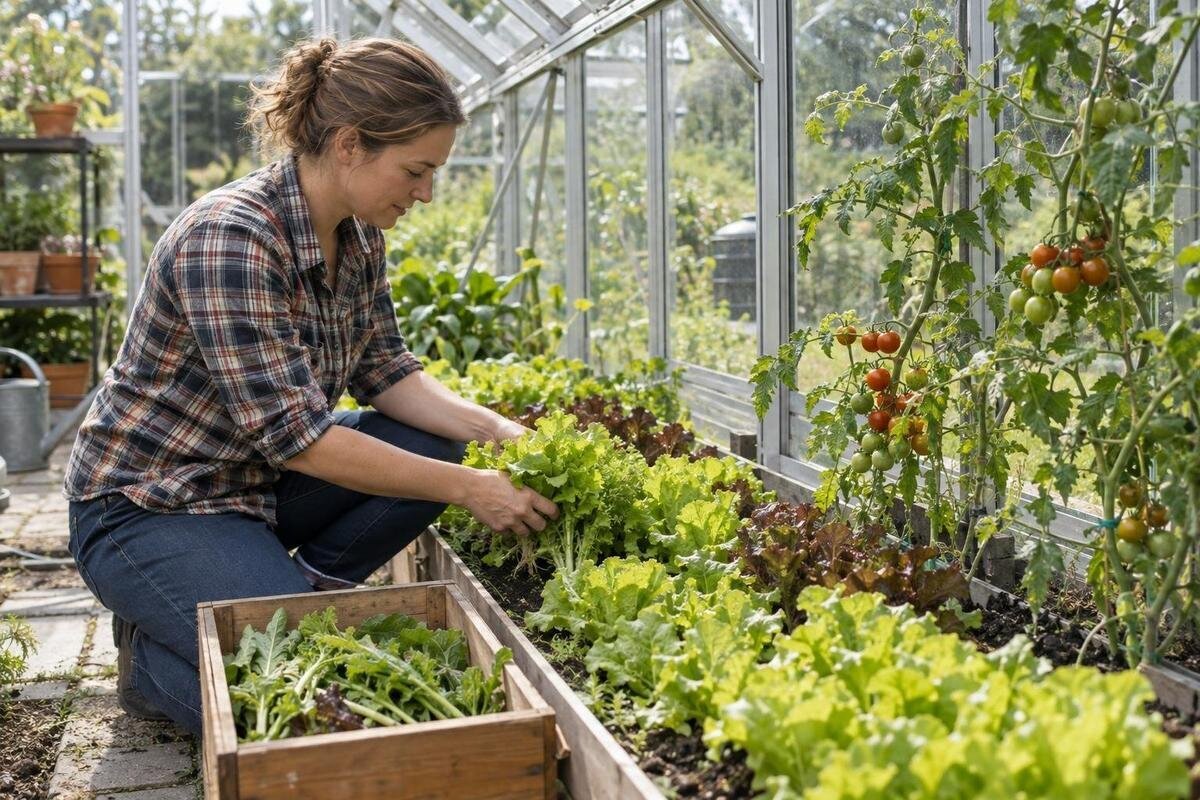
Greenhouse food growing
Could a greenhouse put more homegrown food into household meals? Yes, often by supplying a chosen mix of herbs, salad leaves or other crops at times when they are useful. That is a more realistic aim than replacing the weekly shop. The likely contribution depends on what people eat, the growing space that can actually be used, the amount of harvest that gets eaten and the time available for routine care. A practical estimate starts with the household's meals, maps seasonal gaps and then checks the results against an honest crop and care log.

What a greenhouse can realistically add to meals
A greenhouse can add meaningful ingredients to meals without supplying most of a household's food. It may make it easier to pick herbs, salad leaves or crops such as tomatoes when they are wanted, adding freshness and choice even if the volume is modest. It helps to distinguish a frequent ingredient from a complete meal: a few homegrown additions do not replace staples such as bread, oats, rice or pulses, or the wider range of food a household buys. A useful target is a share of ingredients actually eaten, not a claim of complete self-sufficiency. If a small harvest is used regularly, it can matter to the menu without changing the household's dependence on shopping for most food.
Cover changes the growing environment; it does not supply daylight, warmth, water or attention by itself. It may protect suitable plants from some exposure and, in the right conditions, offer a useful picking window, but results vary by site, crop, season and management. An unheated greenhouse should not be assumed to provide a reliable harvest in every month, and plants still need routine care. Identify the meals and months when homegrown food would be useful, then keep outdoor crops, stored food and shopping in the overall picture. This frames the greenhouse as one contributor to household meals rather than the whole food system.
Start with the food your household already eats
Start with a record of actual meals and shopping, not a seed catalogue. For a representative fortnight or month, note which vegetables and herbs recur, roughly how much the household buys, and whether that food is used, stored or wasted. Include weekday lunches and quick suppers as well as planned weekend dishes: a crop that fits a familiar meal is more likely to be harvested and eaten than an unusual ingredient chosen only because it looks appealing. A notebook or shopping list is enough; exact weighing is optional at this stage, but consistent units—packs, bunches, portions or grams—will make later comparisons more useful. Also note the difference between a full pack used across meals and one bought for a single recipe.
Sort the record into foods you would grow and eat often, foods you enjoy but use occasionally, and foods nobody wants in quantity. Begin with the first group. A crop that ripens in a short spell can be too much for one household even when it is a favourite; herbs or leaves may be picked in smaller amounts, while a crop used in sauces may have a clear route into meals. Ask who will cook, who will harvest and whether surplus can be shared, stored or preserved. Check that the people who share meals are happy to eat the proposed crops, not only that the gardener likes growing them. If a crop has no dependable place in meals, leave it out of the first plan.
Choose crops for a clear role in meals
Give each crop a reason for occupying covered space. Some households may value warm-season fruiting crops such as tomatoes, cucumbers or peppers; others may get more regular use from salad leaves and herbs. Treat these as options rather than universal recommendations: choose varieties suited to the conditions you can provide, follow seed-packet guidance and seek local growing advice where timing or conditions are unclear. A greenhouse is most useful when a chosen crop benefits from cover or a more controlled environment. If the same crop would do just as well outdoors in the space you have, reserve protected ground for something with a clearer purpose. Include the attention a crop needs in that choice; an ingredient is useful only if someone can tend it.
Make a short crop list before buying seed. For each entry, write down the meals it will go into, when you expect to use it and whether it needs a long growing period or repeated sowings. A crowded collection of experiments means more labels, care routines and harvest windows to manage. Compare that list with the area you can realistically look after. The Bloomcabin Prestige Greenhouse is listed from 3.77 m² to 28.08 m²; the range gives an area comparison, not a prediction of how much food any household will harvest. Leave room to learn what you actually use before filling every available part of the plan.
Measure food eaten, not just harvested
Do not turn plant counts into a promised yield by applying a generic figure. Conditions, variety, planting date, pest pressure and care all affect what is picked, so a generic estimate is a poor forecast for a particular home. Treat the first growing cycle as a measurement exercise. Record what you sow, roughly how many plants reach the growing space and the amount harvested each time. Use weights for crops that are easy to weigh, or consistent counts and bunches for others. Label notes by crop and date, so small harvests from different plants are not blurred together. Record damaged, overripe or unused produce too: gross harvest and food eaten are not the same measure.
Compare the log with what the household normally buys. If you typically buy a certain number of salad portions in a week, note how many portions from the greenhouse were actually used that week; you may still need to buy the rest. For a simple illustrative calculation, suppose the household normally buys six salad portions and uses two from its own harvest. Those two replace two of the six bought portions for that week; they do not mean one-third of every meal is homegrown. Repeat the comparison across ordinary weeks and weeks with smaller harvests before describing the annual contribution. The Bloomcabin Orangerie Spacious Greenhouse is listed from 47 to 70 m², but its area figures are not a forecast of household harvest, use or demand.

Count the routine care time
Food growing asks for attention on ordinary days as well as at sowing and harvest. Depending on the crop and conditions, recurring jobs can include checking moisture, watering, ventilation, tying or pruning plants, looking for problems, harvesting and clearing finished crops. The tasks are not equal in every week: planting periods and active growth may call for a different routine from quieter parts of the year. Note which jobs can be done in a short weekday visit and which need a longer block of time. The useful question is not whether there is time for one enjoyable planting session, but whether somebody can notice what needs doing repeatedly. If care is shared, agree who is responsible rather than relying on an unspoken assumption.
Keep a brief time log for ordinary weeks and the busiest growing periods. Record actual minutes spent growing and preparing the harvest, including sowing, collecting produce and washing or sorting it, not only watering. Note absences or busy periods when the usual gardener may not be available; a routine that works only during a quiet week may not be realistic for the season. This shows whether the planned number of crops fits the household's schedule, and whether a simpler crop list would deliver a better contribution for the time available. The Aluminium Classic Greenhouse is listed in sizes from 3.77 m² to 28.08 m²; that range can be compared with your plan, but it does not state how much care a chosen setup will take.
Plan for seasonal gaps
Draw a simple month-by-month calendar for crops the household buys and those it hopes to grow. Mark likely sowing, planting and picking windows using seed information and advice suited to the site; do not assume one date applies to every garden. The aim is to see when homegrown produce could be used and when the household will still rely on shops, outdoor beds or stored food. Mark crops that may be ready at the same time as well as gaps: a season that looks productive on paper can still contain a glut followed by weeks with nothing to pick. A greenhouse may change timing for some crops, but the effect depends on the plant, light, temperatures, location and attention. Treat an extended season as something to test, not a guarantee of produce every month.
Plan around gaps instead of planting everything at once. Where a crop can be sown more than once, stagger sowing according to its growing guidance and household demand; that may spread picking rather than create one surplus period. Make a note of empty weeks too, because they show where another crop, an outdoor bed or a bought ingredient is the more practical answer. The Limited Edition Aluminium Greenhouses are listed with areas from 3.77 m² to 28.08 m²; extra area alone does not lengthen a growing season or ensure a winter harvest. Use the crop calendar, rather than the size label, to set expectations about availability.
Check the site and access before choosing an area
Measure the proposed position and the route used to reach it before settling on crop numbers. Allow for access around the structure, door movement, paths, nearby plants and the space needed to bring in compost, pots or a harvest basket. Look at how light and shade change through the day and whether watering is practical from that position; both affect what can be grown and how easy it is to keep up with. One quick glance may miss shade that shifts over time. A greenhouse that fits on a plan but is awkward to use can undermine a meal-growing routine. Where the ground, base or fixing needs specialist assessment, ask a qualified installer or relevant professional rather than guessing.
Compare a product's stated area with the space measured, then verify the exact configuration and its usable area. The Lean-to Greenhouses listing spans 3.69 m² to 14.34 m², but those figures do not establish that a particular model will suit a specific wall or position. Site conditions, access and the actual dimensions need to be assessed for the option under consideration. Keep the crop plan separate from any structural decision: establish what the site can accommodate safely with qualified advice where needed, then decide how much planting to put within it. A product range can narrow comparisons; it cannot replace a site check.
Separate planting space from storage and access
Total area is not the same as planted area. Paths, room to reach crops, containers, shelves or work surfaces may reduce the area available for plants, while a crowded layout can make picking and routine checks harder. Draw the intended layout at a simple scale, marking beds or containers, a route through the greenhouse and any space reserved for sowing or temporary storage. For each crop, check plant spacing against seed information and leave room for mature growth. Then ask whether the person doing the work can reach the plants without shifting pots or damaging neighbouring growth. This is more useful than assuming every square metre shown in a product listing can hold a full crop.
Decide where tools, pots and seed trays will go, and whether keeping them in the same structure helps or competes with growing space. The Limited-Edition Aluminium Greenhouses with Storage are listed from 5.52 m² to 28.08 m². Treat storage and growing areas as separate parts of the plan: the listing establishes model identity and an area range, not how much plantable space remains in a particular configuration. If space is reserved for storage, do not count it as a bed; check the details of the selected option. Keep the route to the crops clear so stored items do not obstruct harvesting and routine care.

Combine covered growing with outdoor beds
Use the greenhouse alongside, rather than instead of, outdoor beds or containers. Covered space is often best reserved for shortlisted crops that benefit most from the conditions it offers; other foods may be manageable elsewhere in the garden or in pots. This division can prevent the most protected area being occupied by a crop that does not need it, and spread the work across different growing areas. Outdoor beds still need their own attention, so count them as part of the plan only if someone will tend them. A greenhouse does not have to supply every vegetable to make a difference. Consider which combination of covered and open-air crops fits the meals you actually cook.
Plan the whole plate, not just the structure. Even a successful greenhouse crop usually contributes one or a few ingredients, while other parts of meals continue to come from outdoor growing, shops or stored food. If you preserve, freeze or share surplus, include that in the household plan, but do not count produce left unused as a meal contribution. Looking at the full menu also discourages using covered space for a crop that the household cannot consume in quantity. The T-Shaped Orangery Greenhouse is listed from 16.52 m² to 30 m²; its area can be compared with the space you want under cover, but the listing does not show how much outdoor space or crop diversity a household needs.
Use first-season results to set a target
Treat the first season as a trial with a specific, modest target—for example, supplying a chosen herb or another recurring ingredient for regular meals. Base that target on what the household currently buys and is willing to eat, not on an assumed yield. During the season, record sowing dates, care time, harvests, how much was eaten and the weeks when nothing was available. Use a representative period, not a particularly good week, when comparing the result with the original shopping record. That gives you a household-specific baseline even if the first harvest is small, and helps identify whether the limit was space, time, crop choice or seasonal timing.
Use the evidence to adjust one thing at a time: grow more of a crop that was reliably used, reduce one that created surplus, or change timing where growing guidance allows. Two useful measures are the amount eaten and the weeks when a crop contributed; record care time alongside them so the harvest is not considered in isolation. If the greenhouse supplied a useful ingredient in only part of the year, that can still be worthwhile; the aim is not year-round independence. The Pyramid Greenhouse is listed from 5.53 m² to 18.9 m²; treat its available area as one planning detail alongside crop choice, site, usable layout and care time. A larger target is justified only if the first season's meals and routine make room for it.
Frequently asked questions
Can a greenhouse make a household self-sufficient?
It can contribute fresh ingredients, but a greenhouse alone is not a dependable route to year-round self-sufficiency. The result depends on what you grow, when it is ready, how much the household eats and how much care is available. Most households will still rely on other food sources.
Which crops are best for household meals?
There is no universal shortlist. Begin with vegetables and herbs your household buys and uses regularly, then check that they suit the conditions and time you can provide. A familiar ingredient that is picked and eaten is a better fit than an interesting crop that goes unused.
Does a bigger greenhouse mean a bigger harvest?
Not necessarily. More area does not predict how much will be planted, harvested or eaten. Crop choice, usable growing space, conditions and care all matter, and extra area may bring extra work. Compare the planned crop mix and routine with the available size rather than using area alone.
How much time does greenhouse growing take?
It varies with the crops, conditions and the way you grow them, and the workload can change over the season. Keep a brief record of sowing, routine care, harvesting and clearing finished crops during both ordinary and busy weeks to see what fits your household.
How can I measure the greenhouse's contribution to meals?
Record what you normally buy, then note the amount of homegrown produce that is actually eaten or stored and later used. Track the weeks it is available as well as the quantity. Produce harvested but left unused is not a contribution to household meals.
A greenhouse contributes to household meals when its crops match eating habits and its care fits ordinary routines. A modest harvest used regularly can be more valuable than a larger glut. Tracking what was eaten, when it was available and how much work it took gives a grounded picture of the greenhouse's role—and a better basis for future crop choices than promises of self-sufficiency.
