
Greenhouse Fans: Moving Air or Extracting Heat?
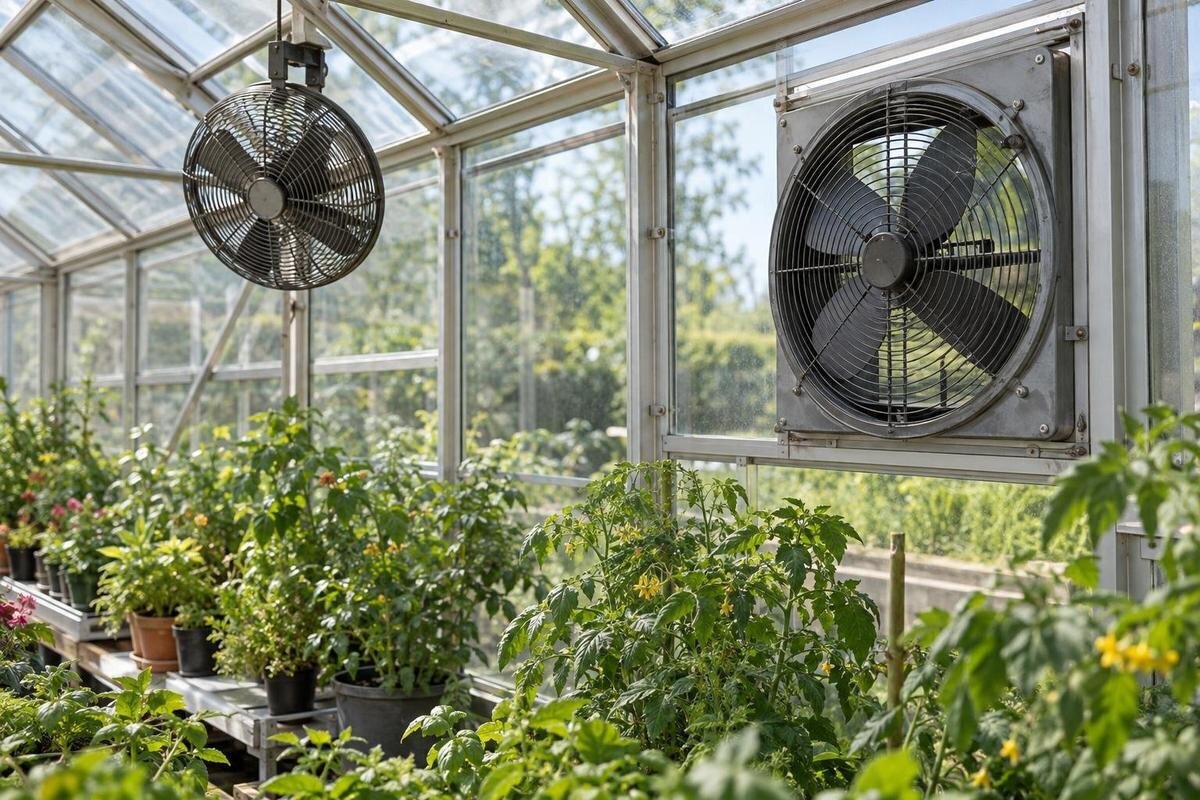
Greenhouse ventilation
A fan can make leaves flutter while the greenhouse stays hot, so visible movement is not proof that heat is leaving. The key question is whether air is being mixed within the structure or expelled and replaced. Circulation fans redistribute air already inside; extraction fans move indoor air out and depend on a route for outside air to enter. Some growing spaces benefit from both functions, but a warm or still corner does not automatically call for another fan. A simple airflow sketch, comparable temperature and humidity readings, and a check of vents and obstructions can show which job is missing.

01
Circulation fans and extraction fans do different jobs
A circulation fan moves air already inside the greenhouse. Its purpose is to reduce still pockets and mix air across the growing space; turning the blades does not, by itself, bring in outside air. An extraction fan discharges greenhouse air outdoors. Air that leaves has to be replaced, normally through an open vent, window or door included in the airflow route. If replacement air takes a short path straight to the exhaust, little may pass across the plants. To identify what an existing fan does, ask where the air goes after reaching it: back into the greenhouse or outside.
That distinction separates movement from heat removal. A breeze from a circulation fan can make moving air noticeable, but the fan does not remove heat from a closed structure. Extraction carries indoor air out, but its effect depends on the air coming in: cooler outside air can help bring the greenhouse temperature down towards outdoor conditions, whereas equally warm or warmer air cannot provide that same cooling. Sunlight and warm surfaces may continue adding heat. A leaf moving beside a fan is therefore not evidence that the air at the far end is cooler. Think of extraction as exchanging air, not refrigeration, and do not judge it only by whether leaves move.
Sketch an air route before choosing fan positions
Before choosing fan positions, draw a simple plan view of the greenhouse. Mark doors, roof and side vents, solid walls, partitions, benches, shelving and main crop rows. Draw arrows from the intended intake, through the occupied area, to the intended outlet. In a rectangular structure, a route from one side or end towards a more distant exhaust may be easy to picture, but the actual openings and equipment instructions determine what is workable. Add a side-view note as well: warm air often gathers higher up, yet wind and vent positions can change the route. If the inlet and outlet sit close together, air may turn straight back out rather than crossing the growing space. Mark which openings are expected to stay open during fan operation.
An attached greenhouse needs its own sketch rather than a copied plan for a freestanding structure. Note the wall position and which openings can stay open during fan operation. The Lean-to Greenhouses listing covers floor areas from 3.69 to 14.34 m², so draw the particular version you are considering. Check whether air can pass across the growing area without depending on a door or vent that is normally shut. Show narrow aisles and sheltered ends on the plan too: these can be missed if you treat the whole interior as one open space.
02
Where circulation fans are useful
Circulation fans are useful when air movement is uneven: one end feels still, an area behind a bench is poorly reached, or foliage and shelves divide the space into pockets. Arrange air to travel along a clear passage, with a return route through the rest of the greenhouse, rather than aiming every fan at the same spot. The Spacious Greenhouse range is listed from 47 to 70 m²; across a larger footprint, check both near and far ends instead of relying on a breeze beside the unit. Draw the return path as well, since circulating air needs somewhere to travel back.
Circulation is not a substitute for ventilation when fresh air or heat removal is required. Mixing air can reduce local temperature and humidity differences, but it cannot remove moisture from a closed space without air exchange or another removal process. Follow the fan's mounting and speed instructions, and avoid directing a forceful jet at one plant. Check a sheltered part of the crop area to see whether mixing has improved there; a breeze at head height may not reach lower plants. If the air moves more evenly but the greenhouse remains hot, review the inlet and outlet route rather than increasing circulation alone.
When an extraction fan addresses the problem
Extraction is the relevant function when repeated readings show that the greenhouse is warm across a broad area and passive openings are not clearing it sufficiently under the conditions you experience. An extractor has to discharge air outdoors, and a deliberate inlet must let replacement air enter. Check that the inlet can remain open and is not blocked by stored items or dense planting; then consider whether air travels through the growing area or simply takes the easiest short route from opening to fan. A closed space without a clear inlet may draw air through unintended gaps, making the route unpredictable. Manufacturers state how equipment is intended to be used. Choose fan size and inlet arrangements from the exact model instructions or qualified advice, not a rule of thumb based only on floor area.
Floor area alone does not determine the required extraction rate. The Aluminium Greenhouses listing spans 3.77 to 28.08 m²; note the selected footprint, height and usable vents when assessing equipment. Where an extractor manual distinguishes a free-air rating from performance with restrictions, use the figure and conditions that match the proposed setup. Do not assume that an opening or screen has no effect on airflow. If installation involves altering the structure or fixed electrical work, ask a suitably qualified professional to assess the method rather than improvising.

03
How greenhouse shape and vents affect airflow
A straight route is easier to picture in a rectangle than in a greenhouse with a side room, partition or unusual footprint. A T-shaped plan has a branch that may be missed if air only travels down the longest aisle. When considering the T-Shaped Orangery Greenhouse, mark every branch, bench and opening on the actual plan. Assess whether a branch needs its own circulation route, a different inlet or closer monitoring; one central fan may not reach every section. If a temporary divider or door can split the space, show how the route changes when it is closed.
Roof and side vents, doors and louvres can form parts of a ventilation route, but their effect changes with position, wind and whether they are open. A high-level outlet may help warm air leave when a suitable inlet supplies replacement air; it is not a guarantee of flow on its own. A fan may draw mostly from the nearest opening if that is the easiest route. Observe which openings are open at the times you need ventilation, including any vent that changes position during the day. Keep both ends of the intended route clear of pots, hanging items and plants, and check the greenhouse and fan manuals before relying on a particular opening as part of the system.
Use temperature and humidity logs to locate the issue
Readings are more useful when they reveal a pattern rather than a single hot moment. Compare the same points at similar times: near the intended inlet, in the middle of the crop area, near the outlet, and in any known still corner. If practical, compare at canopy height with a higher point as well. Keep sensors out of direct sun and away from the immediate fan discharge, so they represent greenhouse air rather than sunlight on the device or a concentrated jet. Record outdoor conditions and whether vents, doors, fans and shade were open or in use; those details help explain why two readings differ. Use the same sensor for comparisons where practical, or note which device supplied each reading. With one sensor, take readings in sequence and note any change in the weather between points.
Record temperature and humidity during repeated periods when the problem appears. A high reading at one end calls for a different check from high temperatures throughout; a sheltered humid corner warrants checking local obstructions. For a layout in the Pyramid Greenhouse range, mark each measuring point on your airflow sketch so you can compare the same locations later. When testing a change, alter one thing at a time where possible. This makes it easier to distinguish the effect of moving a fan from that of opening a vent or adjusting shade.
04
Benches, foliage and storage can interrupt airflow
Benches, dense foliage, hanging baskets and stored equipment can interrupt airflow. Mark obstacles between the inlet and outlet, particularly where they divide the growing area. Air may pass over or around them without reaching the space behind, so check aisle ends, sheltered corners and beneath dense benches. The Limited-Edition Aluminium Greenhouses with Storage listing identifies a built-in storage option; include that area in the plan rather than drawing only the planted space. Temporary stacks of pots or trays also matter if they block an opening. Sketch the greenhouse as it is normally used, not only when empty, and identify any gaps that need to remain clear.
As crops mature, leaves and supports may close gaps that were clear at planting time. Recheck the route after a major rearrangement or as seasonal growth fills the benches. Move a circulation fan or adjust its direction only as its instructions allow, and avoid aiming a strong stream continuously at one patch of foliage. For extraction, make sure stored items do not obstruct the replacement-air path or outlet. If a sheltered zone remains still, test whether clearing an opening or moving a bench helps before deciding to add a second fan; the obstruction, rather than a lack of equipment, may be the cause. Also leave the fan's own intake and service area unobstructed as its manual specifies.
Coordinate fan use with vents and shading
If a greenhouse heats quickly in direct sun, airflow and heat gain are separate parts of the problem. Shading can reduce solar energy entering the growing space; an extractor removes some indoor air, while a circulation fan moves air already inside. Shade does not exchange air, and a fan does not reduce incoming sunlight. This distinction helps avoid buying a fan to solve a problem caused mainly by sun load, or adding shade when the real issue is an obstructed route. Check what coincides with high readings: direct sun, closed vents, still air, or several conditions together. Compare similar conditions if you are trying to judge whether a shading change has altered the heat pattern.
Both fan functions may be useful where the greenhouse has general heat accumulation and local still pockets: extraction provides air exchange, while circulation moves air through the crop zone. Plan their positions together so that incoming air does not take a short route straight to the outlet. Outside temperature and changing weather affect what extraction can achieve, so consider when the fans will run and which vents will be open. With manual or automatic controls, check that each control produces the intended opening and fan operation. Controls cannot correct a blocked route; use the equipment manuals to check compatibility and operating limits.

05
Choose fan specifications for the actual greenhouse
Once the required function is clear, compare equipment by its intended job, installation position, stated performance and operating conditions. An extractor's airflow specification must be considered alongside inlet openings and greenhouse layout; a circulation fan's specification concerns movement within the space. Do not compare the figures as though they describe the same outcome. Check mounting and control requirements, and confirm that the proposed location suits the fan's stated operating environment rather than inferring suitability from an image. If the information does not cover your proposed arrangement, ask the supplier or a qualified installer before choosing equipment.
When comparing versions in the Limited Edition Aluminium Greenhouses listing, use the dimensions and vent positions of your selected version. Two greenhouses with the same floor area may have different openings, obstructions and crop layouts, so the catalogue size range is not a fan-sizing guide. Compare the actual arrangement with the fan's stated airflow requirements, using measured dimensions where the interior has been modified.
Check airflow after setup and as conditions change
After setup, test the intended route rather than merely checking that the fan runs. Observe several points: does replacement air enter, does the path cross the crop area, and can it reach the intended outlet? A light ribbon or strip of tissue held well clear of moving parts can help show direction; never bring it near fan blades or use flame or smoke to test airflow. Repeat the check with doors and vents in the positions used during ordinary operation, as changing an opening can redirect the route. If you have both functions, check each separately and then together, because their combined movement may differ. Follow the equipment manual for all adjustments and checks.
Keep a simple record of fan mode, vent position, weather, temperature and humidity after each change. For a setup in the Prestige Greenhouse, record the selected version and the arrangement you tested so that later comparisons refer to the same space. Revisit the sketch as crops thicken, benches move or vent use changes. Check whether adjustments reach the far corner, not just the area beside the fan. If a fan vibrates, overheats, makes an unusual sound or appears damaged, stop using it and follow the manual or seek qualified assistance; do not open or modify it yourself.
Frequently asked questions
Will a circulation fan lower the temperature in my greenhouse?
Not by itself. A circulation fan moves air already inside the greenhouse, so it may reduce local differences but does not exchange hot indoor air for outside air. To remove heat, you need an air-exchange route. Extraction can help bring the temperature towards that of the incoming air, but it cannot make that air cooler.
Does an extraction fan need an open vent?
Yes, it needs a route for replacement air to enter as indoor air leaves. Without a planned inlet, air may come through unintended gaps or take a short route straight to the extractor. Check which openings can remain available during operation and follow the fan and greenhouse instructions.
Can I run circulation and extraction fans at the same time?
They can serve different purposes in one greenhouse: extraction exchanges air, while circulation moves it around the crop area. Plan their positions together so the incoming air crosses the space rather than heading straight to the exhaust. Check the equipment manuals and test the route with each fan separately, then with both running.
Where should I put a greenhouse circulation fan?
Choose a position that helps air move through the area you want to reach, with a route back through the greenhouse. Benches, crop rows and shelving can interrupt that path, so do not judge placement by the breeze beside the fan. Follow its instructions and avoid directing a strong stream continuously at one patch of plants.
How can I tell whether I need circulation, extraction or both?
Compare temperature and humidity at several points during similar conditions, and note which vents, doors, fans and shade are in use. A still pocket or uneven readings may point to a circulation issue; readings that are high across the space may warrant reviewing air exchange. If both patterns appear, the two functions may be useful together.
The right arrangement follows the job: circulation for uneven air, extraction for exchanging indoor air, or both when readings show both problems. Give the air a clear route from inlet through the occupied space to an outlet, and account for the actual greenhouse shape, vents and obstructions. Then test movement at several points under normal operating conditions and revisit the plan as crops and openings change. That keeps a visible breeze from being mistaken for heat removal.
