
Taking a Greenhouse to a New Home: Is It Worth It?
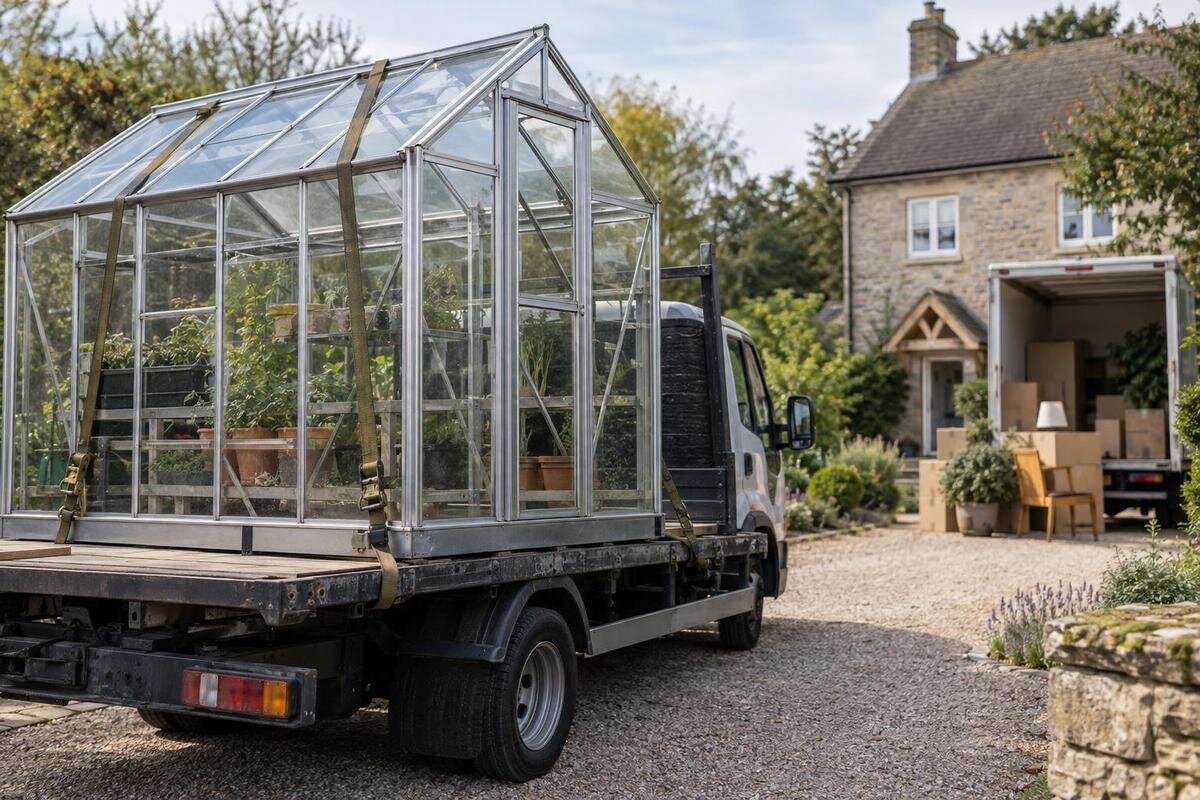
Greenhouse relocation decision
An established greenhouse can be worth taking to a new home, but it is not automatically cheaper or easier than replacing it. The answer depends on its present condition, the risks of dismantling and rebuilding, whether the new garden can accommodate it, and the full cost of both options. Compare a realistic relocation quotation with the price of a replacement that meets the same need, then consider timing, uncertainty and the value you place on the existing setup. This guide is about whether relocation makes sense, not a dismantling procedure.

What will you need from a greenhouse at the new home?
Before asking what the old greenhouse is worth, write down what you expect it to do at the new address. Are you continuing the same growing routine, or will the garden, the people using it and the time you have available change? Note the space you need for crops, access, working room and any storage, and whether the greenhouse is central to your plans. Think about who will use and maintain it as well as what you hope to grow; a house move can change the time available for routine jobs such as watering and ventilation checks. This separates a practical need for a greenhouse from a wish to keep a familiar structure.
The original purchase price is a sunk cost; moving the greenhouse will not recover it. What matters now is its condition, its usefulness at the new home and the cost of providing an acceptable alternative. Non-financial value can still count: you may value a particular size, arrangement or established setup. Be explicit about that value, though, rather than treating the old price as proof that moving is economical. Use the same requirements for both options, and decide how much delay, work and uncertainty you are willing to accept before comparing estimates. A greenhouse that no longer suits your growing plans may not be worth relocating even if it is intact.
The cost of a suitable replacement
A relocation quote has little meaning until you know what a suitable new option would cost. Define the comparison first: the area you need, the position available in the garden, essential features and whether you expect a professional to assemble it. A catalogue family is not a specific configuration, so do not treat its broad range as a direct equivalent. As one starting reference, the Aluminium Greenhouses range lists area options from 3.77 to 28.08 m². That span does not confirm the dimensions, fittings, specification or price of a particular model; request details for an exact candidate that meets your brief. Similar area figures can still represent different outer dimensions and internal arrangements, so do not use square metres alone to judge fit.
Choose a replacement baseline that meets the same need, not simply the cheapest product or a larger greenhouse you would not use. Ask what is included in the replacement estimate: delivery, assembly, base preparation, removal of an old structure or disposal of materials may be priced separately. If you plan to put a new greenhouse together yourself, include the time and any expertise you would need instead of treating the work as free. A like-for-like comparison means matching the outcome, not the model name. Moving is not a saving if the old structure leaves you with an awkward layout, while a new greenhouse is not automatically the better choice just because it has not been used before.
Will the new garden suit the existing greenhouse?
Measure the proposed space at the new address and allow for more than the greenhouse's stated area. Include room to open the door, reach the outside, use nearby paths and carry materials in; note boundaries, trees, future landscaping and any work already planned. Consider how sunlight and shade move across the site during the day, as well as the level of exposure and how you will reach the growing area. A wall-side position calls for a different layout from a freestanding one. If that format is under consideration, the Lean-to Greenhouses range lists area options from 3.69 to 14.34 m². This is a point of comparison, not proof that a wall or particular model will suit your garden.
Check the manufacturer's instructions for the exact greenhouse's site and support requirements, and ask an experienced installer or other qualified professional if the ground, access or exposure raises questions. Do not assume the existing base can be reused: its dimensions, condition and position may not match the model or the new site. Changes can add time and cost, even when the greenhouse itself appears sound. Check access for the people who will dismantle, transport or assemble it, and whether the work clashes with landscaping or other renovations. A scaled plan can help reveal door and path conflicts before you accept a quote. A structure can fit on a sketch yet be awkward to enter, maintain or use once paths and growing beds are considered.
Accessories, storage and working space
List the features you use, not just the parts that happen to be attached. Depending on your current setup, that may include vents, shelves, staging, benches, rainwater equipment or storage; note their condition and whether each item is essential at the new address. Do not assume that accessories are included in a relocation quotation or will attach to a replacement. If storage is a genuine requirement, the Limited-Edition Aluminium Greenhouses with Storage catalogue entry lists area options from 5.52 to 28.08 m². Check how much of the selected model's area is available for growing and how the storage is arranged.
Then reconsider the working space you need. A greenhouse that was convenient in the old garden may be too large, too small or arranged around tasks you will no longer do. Mark which features are essential, useful or unnecessary, and check whether you can leave an item behind, move it separately or choose a replacement that includes what you need. Confirm details from the selected model's own plan or specification; do not infer door positions, internal layout or compatibility from a category name. Some equipment may be cheaper to replace than to include in a move, so price it separately rather than guessing. Compare what you will actually use instead of recreating the old arrangement by default.

Ownership and handover arrangements
Before booking any removal work, check what has been agreed about the greenhouse at the old address. It may be expressly included in a written sale agreement, promised to a purchaser or belong to a landlord rather than you. Do not assume you can take it because you paid for it, or that it must remain because it is fixed in place. If the paperwork or ownership is unclear, ask your solicitor or conveyancer and clarify the position with the other party in writing before making a commitment. If both sides prefer, leaving it behind or agreeing a separate sale may be an alternative; do not count on that outcome until it is agreed.
Coordinate the dates as carefully as the ownership. Establish when the old garden must be cleared, who is responsible for the structure in the meantime, and whether it can remain temporarily if the new site is not ready. At the new home, check that the proposed location and any work on it have been considered with the appropriate local authority or a qualified professional where necessary; do not assume the same answer applies at both addresses. If crops or equipment will be left behind, decide who will care for them. If the handover and new-house dates do not line up, establish what arrangements are needed rather than relying on an informal promise. A tight handover can turn a manageable move into a costly rush.
Can the greenhouse be dismantled and rebuilt reliably?
Even a greenhouse that looks sound may not be a good candidate for relocation. Separating and handling frame sections, panels and fittings, then putting them back together, creates risks: panels may break, fixings may be lost or damaged, parts may no longer fit after earlier repairs, and hidden wear may become apparent only when work begins. The risk depends on the actual model, its condition and the manufacturer's design, so a visual check cannot prove that every component can be reused. Ask an experienced greenhouse installer to assess a fragile structure or one whose condition is uncertain before treating it as suitable for relocation; a general removal quote may not include this specialist judgement.
Find the manufacturer, model and any manual or parts record if possible, then ask whether the relevant components can still be identified or obtained. Do not assume that a replacement part from another model will fit. If the old unit proves impractical, a new candidate can be priced separately: the Limited Edition Aluminium Greenhouses listing gives area options from 3.77 to 28.08 m². This is a replacement option, not confirmation that its parts are compatible with the greenhouse you own. If records are missing, tell the installer before requesting a quote. Ask which parts they expect to reuse, what they would replace and how the estimate treats damage discovered during the work.
The full cost of relocation and replacement
Compare itemised totals for relocation and replacement. A relocation estimate may include professional dismantling, protective handling, transport, temporary storage if dates do not line up, reassembly, replacement panels or fittings, work on the new base and any making-good at the old site. Confirm which tasks and materials are included, who supplies them and what happens if damage is found. A low headline figure may omit the most uncertain part of the job. Set the same scope for the new greenhouse quotation, including the chosen configuration, delivery, assembly and site preparation where applicable. A model name or an area range is not an installed total.
Add expenses that may sit outside either quotation: changing access, disruption to other garden work, your own time and any effect on planting plans if the greenhouse is unavailable. Ask whether an estimate is fixed, conditional on inspection or likely to change if parts cannot be reused; do not insert an arbitrary breakage allowance or generic percentage. To put a replacement candidate on the list, the Prestige Greenhouse range lists area options from 3.77 to 28.08 m². Use a current quote for the selected model in the comparison, with delivery, assembly and base work listed separately. Check the mover's terms on accidental damage and exclusions rather than assuming cover applies.
When is relocation worth considering?
Relocation is easier to justify when the greenhouse is in good condition, its model and components are understood, an experienced installer is willing to handle it, and the new site meets its requirements. It should still serve the way you plan to garden; keeping it simply because it can be saved is not enough. A current arrangement that you value may be a reason to move, especially if it fits your routine better than a different option, but only when a full quote accounts for handling, repair risk and reassembly. Set a maximum relocation cost and a few conditions that would change your mind, such as a failed inspection or an unavailable part, before agreeing to work.
Check whether the move coincides with a change in scale. If the new garden plan calls for substantially more growing area, compare that requirement instead of treating the old greenhouse as the limit. The Spacious Greenhouse listing shows area options from 47 to 70 m², worth considering only if your actual plans call for that scale. If you expect to grow less, a smaller replacement may be more sensible than relocating unused capacity. More area is useful only if it fits your garden plans, time and maintenance routine; the aim is to preserve useful growing space, not merely the old structure's size.

Would a different layout suit the new garden better?
Replacement becomes more persuasive when the old design does not suit the new plot, it has recurring faults, key parts cannot be identified or a professional cannot give a credible reassembly quote. Moving may also preserve problems that a new setup could avoid, such as an awkward entrance or a location that makes everyday access difficult. If you want a different outline, the T-Shaped Orangery Greenhouse range lists area options from 16.52 to 30 m². Compare the chosen model's exact dimensions, door position, access and siting requirements with the proposed location.
Draw the usable part of the new garden and mark paths, boundaries, trees and planned work before choosing a replacement. If the old greenhouse occupied a useful route, simply selecting a different shape may not solve the problem unless the position changes too. Ask for a plan and specification for the exact candidate, then compare the features you identified as essential, including how people reach and work around it. This matters particularly on a narrow or irregular site, where a catalogue category is only a starting point for an enquiry. If you hope to reuse any existing components, get confirmation from the manufacturer or installer rather than assuming compatibility.
A final comparison of relocation and replacement
Put the decision on one page: the greenhouse's condition and model, the professional assessment of dismantling and reassembly, the new-site check, ownership and handover terms, the all-in relocation estimate and a quote for one suitable replacement. For each unanswered question, note who will resolve it and by when. If a different outline is under consideration, the Pyramid Greenhouse listing gives area options from 5.53 to 18.9 m²; include a quote for the configuration you are considering rather than just its area. Recording the information keeps assumptions separate from confirmed costs.
Agree a decision rule before the move dates make the choice urgent. You might require written confirmation that the structure can be reassembled, a suitable location at the new home and a relocation total below an acceptable replacement quote; the exact threshold depends on your priorities. Decide what you will do if an inspection changes the estimate or if the new site is not ready. If an unresolved issue could change the total, record it as a risk rather than treating its cost as zero. If the totals are close, compare which option gives you the growing space you want with less uncertainty, work and disruption. Keep the quotes and specifications together so you can reassess if plans or conditions change.
Frequently asked questions
Is it always cheaper to move a greenhouse than replace it?
No. Comparing transport alone with a new greenhouse price leaves out dismantling, handling, reassembly, repairs, work at the new site and any storage between dates. Ask for written quotations with clear inclusions for both options. If the totals are close, weigh condition, fit, delay and uncertainty as well as the cash cost.
Can every greenhouse be dismantled and rebuilt?
No. The answer depends on the particular model, its condition, the components and the manufacturer's information. Panels or fittings may be damaged or unavailable, and a visual check cannot confirm that everything can be reused. Ask an experienced greenhouse installer to assess an uncertain structure before treating relocation as feasible.
Can I reuse the base at the new house?
Do not assume so. The existing base may not match the greenhouse's requirements or the new garden's position and condition. Check the instructions for the exact model and ask the manufacturer or an experienced installer about the proposed site. Include any necessary base work in the cost comparison.
Should I leave the greenhouse at the house I'm selling?
There is no automatic answer. Check the written sale arrangements and clarify ownership and expectations with the purchaser; if anything is unclear, ask your solicitor or conveyancer before organising a move. Leaving it in place or agreeing a separate sale may be an option, but only count on that if the terms are agreed.
What should I tell an installer before asking for a relocation quote?
Share the manufacturer and model if known, the greenhouse's condition, any manual or parts information, and clear photographs. Explain the access and timing at both addresses, the condition of the existing base and what you know about the new site. Ask what the quote includes, what may change after inspection and how it treats damage or missing parts.
Taking a greenhouse to a new home is worthwhile when its condition, the new site and a fully costed relocation plan all line up. A greenhouse that can be moved is not necessarily one that should be. Resolve important questions about the model, reassembly and site fit before committing, then compare written costs for options that meet the same need. Choose the one that gives you useful growing space at the new address, rather than simply preserving the old frame.
