
Why Are Pepper Flowers Falling in My Greenhouse?
Greenhouse crop problems
Finding pepper flowers on the greenhouse floor can be worrying, particularly when the plants otherwise look healthy. Flower loss is a symptom, not a diagnosis: heat, cool nights, uneven moisture, limited pollen movement and recent transplant stress can overlap. Begin by checking whether the whole flower has fallen or only the petals. Then compare affected plants with greenhouse conditions over the days around the drop, rather than guessing from one fallen blossom. These checks can narrow the possibilities without assuming that every pepper plant responds in the same way.

Before changing your set-up 1
First, distinguish falling petals from a dropped flower
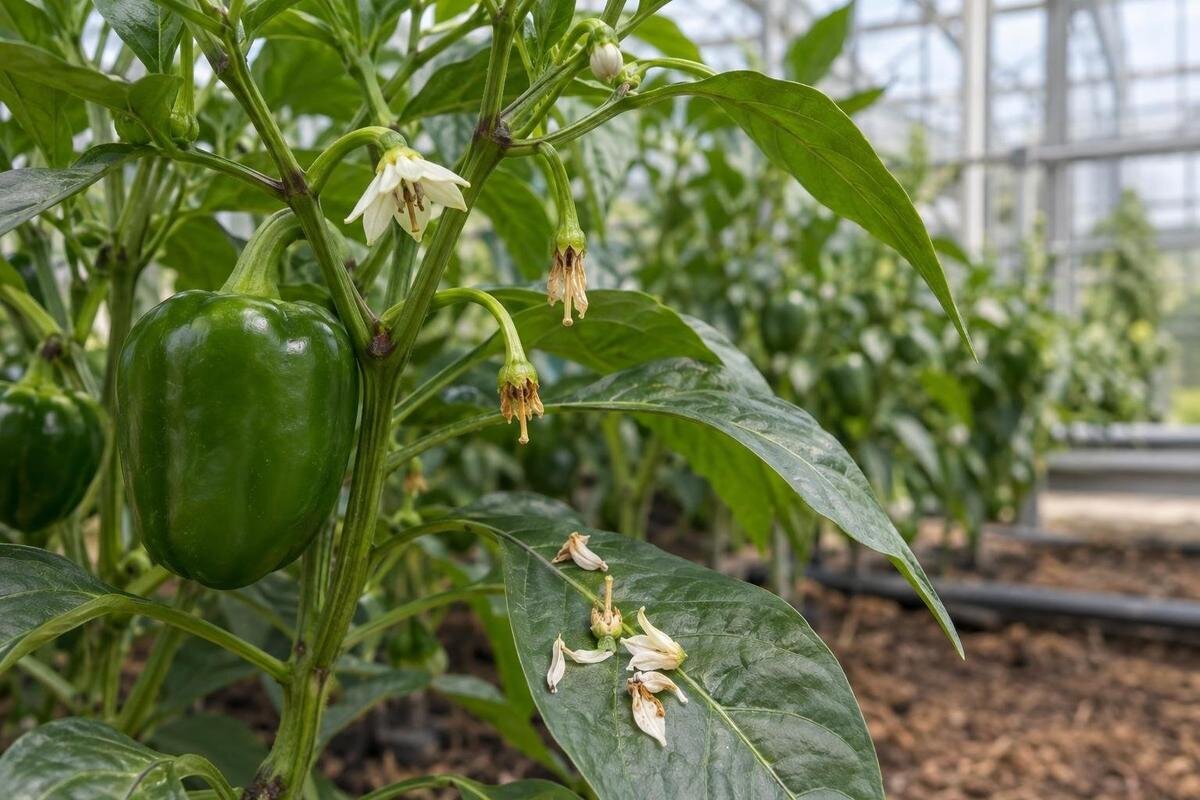
Start with the flower itself. Pepper petals commonly shrivel and fall after flowering; if a firm, tiny green fruit is swelling behind them, that is the normal next stage, not blossom drop. Blossom drop occurs when the whole flower comes away, usually with its short stalk, without a small fruit developing at its base. One or two detached flowers can occur without indicating a serious problem. The pattern matters more: are new flowers opening and setting fruit, or are most buds and blossoms falling over several days? Check several flowers on each plant before deciding that the whole crop is affected.
Inspect more than the first flower you find. Photograph a fallen blossom close enough to show its base and stalk, then take a wider image of the plant and its position in the greenhouse. Record the date, whether the petals alone or the whole flower came away, and any marks, distortion or insects. Compare a plant losing blossoms with one carrying developing fruit. Images taken from similar distances are easier to compare later and may help a horticultural adviser assess the pattern. They cannot identify heat, cold or watering stress by themselves, so treat them as useful clues rather than a definitive diagnosis.
Greenhouse heat can disrupt fruit set
Heat can trigger flower loss in a greenhouse because air around a pepper canopy may warm rapidly on a bright day, even when the outdoor air feels mild. Excessive daytime heat can interfere with pollen function and fruit set; warm nights can add stress by giving plants little time to recover in cooler conditions. A flower may fall after the conditions that affected it, so compare losses with the days beforehand, not only the weather when you noticed them. Repeated drops after warm spells are a useful clue, but one warm afternoon is not proof. Look for a similar pattern on more than one plant.
Place a min/max thermometer near flower height, shaded from direct sun and away from the glass, and read it during the warmest part of the day and again in the morning. Record whether the greenhouse stays warm into the evening; an outdoor forecast does not show the conditions at the crop. If it does, use available ventilation when conditions allow and consider suitable shading. Do not water compost that is already wet simply because the air is hot. If you are comparing structures, the lean-to greenhouse range is one format to inspect, but check the chosen model’s openings and site exposure rather than assuming its shape will prevent heat build-up.
Before changing your set-up 2
Cool nights and sudden temperature changes
Cool spells can interrupt fruit set too. Peppers are warm-season plants, and low night temperatures can affect pollen release and fertilisation even after a bright day. A large difference between a sunny afternoon and a cold night may also stress plants, especially young ones still establishing. This can be easy to miss if you judge conditions by the daytime temperature alone. A plant may continue to look green while particular flowers fail to set, so healthy foliage does not rule out a cold-related problem.
Check the overnight minimum and note where flowers are being lost: near a door or greenhouse edge, in containers, or across the whole row. Keep the thermometer in the same crop-level position on comparable days, and note whether a door or vent was open. Losses clustered in one spot make a local exposure worth investigating; widespread loss may point to a broader temperature or plant-stage issue, though neither pattern proves the cause. A product listing cannot promise a particular night temperature: assess the limited-edition aluminium greenhouse range using the selected model’s published details and the site where it will stand.
Uneven root moisture can trigger flower loss
Pepper roots cope poorly with repeated swings from very dry to saturated. Containers can dry quickly in sunny conditions, while heavy watering after a long dry spell does not erase stress during bud development. On the other hand, potting compost or bed soil that stays waterlogged deprives roots of air and can interfere with water and nutrient uptake. Both extremes can lead to poor growth or wilting, so the fallen flower alone does not tell you whether a plant needs more water. Check the root area before acting, especially if leaves are drooping as well.
Check below the surface rather than judging from a dry crust: feel the growing medium at root depth, and note whether water drains freely from containers. In beds, compare soil around the root zone; in pots, the weight of a familiar container can be another clue. Aim for steadier moisture suited to the medium, letting excess drain rather than keeping roots saturated. No single watering interval suits every pot, as compost, container size and sunny spells change how quickly it dries. If access around containers is part of a greenhouse decision, check the T-shaped orangery greenhouse against its selected dimensions to see whether each pot would remain reachable for inspection and watering.

Before changing your set-up 3
Pollination and pollen movement inside the greenhouse
Pepper flowers generally have both male and female parts and can self-pollinate, so a second plant is not normally needed. Pollen still has to move within the flower and reach the stigma. In a very still greenhouse, there may be little movement from insects or air; very damp conditions can also make pollen less free-flowing. Poor pollination can mean no swelling fruit and the flower drops, but the same result can follow environmental stress. Look for whether flowers are opening but repeatedly failing to leave a tiny fruit behind before deciding that pollination is the only issue.
Where air is still and flowers are dry, gently tap a plant support or move a flower-bearing branch to encourage pollen movement; a light touch is enough, and there is no need to brush every blossom. Avoid hard shaking or handling petals, which can damage delicate flowers. This is a small pollination aid, not a fix for excessive heat, cold or stressed roots. If choosing a greenhouse shape for crop access, a pyramid greenhouse listing still needs checking for the selected model’s openings and door access; the shape alone does not establish air movement or insect access.
Plant establishment and fruit load change flowering
Recently transplanted peppers may shed some early flowers while roots establish, particularly after root disturbance or a sudden move from a sheltered growing space. Young plants have not yet built much leaf area, and a few first flowers may fail to set even as the plant continues healthy growth. Look for fresh leaves and new buds rather than judging recovery solely by flowers already on the floor. If a move, potting-on and temperature change all happen together, avoid disturbing the plant repeatedly; that makes it harder to identify what is helping.
A plant carrying several developing fruits may put more resources into those fruits than into every new blossom, so some flower loss can accompany a changing crop load. Feeding is another area to review, but a fallen flower is not proof of a deficiency: too much nitrogen can encourage leafy growth and fewer flowers, while poor roots or unsuitable moisture can mimic nutrient problems. Note what fertiliser was applied and when; do not increase the dose without a reason. If storage is part of a future greenhouse layout, compare the limited-edition aluminium greenhouse with storage with the selected plan and check how much working and planting space remains.
Before changing your set-up 4
Light and spacing affect flowering
Light influences how strongly a pepper grows and flowers. Plants in persistent shade may become stretched or produce less robust growth, while crowding can leave inner branches shaded even in a bright greenhouse. Look for long gaps between leaves, weaker growth on one side, or blossoms concentrated on the brighter side. These signs raise a light or spacing question, but do not prove it is the only cause: low light can coexist with temperature or watering stress. Note which plants and branches are affected before moving pots or pruning.
Map the affected plants and notice how shadows move through the day; a clear morning does not reveal afternoon shade from a wall, frame or neighbouring foliage. Keep enough room to inspect and reach plants, and avoid stripping leaves simply to let light in, as heavy pruning adds another stress. The spacious greenhouse listing gives a floor-area range of 47–70 m², but advertised area does not show how much light reaches a pepper row or how much clear space remains around its canopy. Compare the selected plan with the site’s shade and the intended planting positions.
Ventilation creates different conditions around the crop
Ventilation affects the local climate, but an open door is not a reliable measure of conditions everywhere. Heat can gather high in a structure or in still corners, and plants near an opening may experience a different pattern from those in the centre. Air movement may help pollen shift, yet a strong flow of cold air can create a new stress when conditions change. Persistent condensation can be a sign that moisture is lingering, though it does not identify the cause of flower loss. Use available openings according to the greenhouse maker’s guidance and observe how the plants respond.
Take readings at flower height in more than one part of the greenhouse, keeping the thermometer shaded and using the same spots on comparable days. Record which vents or doors were open, when they were opened, and whether flowers fell in one zone or throughout. The Prestige greenhouse page identifies a product range, but selected-model details are needed to check opening positions and operation; the name alone is not a ventilation specification. These location notes help you judge whether a recurring loss pattern matches a local hot or still pocket.

Before changing your set-up 5
Check roots, feeding and pest signs
Nutrition and root health deserve attention when flowers fall alongside other changes. Very lush, soft foliage with few flowers can follow excess nitrogen, but it does not explain every dropped blossom; pale leaves, weak growth or leaf-edge damage have several possible causes. In containers, old or compacted compost and poor drainage can affect roots; in beds, the soil may have a different issue. Notice whether the problem affects new growth, older leaves or one side of a plant. Review recent feeding and watering, and consider a suitable soil or growing-medium test if a wider problem persists instead of adding fertiliser by guesswork.
Inspect buds, flower stalks and leaf undersides for visible insects, chewing, webbing, sticky residue, mottling or distorted new growth. These signs may point to pests or disease, but a single mark is not enough to identify which one. Avoid treating with fertiliser or pest control solely because flowers have fallen. If symptoms spread, flowers repeatedly fall before fruit forms or the whole plant weakens, take clear photographs and seek advice from a local horticultural professional. For regular inspection, compare the aluminium classic greenhouse listing with your intended planting layout to check whether there would be room to reach both sides of the crop.
A short record helps narrow the cause
Make a simple record for each affected plant: when blossoms fell, whether whole flowers or petals were involved, the plant’s stage, and whether tiny fruits followed. Add greenhouse maximum and minimum readings, watering and feeding dates, and any move, transplant or change in ventilation. Note the plant’s position, not just the greenhouse average, and take photographs from similar angles as new flowers open. A pattern such as losses after warm nights or only along one edge makes an explanation more plausible. Keeping these details together helps you compare conditions and symptoms over time, though the record alone does not prove a cause.
Change one manageable condition at a time, such as correcting an obvious watering inconsistency, then watch new buds and flowers. A fallen blossom cannot be restored, and simultaneous changes make results difficult to interpret. Avoid pruning, feeding heavily and altering watering all at once to chase one symptom. If losses continue through repeated flowering, fruit never begins to swell, or leaves and stems develop additional symptoms, share dated photographs and your notes with a horticultural adviser. Matching the flower, the plant and its recent growing conditions gives a more useful basis for diagnosis than guessing from the greenhouse floor.
Frequently asked questions
Is it normal for pepper flowers to fall off?
Some flowers will fail to set, but first check what has fallen. Petals dropping while a tiny green pepper swells behind them is normal. If the whole flower and stalk come away without a fruit forming, repeated losses are worth investigating.
Can greenhouse heat make pepper flowers drop?
Yes. Excessive daytime heat and warm nights can interfere with pollen and fruit set. Check indoor maximum and minimum temperatures at crop height; a mild outdoor day does not guarantee mild greenhouse conditions. Heat is a possible cause, not a diagnosis on its own.
Do greenhouse peppers need to be pollinated by hand?
Usually not. Pepper flowers are generally self-fertile, but pollen still has to move within each flower. In very still conditions, gently moving a flower-bearing branch can help. Also check temperature, root moisture and plant development if flowers keep falling.
Why are flowers falling when the leaves look healthy?
Flowering and fruit set can be disrupted before leaves show obvious stress. Temperature changes, uneven watering or limited pollen movement may affect blossoms while foliage still looks normal. Check how many flowers fall, where the affected plants are, and whether a small fruit remains.
Should I water or fertilise my pepper plant straight away?
Not without checking first. Feel the growing medium at root depth and review recent feeding. Extra water can worsen saturated roots, and extra fertiliser will not correct pollination or temperature stress. Change a condition only when your observations support it.
Pepper blossom drop is best read as a pattern: whether the whole flower fell, which plants were affected and what conditions they experienced as buds opened. Check temperatures at the crop, root moisture, pollen movement and the plant’s stage before changing its care. When photographs and a short log show repeated losses, they also make it easier to ask for a useful horticultural diagnosis.
