
Greenhouse Power Cut: Frost-Protection Plan
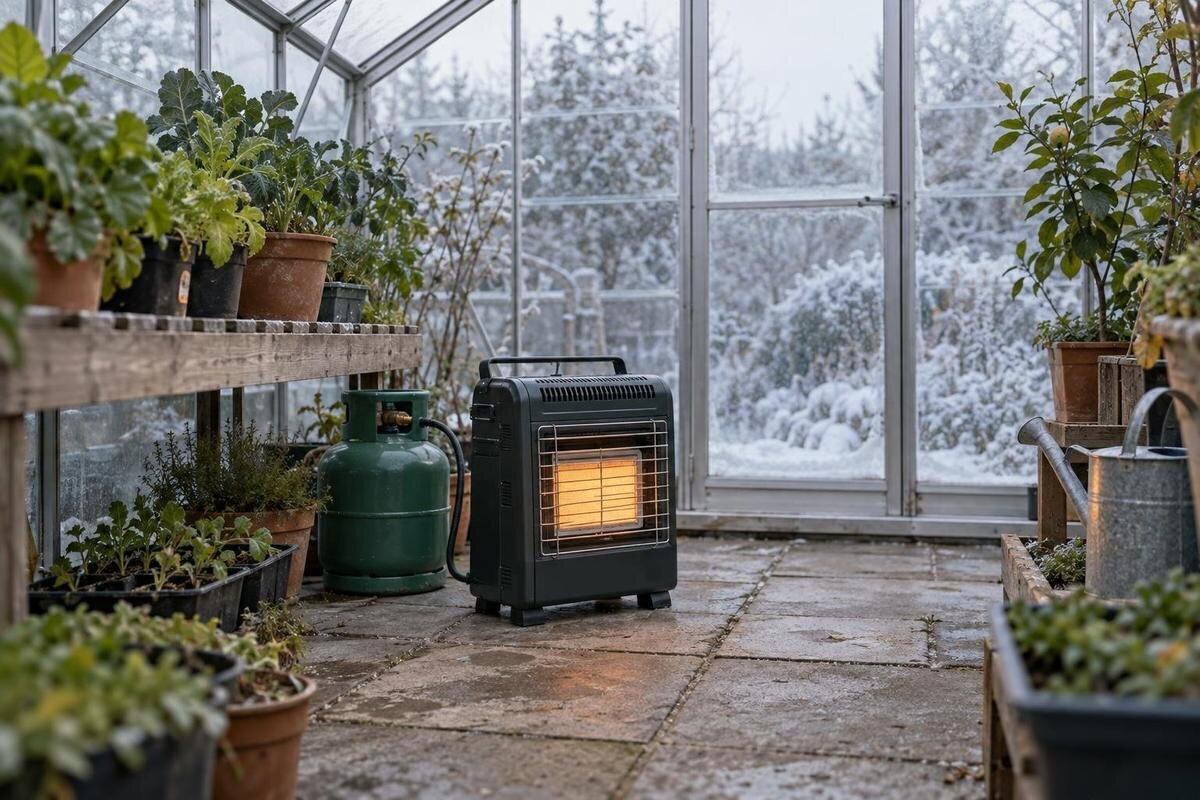
Greenhouse heating and winter energy
A heated greenhouse can lose its protection as soon as a power cut stops the heater, while an alarm may also lose power or connection or go unnoticed. A useful frost plan is therefore a response system, not just a second heat source: measure the coldest areas, decide which plants need attention first, reduce avoidable heat loss and identify backup equipment intended for that setting. The aim is time to respond and fewer surprises, not a promise that every plant will stay frost-free.

What happens to greenhouse temperature when the power goes off
When the heater loses mains power, it stops adding heat and the greenhouse air begins to move towards the outdoor temperature. The rate varies with the weather, the structure's exposed area and volume, glazing and seals, open vents, and the starting temperature. A forecast minimum cannot tell you exactly how long plants have, and a reading from one cold night is no guarantee for another. A central sensor may also miss a colder point by a door or at the edge of a bed. The useful question is how your own greenhouse behaves where plants are growing, not a universal number of hours.
Build a baseline on cold nights before an outage. Put a min/max or data-logging thermometer at plant height, note its position, the outdoor conditions, heater setting and any opening of doors or vents, then review the minimum. Do not switch off a working heater simply to test the cooling rate; use routine readings or records from an earlier interruption. Repeat the observations in different conditions, and keep readings from separate areas distinct rather than averaging away a cold corner. The Spacious Greenhouse range is listed from 47 to 70 m², but its footprint alone does not establish insulation, heat demand or cooling time.
Set temperature alerts around the most vulnerable plants
Choose the low-temperature alert with reference to the plants' minimum requirements, not a generic greenhouse setting. Use plant labels, reliable supplier guidance or dependable growing records for the actual species and stage; seedlings, cuttings and established plants may not share a limit. Set the alert above the point at which action is needed, leaving a margin for sensor tolerance, notification delay and the time it takes you to reach the greenhouse. One threshold cannot protect a mixed collection unless it reflects the most vulnerable group you intend to keep there.
Make sure an alert can reach someone. A phone notification may depend on mains power at the hub, an internet connection, mobile coverage and the phone itself, so check which parts have battery backup and whether a local alarm will still sound. Use the device's test function and send a test notification to the person who will respond. The Classic Aluminium Greenhouses range is listed from 3.77 to 28.08 m²; for the exact footprint, plan sensor coverage around the layout instead of assuming one central reading represents every bed. Record the alert value and the action expected beside the contact details: a number without an assigned responder is not a complete plan.
Measure cold spots before relying on one sensor
Place a sensor at growing height near the plants you most need to protect. Keep it away from a heater outlet, direct sunlight and contact with cold glazing, since any of these can distort the reading for the wider growing area. A sensor beside the door may tell a different story from one among the plants at the back. If there are separate beds, shelves or plant groups, consider monitoring more than one representative area and label each sensor so you know which reading belongs where.
Compare readings during naturally cold conditions and note the location and time of each minimum. This can show whether the same area repeatedly runs colder, or whether the difference changes with wind or how the greenhouse is being used. Repeat the check after changing shelves, plant positions or coverings. The Lean-to Greenhouses range is listed from 3.69 to 14.34 m², but a product category and floor area cannot reveal how temperatures differ at your site; measure the planting positions in the exact greenhouse you use or are considering.
Reduce draughts without blocking ventilation
Before winter, check that doors close properly, vents move as intended and there are no obvious gaps around frames or glazing. Use only repair materials compatible with the greenhouse, and do not obstruct vents or seal the structure so tightly that a heater's ventilation requirements cannot be met. A temporary cover or horticultural fleece around a small group of plants may offer an extra layer, but it does not guarantee a safe minimum temperature. Keep coverings away from heaters and electrical equipment, and leave a route to reach plants and controls.
Check insulation and ventilation accessories against the exact greenhouse model and size. When comparing the Limited Edition Aluminium Greenhouses, identify which doors, vents and frame sections an accessory would cover, then check its compatibility in the product information. The range name alone does not establish fit or a change in heat loss. Your plan should distinguish repairs to existing gaps from temporary plant coverings: record what needs attention before winter and where covers will be kept for an outage. That makes it easier to find the right materials without searching while the temperature falls. Any addition near a heater or affecting airflow needs to be considered alongside the equipment instructions. Keep vent mechanisms accessible, and note how temporary coverings will be removed when they are no longer needed.

Rank plants and create a manageable protection zone
Make a short list based on each plant's known temperature requirements and condition. Put plants with the least tolerance for cold, including vulnerable young growth where relevant, at the top; keep hardier plants lower on the list only if their own requirements allow. Note which plants are in pots, which can be moved safely and where they are now. A plant's size or value to you does not tell you its cold tolerance, so use reliable growing guidance rather than assuming every plant needs the same response. Separate the protection priority from the practical action: a plant may be highly vulnerable but too large to move, while a smaller pot may be easy to relocate. Give each priority group a clear label and record whether the planned response is covering it, moving it or using the checked backup heating arrangement.
Group plants only where they can share the same conditions. Moving a priority pot away from an exposed edge or door may make it easier to cover or relocate, while a larger collection may need more than one group. Do not pile pots in a way that blocks doors, vents or access to equipment. The T-Shaped Orangery Greenhouse options range from 16.52 to 30 m²; use the plan for the exact option to map plant positions rather than assuming its shape creates separate warm zones. Mark each group on that plan using the same labels as your priority list. If relocation is part of the response, identify the intended destination and check that it can provide the conditions those plants need. A plan to move pots is incomplete if the responder still has to decide where to put them.
Check greenhouse size against heater specifications
A heater's stated suitability depends on the conditions set out by its manufacturer, not just the floor area of a greenhouse. Check its intended operating environment, documented capacity and any stated assumptions about space, ventilation and temperature. Look for instructions on thermostat behaviour after a power interruption, clearances and any requirements for moisture protection. Do not assume that a heater is suitable for a greenhouse simply because it works indoors, or that a product listing's area figure is enough to select one.
Compare the heater information with the specifications for the exact greenhouse configuration, and seek advice from the relevant manufacturer or a qualified professional if key details are missing. The Oasis Pyramid Greenhouse range lists options from 5.53 to 18.9 m²; this is a footprint range, not a heater recommendation or a prediction of performance. Keep the selected greenhouse details and heater instructions together so that you can compare their stated requirements without relying on memory. Note any conditions attached to the heater's capacity claim and distinguish these from the temperature you want for your plants. For backup planning, record what the instructions say about restarting after an interruption, including whether the previous settings are retained or must be restored. Leave unanswered compatibility questions clearly marked rather than treating a missing detail as confirmation that the combination will work.
Choose backup equipment for the actual outage
Separate backup heat from backup electricity. An ordinary electric heater will not run during a power cut unless a suitable separate supply is available, and a battery intended for a sensor or control unit does not automatically have the output or runtime to support a space heater. Use only a system whose documented limits and compatibility have been checked with the relevant manufacturers. Avoid improvised electrical connections; ask a qualified professional about any fixed supply or switching arrangement.
Do not run a portable generator or an unflued fuel-burning heater inside a greenhouse. Exhaust and combustion products can create serious carbon monoxide and fire risks. Use any alternative heat source only if its manufacturer explicitly approves the setting and its requirements can be met. Check batteries, fuel and maintenance only as the equipment instructions specify. If you are considering the Limited-Edition greenhouse range with built-in storage, distinguish storage space from a location approved for operating equipment: the product name does not establish whether a heater, battery or fuel can be kept or used there. Record the permitted storage and operating locations separately in your outage plan. This helps a responder find equipment without mistaking where it is kept for where it can safely run. Keep the relevant instructions with the plan, and resolve suitability questions before relying on that equipment during an outage.
Know what to do when the alert arrives
When an alert comes in, check the reading against an independent thermometer if one is available, then follow the written order you prepared in advance. Contact the person responsible for reaching the greenhouse, confirm what equipment has stopped and use only a backup method already checked for suitability, following its instructions. Protect the highest-priority plants first, using a suitable cover or moving pots only if that can be done safely. Do not bypass controls, handle wet electrical equipment or improvise a connection in a hurry.
Keep the route from the door to the priority plants, vents and heater controls clear before a power cut happens. Draw those positions on the plan for the exact greenhouse, including any obstacle that would slow a response. When comparing the Prestige Greenhouse size options, listed from 3.77 to 28.08 m², use the selected model's layout rather than the area figure alone to plan access. Walk through the intended response with the person who may need to carry it out. Check that they can match sensor labels to plant groups, find the covers and identify the relevant controls without rearranging pots or shelving. Include any access arrangements they need, such as where a key is kept, and make sure they can find the plan. Clear labels and an accessible route are especially useful when someone other than the usual gardener responds.

Check the greenhouse after power returns
Do not assume the heater has restarted correctly just because mains power is back. Check its displayed status and the temperature readings, and follow the equipment instructions to confirm normal operation. If there is a fault, unusual smell, visible damage or repeated interruption, stop using the equipment and seek appropriate qualified help rather than repeatedly resetting it. Keep temporary plant protection in place until readings show that conditions have stabilised and it is appropriate to remove it.
Record when the outage began and ended, the lowest readings, which alerts arrived and what actions were taken. Note how the plants responded and whether any equipment behaved differently from what its instructions led you to expect. Separate recorded readings from estimates, and identify any gaps caused by a monitor losing power or connection. If several people helped, bring their notes together so that the sequence is clear. This gives you a practical basis for adjusting sensor positions, the alert margin or the order of plant priorities. Record any agreed changes in the plan itself rather than leaving them only in an outage log. It is still a record of one set of conditions, not proof that the same response will be enough in colder or windier weather.
Write and test the winter outage plan
Keep the plan short enough to use under pressure. Include the plant priority list and its temperature guidance, a map of sensor positions and cold spots, the alert value, who will receive it and who can reach the greenhouse. Add the approved backup method, relevant equipment instructions, the location of any covers and the route to doors and controls. Keep a copy somewhere accessible indoors as well as in a place where a responder can find it without searching through the greenhouse.
Test the alert system with its supplied test function, check the relevant batteries and confirm that notifications reach the people named in the plan. Review the arrangement before winter and after changing the heater, monitoring system, greenhouse layout or contact details. Do not create an outage by disconnecting essential equipment just to rehearse; use the test methods provided by the manufacturers. If nobody can reliably reach the greenhouse at certain times, make that part of the plan and decide in advance what action is still practical.
Frequently asked questions
How quickly can a greenhouse get cold after a power cut?
There is no dependable time that applies to every greenhouse. The outdoor conditions, glazing, seals, vents, starting temperature and layout all affect how the temperature changes. Use readings from your own greenhouse on cold nights to understand its usual pattern, but do not treat one night as a guarantee for another.
What temperature should I set as the alert?
Set it with reference to the minimum requirements of the plants you intend to protect, using reliable plant or supplier guidance. Leave a margin for the sensor's accuracy, notification delays and the time it takes someone to respond. A single setting may not suit every plant in a mixed collection.
Should I close every vent during an outage?
Keep doors and vents closed only where that is safe for the greenhouse and any backup heater in use. Some equipment needs ventilation, and vents must remain usable as its instructions require. Avoid sealing the space or blocking vent mechanisms just to try to hold warmth.
Can I run a portable generator inside the greenhouse?
No. Do not run a portable generator inside a greenhouse: exhaust can create a serious carbon monoxide and fire risk. Keep generators outdoors in a location where exhaust cannot enter the greenhouse or nearby buildings, follow the manufacturer's instructions, and get qualified advice for any fixed electrical connection.
Will a battery backup run my greenhouse heater?
Do not assume so. A battery intended for an alarm or control unit may not provide the output or runtime needed by a space heater. Check documented compatibility and operating limits with the heater and backup-system manufacturers, and ask a qualified professional about the electrical connection.
A dependable outage plan brings together an observed temperature baseline, an alert that reaches a person, named plant priorities and a safe fallback. Revisit it when the plants, greenhouse layout, heater or communications change. Your records can make the next response more informed, even though they cannot guarantee the conditions of the next power cut.
