
Growing Greenhouse Ranunculus in Ireland
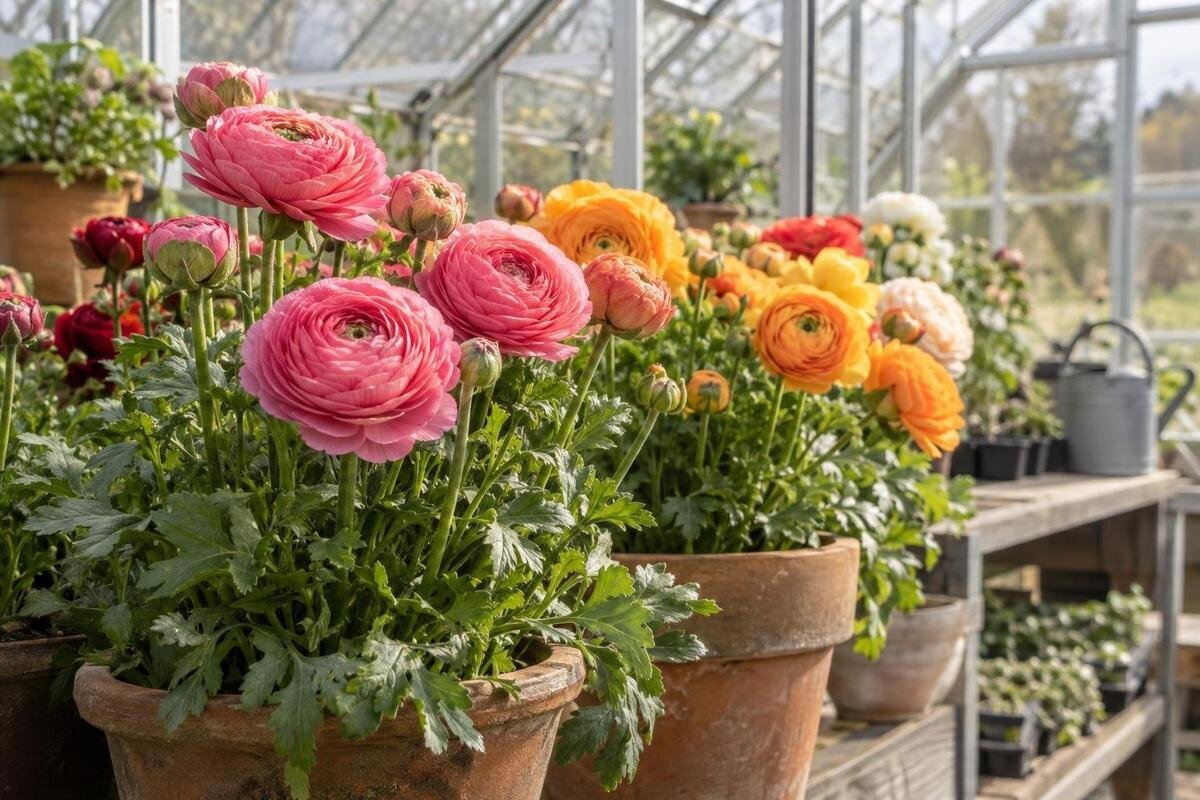
Greenhouse growing guide
Ranunculus rewards a cool, bright growing period. Its claw-shaped corms need to root and build foliage before flowering, so a greenhouse is most useful when it shelters them from direct rain while still letting in plenty of light and fresh air. It does not turn an unheated house into a frost-free room, and it cannot correct a waterlogged bed. In Ireland, planning around overnight temperatures and drainage matters as much as choosing a planting date. This guide explains how to handle corms, prepare beds or pots, control moisture and airflow, and finish the crop after flowering.

Ranunculus needs a cool, bright growing season
Most garden ranunculus grown for showy, layered flowers are cultivars of Ranunculus asiaticus. They develop from dormant corms: roots and leaves appear first, the foliage supports flower stems, and the plant slows as days lengthen and temperatures rise. The main growing window is therefore cool and bright, not a long spell of warm summer weather. A greenhouse can reduce direct rain on foliage and give you a protected place for pots or a small bed, but it does not remove the crop's seasonal rhythm. Think of it as shelter and light management, rather than a heated tropical room.
Plan for your own space before deciding how many corms to buy. Pots, trays, beds and a clear route for checking stems all take room; crowding them together also restricts airflow. If built-in storage is useful, the Limited-Edition Aluminium Greenhouses with Storage listing covers 5.52 to 28.08 m². That is the stated range of available areas, not the size of a usable bed. Compare the actual layout, height, door position and ventilation details with the way you intend to grow. A smaller, accessible crop is easier to inspect and water consistently than a house planted edge to edge.
When to plant ranunculus under glass
Plan planting around the crop's season rather than a fixed date. Autumn planting can give corms time to root in a cool greenhouse and may bring an earlier spring display, provided the medium drains and plants are protected from damaging frost. Late winter or early spring is an alternative where an unheated house is exposed or stays cold and wet through winter. In Ireland, the house and garden site matter: daytime sun can warm a greenhouse quickly, while overnight temperatures may fall sharply. Take readings at foliage height for several nights; an afternoon temperature is not a reliable guide to the coldest part of the day.
For a first crop, try one manageable row or a few pots rather than committing the whole greenhouse to autumn planting. Keep a record of overnight temperatures and how long the compost stays damp, then use those observations when planning your next batch. If you are comparing the Bloomcabin Prestige Greenhouse options, which range from 3.77 to 28.08 m², consider how much space ranunculus will occupy alongside your other seasonal crops. Allow access for removing damaged foliage and carrying watering cans without brushing wet leaves. This trial gives you a practical basis for choosing between autumn and late-winter planting in your own greenhouse.
Choosing sound ranunculus corms
Ranunculus corms are usually supplied dry and claw-shaped. Look for firm planting material without soft, mushy patches, heavy mould or a sour smell. Some wrinkling is normal in dormant stock and does not, by itself, mean a corm is dead. Check the packet for cultivar, planting depth and any advice on soaking or storage; varieties and grades can differ in flower form and performance. Discard corms that are clearly decayed, but do not reject every slightly shrivelled one. Keep sound stock dry and cool until planting, and avoid leaving it in a warm, damp place where it may deteriorate before it is in the compost.
Keep cultivars and planting dates labelled, especially if you are growing more than one batch. This makes it easier to compare flowering and identify which plants are worth keeping after the season. For a wider growing project with separate working and growing areas, the Spacious Greenhouse listing covers 47 to 70 m². That is a substantial footprint, not a requirement for a small run of ranunculus; consider it only in the context of your overall plans. Whichever space you use, set aside a dry surface for handling corms and trays, and keep stored planting material separate from damp compost.
Soaking, orientation and planting depth
Some growers briefly soak dry corms before planting, while others plant them dry. Follow the supplier's directions for your stock. If soaking is recommended, use a clean container of cool-to-lukewarm water for a few hours, then drain the corms and plant promptly. Do not leave them submerged overnight: prolonged soaking can encourage decay. Pre-sprouting in shallow, barely moist compost can help you see growth before committing a bed, but it takes extra handling and careful moisture control. It is not essential. If you choose to pre-sprout, move each corm gently once roots appear and take care not to break them.
Set each corm with its pointed claws facing down and cover lightly. A common starting point is 3 to 5 cm deep, with roughly 10 to 15 cm between plants; follow the packet if it gives different instructions for your cultivar or corm size. In pots, leave enough room for leaves to grow without forming a dense, damp mat. Mark the row and cultivar so you can identify shoots as they emerge. The Aluminium Greenhouses listings span 3.77 to 28.08 m². When comparing footprints for a bed-grown batch, allow for paths and working space before estimating how many rows will fit.

Preparing beds and pots for drainage
Drainage is central to corm health. Ranunculus needs moisture during active growth, but a waterlogged root zone can lead to decay. Compact soil that stays shiny or puddled after watering is a warning sign. In a bed, loosen the soil and add mature organic matter only if the soil needs it; do not plant corms into fresh manure or a dense, cold pocket. If the ground is heavy, a raised bed or containers can give you more control. Aim for an open, crumbly growing medium that holds some moisture while allowing excess water to drain away.
For pots or trays, use clean containers with unobstructed drainage holes and fresh, free-draining potting compost. Do not let containers sit in water collected in a saucer, and avoid placing drainage holes flat against a wet surface. If you are considering a lean-to layout, the Lean-to Greenhouses range lists areas from 3.69 to 14.34 m². Check the installed footprint and usable working width against your proposed beds and pots rather than assuming the full area is plantable. Keep containers reachable for inspection and watering, and avoid packing them tightly against glazing or vents.
Light, temperature and ventilation
Give ranunculus the brightest practical position. They flower best in full sun to bright light; around six hours of direct sun is a useful guide when the season allows. A dim greenhouse may produce stretched foliage, weaker stems and fewer buds. Glass does not create daylight, and nearby walls, fences, trees, dirty glazing or crowded foliage can all reduce the light reaching plants. Avoid heavy shade in the cool growing season. A bright position can also warm quickly when the sun appears, so keep an eye on temperature as well as light.
Treat ranunculus as a cool-season crop. A broad working range of about 7 to 15°C suits active growth for many garden varieties, while sustained temperatures above roughly 18 to 20°C can hasten flowering and shorten the useful display. These are guides, not a promise for every cultivar or stage; use the supplier's information where available. An unheated greenhouse may cool close to outside temperatures overnight and can still freeze. The Limited Edition Aluminium Greenhouses listing spans 3.77 to 28.08 m²; footprint alone does not show headroom or vent arrangement. Compare those details, and use a min/max thermometer at foliage height. Ventilate on mild, bright days before the house overheats or condensation lingers.
Watering by soil condition
At planting, moisten the growing medium enough to settle it around the corms. If it remains damp, wait before watering again. Once leaves and roots are active, water when the top layer begins to dry rather than following a fixed daily schedule. Apply water at root level, then let surplus water drain away. The interval depends on pot size, airflow, daylight and weather: a small pot on a bright bench can dry much faster than a bed. Check a few centimetres below the surface or use the weight of a pot as a repeatable guide.
Avoid both extremes. A corm sitting in wet compost may soften or rot, while repeated severe drying during leaf and bud growth can stall the plant. Water in the morning where possible so foliage has time to dry, and direct water towards the soil rather than soaking leaves. Keep hoses and watering containers clean, and do not leave puddles under benches or across paths. A larger floor plan can affect hose reach and access: the T-Shaped Orangery Greenhouse listing gives options from 16.52 to 30 m². Treat this as floor area only, and plan the water point and clear routes before laying out beds.
Reducing disease in a humid greenhouse
Still air, high humidity and wet foliage favour common fungal problems such as grey mould, particularly where leaves or spent petals touch. Avoid overcrowding, remove yellow or damaged material promptly, and clear fallen petals from benches and soil. Give plants room for leaves to dry after condensation, and check the base of stems as well as the foliage when watering. If you suspect rot, inspect the corm and surrounding compost. Yellowing can also reflect warmth, watering or natural leaf ageing, so do not diagnose from one symptom alone. Remove clearly affected plant material rather than leaving it among healthy plants.
Ventilate on mild days to exchange damp air and reduce heat, then adjust openings as temperatures fall. The aim is fresh air without leaving tender shoots exposed to hard frost. Clean pots, tools and reusable trays between batches, and do not reuse compost from a diseased crop. If you are considering the Pyramid Greenhouse, listed in areas from 5.53 to 18.9 m², check where its openings sit in relation to your planned crop. Arrange plants so air can pass across them; greenhouse shape alone does not guarantee good air exchange.

Feeding, supporting and cutting flowers
Good roots and light matter more than aggressive feeding. If the bed is fertile and plants look healthy, avoid repeated high-nitrogen feeds, which can favour soft leafy growth over sturdy stems. In containers, use a balanced fertiliser suitable for flowering plants only once active growth is established, and follow its label. Do not combine products or exceed the stated rate. Leaves should remain green while the plant is building energy for flowers and corms. Weak stems can also result from low light, warmth, crowding or excess water, so review growing conditions before changing the feeding routine.
Ranunculus stems may need support in a crowded or exposed greenhouse, particularly when flowers are heavy. A simple mesh support raised as the plants grow can help keep stems upright without tying each one tightly. For cut flowers, harvest when the buds have colour but are still partly closed, using a clean blade and leaving as much healthy foliage as possible. Remove spent blooms from plants grown for display, but do not strip green leaves after the first flush. Flowering speed varies with cultivar and temperature, so check the buds regularly once they begin to develop.
What to do after flowering
After flowering, foliage may yellow as the plant enters dormancy, particularly as temperatures rise. If the leaves decline after a healthy season, this is not necessarily a sign of disease. Continue modest watering while they remain green, because the foliage helps replenish the corms. Reduce watering as the leaves die back naturally, and do not cut healthy foliage off early just to tidy the bed. Mark the row and note which plants flowered well while you can still identify them; this is useful if you decide to lift and store corms for another season.
Where a wet summer or autumn could leave dormant corms in damp compost, some growers lift them once the foliage has died. Dry them thoroughly in a shaded, airy place, then keep them labelled in a cool, dry, ventilated spot until planting. Do not store corms while damp or in a sealed, humid container; inspect them occasionally and discard any that soften or rot. Reuse can work, but corms may shrink or lose vigour, so results are variable. If you leave them in the bed, good drainage and protection from damaging frost remain important.
Frequently asked questions
Do I have to soak ranunculus corms before planting?
No. Plant them dry if the supplier recommends that. If soaking is advised, use clean water for a few hours, then drain and plant promptly. Avoid leaving corms submerged overnight, as prolonged soaking can encourage decay.
Can I grow ranunculus in an unheated greenhouse?
Yes, provided the corms have cool, bright conditions and the growing medium drains well. An unheated greenhouse can still become very cold or freeze overnight, so take readings at plant height and plan autumn planting around the frost exposure of your own site.
How much sunlight do ranunculus need?
Give them the brightest practical position. Around six hours of direct sun is a useful guide where the season allows, though a bright, unobstructed spot is better than a shaded one. Ventilate when sunshine causes the greenhouse to warm quickly.
How often should I water ranunculus?
There is no reliable daily schedule. Check the compost a few centimetres below the surface and water when it is beginning to dry, allowing excess water to drain away. Pots may dry faster than a bed, particularly in bright weather.
Can I keep ranunculus corms for another year?
You can try once the foliage has died back naturally. Lift the corms carefully, dry them thoroughly in an airy, shaded place and store them cool and dry. Reused corms may lose vigour, so flowering can be less predictable than with fresh stock.
Growing ranunculus successfully under glass depends less on warmth than on cool, bright conditions and good drainage. Choose firm corms, follow the planting-depth guidance, keep the root zone moist but not saturated, and ventilate when the house warms or condensation persists. In Ireland's changeable conditions, a thermometer and a quick check beneath the compost surface are more useful than following a fixed calendar or daily watering rule. Let the foliage die back naturally after flowering so it can replenish the corms before dormancy.
