
Should Greenhouse Shading Go Inside or Outside?
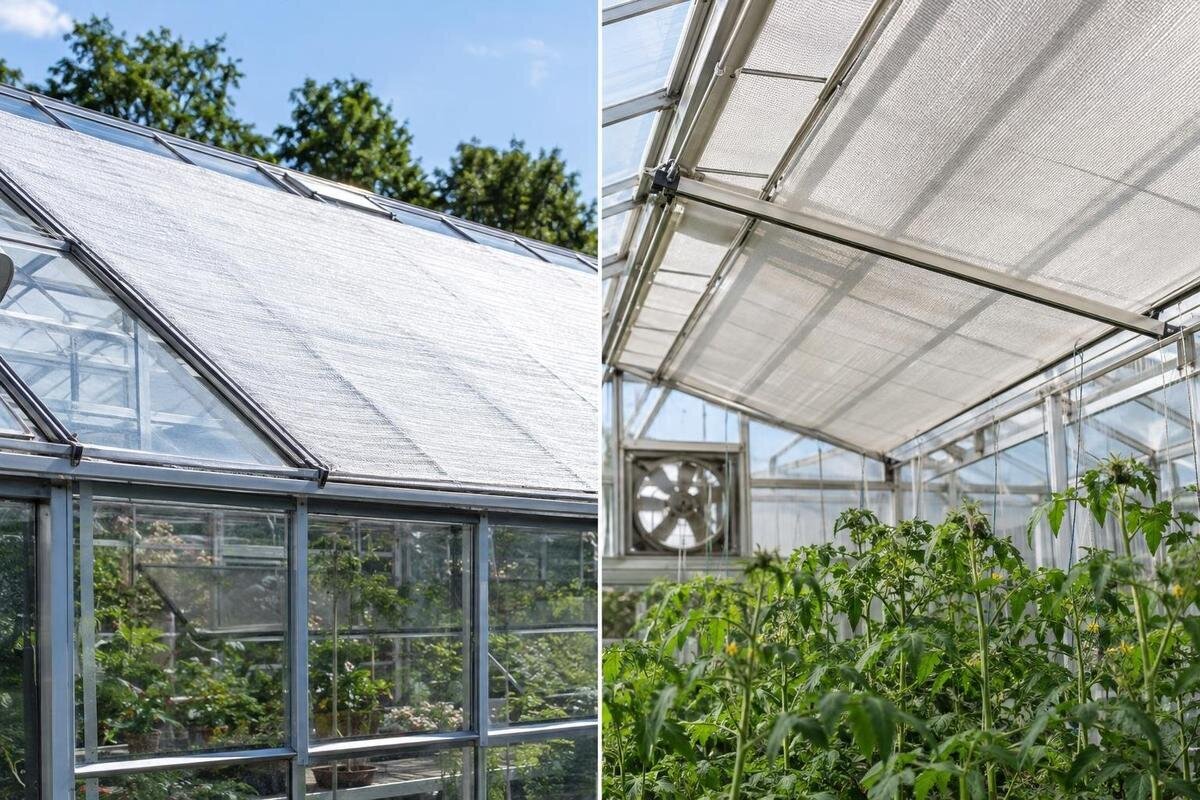
Greenhouse shading
Choosing between outside and inside shade is not just a question of where the fabric is easiest to hang. Position changes what happens to sunlight before and after it passes through the glazing, while the greenhouse's construction determines whether the shade can be fixed and operated without obstructing vents, doors or daily work. First decide whether you need to reduce solar heat gain, soften direct sun on crops, or address both. Then compare the two positions against the exact model and the fixing points you can verify.

Before you buy 1
Identify the problem before choosing a position
Before comparing positions, separate a warm greenhouse from direct sun striking a particular crop. A thermometer left in a sunbeam can register heat absorbed by the instrument rather than the surrounding air, while a reading taken at the opposite end may miss a local hot spot. Take air-temperature and, if relevant, humidity readings in a consistent shaded position; note the time, weather, vent state and whether any shade is already in place. Repeat during the hours when the problem usually occurs, using the same instrument and location. The aim is to identify whether your main concern is a rise in air temperature, a patch of direct sun, or both.
Photograph the same bed and the relevant roof or wall area when the problem occurs. Note which plants receive direct sun, how long that patch lasts, and whether it moves across a path, bench or growing area. This helps distinguish a local light problem from heat building throughout the greenhouse, which calls for a different emphasis. If crops are the concern, record which ones and where they sit: light needs vary, so a screen that helps one bed may shade another unnecessarily. This guide compares positions rather than naming a universal shade percentage; fabric density and crop requirements still need a separate, crop-led choice.
How the two positions affect sunlight
An external screen intercepts sunlight before it reaches the greenhouse glazing. Depending on its reflective and shading properties, it can reduce the solar energy entering the enclosure. An internal screen acts after sunlight has passed through the glazing: it can soften direct rays on plants, but any energy it absorbs is already inside the greenhouse and may warm the screen or nearby air. A reflective inner surface may send some light back towards the glazing, but that does not make an inside system automatically equivalent to an outside one. Position changes the heat balance, not just the convenience of hanging a cloth; coverage, gaps, material and ventilation also affect the result.
Choose the position according to what you need the shade to do. If sunlight entering through the glazing is warming the whole greenhouse, investigate an external system. If direct sun on a particular crop is the concern, consider whether an internal screen would cover that growing area without shading neighbouring beds unnecessarily. For a model such as the Bloomcabin Prestige Greenhouse, compare these requirements with the layout and the fixing information in its manual. This separates two questions that are easy to confuse: which position addresses the sunlight problem, and which arrangement can actually be fitted and used on your greenhouse.
Before you buy 2
When external shading is better for heat gain
External shading is usually the stronger starting point when air temperature rises throughout the greenhouse during sunny periods. By intercepting sunlight before it passes through the glazing, it can reduce the amount of solar energy entering over the covered area. The advantage depends on the screen and its coverage: uncovered panels, gaps at the edges, a changing sun angle and an open vent can all affect what reaches the interior. A loosely fitted or poorly positioned screen may leave the area you intended to shade exposed. It is reasonable to expect the outside position to help with solar gain, but not to promise a particular fall in air temperature from position alone.
External shade also needs to be manageable in everyday use. It is exposed to the weather and can be awkward to reach for seasonal adjustment, inspection or removal. For a Spacious Greenhouse, assess how you would reach each part of the proposed covering, rather than considering its shaded area alone. Include the roof openings in that assessment: a screen must not interfere with vents or glazing. Wind can catch a loose covering, so use a system and fixing method confirmed as suitable for the exact greenhouse. A patio screen, sail or garden cover is not a substitute simply because it appears to cover the required area.
When internal shading suits a growing area
Internal shading is worth considering when the main concern is direct sunlight on foliage or a particular bench, rather than high air temperature throughout the greenhouse. It sits between the sun and the crop, so a screen can reduce direct rays in a selected area if its coverage and position suit the layout. Because it is under cover, it is less exposed to wind and rain, and you may find it easier to inspect or reposition. These are access advantages, not evidence that an internal screen removes heat as effectively as an external one. If the air itself is consistently too warm, compare that limitation with your main objective before choosing.
An internal screen can be practical when only part of the growing area needs shade, or when you want to reposition it as sunlight moves across the space. On the layout for an Aluminium Classic Greenhouse, mark the beds or benches you want to cover and the routes you use to reach them. Consider the screen both in use and moved aside: fabric should not snag crops, obstruct watering or block a window. Easier access is only an advantage if you can operate the shade comfortably during ordinary gardening. Once the position is clear, check the model manual for a suitable interior fixing.

Before you buy 3
Keep access, doors and vents clear
Think through the greenhouse in use, not only as a roof viewed from outside. An external screen may sit across a vent, window or handle, or make a part of the roof difficult to inspect. Inside, fabric can obstruct a doorway, narrow a route between benches or hang where you need to reach plants and equipment. These problems depend on the position and operation of the particular shade, so a general picture of a greenhouse is not enough to judge clearance. Trace the areas you use every day and note which openings, handles and paths need to remain accessible.
Check clearance through the full movement of doors and vents, not just when everything is shut. If the shade retracts or moves, consider where it gathers and whether that position blocks access to crops. For a Lean-to Greenhouse, compare the proposed screen position with the door, window and growing-area layout for the exact model. Check both arrangements: shade extended during sunny periods and shade moved aside when it is not needed. The greenhouse drawings and shade instructions should help you identify any overlap with an opening. If that relationship is unclear, ask for clarification before buying rather than discovering an obstruction during daily use.
Use approved fixings for external shade
For outside shading, confirm that both the screen and its fixing method are intended for the conditions in which they will be used and are approved for your exact greenhouse. A covering exposed to wind can pull on its attachments, so do not assume that a glazing bar, frame edge or existing bolt is suitable simply because it is reachable. Avoid attaching anything to the glazing itself, seals, vent mechanism or opener unless the manufacturer specifically identifies that point for the purpose. The greenhouse and shade instructions are more useful than a generic installation picture, because small differences between models can change what is compatible.
If the manual does not identify an approved external fixing point, do not drill, clamp or tie a screen on as a trial. Ask the greenhouse manufacturer or a qualified installer to confirm the intended method for your exact model, including a Limited Edition Aluminium Greenhouse if that is the structure you are considering. Establish how the screen attaches, how it is adjusted and how it is removed; these are separate practical questions, not just a matter of finding somewhere to hang fabric. The arrangement should leave glazing and openings accessible for inspection. If a suitable external attachment cannot be confirmed, consider another position or system.
Before you buy 4
Check the fixing points for internal shade
An inside position is not automatically compatible just because it is sheltered from the weather. The frame may not have a designated point for a screen, and clips that look similar can fit differently or put pressure in the wrong place. Follow the greenhouse and shade instructions, and do not treat a pane of glass as an attachment point. If the instructions specify a bar or support, check that it is the one intended for the screen rather than a nearby part that merely looks convenient. This matters especially where the shade will be opened, closed or adjusted regularly.
Look at the whole path of the fabric inside the greenhouse, including where it hangs when extended and where it gathers when moved aside. For a T-Shaped Orangery Greenhouse, use the model's own layout to trace that path around the growing space. The screen must not foul a vent as it opens, interfere with an automatic opener, cover a handle or obstruct access to plants. Leave access to glazing and drainage channels, and consider whether condensation or routine watering could affect the screen. These checks help you decide whether the proposed internal position remains practical throughout normal use, rather than only when the fabric is first fitted.
Keep shading separate from ventilation
Shading and ventilation address different parts of the greenhouse environment. A screen can reduce some incoming solar energy, but it does not remove warm or humid air that is already inside. If the greenhouse is still too warm after shading, an unobstructed and suitable ventilation arrangement remains important. Conversely, a screen chosen to reduce direct sun on a crop should not be allowed to cover a vent or prevent it opening fully. Treating shade as a substitute for ventilation can leave the original problem unresolved, even if the growing area looks less bright.
Check roof and wall openings against the proposed shade position, including what happens while a vent or opener moves. On a Pyramid Greenhouse, as on other models, assess clearance using the exact layout rather than assuming that the screen will sit clear of every opening. If there is an automatic opener, follow its manual and do not alter the mechanism to accommodate an incompatible screen. When comparing shade positions, record which vents are open and whether the fabric affects their movement. Keeping that information alongside temperature readings helps you distinguish the effect of shading from a change in ventilation.

Before you buy 5
Compare the positions on similar days
A simple log can help you judge whether the position addresses the problem you identified. Record a baseline before changing the shade, then compare readings at the same location and similar times on days with broadly similar conditions. Keep the thermometer in a shaded position, and note air temperature, humidity if you are measuring it, direct sun on the crops, vent state and how much of the glazing is covered. Take photographs from the same viewpoint so you can see whether the sun patch has shifted or the screen leaves gaps. Change one factor at a time where possible; otherwise, you may not know what caused the difference.
Read the results against your original aim. A change in direct sun on a particular bed may be useful even if the overall air-temperature reading moves little. If whole-greenhouse heat is the concern, compare the readings and vent conditions rather than judging by brightness alone. Weather and ventilation can vary between observations, so a single before-and-after reading is not proof that a screen caused the change. Do not rig up an unapproved outside covering simply to test it. Compare only arrangements that can be used safely and in line with the relevant instructions.
Confirm compatibility before buying
Before ordering, confirm whether the shade is designed for internal or external use, whether it covers the required area, and how it is fixed and operated. If you are choosing the greenhouse at the same time, keep the two purchases connected: compare the proposed screen with the exact greenhouse layout and fixing guidance. For example, when considering the Limited-Edition Aluminium Greenhouse with Built-In Storage, include access to the storage section as well as the growing area in your layout check. A product photograph can help you recognise the model, but it does not establish screen compatibility. Resolve any uncertainty about the attachment before committing to the arrangement.
Compare the complete arrangements rather than choosing on shade position alone. An external system needs suitable fixings and a practical way to reach it for adjustment or removal. An internal system needs enough room for the fabric and its movement without getting in the way of plants, watering or access. In either case, match the proposed coverage to the sunlit area you identified, and check where the screen sits when it is not in use. If neither option fits without obstructing an opening or relying on an unapproved attachment, consider a different system. A screen that cannot be operated conveniently is a poor match even if its position addresses the sunlight problem.
Frequently asked questions
Does external shading always keep a greenhouse cooler than internal shading?
No exact result is guaranteed. External shade intercepts sunlight before it reaches the glazing, so it generally has an advantage for reducing solar heat gain. The effect still depends on the screen, coverage, sun angle and ventilation.
Can internal shading reduce heat?
It can limit direct sun on plants, but it acts after sunlight has passed through the glazing. Some heat is therefore already inside. A reflective screen may send some light back towards the glazing, but its performance depends on the material and arrangement.
Can I attach shade cloth to any greenhouse roof bar?
Do not assume so. Use a fixing only if the instructions for your exact greenhouse and the shade system confirm it is suitable. If they do not show an approved fixing point, ask the manufacturer or a qualified installer rather than improvising.
Will shading mean I can use the vents less?
No. Shade can reduce incoming solar energy, but it does not remove warm or humid air. Keep vents clear and operating as intended, and do not fit fabric where it could interfere with a vent or its opener.
What should I record before choosing a position?
Note air temperature in a shaded, consistent position, the time and conditions, vent state, and where direct sun falls on plants. Comparing similar periods helps show whether the main concern is broad heat gain, local sun exposure, or both.
If the concern is heat building from sunlight on the glazing, begin by investigating external shade, provided the greenhouse manufacturer confirms a suitable fixing. If plants mainly need protection from direct rays and easy access is important, internal shade may be a more practical fit. In either case, keep vents and working routes clear, and use guidance for your exact greenhouse rather than borrowing another model's fixing diagram. The right position is the one that addresses your problem without compromising access or ventilation.
