
A Two-Week Holiday Watering Plan for Your Greenhouse
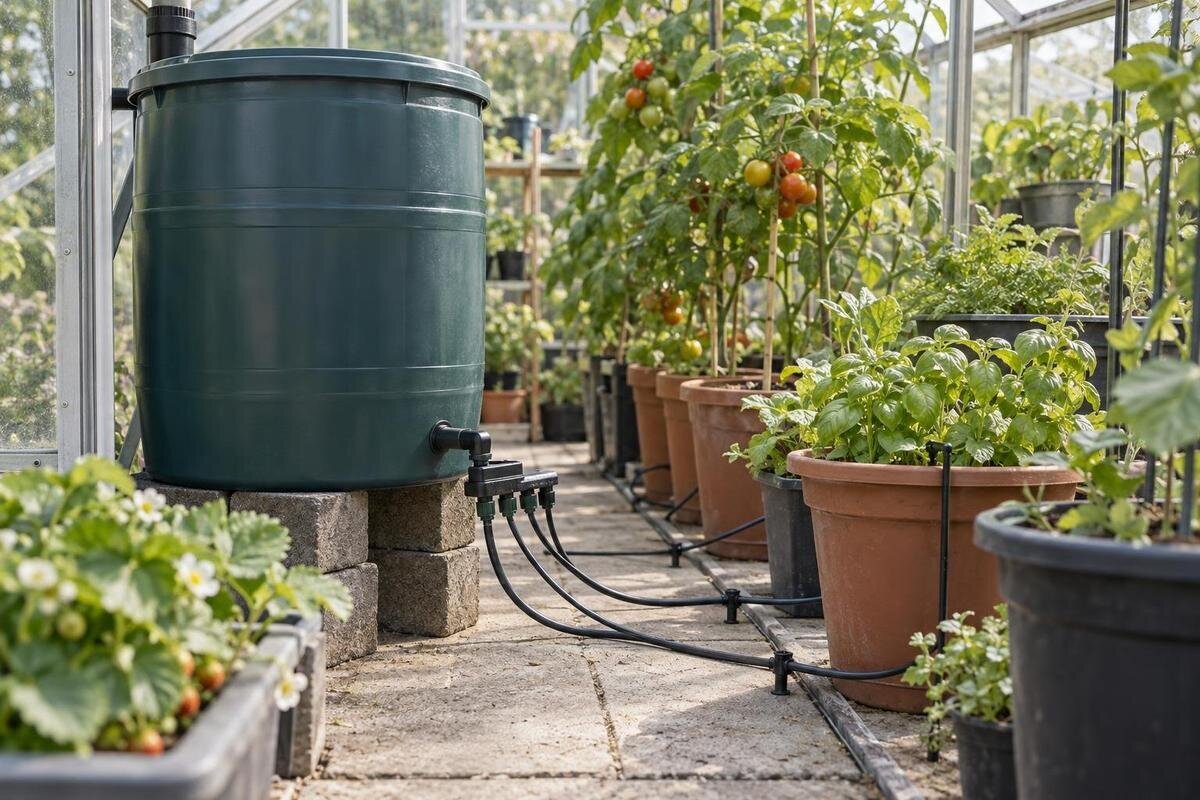
Greenhouse watering
Keeping greenhouse plants watered for a fortnight takes more than a timer set to run each morning. A dependable holiday watering plan starts with the water your plants actually use, checks that the installed system delivers it and allows enough usable water for the full absence. It also covers what happens if a tank empties, a line blocks or the controller stops—and gives a named person clear instructions for checking the system. Work from your own beds and containers, not a generic schedule: the greenhouse roof keeps direct rain off the growing area, and different pots can dry at different rates.

01
Map the beds, pots and plant groups
Before adjusting anything, make an inventory of what has to stay watered: bed rows, individual pots, seed trays, hanging baskets and plants temporarily kept in trays. Group them by container size, growing medium and stage of growth, and flag anything newly planted or quick to dry. Counting plants alone can mislead: one small pot and a bed row have different watering needs, and two groups side by side may need different attention. Sketch their positions and give each group a short label. Note any plants due to be moved before departure; a changed position can put an outlet out of reach. This map will guide the settings, checks and instructions you leave for a visitor.
For at least seven representative days, keep your normal routine and record how much water each group uses, on which days and at what time. Measure it consistently with a marked watering can, a measured change in reservoir level or a meter if available. If a group is watered every few days, total its actual weekly use rather than treating one session as daily demand. Note the condition of the growing medium as well: water coming from an outlet does not by itself show that the root area is being reached. If you are planning a growing layout for the T-Shaped Orangery Greenhouse, listed in sizes from 16.52 to 30 m², distinguish the planted area from the overall floor area when mapping your watering needs.
Separate plants that need different schedules
Use your map to decide which plants can share one programme. Plants in beds and plants in small pots may dry at different rates; grouping them only because they are close together can leave one group too wet while another is short of water. Put together plants that have similar needs and can be supplied by the same outlets, then separate groups that already need different timing or amounts. If your timer controls only one group, recognise that limitation: the same run cannot provide different durations to different groups. Avoid adding valves or changing the layout just before departure unless you can set up and test the whole arrangement well ahead of time.
Label each zone on the sketch and beside its line or valve, and mark exactly which beds and containers it serves. Record its usual run time and measured use, and note any outlets shared between groups. If one schedule must remain shared, identify the group most likely to need attention and add it to the visitor’s checklist. This information helps someone spot a missed zone without guessing. When comparing sizes in the Pyramid Greenhouse range, from 5.53 to 18.9 m², plan zones around your intended beds and containers. The number of schedules you need depends on those plant groups, rather than the greenhouse’s catalogue area.
02
Test water delivery at the outlets
Test the irrigation as it will operate during the holiday, using its usual water source, timer, filter, pipes and outlets. Run every zone through a full on-and-off cycle; a controller display proves only that the timer is running. Catch water from outlets near the beginning and end of each line, or from all outlets if practical, for the same timed interval. Compare what you collect and look for weak or missing flow, leaks, loose connections, blocked outlets and water landing away from the intended growing area. Record what you observe before changing anything, so you can tell whether a later test has improved it. Check that the timer starts and stops when the programme says it should.
Repeat the check over several cycles and with the reservoir at a level close to the one expected late in your absence. A system that works only when the tank is full has not proved the whole plan. Check whether the bed soil or potting mix is being wetted as intended, then look again after it has had time to drain; flow through a pipe alone does not show whether water is reaching the roots. Clean or adjust components only as their instructions allow, and retest the full zone afterwards. Whether your layout occupies a smaller or larger model in the Aluminium Classic Greenhouse range, listed from 3.77 to 28.08 m², measure delivery at the installed outlets rather than estimating it from floor area.
Calculate usable reservoir capacity
Turn your records into a 14-day volume. If you measured a complete week under the routine you plan to leave in place, double that total water use for a first estimate. If your schedule varies, add the expected sessions and amounts for each zone across the fortnight. Include containers watered by hand as well as those connected to the system. If demand varied during your trial, base the estimate on a representative higher-use period rather than one quiet day, and write down your assumptions. Add a separate contingency reserve for a delay or an unexpected top-up. Keeping this figure separate makes it clear whether the stored water covers both normal demand and the extra margin.
Compare the total with usable litres, not just the tank’s nominal capacity. Measure from the full mark down to the lowest level the outlet can draw reliably; water remaining below that point is not available to the plan. Do not count rain collection or automatic replenishment unless you have tested the arrangement and know how much it can contribute during your absence. If you are considering the Limited-Edition Aluminium Greenhouse with Built-In Storage, keep general storage space separate from your water-storage calculation: the model name does not state an irrigation-water capacity. If someone may refill the reservoir, mark the target level and agree where the water will come from.

03
Allow for changing conditions
Your seven-day record is a baseline, not proof that the same amount will cover every kind of weather. If the trial takes place in cool or cloudy conditions, a warm, bright spell can make growing media and small containers dry faster. Compare your estimate with the highest water use you have actually recorded and keep a margin for demand beyond that. Check the pots and beds themselves rather than relying on an outdoor forecast: rain does not water the growing area directly through a greenhouse roof. For a rain-fed reservoir, distinguish water already stored from possible inflow during your absence; a forecast is not a substitute for the usable volume you have measured.
Decide in advance what a visitor should do if the forecast turns unusually warm or the reservoir falls towards its marked reserve. Ask them to inspect named groups, compare the medium with your notes and contact you before making a substantial change to the timer. Avoid a blanket instruction to double every run, which may overwater slower-drying groups without fixing a weak outlet. For a larger planting layout, such as one planned within the 47–70 m² Spacious Greenhouse range, identify the groups needing attention rather than applying one adjustment across the whole floor area. If you cannot test during warmer, brighter weather before leaving, arrange a closer check rather than guessing at extra watering.
Test alerts before relying on them
An alert helps only if the installed equipment can detect a problem early enough for someone to act. Check the documentation for the controller and sensors you actually have: some equipment may report low water, a battery or power issue, or interrupted flow, while a basic timer may show only that a programme was scheduled. Do not assume a phone app proves water reached the plants. Set the correct recipient and notification method, make sure alerts are not muted, and identify any zone the sensors do not cover. A warning that arrives after the reservoir is empty is not a useful safeguard for a fortnight away.
Test the full notification route before departure, using the equipment’s safe test procedure. Confirm that the alert reaches the right person and agree what action follows. Check connectivity and battery status at the greenhouse, not only indoors, and add a second contact if you may not be reachable. Keep a short note of which warnings are supported and which faults still need a physical visit. If you are choosing a structure such as the Bloomcabin Prestige Greenhouse, assess monitoring equipment separately: the alerts available depend on the controller and sensors you install, not the greenhouse model.
04
Prepare for likely system faults
Write a short fault list based on the system you have tested. Possible problems include an empty tank, a valve left closed where one is fitted, a blocked filter or outlet, a loose tube, a leak, a flat timer battery or a power interruption. Inspect visible joints and the water level before you go, and label the normal operating controls in plain language. For each likely sign, state a safe first check and who to contact if it does not solve the issue. A visitor should not have to pull apart pipework or troubleshoot electrical equipment from a vague note.
Keep the plan focused on actions that can be done safely. A visitor might stop a visible leak at a clearly labelled control if that is within their agreed role, contact you, or hand-water the agreed groups using the amounts you have recorded. Do not leave an unfamiliar backup device or untested water supply for someone to work out. If you are planning irrigation for an Aluminium Lean-to Greenhouse, draw the actual tank, timer, lines and shut-off points on your map. A greenhouse product listing cannot show the route or connections of the watering system installed on your site.
Give a visitor clear instructions
Ask one named person to take responsibility and agree a backup if they are unavailable. Set out visit dates before you go; no single interval suits every greenhouse, since a thoroughly tested system with a large reserve presents different risks from a new setup with varied crops. Show the helper how to enter, where the reservoir and controls are, which groups need particular attention and how to contact you. Confirm that they can reach the site and have permission to use the tap or other agreed supply. A request to “check the greenhouse” is too vague to catch a dry pot, a leak or a silent controller.
Leave a one-page checklist in the order the visitor will carry out the checks: confirm the tank is above its marked level, inspect named beds and pots, look for an obvious leak, check the controller’s status and send you a short report or photo. State what counts as a problem and when to call, including what to do if you cannot be reached. Do not ask the visitor to change several settings or guess at a watering amount. If you are choosing a Limited Edition Aluminium Greenhouse, include visitor access in your layout planning; for an existing greenhouse, make the checklist specific to the crop groups and controls already on site.

05
Rehearse the full plan before departure
Leave enough time for a proper rehearsal; do not assemble the system or change its schedule on the last evening. Run the installed programme through several complete cycles under the settings you intend to leave in place. Measure water use and look for inconsistent outlets after each cycle. If you can test the whole fortnight before travelling, you will see whether the reservoir estimate and refill arrangement hold up over the full period. If that is not possible, test repeatedly for as long as you can and note what remains untested, particularly a new component or a schedule that has not run to completion. An early visitor check can help cover that gap.
Use the rehearsal to check details that are easy to miss: the timer’s day and clock, the intended start and stop times, valve positions, usable water, visible leakage, a successful alert test, and the visitor’s contact details and access. Compare the tank’s measured drop with your estimate; if it is higher or lower, find out why and revise the plan before leaving. Write down the final settings and water level once you are satisfied. Any later change—a moved outlet, new plants or a reset controller—means the relevant part needs another check.
Plan for a delay and for your return
Allow for a delay beyond the booked return date as well as the expected fortnight. Use your recorded consumption to work out how much extra time the reserve covers, and tell your visitor when that margin would run out. Agree who can continue visiting or refill the reservoir if travel is extended, rather than assuming the original arrangements will remain available. If no regular refill is planned, identify someone who can arrange one before the tank reaches its minimum. Leave phone numbers and a second way to reach you so that an extension can be agreed promptly. A full tank on departure does not cover an absence of unknown length.
When you return, inspect the reservoir, timer, outlets and plants before restarting your usual routine. Check whether the programme ran as expected and look for dry or persistently wet groups, leaks and a reservoir change that suggests actual use differed from the estimate. If moisture is uneven, address the affected zone rather than making a sudden blanket adjustment. Note how much water the system used, whether a visitor had to attend and which alerts arrived. That record will make the next holiday plan more accurate.
Frequently asked questions
How much water does a greenhouse need for a fortnight?
Measure the water used by each group over a representative period, then total the amount needed for the 14 days using the schedule you plan to leave in place. Add a separate reserve for delays or unexpected use. Check the result against the reservoir’s usable capacity, not just its stated size.
Can I rely on rain while I’m away?
Rain does not water plants directly through a greenhouse roof. If rainwater is collected into your reservoir, count on it only if the collection and refill arrangement have been tested and you know how much water will be available. Otherwise, plan using the water already stored.
How long should I test the watering system before leaving?
Run it through several complete cycles using the settings, water source and reservoir you intend to use. If the system is new or has changed, allow time to find and correct faults. A full-fortnight trial is useful if you can arrange one, but repeated tests and an early visitor check are better than relying on a single run.
Which alerts should I set up?
Use alerts only for problems your actual equipment can detect, such as low water, a power or battery issue, or interrupted flow. Test that each notification reaches the right person and agree what to do when it arrives. A timer running a programme does not necessarily confirm that water has reached the plants.
Do I still need a visitor if the watering system is automatic?
Yes. A person can check the reservoir, plants and visible parts of the system, and respond to problems a timer may not detect. Arrange visits according to how well the system has been tested, the reserve available and the plants you are growing. Give the visitor a named contact and clear instructions.
A reliable fortnight plan is built from measured use, a reservoir with enough usable water, tested delivery and a person who can respond if something goes wrong. Keep the record of what you tested and what remains uncertain. That gives your visitor practical instructions while you are away, and gives you better evidence for the next holiday.
