
Overwintering a Potted Olive Tree in a Greenhouse
Greenhouse care
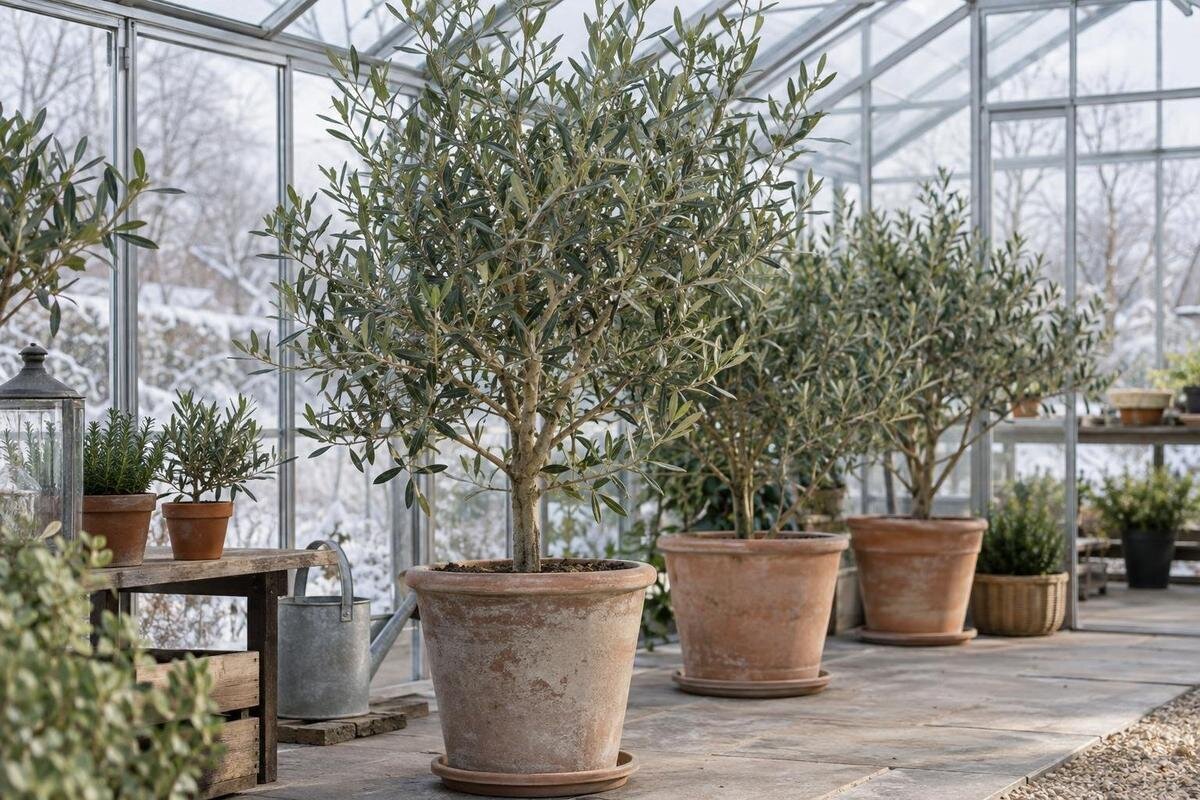
A greenhouse can reduce a potted olive tree’s exposure to wind and rain, but an unheated structure may still become very cold overnight. The evergreen canopy needs bright winter light, while roots in a container cool more readily than roots in the ground. Good overwintering therefore combines a bright position, protection around the pot, careful watering and ventilation. Cultivar, plant condition and measured temperatures matter more than a single supposed safe minimum.

01
Overnight temperatures in an unheated greenhouse
An unheated greenhouse can soften exposure to wind and rain and capture warmth while the sun is out, but it is not a heated room. Air may warm on a clear day and lose heat quickly after sunset; on a cold night, the interior can approach the outdoor temperature. Readings also vary within the structure: a thermometer in direct sun beside the glazing may misrepresent conditions around the tree. Treat the greenhouse as shelter, not proof that a potted olive will stay above a particular figure. The result depends on cultivar, length of cold, previous acclimatisation, tree health and how wet the compost is. Those variables make one minimum temperature unsuitable as a universal promise.
Roots of an olive planted in open ground sit within the surrounding soil; roots in a pot are exposed around the container’s sides and base. A cold-tolerance claim for a mature, established tree therefore cannot automatically be applied to a young potted example. Read cultivar guidance for its assumptions, including whether it describes brief frost or prolonged cold and a sheltered position or an exposed one. The listed Aluminium Greenhouses cover floor areas from 3.77 to 28.08 m², useful when comparing footprints but not evidence of overnight warmth. Make temperature decisions from plant-specific guidance and readings at the tree.
Know which olive you are overwintering
Olive (Olea europaea) is an evergreen tree, so it still needs good light when cool conditions slow its growth. It is not a tropical houseplant that automatically benefits from being kept warm. Winter tolerance varies by cultivar and by the state of the plant; a named, acclimatised tree and a newly purchased young tree may respond differently. Use the plant label or a reliable horticultural reference for the cultivar, rather than a generic statement about olives. Check whether any temperature figure refers to a potted or in-ground tree, and whether it concerns short exposure or a prolonged cold spell.
Before moving the tree under cover, note the cultivar if known, its general health and where it spent the previous winter. A recently repotted tree or one that has produced weak growth deserves closer monitoring than a well-established specimen. Check stems, leaf undersides and the compost surface for pests; remove fallen leaves and confirm that drainage holes are open. If you suspect a pest, keep the olive apart from other overwintering plants while you identify it. Avoid feeding a tree that is barely growing in low light: extra fertiliser will not correct unsuitable winter conditions or provide the light an evergreen needs.
02
Choose the brightest practical position
Bright, unobstructed light is one of the main reasons to use a greenhouse for an evergreen olive. Choose the clearest position available rather than tucking the pot behind stored items or taller plants. Winter sun sits lower than summer sun, so a wall, hedge or nearby tree may cast a long shadow even where the area looked sunny earlier in the year. Watch the light at the place where the crown will be, not just at the greenhouse door. Compare possible positions at different times of day, noting which parts of the canopy are shaded. A spot that catches a brief patch of morning sun may look promising during one visit, so check it again later before settling on the layout. Clean, clear glazing helps make the most of daylight, but cannot compensate for a deeply shaded site.
An attached structure can be convenient to access, yet the adjoining building may block part of the sky. If this is the layout you are considering, compare the Lean-to Greenhouses with the actual aspect and winter shadows at the proposed wall. The category name cannot tell you how much daylight that particular spot receives, so use the site itself as the test. Keep branches from resting against glazing and leave space around the tree, so stored pots or tools do not shade the leaves or make the light harder to assess.
Protect the pot without sealing in moisture
Container roots have less protection from surrounding soil than roots of a tree planted in the ground. A removable pot jacket or a dry insulating layer around the sides, and beneath the pot where practical, can slow rapid cooling. Keep drainage holes unobstructed and do not seal the compost surface; water must still drain and the root zone needs inspection. Arrange the insulation so you can lift or remove it without having to move the whole tree. Before watering, check that the covering has not slipped beneath the drainage holes or hidden water collecting at the base. If the wrap becomes wet, inspect it rather than leaving damp material in contact with the container. Protection that prevents these checks makes routine care harder. Insulation is a buffer against rapid temperature changes, not a way to make an exposed pot frost-proof.
Position the pot away from the entrance, where cold air may come in, and away from cold glazing while keeping it in the brightest part of the greenhouse. If you raise it from the floor, use a level, stable support that will not obstruct drainage or let a heavy planter rock. Measure the container with its insulation on, then allow room to reach the compost and move around the tree. When comparing the Limited Edition Aluminium Greenhouses, use the chosen model’s footprint and layout for that plan rather than assuming a headline floor area will suit the pot.

03
Checking the compost before watering
Water use usually drops in a cool, dim greenhouse because the tree and compost dry more slowly. Do not water to a weekly timetable or assume a dry-looking surface means the entire root ball is dry. Check a little below the top layer, taking care not to damage roots; if the compost is still damp there, wait and check again. Make these checks directly in the olive’s pot rather than judging by a neighbouring container, since pot size and compost may differ. If the surface appearance and the compost beneath it give different impressions, use the below-surface check before deciding to water. Keep access to the compost clear enough to repeat that check without disturbing the tree. When the root zone is beginning to dry, water evenly and let excess drain freely. The aim is neither waterlogged compost nor a completely dried-out root ball, and the interval will change with pot size, compost, light and weather.
Keep the pot out of standing water: empty a saucer or tray after watering, and clear any blocked drainage route. Watering during a milder part of the day gives excess water time to drain before colder conditions return, but do not soak the plant simply because a sunny spell has warmed the greenhouse. Set the pot where you can inspect it and carry water without squeezing past branches. When comparing a T-Shaped Orangery Greenhouse, mark the tree and watering route on the plan; total floor area alone does not show whether everyday access will be clear.
Ventilate during mild spells
Ventilation matters even in winter. On a bright day, an enclosed greenhouse can heat up while the outdoor air remains cool; stale, damp air and persistent condensation can also build up. Air the structure on suitable mild, relatively dry days, adjusting the opening to conditions rather than leaving a door wide open in cold wind. Close or reduce openings before temperatures drop, and avoid a direct draught on the tree. Ventilation manages excess daytime warmth and dampness; it does not keep the greenhouse warm overnight or compensate for compost that stays wet.
Look at the actual openings and consider how you will operate them from where the olive stands. Do not infer vent number, location or reachability from a greenhouse’s shape or area. The Pyramid Greenhouse is one format to compare, but assess the chosen configuration for practical ventilation and access before buying. If condensation appears, consider watering and airflow together: wet glass alone does not prove the compost is waterlogged, and opening vents cannot correct a pot that remains saturated.
04
Space for the crown, pot and entrance route
Measure the tree at its full crown width and height, then add the pot, insulation and any support. Check the route through the entrance as well as the floor area: the tree must pass through the door without branches catching. Note any turn between the doorway and its winter position, especially if other pots or fixed fittings narrow the route. A space may accommodate the olive once it is standing there but still be awkward to reach with the tree in its container. Include the return journey outdoors in this plan, rather than arranging everything around a pot you cannot readily move again. Leave a practical walking route rather than filling every spare corner with pots. If you expect the tree to grow, allow for its likely future size instead of planning around a recent prune or a temporarily compact shape.
Storage can be useful, but it should not make the olive difficult to reach or shade it. The Limited-Edition Aluminium Greenhouses with Storage are listed from 5.52 to 28.08 m²; when comparing a size, mark storage, tree, pot cover and walking space separately. This gives a more realistic picture of the area available for the olive than treating all listed floor space as clear growing room. Keep watering equipment accessible without storing items against the plant or blocking openings.
Access for routine winter care
Once the olive is in its winter position, you should be able to inspect both sides of the canopy, check the compost and read a thermometer without moving stored items each time. Plan these tasks separately from the route used to bring the tree inside. Decide where you will stand to examine leaf undersides, where you can set down a watering can and how you will reach the pot’s drainage area. This helps reveal awkward corners that a simple outline of the tree on a floor plan may miss. Compare the model’s internal height at the intended position with the olive’s height and crown spread; ridge height alone does not guarantee headroom at the edge. Check whether vent controls are reachable from the floor without leaning through the branches. These details matter when the tree remains in place for a long winter.
The Prestige Greenhouse with Metal Base is listed in floor-area options from 3.77 to 28.08 m². Those figures establish area, not internal height, door clearance or airflow, and the product name alone does not answer those questions. Use the selected version’s available measurements and opening details to judge whether you can tend the olive without squeezing between pot and frame. Leave enough clearance from the glazing that the crown will not press against it, especially as new growth appears.

05
Monitoring greenhouse temperatures
Use a min/max thermometer or temperature logger in the greenhouse, positioned in the shade near the olive rather than in direct sun, against glazing or beside a heat source. Record overnight lows as well as daytime highs; a midday reading cannot show how cold the plant was at dawn. Note the date and measuring position alongside each reading so you can compare like with like. If you move the thermometer, record that change rather than treating both locations as identical. Keep a brief note of whether vents were open and whether the tree had been moved, so the record describes the conditions you actually provided. If practical, compare conditions near the canopy and close to the pot, since a reading at one point may not describe the root zone or the coldest part of the greenhouse. A short record through several weather changes is more useful than a single reading.
Compare the coldest readings, and how long they lasted, with guidance for the named cultivar and for a potted plant. Make a contingency before a severe spell: a bright, sheltered alternative may be preferable to relying on the greenhouse alone if conditions exceed that guidance. The Spacious Greenhouse is listed from 47 to 70 m², but a large floor area is not a minimum-temperature rating. Choose space for the garden’s actual use, and make the same cold-weather plan regardless of the greenhouse footprint.
Move the tree back outdoors gradually
Do not rush an olive from a dim winter corner directly into strong sun and wind. As spring conditions become suitable for the particular tree, start by allowing more air into the greenhouse, then introduce outdoor exposure gradually in a bright, sheltered place. Increase exposure in stages and watch the forecast; keep the tree protected when conditions fall outside its cultivar guidance. This transition limits abrupt changes in light, airflow and temperature. A greenhouse that felt bright indoors does not expose leaves to the same conditions as an open garden.
Watch for steady new growth, leaf colour, persistent leaf loss and changes in how quickly the compost dries as days lengthen. A few fallen leaves do not identify one cause: check moisture, drainage, cold readings and pests before changing your watering routine. Resume more regular watering and feeding only as growth and conditions justify, following the instructions for the compost or fertiliser you use. Repot or prune because the tree needs it, not simply because winter has ended. A healthy transition is gradual and depends on the tree, not a fixed calendar date.
Frequently asked questions
What is the lowest temperature a potted olive can tolerate?
There is no single minimum that is safe for every olive. Cultivar, age, acclimatisation, how long the cold lasts and whether the tree is in a pot all affect the risk. Use guidance for the named cultivar and a potted plant, and measure overnight conditions where the tree stands.
Does an olive tree need a heated greenhouse in winter?
Not automatically. The right conditions depend on the cultivar and the tree’s health, and an unheated greenhouse may be suitable if it provides enough light and the measured temperatures remain within the plant’s requirements. Extra warmth is not a substitute for light.
How often should I water an olive in a greenhouse?
There is no reliable weekly schedule for every pot. Check the compost below the surface and wait if it is still damp around the root zone. When it is beginning to dry, water evenly and let excess drain away; do not leave the pot standing in water.
Should I wrap the whole olive tree in fleece?
Focus first on buffering the pot and root ball, while keeping drainage open. Covering the canopy is not automatically necessary; consider it only if the cultivar’s guidance and the conditions call for it. Any covering should not be treated as a guarantee against cold.
Why is my olive dropping leaves in winter?
Leaf drop can follow changes in light, temperature or watering, but it can also accompany root problems or pests. Check the compost, drainage, overnight readings and leaves before changing your routine. A few fallen leaves do not identify the cause on their own.
For a potted olive, winter care is a balance: retain bright light, buffer the root ball, avoid persistently wet compost and refresh the air without exposing the canopy to a cold draught. Since a greenhouse does not set one safe minimum, use cultivar-specific guidance and overnight readings to decide whether the position remains suitable. That gives you a practical response to changing conditions rather than a fixed temperature or watering rule.
