
How to Grow Okra in a Greenhouse
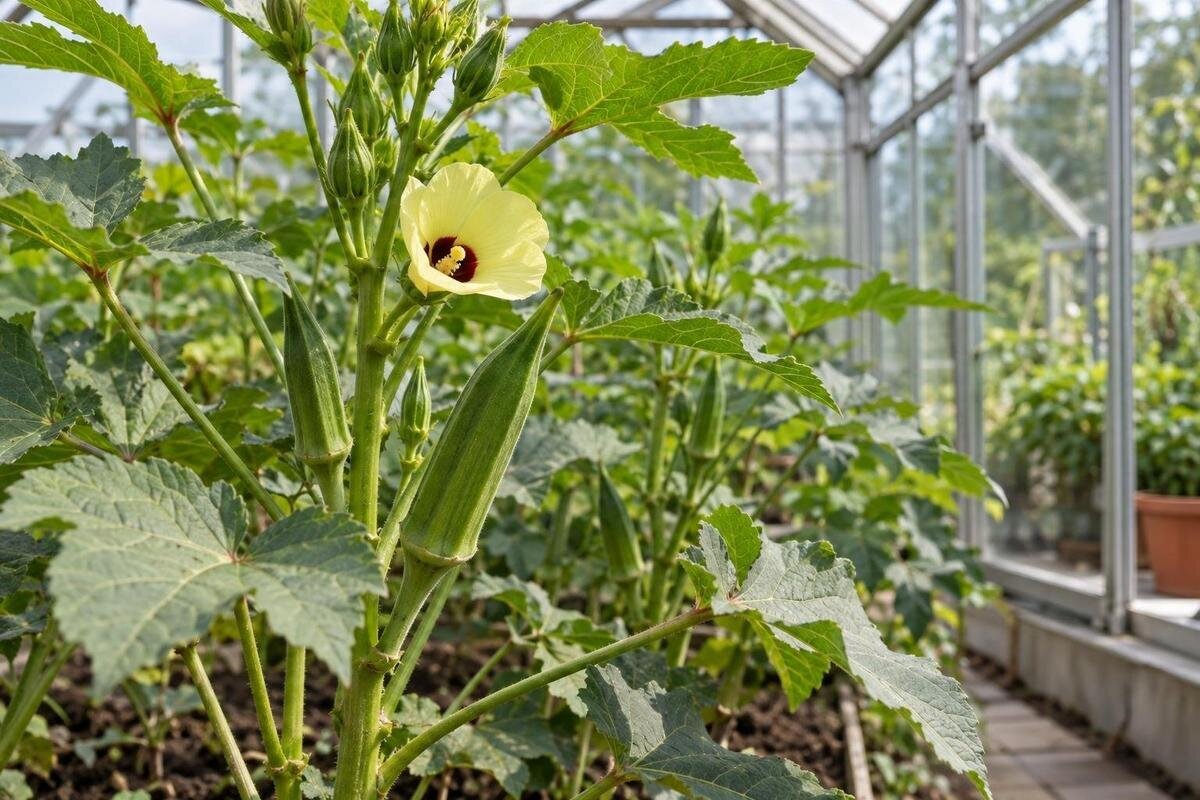
GREENHOUSE GROWING GUIDE
Okra can grow under glass in Ireland, but it needs a long run of warmth, bright light and enough time to flower and fill pods. A greenhouse may improve daytime conditions without keeping nights warm, so success in an unheated structure is uncertain. This guide explains how to plan the crop, when heating may help and what to check before giving okra valuable greenhouse space.

Before choosing a greenhouse 1
Is okra realistic in an Irish greenhouse?
Okra, also called lady’s fingers, is a warm-season annual from tropical and subtropical climates. It can be grown in Ireland under glass, but the limiting factor is usually sustained heat, not whether a seed will sprout. A bright greenhouse warms quickly by day and shelters plants from wind and rain, yet it does not behave like a heated room: after sunset, its temperature can fall much closer to the outside temperature. That matters at germination and while roots, flowers and pods develop. The Royal Horticultural Society’s okra guidance and Clemson Cooperative Extension’s crop guide treat it as a heat-loving crop; shelter alone does not promise enough warm weeks. Local exposure, shade and summer weather all affect the outcome.
Think in terms of a trial and a harvest window. If an existing greenhouse catches plenty of sun, has room for a mature plant and stays reasonably warm at night, try one or two plants before dedicating a bed or installing heat. If conditions remain cool, plants may stay small, flower late or produce too slowly for a worthwhile harvest before autumn. If you are also comparing greenhouse sizes, the Classic aluminium greenhouse range lists options from 3.77 m² to 28.08 m². Use the exact plan to see whether the mature plants, other crops and a clear access route will fit. Floor area helps with that layout decision, but does not establish whether conditions will be warm enough for okra.
The warmth and season length okra needs
Okra seed needs warm compost to germinate; a sowing medium around 21–29°C is commonly recommended. In cooler compost, germination may be slow or uneven, while cold and persistent wetness can lead to seed loss. After emergence, the plant needs bright, warm conditions over a long stretch, without repeated cold spells during flowering and pod growth. Exact requirements vary with variety and stage, so read the seed packet or supplier’s guidance and measure rather than guess. Put a minimum/maximum thermometer near the growing area: an afternoon reading in direct sun will not tell you how low the temperature fell overnight. Check several nights, including cloudy periods, rather than judging conditions from one sunny afternoon.
Season length matters as much as peak temperature. Count backwards from the part of the Irish summer most likely to be warm and bright: allow time to raise seedlings, establish them in their final bed or pots, then form flowers and harvestable pods. A packet’s days-to-maturity figure may count from sowing or transplanting, so check the small print before relying on it. Cool weather, low light and late planting can all delay the harvest. Choose an early cultivar if available, but treat its stated maturity time as a guide under favourable conditions, not a promise in Ireland. A late first flowering can leave little time for pods to reach picking size before autumn. More fertiliser cannot replace missing warmth and light.
Before choosing a greenhouse 2
Heating: when does it make a difference?
Heating is most useful when it maintains warmth through key stages, not simply when it lifts the temperature for one chilly night. A thermostatically controlled, purpose-made greenhouse heater may support seedlings or extend the growing season, while a heated propagator or small protected propagation area can be a more proportionate way to start seeds. Once plants reach flowering and fruiting, warming compost alone will not keep the whole plant active if the surrounding air stays cold. Decide how many weeks heat is needed, what temperature you hope to maintain and how ventilation affects that plan. A heater intended for occasional frost protection should not be assumed to overcome a prolonged cool spell. Heating also needs to be balanced with ventilation if strong sunshine returns.
Running cost depends on the exact structure, glazing, exposure, ventilation, target temperature and local energy tariff; floor area alone cannot calculate it. For perspective, the Spacious Greenhouse range is listed from 47 to 70 m², but that measurement does not reveal heat loss, air volume or energy use. If the greenhouse is already heated for other crops, okra may share the warm period, although its own requirements still matter. If you would heat a whole greenhouse for a small okra harvest, compare the cost with the value of the crop and with a heated propagator plus a one-plant trial. Ask a qualified heating professional to assess the exact setup, and use equipment installed in accordance with its instructions.
When to sow and how to raise seedlings
Plan sowing around warmth and light. In Ireland, sow indoors in late winter or early spring—often around March, depending on the cultivar and the warmth you can provide—rather than putting seed into cold greenhouse compost. Use warm propagation compost and give seedlings strong light as soon as they emerge. If you rely on sunshine to warm the greenhouse, use the overnight temperature readings described above to judge whether it is suitable for raising seedlings. Starting much too early can leave seedlings lanky or root-bound while they wait for a suitable planting window. Sow only as early as your light, heat and space allow, and follow the packet’s instructions for sowing depth.
Use individual deep pots, preferably one seed per pot, so young roots need less disturbance when they are moved. Okra can resent rough transplanting, so handle the root ball gently and pot on only when necessary; keep the compost evenly moist, not saturated. Acclimatise seedlings gradually to greenhouse conditions during mild periods, then return them to warmer shelter if nights remain cold. If you plan to raise trays under glass, allow room for seedlings as well as the mature crop: the Lean-to greenhouse range lists floor-area options from 3.69 m² to 14.34 m², but actual bench space, door clearance and growing area must be checked on the chosen plan. Label pots clearly so that sowing dates and varieties are not confused.

Before choosing a greenhouse 3
Planting out, spacing and support
Move seedlings into their final position only when the greenhouse bed or pot is warm and forecast overnight temperatures are mild enough for continued growth. If a cool period is forecast, delay planting rather than placing a young plant into cold compost. A suitable transplant is compact, has several true leaves and a root ball that holds together when removed from its pot; a plant that has waited too long in a tiny container is harder to establish. Once planted, water in gently and avoid repeatedly moving it between warm and cold locations. Have a warmer place available for young plants if a sudden cold spell means they need extra protection.
Check the variety’s expected height and spacing before choosing a spot. Okra can become a tall, branching plant—some cultivars grow well above a metre—so leave headroom and avoid letting it shade smaller crops. Follow the packet’s spacing and allow for the mature plant, not just the size of its seedling pot. The Limited Edition aluminium greenhouse range is listed from 3.77 m² to 28.08 m²; use the individual model’s drawing to plan bed positions and access around them. Most okra needs no elaborate training, but a tall stem in an exposed or crowded position may benefit from early support if it begins to lean. Leave enough room to reach the plant for watering and picking.
Growing okra in a bed or a container
A greenhouse bed gives roots a larger, more even volume of soil, which can buffer short gaps between waterings. Okra prefers fertile, free-draining ground; improve poor soil with well-rotted organic matter and make sure excess water can drain away. Avoid overfeeding with nitrogen, which may encourage leaf growth at the expense of flowers and pods. Before planting, check whether the bed stays sunny and whether surrounding crops will shade the plant as they grow. A warm, open position is more useful than a convenient cold corner, and the bed should be easy to reach for watering and picking. Do not plant into ground that remains waterlogged.
Containers can be practical if you need to move the crop to the brightest part of the greenhouse, but choose a substantial, deep pot with drainage and enough capacity for the mature plant. Use the variety’s recommendations rather than assuming any pot will do. A small container dries quickly and restricts roots, so check the compost more often and water when needed instead of following a fixed weekly schedule. Set the plant in its final pot early enough to avoid root disturbance. If you are planning a number of warm crops, the T-shaped orangery greenhouse range lists options from 16.52 m² to 30 m². Mark the positions of beds and pots on the chosen model’s plan, keeping the aisle clear.
Before choosing a greenhouse 4
Ventilation, watering and day-to-day care
Give okra the brightest position available and avoid letting taller crops cast shade. Sun through greenhouse glazing can raise temperatures sharply even on a cool day, so ventilate during bright weather when conditions warrant and monitor the daytime maximum as well as the overnight minimum. Aim to avoid both stagnant, humid air and abrupt cold draughts over young plants. Airflow can help foliage dry and makes the plant easier to inspect, but it cannot make up for a lack of warmth. When comparing designs, the Pyramid greenhouse range lists floor-area options from 5.53 m² to 18.9 m². Check the chosen model’s vent number and positions separately, including whether you can reach and operate them easily.
Water at the base when the compost begins to dry, giving enough to moisten the root zone without leaving a pot standing in water. Check bed soil directly; a container in a warm greenhouse may need attention more often because it dries faster. Even moisture is particularly important as flowering begins, since alternating drought and saturation stresses growth. Use a balanced fertiliser in line with its label rather than a high-nitrogen routine intended to force growth. Inspect leaf undersides for aphids, whitefly or spider mites, and identify any problem before choosing a control. Good spacing makes those checks easier and helps you notice problems while they are still limited.
Flowers, pollination and pod formation
Okra produces conspicuous flowers before the pods form, and each flower is short-lived, so check the plant regularly once buds appear. Most cultivars are self-fertile; a second plant is not normally needed just for pollination. In a greenhouse, insects may visit the flowers, but a lack of pollinators should not be the first explanation for poor fruit set. When blossoms fall without a developing pod, look at recent night temperatures, light, watering and feeding. Cold conditions, weak growth or stress can interrupt flowering and fruit development even when the plant has opened flowers. A small swelling below a faded flower is a clearer sign of a developing pod than the flower itself.
If the plant looks vigorous and conditions are warm but flowers keep dropping, observe several blooms over a few days before intervening; very dry compost or sudden heat can also disrupt growth. In a very enclosed greenhouse, gentle hand transfer of pollen from a fresh bloom to another flower can be tried as an experiment, but it is not a fix for cold nights or poor light. Keep notes on the first flowers and the first pods that begin swelling. That record helps distinguish a pollination issue from a too-short warm season and gives you a more useful basis for next year’s sowing date. Do not add more plants solely on the assumption that one cannot set fruit.

Before choosing a greenhouse 5
When and how to pick okra
Pick pods while they are young and tender. Many varieties are best harvested at roughly 5–8 cm long, though the ideal size differs; follow the cultivar description and test one rather than waiting for large fruit. In warm conditions, pods lengthen quickly, so inspect the plant every day or two once production begins. Use scissors or secateurs to cut the stem cleanly, and wear gloves if your chosen variety has bristles that irritate skin. Older pods become fibrous and hard, so do not leave them on the plant simply to increase their size. Frequent checking matters most once the first pods appear.
Pick regularly, including any pods you cannot use fresh, rather than letting them mature fully on the plant; regular removal supports continued flowering and keeps the crop manageable. Handle pods gently and record how many reach a useful size before cool weather returns. Built-in storage is worth considering if you want picking tools close at hand. The Limited Edition greenhouse with built-in storage is listed from 5.52 m² to 28.08 m²; check its layout to see where the storage sits and how much growing space remains. Keep harvested pods out of a hot greenhouse while deciding how to use them; prompt use helps preserve their texture.
Planning greenhouse space and heating for okra
Choose the structure only after deciding whether okra will be one experiment, part of a collection of warm crops, or a reason to heat a greenhouse regularly. Map the sunny area and the space each mature plant will occupy, then allow for a path, working space, access to vents and room for other crops. The Prestige greenhouse range is listed from 3.77 m² to 28.08 m², giving you a range of sizes to compare against that plan. Look at individual bed dimensions and usable space rather than the total area alone. A larger size or a named style does not guarantee a warmer growing season; consider construction details and the intended heating plan separately.
If you already own a well-lit greenhouse, try one plant and record night lows, daytime highs, flowering dates and pods harvested for a full season. If you would buy a greenhouse or add heating solely for okra, weigh the full project—including suitable, safely installed heat and likely running time—against the harvest you expect. A heated propagator may help an early start, but it will not keep mature plants warm later in the season. Heating can be easier to justify when the same warm period serves several crops. Where sustained warmth is not realistic, choose a crop that suits the greenhouse you have rather than relying on an optimistic sowing date.
Frequently asked questions
Can I grow okra in an unheated greenhouse in Ireland?
You can try it, but a dependable harvest is uncertain. A greenhouse warms in sunshine but can cool sharply overnight. Monitor minimum temperatures and give the plant your sunniest suitable position; treat the first season as a trial.
When should I sow okra in Ireland?
Sow indoors in late winter or early spring, often around March if you can provide warmth and strong light. Adjust the date to the variety and your growing conditions, and avoid starting so early that seedlings outgrow their space.
Does okra need a heated greenhouse?
Not always, but reliable pod production needs a long, warm period. A heated propagator can help seedlings; heating a whole greenhouse through flowering and fruiting may be a much larger commitment. Assess the exact structure and likely running time.
Do I need more than one okra plant for pollination?
Usually not. Most okra cultivars are self-fertile, so one plant can set pods. It still needs suitable warmth, light and steady growth; poor fruit set is not automatically a sign that pollinators are missing.
How large should okra pods be when picked?
Many varieties are best picked at roughly 5–8 cm, but the ideal size varies. Follow the cultivar guidance and check every day or two in warm weather; older pods become fibrous.
Okra is worth a try if you enjoy a challenging warm-season crop and can give it a bright, protected position. One season of records—night temperatures, first flowering and pods that reach picking size—will show whether your greenhouse offers enough warmth for a repeat attempt. If it does not, that evidence is more useful than simply sowing earlier or adding more feed.
