
How to Grow Pak Choi in a Greenhouse
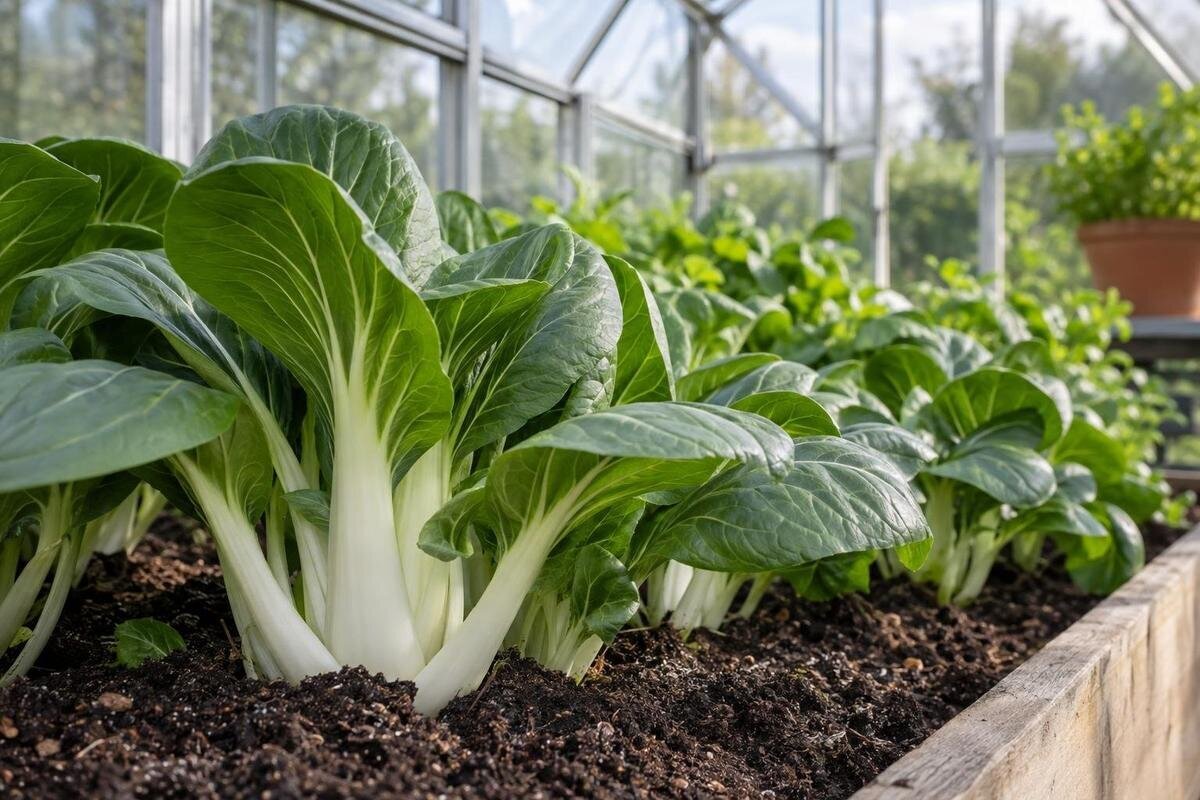
GREENHOUSE CROP GUIDE
Pak choi is a fast-growing leafy brassica that suits cool spells better than a hot greenhouse in midsummer. In Ireland, an unheated greenhouse can help with spring and autumn sowings, but it will not prevent frost or stay cool on a bright day. The key is timing: avoid leaving young plants chilled for long periods before they face lengthening days or heat; keep moisture even, ventilate when the house warms, and harvest before a flower stem develops. Small, staggered sowings are easier to manage than one large batch and help prevent a glut.

What a greenhouse changes for pak choi
Pak choi (also called bok choy) is a quick-growing brassica grown for its tender leaves and crisp stalks. It performs best in cool, reasonably steady conditions; sustained heat or a check in growth can shorten the useful leafy stage. A greenhouse shields seedlings from wind and heavy rain and can extend the spring and autumn windows. It does not hold one temperature, though: an unheated house may be cold overnight and warm quickly in sunshine. The crop benefits from shelter, but it still needs airflow; a greenhouse should not be left closed on warm, bright days. Its compact rosette can fill a bed between longer crops, provided it receives good light and is not crowded beneath mature foliage.
Treat it as a seasonal crop rather than a plant to keep producing in a warm house all year. In Ireland, the useful windows are usually spring and late summer into autumn, when conditions are cooler than at midsummer. Cover can bring a spring sowing forward or extend an autumn batch, but success depends on actual night temperatures, light and ventilation at your site. If comparing greenhouse sizes, the Limited Edition Aluminium Greenhouses listing gives options from 3.77 to 28.08 m². Plan how you would divide the space between beds, paths and other crops, rather than treating the full stated area as planting space. If you plan tomatoes or cucumbers later, grow pak choi in the cooler gap rather than beneath their dense canopy.
Sowing times for an Irish greenhouse
Use a sowing window rather than relying on a fixed date. As a practical starting point in Ireland, sow a spring batch under cover around March or April, and an autumn batch in July or August; shift those dates to suit an exposed garden or a greenhouse that stays cold at night. Seedlings left chilled for a prolonged spell can stall and may be more likely to flower prematurely later, particularly as days lengthen. At the other extreme, sowing into the hottest, brightest part of summer can mean warm conditions and long days that shorten the leafy stage. The seed packet’s seasonal advice and readings from your greenhouse should refine these broad timings. A maximum–minimum thermometer is more useful than a single reading at midday.
Sow modest batches at intervals of about two to three weeks while conditions remain suitable. If one batch runs to seed or establishes poorly, the next may still give a harvest; do not sow the whole amount at once. For the last autumn batch, allow enough time for plants to size up before daylight drops and growth slows. A larger structure does not automatically provide a longer crop window: the T-Shaped Orangery Greenhouse listing gives sizes from 16.52 to 30 m², but that stated area says nothing by itself about overnight warmth or available light. Schedule from growing conditions, not greenhouse size, and use maturity estimates on the packet as a guide rather than a deadline.
Choosing a variety for the season
Choose seed labelled for spring or autumn growing, or described as slow to bolt, and match it to the harvest you want. Pak choi varieties differ in speed, final size, stem colour and shape; a compact type can be convenient for baby leaves, while a full-sized plant needs more room. Some packets specify whether a crop is intended for young-leaf picking or whole heads, which helps you choose a spacing and harvest plan. A slow-to-bolt label can lower the risk in a suitable season, but it is not a guarantee if plants face prolonged cold, heat or water stress. Check the packet’s intended season and spacing rather than choosing a cultivar on its name alone.
Use the days-to-maturity figure as a planning estimate, not a promise. Cool, cloudy weather or seedlings checked by cold will slow growth, while mild, bright conditions can speed it up. Keep the seed packet and note the variety, sowing date, greenhouse conditions and harvest date. Those simple records show whether early batches are being sown too soon, whether autumn sowings need to move forward, and which variety stays leafy longest in your conditions. Compare plants grown at the same time before changing your whole schedule; if one plant bolts early, its position or condition may be part of the explanation. If you have not grown the seed before, try a small first batch.
Sowing seed and raising seedlings
Use modules or a shallow tray of fine seed compost, following the sowing depth on the packet. Modules make it easier to space seedlings and move them with roots intact; a tray works for a small batch but crowded seedlings need timely thinning. Sow thinly, keep compost evenly moist rather than waterlogged, and give seedlings good light in a cool-to-mild place. Greenhouse trays can dry quickly around the edges during bright weather, so check them rather than watering by the calendar. Clean containers and prompt thinning reduce the time seedlings spend crowded and damp. Direct sowing into the final bed avoids transplanting, but thin the row once seedlings have leaves so each plant has room.
Transplant when seedlings are sturdy and have several true leaves, before roots are tightly tangled or plants have outgrown their modules. Water the tray beforehand, lift each seedling gently by a leaf rather than squeezing the soft stem, and water the bed after planting. If you raised seedlings in a warmer room, acclimatise them gradually to cooler greenhouse conditions instead of moving them straight into a cold night. When planning room for trays as well as beds, the Pyramid Greenhouse listing gives sizes from 5.53 to 18.9 m². Sketch where each batch will go as it moves from modules into the bed. Reserve a bright spot for seedlings and leave enough room to lift trays and water them without reaching across established plants.

Preparing beds and setting spacing
Choose a bright bed with fertile, moisture-retentive soil that still drains freely. Work in mature compost before sowing or planting; avoid a compacted, waterlogged patch or a very dry, impoverished bed. Preparing the soil ahead is more useful than trying to correct poor conditions once leaves have formed. In containers, use a free-draining growing medium and a vessel large enough to hold moisture between checks; small pots dry quickly in a greenhouse. Position the crop where tall plants will not shade it, and keep the bed accessible for regular watering and inspection. Avoid trying to force leaf growth with a heavy dose of fertiliser just before sowing.
For full-size plants, allow roughly 20–30 cm between plants, adjusting to the packet and variety; leave similar or slightly wider gaps between rows if growing in lines. Baby leaves can be sown more closely and harvested young. Leave room to reach the back of a bed for watering and inspection, and avoid pressing plants against a wall or crowding them beside a mature crop. The Limited-Edition Aluminium Greenhouses with Storage listings range from 5.52 to 28.08 m². When comparing layouts, mark out the storage section, pathways and proposed beds. Check that you can reach the plants at their planned spacing without stepping into the bed or moving containers each time you tend the crop.
Managing temperature and ventilation
Watch daytime warmth as well as overnight cold. A closed greenhouse can heat rapidly in bright weather, even when the air outside feels cool; use a maximum–minimum thermometer at crop height and open vents or doors when conditions are mild and sunny. Air exchange helps prevent still, damp conditions, but do not leave young seedlings exposed through a sudden cold snap without considering protection. During an unusually hot spell, temporary light shade can take the edge off intense sun. Remove it when conditions ease: permanent heavy shade reduces the light pak choi needs for steady leaf growth. A week of recorded highs and lows is more useful than guessing from the weather outside.
An unheated greenhouse is not frost-free, and pak choi will not keep growing quickly through the darkest, coldest part of winter. A light fleece over young plants can buffer a brief chill, but it is not a substitute for heat or a guarantee against frost. Heating only to maintain a cool-season crop may be poor value if low winter light still limits growth, so weigh the likely harvest against extra energy use. The Bloomcabin Prestige Greenhouse listing gives sizes from 3.77 to 28.08 m²; a size range does not establish ventilation or overnight temperature, so check those details for any model you consider. Spring and autumn batches often make better use of unheated cover than a winter crop.
Watering and feeding pak choi
Keep moisture even from germination through leaf expansion. Check below the soil surface: the top can look dry while the root zone remains damp, or a container may have dried lower down despite a moist-looking surface. Water thoroughly when the bed begins to dry, then allow excess to drain; repeated wilting followed by heavy soaking stresses plants and can contribute to premature bolting. Containers need more frequent checks than beds, especially in bright or breezy weather. Do not follow a rigid daily timetable: water demand changes with weather and plant size. Where practical, water the soil rather than leaving foliage wet for long periods, and make sure excess water can escape.
Pak choi needs steady nutrition, not a last-minute heavy feed. If a bed is fertile and has been improved with compost, a short crop may need little extra; container-grown plants can be fed with a balanced product only as directed on its label. Excess nitrogen can make growth soft and lush without correcting poor light, cold or irregular watering. Pak choi alone does not require a large greenhouse. If planning several crops, the Spacious Greenhouse listing gives sizes from 47 to 70 m². Consider how you would manage watering across the whole layout, including pots and seed trays as well as beds. Keep access to the water source clear, and arrange containers so that tending one crop does not mean walking across another.
Why pak choi bolts and what to do
Bolting is the rapid extension of a central flower stalk. The plant shifts from building a compact rosette to flowering; leaves may become tougher or stronger in flavour, and the useful leafy stage is nearly over. In pak choi, premature flowering can follow prolonged cold exposure while plants are young, particularly when conditions then turn to longer days. Heat, dry compost and transplant stress can add to the risk, but cultivars respond differently, so one cause cannot always be singled out. A greenhouse reduces exposure to wind and rain; it does not switch off the plant’s natural flowering response.
Lower the risk by sowing in a window when seedlings can continue growing, rather than leaving them for weeks in cold compost or a cold greenhouse. Keep seedlings from becoming root-bound, water consistently and ventilate during warm spells. Choose a variety marked slow to bolt for the intended season, and grow small batches that you can harvest on time. If several plants start flowering during hot weather, pause sowing until conditions cool rather than trying to fix the problem with extra fertiliser or water. Once the flower stalk is rising, more feed will not turn the plant back into a leafy head; harvest usable leaves promptly and clear the plant. If only one plant bolts, compare its position with neighbours before changing the whole schedule.

Checking for pests and disease
Inspect seedlings and leaf undersides every few days. Flea beetles leave many small holes, while slugs and snails can remove tender growth; aphids and caterpillars may gather around the growing point or beneath leaves. Damage matters most when plants are small, so remove badly affected seedlings or pick pests off early. Look for fresh holes as well as insects, since caterpillars can hide among folded leaves. If using insect mesh, choose one suited to the pest, fit it before insects arrive and check beneath it regularly; a barrier can trap pests inside if they are already present. Keep airflow around the crop and avoid covers that make the bed too warm.
Remove weeds, fallen leaves and spent brassica plants so they do not provide cover for pests. Clean trays and tools between batches, and rotate pak choi with non-brassica crops in a permanent greenhouse bed where practical, particularly if clubroot or another soil-borne brassica problem has affected the ground. Protected growing does not remove that soil history. Give plants enough room and avoid constantly damp, stagnant conditions. When comparing the Aluminium Greenhouses, listed in sizes from 3.77 to 28.08 m², consider access for routine crop care. In your proposed layout, can you reach the growing points and inspect leaf undersides throughout each bed? Check the ventilation details too, especially if you intend to use mesh over the crop.
Harvesting and planning the next sowing
Harvest whole plants while rosettes are compact and the leaves are tender, before the centre stretches into a flower stalk. Cut at soil level with a clean, sharp knife. Baby leaves can be taken young; if you want a full head, avoid repeatedly stripping leaves from the growing point. Check the bed often during mild, bright spells, when plants can develop quickly. If a flower stem is already rising, harvest promptly rather than waiting for a larger head. The leaves may have changed in texture or flavour, but you can still pick usable portions. Cut only what you can use, as freshness declines after harvest, and bring the crop into a cool place rather than leaving it in a warm greenhouse.
Use your sowing labels to keep track of which batch should be ready first, and sow only what you are likely to eat. When reviewing the season, compare harvest dates with the estimates on the seed packet: allow extra time for later batches if growth slowed as light declined. After harvest, clear roots and leaves, check for pests, and prepare the bed for a non-brassica crop if rotation is possible. A final autumn batch may be worth harvesting as smaller leaves if full heads are slow to size. If you are considering the Lean-to Greenhouses, listed in sizes from 3.69 to 14.34 m², draw up a seasonal bed plan alongside the site layout. Include the space occupied by other crops when pak choi is due to be planted, rather than planning each crop in isolation.
Frequently asked questions
Can I grow pak choi in an unheated greenhouse?
Yes, for seasonal harvests when conditions suit the crop. An unheated house can still get cold enough to check growth and may overheat on sunny days. Try spring or late-summer sowings, monitor conditions in your greenhouse and do not count on rapid winter growth.
When should I sow pak choi under cover in Ireland?
March or April is a useful starting window for spring sowing, with July or August a guide for autumn crops. Adjust for an exposed site or cold nights, and make small repeat sowings only while plants can grow steadily. Check the seed packet as well as the calendar.
What makes pak choi bolt?
Prolonged cold while plants are young, followed by lengthening days, can prompt premature flowering. Heat, dry compost and transplant stress may also contribute, and varieties respond differently. Once the central flower stem starts to rise, harvest usable leaves promptly.
Can I grow pak choi in pots?
Yes. Use a container with drainage and enough growing medium to hold moisture between checks. Allow space for the chosen variety, and check pots more often than a greenhouse bed because they can dry quickly in bright weather.
Can I keep harvesting pak choi through winter?
An unheated greenhouse may shelter a late crop, but cold nights and short days slow growth, so reliable winter harvests are unlikely. Sow early enough for plants to size up in autumn, and treat smaller leaves from a slow late batch as a bonus rather than a guarantee.
Pak choi makes good use of greenhouse space in the cooler growing windows of spring and late summer into autumn. The aim is steady leaf growth: avoid prolonged chilling of young plants, keep moisture even and ventilate during warm spells. In Ireland, an unheated house provides useful shelter, but winter growth remains limited. Small batches and a variety suited to the sowing window make the crop easier to manage. Harvest each rosette while it is compact and tender rather than waiting for extra size as the flower stalk begins to rise.
