
Growing Peaches or Nectarines Under Glass
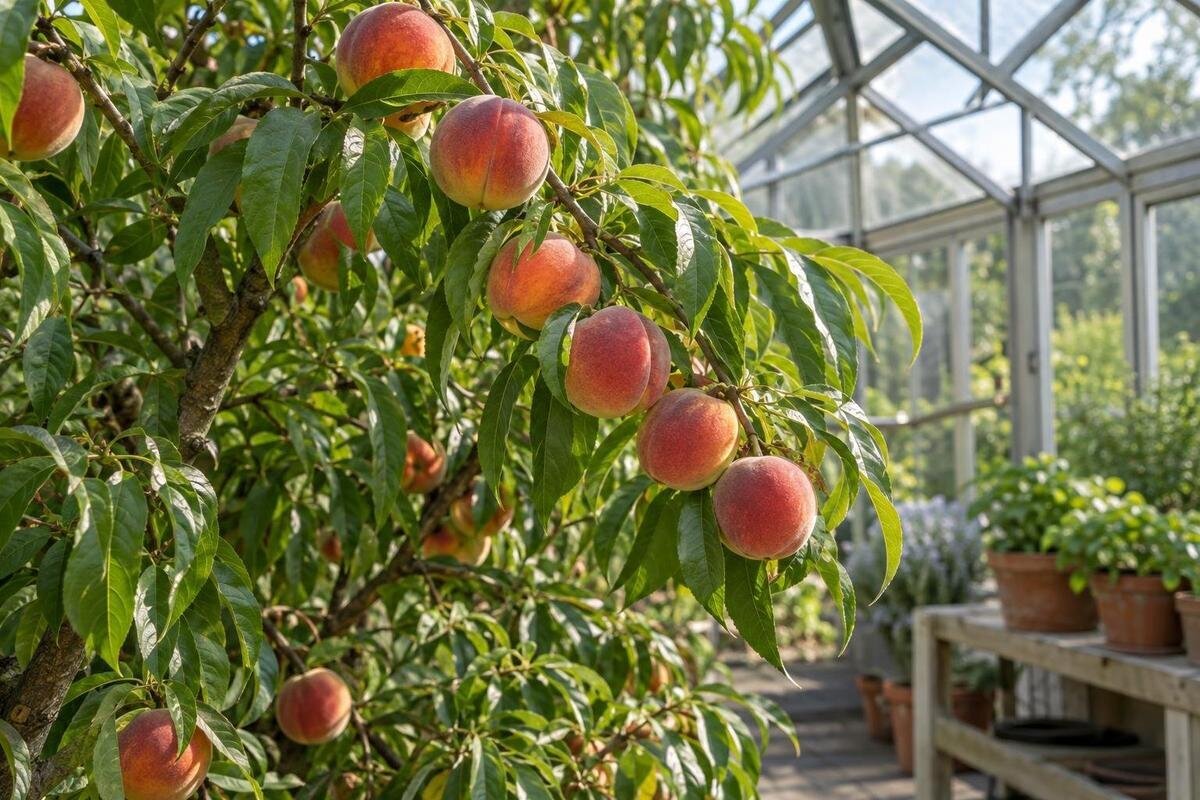
Fruit trees under glass
Peaches and nectarines are perennial trees, so planting one in a greenhouse is a long-term commitment rather than a seasonal experiment. Glass can shelter blossom and fruit from rain and add warmth on sunny days, but it does not make every cultivar suitable for an Irish site. Winter chill, summer ripening, pollination and the space required by a mature canopy all matter. Before planting, decide whether the tree will grow in a border or a pot, how it will be trained, and whether you can maintain it without crowding other crops.

01
Can peaches and nectarines fruit under glass in Ireland?
Peaches and nectarines are forms of the same species and have broadly similar growing requirements; the main visible difference is the nectarine’s smooth skin. A sunny, sheltered greenhouse can reduce exposure to rain and help fruit ripen, especially in a cooler season, but results still depend on light, cultivar and summer weather. A greenhouse warms up in sunshine, yet an unheated structure still follows outdoor seasons and can cool sharply overnight. Treat it as a useful microclimate, not a promise of Mediterranean conditions or a crop every year. It does not replace choosing a variety suited to your site.
In Ireland, the balance between winter cold and summer warmth matters as much as the protection offered by glass. Sites vary in sun, shelter and exposure, and a tree will not overcome inadequate light or a cultivar that ripens too late. Allow for ventilation and room to work around permanent branches. As an initial footprint comparison, the Bloomcabin Prestige Greenhouse is listed in areas from 3.77 to 28.08 m²; those figures help you compare a drawing with the tree’s planned position, not the greenhouse’s climate or clear height.
Choose a cultivar for your site
Buy the named cultivar for its growing traits, not simply for attractive fruit in a photograph. Peaches and nectarines differ in flowering and ripening dates, vigour, fruit quality and winter-chill requirement. Ask a reputable fruit-tree nursery which cultivars have cropped in conditions similar to yours, and request the expected mature size for the specific rootstock as well as the cultivar name. Trees sold under a familiar fruit name can still vary by rootstock or training form. An early-ripening cultivar can be a sensible choice where summer warmth is uncertain, but verify its local harvest window rather than treating ‘early’ as a guarantee.
Chill requirements are cultivar-specific: a tree needs a period of cool winter weather before normal budbreak and flowering, while too little chill can lead to delayed or uneven growth and a poor crop. Ask the nursery what chill measure it uses and whether its advice fits your site and greenhouse conditions; a general figure should not be treated as a promise. The Aluminium Classic Greenhouse is listed in areas from 3.77 to 28.08 m². That helps compare possible footprints, but cultivar chill still needs separate horticultural advice.
02
Decide between a greenhouse border and a pot
An in-ground tree can use a larger root zone than one in a pot, but only where the greenhouse border has suitable soil and drains freely. Persistent waterlogging is a poor match for a stone-fruit tree. Improve the planting area before putting a permanent tree in it, rather than expecting a glass roof to correct unsuitable soil. Check the rootstock’s vigour and ask how it is likely to grow in a confined border. A tree planted directly in the floor is difficult to move if later growth or winter conditions prove unsuitable.
A pot offers flexibility and keeps planting separate from the greenhouse border, but it does not automatically make a full-sized cultivar compact. Rootstock, pruning and available root volume all affect growth, and a pot can dry quickly in warm, ventilated conditions. Plan how you will water and feed the tree, protect its roots and reach it without blocking a path. The pot needs to work for several years, not just at planting. The Aluminium Lean-to Greenhouse is listed from 3.69 to 14.34 m²; compare the available floor area with the pot’s footprint and the space needed to tend the tree, keeping a clear route through the greenhouse.
Plan for the mature canopy and access
Map the tree at its expected mature size before buying it. Ask for the likely height and spread on the specific rootstock and under your intended training system. Then draw the trunk, branches, door swing, paths, vents, benches and the space needed to prune, water and harvest. Leave room to reach the fruiting branches without brushing against them each time you pass. A newly bought young tree takes little room, but its trained framework will occupy space for years and may shade other crops. Keep branches clear of doors and vents that need to open freely.
Do not select a structure from floor area alone: clear height, width, orientation, ventilation and the position of usable walls affect whether a trained tree can fit. Bloomcabin lists the Spacious Greenhouse from 47 to 70 m², a range to consider on a plan; it does not confirm canopy clearance or the growing conditions inside. Compare the exact layout with the dimensions supplied for the tree, and leave room for future growth. If the arrangement leaves no practical route to reach the branches, the floor area will not solve the problem.

03
Train the tree as a fan
Fan training is widely used for peaches and nectarines under glass because it spreads branches across a flat plane, allowing light to reach the canopy and making the shoots easier to inspect and renew. The young tree is guided into a main stem with side branches arranged as a fan against a suitable support. This controls the depth of the canopy, not the tree’s full spread or root growth. Decide where the framework will sit before planting so branches do not end up across a doorway or busy path. Plan the support before the tree is in place; do not assume glazing can carry ties or branch loads. Ask the greenhouse supplier or installer where a support can safely be fixed.
Peaches and nectarines bear mainly on shoots that grew the previous season, so a fan needs replacement growth as older fruiting shoots finish. Pruning is a recurring job, not a one-off shaping cut: indiscriminate shortening can remove wood that would carry the next crop. Learn the sequence for your cultivar and training system, including when to remove spent laterals and retain suitable new shoots. In temperate regions where silver leaf is a concern, spring or summer pruning is generally preferred to wet winter cuts; confirm timing for your tree. The Limited Edition Aluminium Greenhouse is listed in areas from 3.77 to 28.08 m²; verify how a separate fan support could be fixed before settling on a model.
Allow for winter chill and dormancy
A peach or nectarine is deciduous and needs winter dormancy. The relevant chill is a period of cool conditions, not simply one cold night. Different cultivars have different requirements, and an enclosed space may be warmer than outside even when unheated. Too little chill can disrupt leafing and flowering; a warm spell can also bring buds into growth early, leaving blossom more exposed to a later cold snap. Consider the cultivar’s needs alongside the greenhouse’s temperature history rather than assuming the regional climate alone will settle the question.
Do not plan to heat the greenhouse through winter by default. Heating may conflict with the tree’s chill requirement and could bring it into growth too early; whether it is appropriate depends on the cultivar, site and purpose of the structure. If you intend to heat, ask a fruit specialist what conditions suit that tree before changing its winter environment. The T-Shaped Orangery Greenhouse is listed from 16.52 to 30 m², but those floor-area figures are not a winter-temperature rating. Consider any heating plan separately from the structure’s size.
04
Check pollination before the blossom opens
Most peach and nectarine cultivars are self-fertile, so a second tree is not automatically required; confirm this for the named cultivar before planting. Self-fertile does not mean flowers will set fruit under any conditions. Flowers need to open normally, pollen needs to be viable, and conditions during bloom matter. A greenhouse can restrict insect access, especially when doors are closed or weather discourages bee activity. If pollinators are scarce, gently transferring pollen among open flowers with a small, soft brush may help with a small tree, though it cannot compensate for damaged flowers.
Avoid unnecessary warmth that could advance flowering before conditions are suitable. A second cultivar only helps if it is compatible and flowers at the same time, so confirm that their flowering periods overlap rather than assuming any two trees will pollinate each other. Give yourself safe access to inspect open flowers and, if needed, reach them without pulling branches. The Pyramid Greenhouse is listed from 5.53 to 18.9 m²; use the exact layout when planning a working route to the canopy, rather than relying on the total area alone.
Manage ventilation, summer warmth and water
Ventilation matters throughout the growing season, not only on hot days. A closed greenhouse can heat quickly in direct sun, while a crowded canopy with little air movement can stay humid. Opening doors or vents can help exchange air, subject to the weather and the site. Watch conditions around the tree rather than relying only on the outdoor temperature. Give the canopy enough light and avoid letting branches become a dense wall: crowded foliage shades fruiting wood and makes inspection harder. Glass can help warmth build, but it cannot compensate for a dark position or a cloudy summer.
Water the root zone consistently during active growth and while fruit is swelling, adjusting for the soil, pot size, ventilation and weather. A pot can dry much faster than a border, while a poorly drained bed can remain wet; neither should be watered to a fixed schedule without checking it. Avoid persistent saturation and watch leaves and new shoots for signs of stress. Use a feeding plan suited to fruit trees and the growing medium rather than assuming a greenhouse bed has adequate nutrients. The Limited-Edition Aluminium Greenhouse with Storage is listed from 5.52 to 28.08 m²; check the exact growing area and vent arrangement when comparing layouts.

05
Reduce the risk of peach leaf curl
Peach leaf curl is an important risk to understand before planting. The fungus infects young leaves around budbreak in wet spring conditions; distorted, discoloured foliage can weaken the tree and reduce future cropping. A roof that keeps direct rain off during the susceptible period may reduce exposure, but a greenhouse is no guarantee. Moisture can still enter at open sides, and condensation or poor air movement can leave surfaces damp. Ask whether the chosen variety has useful resistance, and remember that healthy-looking blossom does not guarantee healthy leaves later in the season.
Inspect buds, leaves and small fruit regularly for leaf curl, aphids, damage and signs of rot, especially where foliage is dense. A few affected leaves should prompt you to review the tree’s shelter and airflow, not assume the problem is solved by stripping the canopy. Identify the issue before choosing a treatment; a generic spray schedule is no substitute for crop-specific advice. If fruit set is heavy, seek guidance on thinning small fruit for the cultivar and tree strength. Crowded fruit is harder to inspect and manage.
Expect a yearly cycle and a variable harvest
Expect a yearly sequence: the tree rests, flowers, sets fruit, grows new shoots, ripens its crop and needs its training reviewed. Young trees first need to establish a balanced framework; a heavy first crop is not the only measure of progress. Keep notes on budbreak, bloom, fruit set, ripening date, summer conditions and any winter heating. A short record can show whether a tree is settling in or repeatedly flowers poorly or ripens too late for its position. Weather and blossom survival mean the harvest can vary from year to year.
Pick according to the cultivar’s signs of maturity rather than colour alone: skin colour varies, while aroma and a slight give can help indicate readiness, depending on the variety. Handle ripe peaches and nectarines gently because they bruise easily. Fruit on a tree may ripen unevenly, so more than one careful picking can be useful. A clear route beside the canopy makes harvest and maintenance easier. Record when the fruit ripens and which branches crop well, then use those observations alongside your pruning notes to refine expectations for the following season.
Frequently asked questions
Can I grow peaches or nectarines in an unheated greenhouse in Ireland?
Possibly. An unheated greenhouse can provide shelter, but it still cools in winter and cannot guarantee enough summer warmth for every cultivar. Match the tree’s winter-chill requirement and ripening period to your site. An early-ripening variety may suit a cooler summer, but it is not a guarantee; ask a fruit-tree nursery about cultivars that have cropped in comparable conditions.
Do I need two trees to pollinate peach blossom?
Usually not: most peach and nectarine cultivars are self-fertile. Check the named cultivar, as one that needs a partner requires a compatible tree with flowers open at the same time. A closed greenhouse may also limit access for insects, so consider how pollinators can reach the blossom.
Is it better to plant a peach tree in a border or a pot?
Either can work. A greenhouse border gives roots more room but needs well-drained soil and makes the tree difficult to move. A pot keeps it separate from the bed, but can dry quickly and will not necessarily keep a vigorous tree small. Ask about the rootstock’s mature size and plan how you will water the tree.
Will a greenhouse prevent peach leaf curl?
No. Shelter from rain during the susceptible period may reduce exposure, but open sides and damp conditions can still leave the tree at risk. Peach leaf curl affects young leaves around budbreak. Cultivar choice, airflow and correct diagnosis all matter; glass is not a guarantee.
Can a peach or nectarine be fan-trained?
Yes. Fan training spreads branches across a flat support. These trees bear mainly on shoots that grew the previous season, so pruning needs to remove spent fruiting wood while retaining suitable new shoots. Plan the support before planting and confirm pruning timing for your cultivar and training system.
Growing peaches or nectarines under glass means balancing cultivar choice, winter chill, pollination, training and summer ripening over many years. Shelter and extra warmth can help, but neither replaces adequate chill, light and room. Draw the greenhouse layout around the tree at its mature, trained size, with access to ventilate and maintain it. Confirm the cultivar and rootstock before planting; once established, the tree becomes a permanent part of the greenhouse’s growing space.
