
How to Grow Turmeric in a Greenhouse
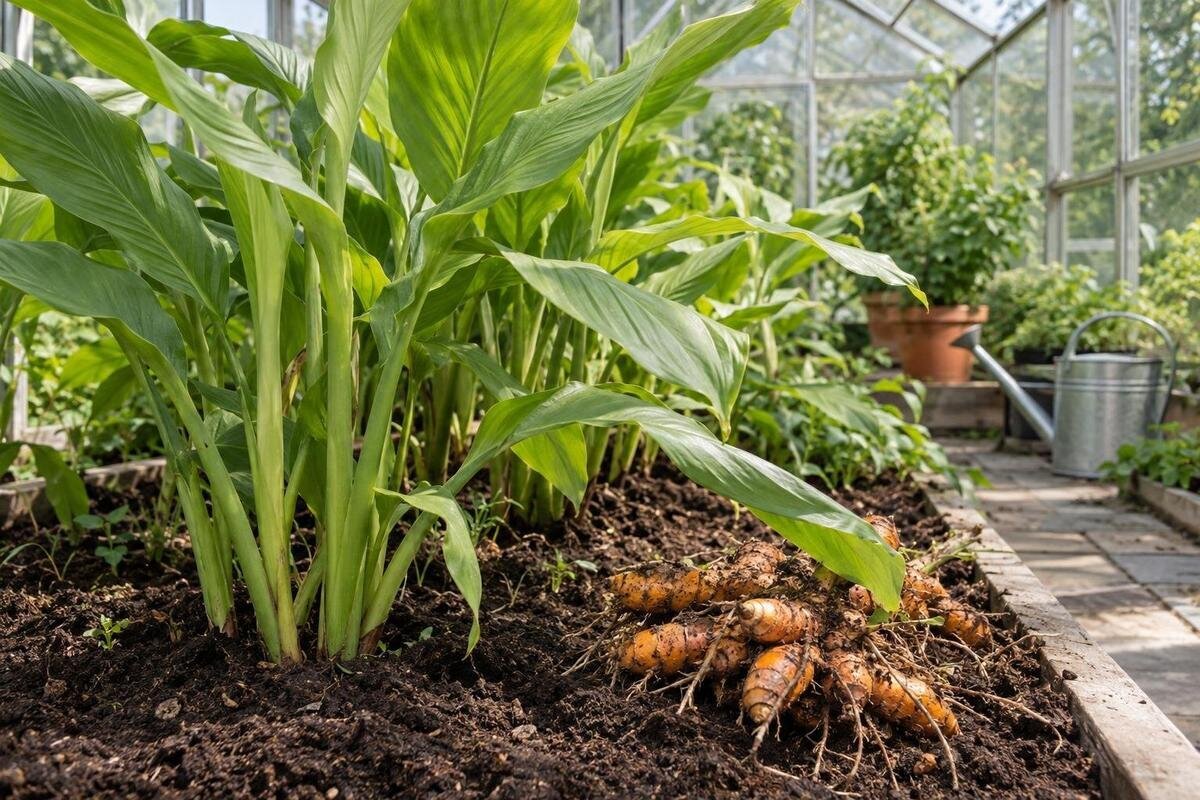
Greenhouse growing
Turmeric is a slow, warmth-loving crop: the part you harvest is a rhizome that needs months of active growth, not a few sunny weeks. In Ireland, an unheated greenhouse offers shelter and useful daytime warmth but cannot guarantee the conditions needed to mature the crop before autumn cools. Container choice, an early start and a realistic heating plan matter more than simply having glass overhead. This guide explains how to plan the crop and when an unheated greenhouse is likely to fall short.

01
Can turmeric grow in an Irish greenhouse?
Turmeric (Curcuma longa) is a tropical perennial grown for its underground rhizomes; it is not a quick summer root crop. In Ireland, a greenhouse can keep rain and wind off the foliage and collect useful sunshine, but an unheated structure cools at night and cannot be assumed to provide tropical conditions. It may support leafy growth during a warm spell, yet there is no reliable route from a short Irish summer to mature rhizomes without a long enough warm period. Duration matters as much as the coldest night: a few bright afternoons will not compensate for weeks when growth stalls, and vigorous foliage alone does not prove that the rhizomes have bulked up.
Treat turmeric as a container crop with a warm indoor or heated-greenhouse phase, not simply as a plant that can be left under glass. One or a few pots occupy their space for most of the season, so the location needs bright light, room around the leaves and a temperature plan before planting. If comparing compact structures, Lean-to Greenhouses are listed in sizes from 3.69 to 14.34 m²; that is an area range, not a promise of warmth or overnight protection. A wall can alter shade and shelter, but it does not supply dependable root warmth. If you try an unheated setup, judge it by rhizome development at harvest, not by the height of the plant in July.
Temperature for active growth
During active growth, aim for air and compost temperatures broadly around 20–30°C. Treat this as a working range rather than a demand for a fixed reading at every moment: brief fluctuations are normal, while long spells in the low teens can slow growth and leave too little time to fill out the rhizome. Frost is not acceptable. Check both the daytime high and overnight low at pot height; a reading beside a heater, in direct sun or next to a vent can mislead. Keep the thermometer shaded from direct sunlight. A glazed house may be hot at midday and cool quickly after dark, so the root zone matters as much as the sunny-day peak.
An unheated greenhouse is shelter, not the heating plan. A propagator can help start rhizomes, but active growth needs a warm room or suitable greenhouse heat for much longer; a brief early burst is not enough. Decide whether you can maintain warmth through cool nights and the late-season growth period before buying planting stock. The Limited Edition Aluminium Greenhouses range is listed from 3.77 to 28.08 m², but area alone says nothing about heat retention or running costs. If fixed electrical work or a new supply is involved, have its suitability assessed by a qualified electrician and follow the heater manufacturer’s instructions.
02
Start rhizomes early, in warmth
Choose a fresh, firm rhizome with visible buds or growth points. A piece sold for cooking may sprout, but it is not a guarantee; avoid pieces that are soft, mouldy or badly shrivelled, or source planting stock from a reputable supplier. If you divide a larger rhizome, make sure each section has a clear bud and enough firm tissue to support a shoot; tiny scraps are more likely to dry out before establishing. Keep the stock clean and label its pot with the planting date. A slow start is easier to assess when you know when it was planted, and a vigorous starting piece gives the crop more time to make leaves.
Begin in a warm indoor place in late winter or early spring—often January to March, depending on the warmth and light available. Lay the rhizome horizontally with the buds facing up and cover it with about 5 cm of free-draining compost. Keep the mix lightly moist, not wet, while it sprouts; once shoots emerge, give it bright light as well as warmth. Sprouting can take several weeks, so avoid digging it up repeatedly to check. A smaller starting pot warms more readily than a large tub; move the plant carefully into its final container once it is established, before roots become crowded. Do not put a new shoot straight into a cold, unheated greenhouse.
Container size and growing medium
Give each planting piece a substantial container because new rhizomes spread sideways beneath the plant. For one starting piece, a pot roughly 30–40 cm across and 25–30 cm deep is a useful planning size; allow more room if several pieces share a tub. Those dimensions are a practical starting point, not a guarantee of yield. A broad tub also makes it easier to check moisture and loosen compost at harvest. If it will sit on the greenhouse floor, compare its footprint and access with the structure; the Pyramid Greenhouse range is listed from 5.53 to 18.9 m², but an area figure does not show whether the tub fits beside the door or staging. Decide where the filled container will stay before planting, as it can be awkward to move.
Choose a sturdy container with open drainage holes and fresh, loose potting compost that holds moisture without becoming dense and waterlogged. Heavy garden soil tends to compact in a pot and makes the wet–dry balance harder to manage. Leave a little space below the rim for watering and a small compost top-up if the mix settles, as well as clear space above the pot for the foliage. Do not crowd several pieces into one small pot to save floor space: each needs room to form new rhizomes. Put the container on a level, accessible surface where excess water can drain freely.

03
Light and space inside the greenhouse
Choose the brightest practical position, ideally with several hours of direct sun, since light supports the long period of leaf growth that feeds the rhizome. In an Irish greenhouse, avoid a corner shaded for much of the day by staging, a wall or taller crops. At the same time, strong summer sun can overheat a greenhouse: during unusually bright, hot spells, ventilate and watch for curled leaves or scorched edges rather than assuming more heat and light are always better. Temporary shade may help during extreme sun, but keep the plant bright enough to grow. Do not put the pot where it will be knocked by the door or exposed to repeated cold draughts when the greenhouse is opened.
Leave clear space around the broad foliage and a route to the pot for watering, inspection and harvest. A neighbouring plant can cast more shade as it grows, even if the turmeric starts in full light, so check the layout through the season. The T-Shaped Orangery Greenhouse listing covers 16.52 to 30 m²; use that area only as an initial comparison, then check the exact dimensions against the tub, walkway and openings you need. A larger footprint allows more possible arrangements, but does not guarantee a brighter position or warmer nights. Keep leaves clear of vents and make sure the pot does not obstruct access to them.
Watering and feeding
During active growth, aim for compost that stays evenly moist, not saturated. Check the top few centimetres and water when that layer is beginning to dry, then let surplus drain. A fixed daily routine is unreliable: a small pot in sunshine may dry quickly, while a large tub in cool, cloudy weather can stay wet. Water thoroughly rather than giving frequent small splashes that wet only the surface. Do not leave the container standing in a full saucer, and do not water simply because the greenhouse air feels dry. In cooler spells, check before topping up because wet compost dries more slowly. If leaves droop, check the mix first; both drought and waterlogged roots can make a plant look stressed.
Once several leaves are growing, use a balanced liquid fertiliser labelled for edible container plants, following its dilution and frequency instructions; check whether the compost already contains feed. More is not a shortcut to larger rhizomes: excess nutrients can build up in a confined pot, while too much nitrogen may favour leafy growth over balanced development. Keep watering and feeding steady while the plant is actively making leaves, then taper feeding as the foliage naturally fades. If growth is weak, check warmth, light and root space before adding feed. Fertiliser cannot make a cold pot productive.
04
Ventilation and pest checks
Ventilation is needed even though turmeric likes warmth. On a bright day, a closed greenhouse can become much hotter than the active-growth range; use vents or doors as designed to release excess heat, then adjust them before the temperature drops after sunset. There is no single opening schedule for every structure, so use a min–max thermometer and respond to readings near the plant. Avoid a stagnant corner with constantly wet foliage: water at compost level where practical, keep fallen leaves off the surface and leave room for air to move between plants. Misting is not a substitute for warm roots and can keep leaves unnecessarily damp.
Check the undersides of leaves and young shoots at least weekly for pests such as aphids and spider mites; warm, sheltered spaces can let small infestations go unnoticed. Clear fallen foliage and weeds from the pot, and identify the cause of leaf damage before treating it, as cold or waterlogged roots can also affect growth. Use a plant-protection product only if its label permits use on edible crops, and follow the directions. When comparing a Bloomcabin Prestige Greenhouse, listed in sizes from 3.77 to 28.08 m², verify the actual vent and door arrangement for the model you are considering; the area range alone does not confirm how well it can be ventilated.
How long turmeric takes to mature
Allow roughly eight to ten months from planting to mature rhizomes in good warmth; cooler conditions can stretch the timetable. That long run is why a late-winter start matters in Ireland. A plant started only when the greenhouse warms naturally may have too little time before autumn nights cool. Keep the container growing through summer rather than harvesting when the first large leaves appear. If the plant is green and making new leaves, the rhizome is still developing; a calendar date is less useful than the plant’s natural dieback. Cold weeks do not count as productive growing time, even if the calendar continues to move.
One workable outline is to sprout indoors in January or February, keep the plant bright and warm through spring, then use the greenhouse once you can maintain suitable temperatures. Continue warmth into autumn if the foliage is still active; in an unheated house, consider moving the pot to a warm, bright indoor space rather than leaving it to stall. Adjust dates to your site, light and heating capacity. Because turmeric occupies a container for months, compare usable floor space before choosing a structure. The Aluminium Greenhouses range is listed from 3.77 to 28.08 m²; check the specific size against the pot, access and the other plants it must accommodate.

05
Harvesting and storing rhizomes
Harvest when the foliage begins to yellow naturally and then dries back, often after eight to ten months of growth. Natural dieback is a more useful cue than a fixed date: if leaves remain healthy and temperatures are warm, give the rhizomes longer. Reduce watering as growth slows, but do not dry out an actively leafy plant abruptly. At harvest, lift the whole root ball carefully and loosen compost by hand to find the rhizomes rather than pulling hard on the stems. A first crop may be modest, especially after a cool or shortened season. Protect the plant from frost rather than waiting for a severe cold snap to force the harvest.
Separate the fresh rhizomes gently and keep a firm section with a visible bud if you want to try another season. Brush off loose compost; if washing rhizomes for cooking, dry them thoroughly. Keep planting stock in a frost-free place that is reasonably dry but not so dry that pieces shrivel badly, checking occasionally for mould or softness. A greenhouse’s built-in storage should not automatically be treated as suitable overwintering space: the Limited-Edition Aluminium Greenhouses with Storage range is listed from 5.52 to 28.08 m², but area does not tell you the storage-bay temperature. Store planting rhizomes somewhere you can monitor and protect them.
Is heating the greenhouse worth it for turmeric?
Before buying or heating a greenhouse for turmeric, compare the crop’s requirements with the structure’s other uses. One plant needs a roomy container and months of warmth; it does not necessarily require heating an entire greenhouse. A larger greenhouse has more air and surface area to keep warm and can require more energy; actual use depends on construction, glazing, air leakage, outdoor weather, ventilation and the target temperature, so an area figure alone cannot provide an honest running-cost estimate. If heat is for turmeric alone, consider whether a smaller warm growing area or indoor propagation and late-season growth is more practical. Decide how long you will need heat, not just what might warm the space on a spring afternoon.
The Spacious Greenhouse listing covers 47 to 70 m², a very different scale from a single turmeric container; that size is easier to justify when it serves other growing or garden uses too. Check exact dimensions, glazing, openings and heating compatibility in the product information, then decide which area you expect to keep warm and for how long. Do not take the word greenhouse or a large footprint as evidence of frost protection. A realistic plan includes temperature monitoring through day and night, an early start, a container roomy enough for rhizomes and a way to carry the plant through the final months.
Frequently asked questions
Can turmeric grow in an unheated Irish greenhouse?
Leaves may grow during a warm summer, but an unheated greenhouse cannot reliably provide warmth for the full eight-to-ten-month growing period. For mature rhizomes, plan on a warm indoor phase or suitable greenhouse heating. Without that, treat the crop as an experiment and expect a smaller or immature harvest.
How warm does turmeric need to be?
During active growth, aim for roughly 20–30°C around the plant and its compost. This is a broad working range, not a requirement for an unchanging reading. Long cool spells, especially nights in the low teens, can slow growth; protect the plant from frost.
When should I plant turmeric rhizomes?
Start in a warm indoor place in late winter, often between January and March depending on your light and heating. Allow several weeks for shoots to appear, then keep the plant warm for roughly eight to ten months before expecting mature rhizomes.
What size pot does turmeric need?
For one planting piece, plan on a pot about 30–40 cm wide and 25–30 cm deep, with drainage holes. Use a larger tub for several pieces. These are practical starting dimensions, not a promise of a particular yield.
When are turmeric rhizomes ready to harvest?
Wait for the leaves to yellow naturally and dry back, usually after a long period of warm growth. If the foliage is still healthy, the rhizomes may still be developing. Lift carefully and keep a firm section with a visible bud if you want to try growing turmeric again.
Turmeric can be a rewarding greenhouse experiment in Ireland, but plan around months of warmth rather than an optimistic summer forecast. Start early in a warm place, give the rhizomes room in a well-drained container and monitor temperatures through the night as well as by day. An unheated greenhouse may keep foliage sheltered, yet it cannot promise a mature harvest. Decide how you will carry the plant through the cool part of the season before planting, and you can judge the likely harvest more realistically.
