
How Insect Mesh Affects Greenhouse Vent Airflow
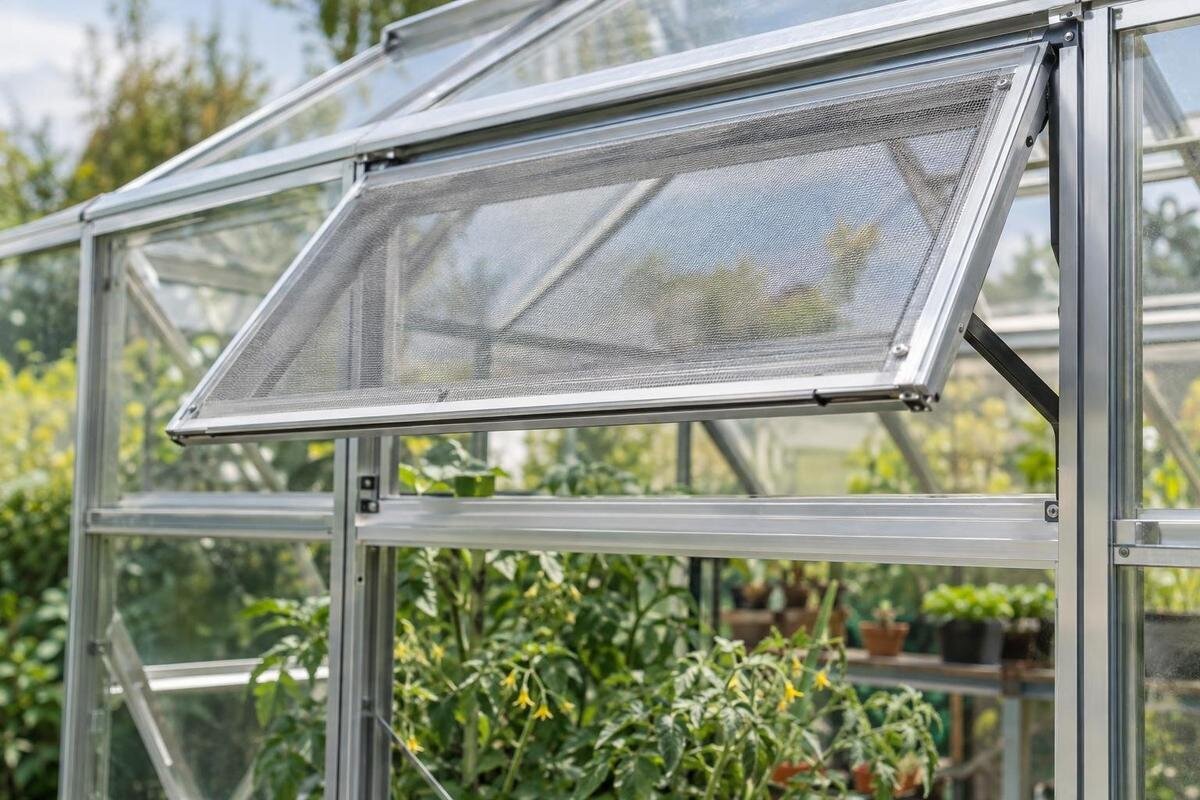
Greenhouse ventilation
Fitting insect mesh over a greenhouse vent can reduce pest entry, but the fine openings that keep insects out also make it harder for air to pass. The right choice depends on the pest and life stage you need to exclude, the mesh's actual opening and open area, and the usable ventilation in your exact greenhouse. Fine mesh over a small or partly obstructed vent can affect airflow differently from more open mesh over a larger opening; neither a product name nor a mesh count answers that by itself. Work from the pest target and the manufacturer's vent information, then monitor how the screened structure behaves.

Before you buy 1
Why insect mesh reduces vent airflow
A vent can be fully open and still provide less airflow after mesh is added. Air has to pass through the spaces between the threads, so the mesh adds resistance. Its support frame, seams, folds or overlap can reduce the clear area further. The vent's outside measurements are therefore not the same as the area left for air to pass through once screened. A tighter weave or thicker thread generally leaves less open space, but two meshes with the same stated count can differ because their thread widths and construction matter. A clean sample and a dirty panel are not equivalent either.
That added resistance does not translate into one fixed percentage of lost airflow. With natural ventilation, the pressure moving air through the greenhouse changes with outside conditions and with the route available through other openings. A fully open vent is not proof that air exchange remains adequate, and a screen fitted to one opening can affect the whole route. When checking a named structure such as the T-Shaped Orangery Greenhouse, use documentation for the exact greenhouse variant and vent configuration, then ask about the screen's airflow resistance. An opener can move a vent as intended, but it cannot remove resistance at the mesh.
Identify the pest before choosing mesh
Start by identifying the insect you want to keep out rather than selecting the finest mesh on the shelf. The useful comparison is between the mesh's clear aperture and the smallest mobile life stage that needs to be stopped, not just the length of a conspicuous adult. Body shape and orientation matter: an insect may approach a gap from an angle, so length alone can be misleading. A broad label such as 'insect proof' is not enough unless the target pest and the mesh specification are clear. Write down the pest name, the affected crop and the life stage you are trying to exclude. If you are seeking identification help, include where and when you noticed it. This gives the adviser and screen supplier a specific question to answer, rather than asking whether a mesh stops insects in general.
If you cannot identify the pest confidently, photograph it or use a suitable monitoring trap and ask a horticultural adviser before buying a very fine screen. A coarser opening may leave a route for the pest; a much finer opening can add resistance without solving a different problem. Mesh can also restrict access for pollinators and beneficial insects, so consider how crops in the greenhouse are pollinated and whether biological-control insects need access. If you are considering the Pyramid Greenhouse, identify the pest you need to exclude before comparing screen options for that model.
Before you buy 2
Read aperture and open area, not mesh count alone
Ask for the clear opening measurement, usually stated in millimetres or micrometres, and check exactly how the supplier defines it. Mesh count tells you how many threads occur over a stated distance, but it does not give the free opening by itself: thread thickness and weave change the space between them. If an open-area figure is available, record it alongside the aperture and material. These measures answer different questions. Aperture helps you assess which insects the screen may exclude; open area describes how much of the panel is available for air to pass through. Keep these details in separate columns when comparing screens, with the units beside each value. If one supplier gives only a mesh count and another gives an aperture, leave the missing measurement unresolved rather than treating the two descriptions as equivalent.
If airflow data are available, ask whether they apply to the mesh alone or to a fitted vent, and what conditions the test used. Do not compare figures from different tests as though they were measured in the same way. If the information is not available, ask the screen and greenhouse suppliers what they can confirm rather than inferring performance from appearance or mesh count. A floor-area range in a listing, such as the one for Limited-Edition Aluminium Greenhouses with Storage, is not a measure of clear vent area. Keep the units and exact model details with your notes so you can compare like with like.
Check the ventilation the greenhouse actually has
Before ordering, record which vents are available, their opening dimensions and the position each reaches in normal use. Separate the clear opening from the outside frame size: hinges, sash edges, louvres and any screen support take up space and can affect how much remains unobstructed. Note which openings are intended to admit air and which are expected to let it leave; air needs a route through the greenhouse, not just one screened panel. A vent that cannot reach its intended position should not be treated as though it were fully available. A simple sketch can make this easier to discuss: label each opening and mark which ones you plan to screen. Include any door used for ventilation, noting whether it will normally be open or closed when the screened vents are operating.
Do not estimate ventilation from floor area alone or assume every opening contributes equally. The number and distribution of vents, the area covered by mesh and the way openings operate all matter; outside conditions can change the result as well. Check the manual for the exact greenhouse version and discuss an unclear layout with the manufacturer. A listing such as Bloomcabin Prestige Greenhouse helps identify the model to ask about, while the instructions for your particular configuration are needed to confirm its vent details.

Before you buy 3
Compare conditions before and after fitting mesh
Record a baseline before fitting mesh: indoor temperature and relative humidity at consistent intervals, alongside outdoor readings, weather conditions, vent positions and whether other equipment was running. Keep the sensor in the same representative growing area and out of direct sunlight; beside a screened vent it may record conditions at that opening rather than elsewhere. Compare similar times of day and, where possible, similar outside conditions. A warm afternoon before fitting and a cool, windy one afterwards cannot isolate the effect of the screen.
After fitting, continue the same notes and look for patterns over several days rather than relying on one reading. If temperatures remain higher or humidity clears more slowly under otherwise comparable conditions, inspect the mesh for blockage and confirm the vent still opens as intended. Note changes to shading, watering or vent settings too, since they can affect a comparison. Keep observations separate from conclusions: record what changed, then note which possible explanations still need checking. If you adjust the vent settings or clean the mesh, date that entry so later readings can be compared with the right arrangement. Where the weather differs substantially, mark the comparison as inconclusive rather than attributing the difference to the screen. The Spacious Greenhouse is listed from 47 to 70 m², but that floor-area range does not tell you how much air a screened vent can pass. Your own consistent records are more useful for judging the fitted arrangement.
Close other routes into the greenhouse
Mesh over vents cannot block insects coming through a door, another unscreened opening or a gap at the edge of the panel. Walk around the greenhouse and note every likely route for the pest you are targeting, including damaged mesh and spaces where a panel meets its frame. If some vents are left unscreened, insects may still use them even when the others are protected. Screening a panel while leaving a gap around its edge can simply move the weak point to the fitting.
Consider access habits as well as the vent: a door left open while you work is an unprotected route, and pests can also arrive on plants or equipment brought inside. The barrier needs to remain intact around the opening, but it must not interfere with moving parts. For a greenhouse such as the Aluminium Classic Greenhouse, check the doors, vents and joins on your own version rather than assuming the model name tells you which entry points are screened. A quick inspection after routine work can help you spot a lifted edge or tear.
Before you buy 4
Match the screen to the exact greenhouse model
An insect screen is useful only if its size and fixing arrangement suit the vent it is meant to cover. Match the greenhouse model, version and vent type against the manufacturer's instructions; do not assume a generic panel fits every opening. Check the clear dimensions and how the vent moves, not just the frame's overall measurement. If your greenhouse has options or has been altered, write down the configuration before asking about a screen. A product family name may not tell you which details apply to your unit.
Ask where the screen sits in relation to the vent and whether that position affects opening travel, hinges, a latch, a seal or an automatic opener. The screen must not foul moving parts or prevent the vent from closing as designed. Follow the model guidance and seek help from the manufacturer if the interaction is unclear. If you are checking a Lean-to Greenhouse, confirm the vent specification for that exact configuration rather than assuming every structure in the category has an identical opening. Do not buy on appearance alone or alter a supplied fitting unless its instructions permit it.
Keep the mesh clean and intact
Mesh condition affects both pest exclusion and airflow. Dust, pollen and other fine debris can cover openings and add resistance; a tear or loose edge can create a route that defeats the barrier. Inspect the full surface and perimeter regularly, including corners and places partly hidden by the frame. Looking across the panel against a light background can help reveal dirt or damage. A photograph taken when the mesh is clean gives you a useful reference for later checks.
Clean the screen only by a method allowed by its instructions; unsuitable tools or cleaners may damage the mesh or frame. If the screen is designed to be removed seasonally, keep track of when it is off and plan how to manage pest entry during that period. Inspect it before putting it back. Before choosing a fitting, consider whether you can reach the whole panel and inspect its edges without altering the arrangement. Ask how any removable parts are refitted, and keep that information with the screen details rather than relying on memory. When replacing a panel for a Limited Edition Aluminium Greenhouse, match the greenhouse version and vent details again rather than assuming an old screen fits every version in the range. A brief maintenance log can help you distinguish a blocked panel from a change in outside conditions.

Before you buy 5
Balance pest exclusion with ventilation
If a mesh fine enough for the target pest appears to restrict airflow too much, do not make its openings coarser until you know whether it would still stop that pest. Ask whether a greater compatible screened area, a different screen construction or another approved opening could retain the required barrier. An additional vent is useful only if its position and fit support the intended airflow. The greenhouse manufacturer or screen supplier can explain what is compatible with the model; a horticultural adviser can help reassess the pest-control approach.
Compare alternatives against the same pest target and ventilation needs. For each option, distinguish what changes: the aperture, the screen construction, the screened area or the openings used. This keeps the discussion focused on the trade-off rather than on a general preference for finer mesh or more vents. Retain the pollination and biological-control requirements identified earlier when assessing a different arrangement; a proposed change should not leave those needs out of the comparison. Combining a suitable screen with routine monitoring and attention to incoming plants and other entry routes can avoid relying on one barrier alone. The aim is not to use the finest mesh available, but to choose an opening that addresses a named pest and a screened vent arrangement that can be maintained in everyday use.
Comparing screens before you buy
Compare screen options using the same set of details: the target insect and life stage, clear aperture, open area, available airflow information and fit for your exact vent. Separate confirmed measurements from unanswered questions. A description such as 'fine insect mesh' cannot fill a missing aperture measurement, and a panel that physically covers an opening is not necessarily a suitable ventilation choice. Where suppliers provide airflow figures, check whether the test conditions and fitted arrangements are comparable before using them to rank products. Ask about any gaps in the information that would affect your choice. If two screens appear similar, explain your greenhouse configuration and ask what distinguishes their suitability for that vent, rather than choosing solely by the product description.
Check what the greenhouse instructions permit and how you will inspect and clean the fitted mesh. Decide what readings you will record before and after fitting so you can compare the same conditions rather than relying on a single observation. Keep the model reference, vent details and screen measurements together for future checks or replacement. A screen that is straightforward to maintain can be a more workable option than one that is difficult to keep clear, provided its aperture still suits the pest you set out to exclude.
Frequently asked questions
Does finer mesh always provide better pest protection?
No. A finer mesh may stop smaller insects if its clear aperture suits the pest and the life stage you need to exclude. It usually leaves less open area for air and may also keep out pollinators or beneficial insects. Choose for an identified pest, not simply for the finest mesh available.
How much airflow will insect mesh reduce?
There is no single figure that applies to every greenhouse. The result depends on the mesh construction and open area, the size of the screened vent, its position, other openings and the conditions driving air movement. Ask for data on the specific screen and compare readings in your own greenhouse.
Can I choose mesh by its mesh count?
Mesh count alone does not tell you the clear opening. Thread thickness and weave affect the gap between threads, so ask for the aperture measurement and, if available, the open-area figure. Compare the aperture with the smallest relevant life stage of the pest you want to exclude.
Should every greenhouse vent be screened?
That depends on the entry routes you need to block and the ventilation available in your greenhouse. An unscreened vent can remain a route for insects, while screening every opening can add resistance. Map all likely entry points and check which openings can be screened without compromising the intended ventilation.
Can insect mesh be used with an automatic vent opener?
Only if the screen arrangement is compatible with the exact greenhouse and opener. Check the model instructions and confirm that the screen will not obstruct the vent's movement, opening or closing. Ask the greenhouse manufacturer if the fitting or position is unclear; a generic screen is not proof of compatibility.
A suitable screen is one whose aperture addresses the pest you have identified and whose fitted, maintained vent still supports the greenhouse's ventilation needs. Confirm compatibility with the exact model, then use consistent records and regular inspections to see how the arrangement performs as conditions and mesh cleanliness change. If the pest barrier and airflow cannot be reconciled, revisit compatible ventilation options or the pest-control approach rather than assuming finer mesh is automatically better.
