
Insulated Greenhouse or Single-Glazed Greenhouse?
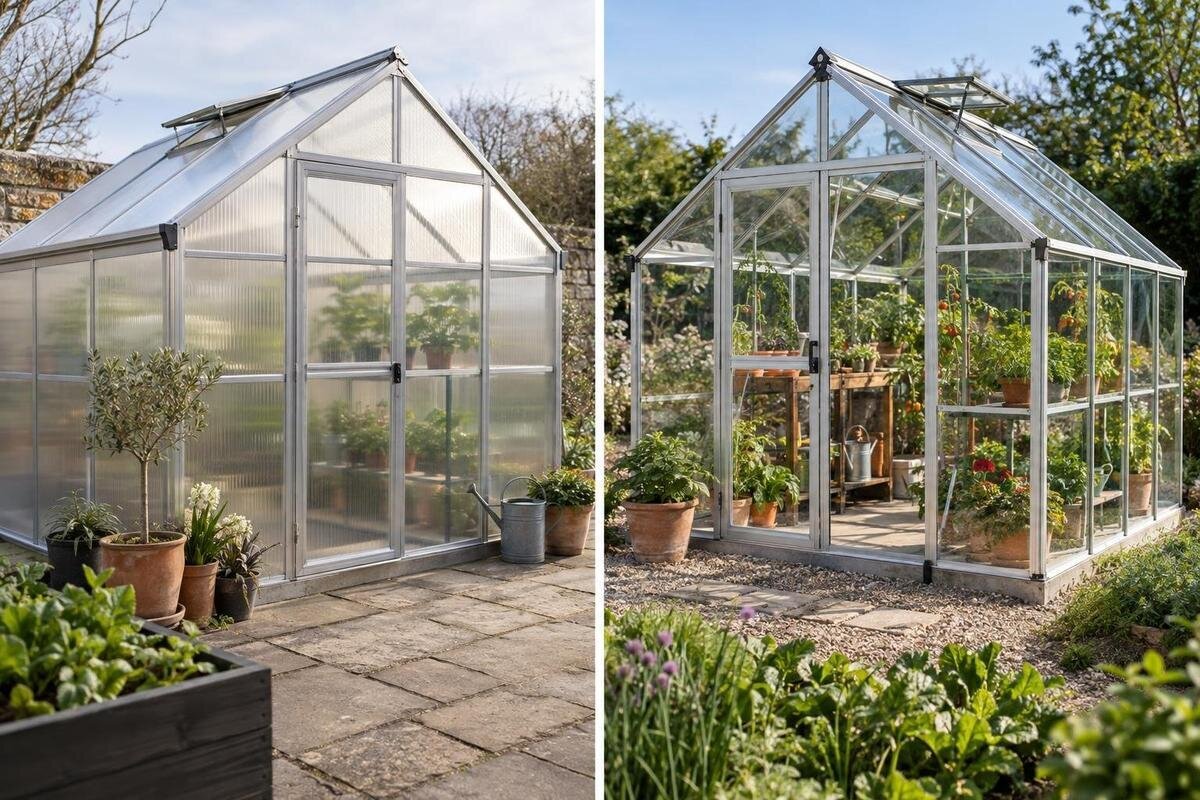
Greenhouse glazing guide
Choosing between an insulated and a single-glazed greenhouse is chiefly a question of the growing conditions you need and how the complete structure is built. A glazing label says little about its frame, doors, vents or base, and “insulated” can describe several different constructions. The comparison below separates the panel from whole-building heat loss, then considers light, ventilation, site and running costs so you can assess the exact design rather than rely on a label.

What “insulated” and “single-glazed” mean
Single-glazed generally means one layer of glass. “Insulated greenhouse” is a broader label: it might refer to two panes with a cavity between them, multiwall plastic panels, insulated opaque sections, or a combination. Those constructions are not interchangeable. Material, number of layers, panel depth, cavity, coatings and seals affect heat transfer, light and how each panel sits in its frame. Ask what is fitted in the roof and each wall, and whether the door, vents and fixed panels use the same build-up. The exact model, size and selected configuration need to be identified.
Greenhouse glazing serves plants as well as the building: light transmission, panel layout, support and integration with openings all matter. A domestic window rating should not be carried over unless the quoted figure covers an equivalent assembly and test conditions. The catalogue identifies a Limited Edition Aluminium Greenhouse, but its name alone does not state the chosen glazing. If alternatives are offered, ask for the written specification and a drawing showing where each build-up is fitted. Also check whether a thermal figure applies to the centre of the pane or to the complete installed greenhouse; those are different boundaries.
Compare the complete greenhouse envelope
Heat leaves through more than the glazing. Roof and side panels, frames, glazing bars, opening vents, doors, seals, corners and the junction with the base all contribute; gaps can also let warm air escape. With other details equal, an insulated panel usually reduces heat transfer through that panel compared with one layer. In a complete greenhouse, however, that advantage may be limited by conductive frame sections or poorly fitting openings. Look for continuity at the ridge, gables, door threshold and lower edge rather than judging the building by its best-performing panel alone.
For a fair comparison, match the footprint, roof shape, height, frame, base, door and ventilation area as closely as possible. Ask for a section drawing and any whole-assembly performance figure, including what components and conditions it covers; a centre-of-glass number is not a whole-building result. A catalogue entry such as Aluminium Classic Greenhouse identifies a model, but does not say whether its frame profiles have a thermal break or how the joints seal. Confirm those details for the selected configuration and compare them with the alternative on the same basis.
Temperature requirements for your plants
Begin with the plants and the way you intend to use the space. A greenhouse for hardening plants, extending the outdoor growing season or sheltering hardy pots has different requirements from one intended for warm-loving crops or a temperature-sensitive collection during cold periods. The crop calendar matters too: early propagation, summer production and overwintering can place different demands on the enclosure. Neither “insulated” nor “single-glazed” tells you what temperature a plant will experience; each describes only part of the system. Use reliable growing guidance to establish the conditions your chosen plants need. Make a month-by-month growing plan, distinguishing plants that will occupy the greenhouse throughout the year from those that will only spend a few weeks there. If several crops share the space, identify which has the most demanding temperature requirement and when it applies. This helps you avoid choosing the whole structure around a use you are unlikely to make of it.
If you must maintain a particular overnight minimum, write it down alongside the periods when it matters and how much variation the plants can tolerate. In an existing greenhouse, a min/max thermometer near the plants over representative cold and mild spells is more useful than a sunny afternoon reading; note outdoor conditions as well. Readings at bench and floor level can differ, so consider where plants will actually sit. Keep the readings with your growing notes, including whether heating was running and vents were open, so that you can interpret them in context. Do not treat one mild week as evidence of conditions throughout the growing season. For a new structure, decide whether it will be unheated, heated occasionally or kept within a controlled range. Separate essential temperature requirements from preferences: protecting a particular collection and simply wanting a warmer place to pot up plants are different reasons for choosing insulation. That distinction changes how much insulation is useful.
Seasonal use and heating demand
An unheated greenhouse does not create heat overnight. Sunshine can warm the air and surfaces during the day, while heat escapes after the sun goes down. Glazing, frame, air leakage, wind exposure and cloud all affect the temperature swing. Insulation slows one route of heat loss, so a well-specified insulated enclosure can cool more slowly than a comparable single-glazed one. It cannot guarantee frost-free conditions or a fixed night temperature. Soil, water containers and other thermal mass may delay a change by storing daytime heat, but they do not replace a suitable envelope or heating when a strict minimum is required.
Where heating is planned, compare what may be needed to hold the target and for how many hours, rather than relying on the word “insulated”. Demand depends on the chosen area, exposed surface, gaps, indoor target, outdoor conditions and heating controls; glazing alone cannot provide a reliable bill estimate. Ask for an estimate based on the actual configuration, and have heating equipment assessed by a suitably qualified professional. Scale matters when comparing designs: Bloomcabin lists the Spacious Greenhouse in a 47–70 m² range, but that area range is not a heating-performance specification.

Light, condensation and ventilation
More layers do not automatically make a greenhouse better for every crop. The material and surfaces affect how much daylight reaches the plants, while a multiwall panel may distribute light differently from a clear pane. Frame bars, coatings, dirt and the proportion of the roof and walls covered by glazing also influence the light inside. Ask for light-transmission information for the exact panel and compare figures stated on the same basis. Avoid assuming that all insulated panels are too dim or that every single pane gives more usable light: the result depends on the material and configuration. Consider that information alongside your crop calendar and the shade already identified on the site. A panel comparison should address the months when you intend to grow, rather than judging the greenhouse only by its appearance on a bright summer day. If roof and wall panels differ, keep their light-transmission information separate instead of treating one figure as representative of all the glazing.
Ventilation remains important for controlling temperature and humidity with either glazing choice. Watering and plant growth add moisture; when humid air meets a cool surface, condensation can form. Insulation may change the temperature of parts of the inside surface, but it does not remove moisture, and frames or junctions can still be cooler. Check how roof and side ventilation is provided and how it can be used during warm spells and damp conditions. Opening the vents exchanges air and may release heat, so the ventilation plan needs to suit both the plants and any heating target.
Frames, doors and the base
Frames and junctions can act as thermal bridges: heat travels through a more conductive part of the structure instead of only through the glazing. The profile, glazing bar, fasteners and perimeter around doors all affect the result. If the frame is metal, ask whether it is a continuous profile or includes a thermal break, and how the glazing edge is sealed; do not infer insulation from the material or finish. Request a frame cross-section as well as the pane details. This matters especially when a performance claim refers only to the centre of a panel.
Check the door, vents, seals and the point where the greenhouse meets its base or floor. These details affect draughts, water entry, access and the continuity of the enclosure. The Bloomcabin Prestige Greenhouse with Metal Base has “metal base” in its name; that does not establish what sits beneath it or whether the base-to-floor junction is insulated. Ask for the relevant drawing and clarify whether the quoted build-up includes the base, floor or any separate foundation. Make sure both designs have the same threshold and door arrangement before comparing them.
How the site affects greenhouse conditions
The site changes the conditions around the greenhouse. Shade from buildings and trees reduces solar gain; exposure can increase wind-driven heat loss; a sheltered spot may have different light and airflow from an open one. Consider how the sun moves across the site during the seasons, where shade falls when you expect to grow, and whether nearby walls block ventilation. An insulated structure can still overheat in strong sun, while a single-glazed one in shade may remain cool. Neither orientation nor glazing is a substitute for observing the site and planning ventilation.
For a lean-to, treat the adjoining building as a separate boundary until the design shows otherwise. A wall is not automatically an insulated greenhouse wall: its construction, temperature, openings and junctions determine whether it forms part of the growing enclosure. The Aluminium Lean-to Greenhouse is a named model category, but its title alone does not show how a particular wall connection is made. Ask for a section through the junction, including the roof and seals, and confirm that any connection is suitable for the building with the relevant qualified installer.
Shape and exposed area
Two greenhouses with the same floor area can have different roof area, wall height, volume and perimeter. A tall ridge, steep roof, full-height sides or multiple ends change the amount of glazing and frame relative to the floor space. That affects how much of the structure is exposed to outside conditions, so floor area alone is not a sound basis for comparing heat retention. Shape also influences usable space near the sides and where plants can sit; keep those practical differences in view rather than selecting by a headline area.
Compare the plan, elevations and cross-sections for the exact versions under consideration. Note the glazed area, solid sections, roof and wall proportions, door and vent positions, frame layout and base, then ask which parts of the envelope any performance information includes. A T-Shaped Orangery Greenhouse shows why a floor-plan outline is only one part of the comparison; its name does not state its glazing specification or heat loss. You do not need to calculate heat flow from drawings yourself, but they let a supplier or qualified designer compare the same scale and components.

Running costs, maintenance and future changes
For the same indoor and outdoor conditions, insulation can reduce heat loss through the areas it covers, so a heated insulated greenhouse may need less heat input than a comparable single-glazed one. The amount cannot be predicted from the word “insulated”: weather, target temperature, heating hours, air leakage, thermal bridges and equipment efficiency all matter. Compare quotations for the same size and construction, and ask for any energy estimate to state its assumptions. Keep the purchase price separate from estimated running costs, then consider both over the period you expect to use the greenhouse. An estimate for continuous winter heating will not answer the same question as one for occasional cold-night protection. Ask for the comparison to reflect your intended pattern of use, and keep that pattern unchanged between options. If it is still undecided, consider the alternatives separately rather than combining them into a single apparent saving. If the greenhouse will remain unheated, the likely benefit is a slower temperature change rather than a particular saving.
Check maintenance and replacement before choosing a panel system. Ask how the glazing is cleaned, secured and replaced, whether matching panels and seals can be obtained later, and how vents and doors are maintained. A multi-layer panel is not automatically easier or harder to repair than glass; the answer depends on its construction and fixing method. If you hope to upgrade single glazing later, confirm that the frame, retainers, panel thickness and openings can accept the proposed build-up. For a model such as the Pyramid Greenhouse, ask for the exact panel schedule and replacement guidance rather than assuming those details from its shape.
Build a like-for-like specification
Put the alternatives side by side using the same footprint and intended layout. Record the glazing material and build-up in each roof, wall, door and vent; frame and thermal-break details; seals; base and floor boundary; opening area; light-transmission information; and any whole-assembly thermal figure, including its test method and conditions. Mark information as confirmed, not stated or different between configurations. This makes gaps in a sales description visible and prevents a quoted pane performance from being mistaken for the greenhouse as a whole. Ask for drawings that match the exact option and size.
Then check that the specification answers your growing requirements: the required overnight minimum, season of use, whether heating is planned, and how ventilation will manage heat and moisture. If an option includes a named storage section, such as the Limited-Edition Aluminium Greenhouse with Built-In Storage, ask for a drawing showing whether that area shares the growing enclosure or is separate; the name alone does not establish the thermal boundary. Identify the growing and storage areas on the plan so that the quoted overall footprint is not confused with the space available for plants. If the areas are separated, include the dividing wall and any connecting doorway in the comparison. Compare unknowns as carefully as confirmed details. An unanswered question about a door, vent or base may matter more than a headline glazing label.
Frequently asked questions
Is double glazing the same as an insulated greenhouse?
No. Double glazing is one possible build-up; multiwall panels or insulated opaque sections are different options. The word “insulated” is not precise without the material, layer arrangement and parts of the greenhouse being specified. Compare the complete enclosure rather than relying on the glazing label.
Will an insulated greenhouse stay warm overnight without heating?
Not necessarily. Insulation can slow heat loss, but it does not create heat or guarantee a particular minimum temperature. Sunlight, outside conditions, air gaps, the frame and any stored daytime heat all affect overnight conditions. If plants need a firm minimum, plan for that requirement rather than assuming the glazing will provide it.
Is single glazing suitable for growing vegetables?
It can suit seasonal growing, but the answer depends on the crops and when you want to grow them. A single-glazed greenhouse provides shelter without promising stable warmth. Check each crop’s growing requirements and consider whether you need winter use, early propagation or protection from cold nights before choosing.
Does insulated glazing reduce the light reaching plants?
It can change how much light passes through and how that light is distributed, but the result depends on the panel material, coatings and construction. Single glazing is not automatically brighter in practice, as frames and dirt also matter. Ask for light-transmission information for the exact panel and compare figures on the same basis.
Can I replace single glazing with insulated panels later?
Do not assume the panels will fit. A different build-up can change thickness, weight and the way it sits in the frame, and it may affect doors or vents. Ask the manufacturer or a suitably qualified installer to confirm compatibility for the exact greenhouse before planning an upgrade.
The better choice follows from how you plan to grow. If plants need shelter and a longer outdoor season, a single-glazed greenhouse may meet the brief without promising stable warmth. If you need to maintain a minimum temperature, compare an insulated whole-building assembly across the roof, sides, frame, doors and base, then include ventilation and heating in the plan. A precise configuration and realistic temperature target make a more reliable decision than either label on its own.
