
Growing Kohlrabi Under Glass in Ireland
Greenhouse growing guide
Kohlrabi can make good use of a greenhouse bed at the start or end of the growing season, when Irish weather is cool and outdoor soil may be wet. It is not a crop that needs a hot house: the challenge is to time sowings around cold nights and warm sunny spells, then give each swelling stem room. Small, repeated batches and an early harvest are more reliable than a crowded bed left to grow on.

Kohlrabi suits the cooler part of the greenhouse year
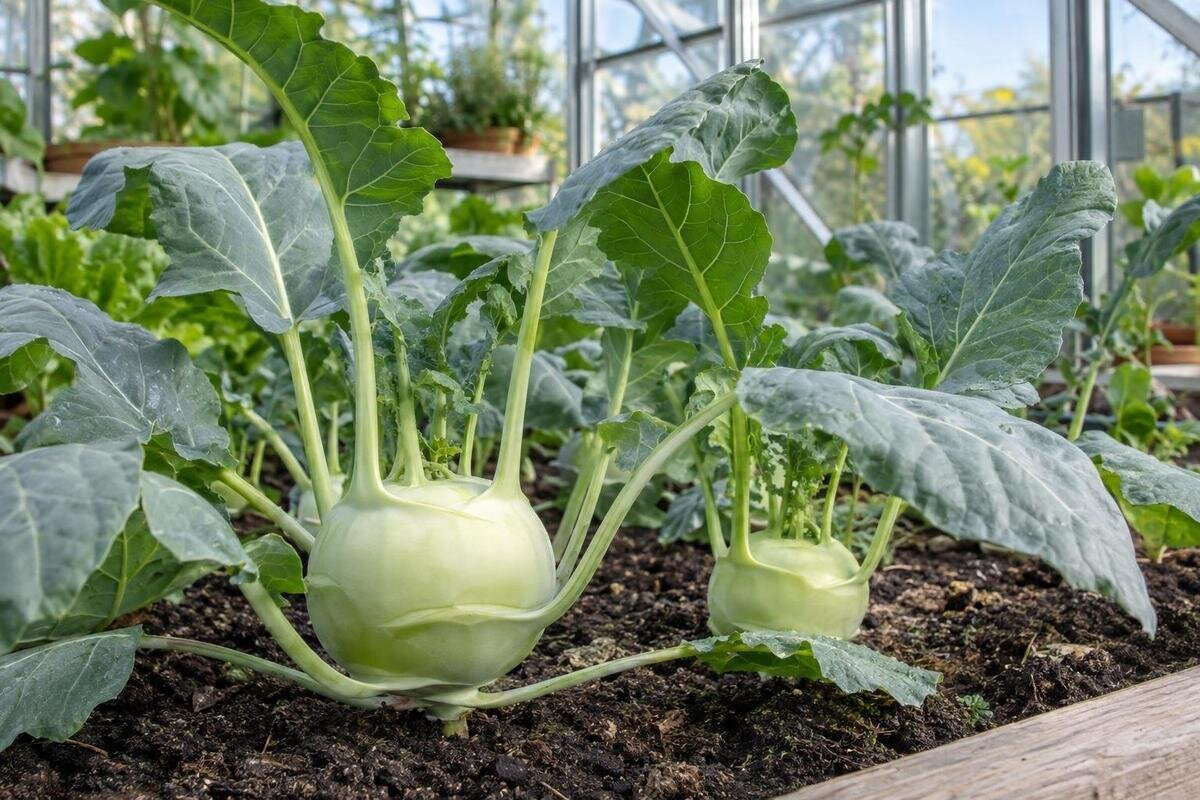
Kohlrabi is a brassica, but the part harvested is a swollen stem, not a root or leafy head. The globe forms just above soil level, with leaf stalks around it, so keep its base visible and leave room for the leaves. Unlike a root vegetable, it is not meant to swell underground; do not mound soil over it. Each plant produces one globe to harvest, rather than a cluster, so spacing must allow that globe room to develop. Healthy leaves support growth, so avoid stripping them back. In suitable cool conditions the crop is relatively quick, although variety, light and temperature all affect maturity.
Glass helps shelter an early or late crop from wind and persistent rain, and gives seedlings a protected place to establish. It does not automatically supply warmth. An unheated greenhouse follows outdoor temperatures: cold nights slow germination and growth, while a bright day can make it surprisingly warm. In Ireland, an outdoor bed may suit a main-season crop; under glass is most useful for bringing it forward or extending it into autumn. The Spacious Greenhouse listing gives an area range of 47–70 m²; even at that scale, kohlrabi needs a cool growing window and only the bed space allotted to it. A large building is no reason to heat or reserve a whole house for this crop.
Sowing dates for an Irish greenhouse
For an early crop, sow under cover in February or March only if you can provide enough warmth for germination and good light afterwards. If the greenhouse is unheated and nights remain cold, sow later in March or April, or raise modules in a brighter indoor spot before moving them under glass. An early date is not useful if seedlings sit cold and stalled for weeks; prolonged chilling can check growth and may encourage bolting. For an autumn crop, sow in July or August, then grow the plants on as summer heat eases. These are broad guide dates, not a fixed national timetable: site, exposure, cultivar and the season's weather all affect development.
Use the variety's stated time to maturity to work backwards from the harvest you want, allowing extra time if the greenhouse is cool or light is low. Sowing early does not mean a spring variety will grow well through winter; low light can slow the development of its swollen stem. At the other end of the year, a late sowing needs enough remaining daylight to reach harvest size before growth slows. A short-maturing cultivar is a better choice for a late sowing, but check the packet against your conditions. In a warm spell, pause rather than starting another batch that will spend its early life in a hot, dry house. Keep notes of actual sowing and harvest dates for your site.
Sow in modules for manageable planting
Sow in clean modules or small pots filled with a fine, free-draining seed mix, covering seed to about 1 cm; follow the packet if it gives a different depth. Modules let you raise only the number of plants the bed can take and avoid thinning crowded seedlings later. Moisten the mix before sowing and keep it damp, not saturated. In suitable warmth, emergence is often within a week or two, but a cold greenhouse can delay it. Direct sowing in a prepared bed is also possible when the soil is workable: make a shallow drill, sow thinly and thin promptly. Label the variety and date, especially if you grow more than one batch.
After emergence, give seedlings the brightest available position and avoid letting them become tall, weak or root-bound. Thin to one strong plant per cell if more than one germinates; transplant while compact, with several true leaves, before roots coil around the module. Acclimatise plants raised indoors gradually to greenhouse conditions, particularly if nights are cold. Handle them by the rootball and keep the stem undamaged; set each at the level it grew in its module rather than burying the stem base. When comparing the greenhouse with built-in storage, identify where seed trays would stand and where plants would grow on. Keep those spaces separate in your plan so a new sowing does not displace seedlings that still need good light.
Give each swelling stem enough room
Prepare the bed before seedlings are ready, so their roots are not left exposed while you make room. For most cultivars, allow about 15–20 cm between plants and 25–30 cm between rows; use 20–25 cm between plants for varieties that grow larger, and follow packet advice where it differs. Plant in straight or staggered rows, preserving the recommended plant and row spacing in either arrangement. If you are using a broad bed, mark planting positions before lifting seedlings from their modules. A staggered pattern can make better use of the space, but it does not justify crowding. Work across the bed in order so you can check the gaps before watering plants in.
Close planting can look productive at first, but leaves quickly overlap, air moves less freely and plants compete for water. The result can be small, uneven stems that are awkward to harvest. Allow enough room to weed and reach each plant without stepping on the bed, and include a path in your greenhouse sketch. The Bloomcabin Prestige Greenhouse listing gives a range of 3.77–28.08 m²; that figure alone is not planted bed area, so work out row spacing and access separately. If you want baby stems, use closer spacing only where the cultivar and harvest plan support it.

Stagger sowings to spread the harvest
Kohlrabi is a one-off harvest per plant, so a single large sowing tends to mature in a short wave. For household use, raise a modest batch first, then another two or three weeks later if the first is growing well; a third can follow while cool conditions remain. Many cultivars take roughly eight to twelve weeks from sowing in favourable conditions, and a cold, dim spell can lengthen that, so batches overlap rather than arriving exactly on schedule. Sow only as many as you can use: a long row may all reach size within a few days, even if individual plants vary slightly. A small first batch also shows how quickly kohlrabi grows in your greenhouse.
Record when the first globe reaches harvest size and how many plants you actually use; that gives a better batch size next time than sowing a full packet. A succession can fill a gap after a short crop, provided the new plants will not sit beneath taller, long-lived crops that block light. If you are considering the T-Shaped Orangery Greenhouse, map each kohlrabi batch as a defined strip within the shared growing space. Mark when each strip is expected to become free, rather than counting every empty patch as available for another sowing. Leave room to remove the finished crop and prepare the bed for what follows.
Keep the bed fertile and evenly moist
Kohlrabi grows well in workable soil that drains freely but holds moisture. Remove weeds, loosen any compacted bed and mix in mature garden compost where organic matter is low; a lumpy surface can leave small rootballs in dry pockets. Do not tread the bed after preparation, as compacted soil is harder to water evenly and roots have less room to establish. A greenhouse bed receives no direct rainfall, so do not assume it is damp because the outdoor ground is. At the same time, water should not stand around the crown; check drainage before sowing rather than trying to correct persistent waterlogging later.
Water thoroughly when the surface begins to dry, then check again as the swollen stems start to form. Long dry spells slow growth and can leave stems coarse; a sudden drenching after plants have dried is a poor substitute for steady moisture. Direct water to the soil, and keep the base of each plant visible so you can spot progress or damage. A light mulch can help the surface hold moisture, but keep it clear of the stem. Balanced bed preparation is more useful than repeated feeding to compensate for uneven watering. When looking at the Aluminium Classic Greenhouse, plan how you would carry water or bring a hose to the crop. You should be able to reach the whole bed without dragging equipment through the leaves.
Ventilate on sunny days and plan for cold nights
Kohlrabi needs a cool growing period, and glass can trap heat quickly when the sun appears. Open vents or doors when conditions allow and check a thermometer near plant height, rather than relying on the outdoor forecast alone. Hot, still air and drying compost put extra stress on the crop; ventilation helps moderate the daytime rise, but it cannot guarantee a stable temperature. If the greenhouse is routinely too hot, shift sowing to a cooler part of the year rather than assuming extra water will solve every problem. Ventilate before plants show signs of stress, and keep clutter from blocking air around their leaves.
At the other end of the range, an unheated greenhouse cannot promise frost-free nights. Cold slows germination and growth, and severe spells can damage young plants. For an early sowing, start seedlings only where they can establish without prolonged chilling; for late sowings, leave enough daylight for stems to swell. If you are considering the Aluminium Lean-to Greenhouse, assess the proposed position rather than assuming the adjoining wall will provide suitable growing temperatures. Note surrounding shade and check the ventilation available in the actual structure before settling the crop calendar. These details matter more to sowing dates than the model name.
Rotate brassica beds and inspect for pests
Kohlrabi shares pests and diseases with cabbage, kale, broccoli, Brussels sprouts and other brassicas. Rotate the family around greenhouse beds rather than growing brassicas in the same soil year after year; rotation over several seasons helps reduce repeated pressure from soil-borne problems such as clubroot. If there is only one greenhouse bed, keep a record of what grew there and consider a suitable container with fresh growing medium while the bed carries another plant family. Distorted or swollen roots can be a sign of clubroot; avoid moving suspect soil into a clean bed. Remove old brassica roots and leaves after harvest.
Inspect leaf undersides, growing points and soil for cabbage white eggs or caterpillars, aphids, flea-beetle holes and slugs. Root damage or poor growth can also point to pests below ground, so investigate promptly rather than assuming more fertiliser is needed. Open doors and vents let flying insects in; insect mesh can help where it can be fitted without pressing on the plants. Remove visible pests and keep weeds and brassica debris down. When comparing the Limited Edition greenhouse range, check how you would reach both sides of the crop for inspection and whether mesh could be fitted to the relevant openings. Do not assume that a particular greenhouse model includes insect protection.

Harvest before the stems become oversized
Start checking the swollen stem as soon as it forms a distinct globe, rather than waiting for the printed number of days to pass. For many cultivars, about 5–8 cm in diameter is a useful tender harvest range; varieties bred for larger stems may have a different target, so follow the packet. The globe should feel firm and still be relatively small. Leaving it too long, especially in warm or dry conditions, increases the chance of coarse, fibrous texture. Cooler weather can delay sizing, so judge each plant by its actual development rather than assuming the whole row is ready together. The Royal Horticultural Society also publishes general kohlrabi-growing guidance; use it alongside the packet rather than treating one diameter as universal.
Each plant produces one globe, so harvest that whole plant when it reaches the right size. Cut through the base with a clean knife, just above soil level, then remove the leaf stalks if they make the stem awkward to handle. Pick individual plants from the row and leave smaller neighbours to keep swelling; do not clear the whole batch because the first one is ready. Check the crop more often during a warm spell, when growth can accelerate. A succession is useful here: it gives later plants time to mature after the first group is gone.
Fit kohlrabi around the rest of the greenhouse
Give kohlrabi the brightest suitable part of the bed, but keep it away from heat sources and areas that overheat on sunny days. Avoid planting it beneath tall tomatoes or other long-lived crops once they shade its leaves; healthy, well-lit leaves support the developing swollen stem. Kohlrabi can occupy a bed before or after a longer crop, but only if the soil is available at the right time and the sequence respects brassica rotation. Write down both the crop coming in and the one that has to leave, so seedlings do not remain in modules because the greenhouse bed is still occupied.
Before deciding how many plants to sow, draw the beds, paths, doors and any fixed bench or storage area, then mark plant centres at your chosen spacing. The Pyramid Greenhouse listing gives an area range of 5.53–18.9 m²; compare a listed area with the actual ground available for beds, because routes and equipment take space too. If you want only a few stems, a short protected row or a suitably sized container can be enough. Keep the remaining space for crops with different seasonal needs instead of sowing more kohlrabi simply to fill the house.
Frequently asked questions
When should I sow kohlrabi in an Irish greenhouse?
Treat February or March as an early protected sowing only if seeds can germinate in adequate warmth and seedlings get good light. In a cold, unheated greenhouse, March or April may be more suitable. For an autumn crop, sow in July or August and allow for slower growth as daylight shortens.
How far apart should greenhouse kohlrabi be planted?
Allow about 15–20 cm between most plants and 25–30 cm between rows. Larger cultivars may need 20–25 cm between plants. Follow the seed packet if it recommends different spacing, and include paths when measuring the space available for a greenhouse bed.
Can kohlrabi grow in an unheated greenhouse?
Yes, during suitable spring and autumn growing periods. An unheated greenhouse does not stay reliably warm at night, and cold, low-light weather slows growth. Start seedlings where they can establish without prolonged chilling, ventilate on sunny days and do not expect steady growth through winter.
What size should kohlrabi be when I harvest it?
For many varieties, about 5–8 cm across is a useful tender harvest size. Check the packet, as some cultivars are intended to grow larger. Pick while the globe is firm and relatively small; leaving it too long, particularly in warm or dry conditions, can make the texture coarse.
Can I plant kohlrabi after cabbage or kale?
It is better to rotate them rather than grow kohlrabi in soil recently used for cabbage, kale, broccoli or another brassica. The crops share some soil-borne problems. If the greenhouse has only one bed, keep a record of plantings and consider a suitable container with fresh growing medium.
Under glass, kohlrabi is best treated as a cool-season crop, with spring and autumn offering useful growing windows. Plan small batches around the bed space available and the number of stems you can use. Give each plant room and steady moisture, then harvest when its stem reaches the preferred size rather than leaving the whole row to become oversized. This makes succession sowing worthwhile without letting kohlrabi occupy more greenhouse space than it needs.
