
What Can an Unheated Greenhouse Protect in a Late Frost?
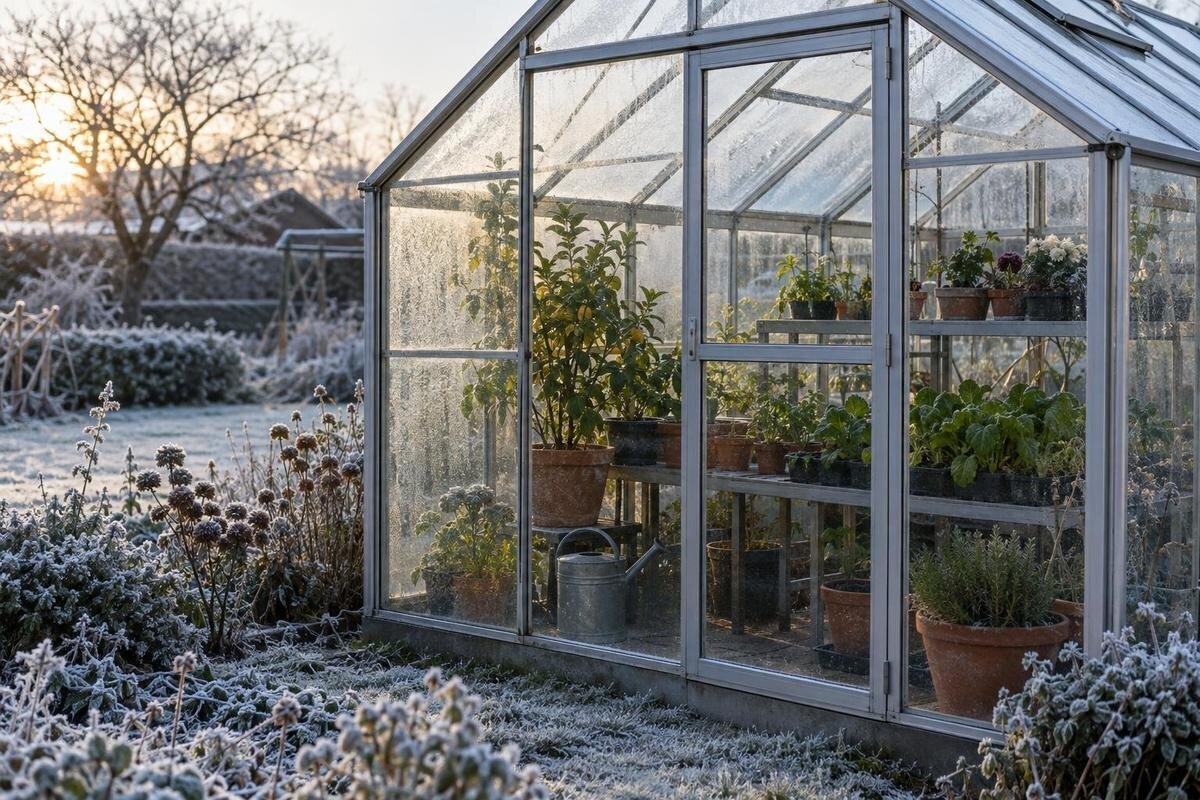
Late-frost planning
An unheated greenhouse can take the edge off exposure during a late frost, but it is not a dependable frost-free refuge. A mild afternoon may leave some warmth in the structure, while a long, cold night can still damage tender leaves and roots. The useful question is not simply whether a greenhouse protects plants; it is which plants are at risk, where the coldest air is, and whether cover or relocation can make a meaningful difference. A quick triage plan keeps attention on the seedlings, pots and crops least able to recover.

What an unheated greenhouse can and cannot do
An unheated greenhouse changes exposure; it does not create heat. Sunlight can warm the air, pots and surfaces during the day, while the enclosure gives some shelter from wind and rain. After sunset, that warmth is gradually lost through the structure and through any opening that remains. If cold lasts for hours, the inside can become cold enough for frost, even after a mild afternoon. A greenhouse is a buffer, not a frost-free room, and there is no reliable rule that an enclosed space is safe simply because it is covered. Visible frost is a warning, but its absence does not prove that tender plants stayed safe.
How much the structure helps varies with the forecast, the length of the cold spell, site exposure, openings and where plants sit. A thermometer in one part can miss a colder corner, and a leaf surface need not match an air reading taken elsewhere. Hardy crops may come through an event that injures tender growth. When comparing greenhouse space, the Limited Edition Aluminium Greenhouses listings show areas from 3.77 to 28.08 m². Those figures help compare footprints, but they do not tell you a minimum night temperature. Judge protection by your crop needs and conditions measured at your site.
Use the forecast to prepare, then measure near the plants
Treat a local weather forecast as a warning to prepare, not as a reading from inside your greenhouse. Forecast lows describe expected outdoor conditions for an area, while the greenhouse can cool at a different rate and neighbouring gardens can differ. Put a minimum–maximum thermometer in the growing zone, at the height of the most vulnerable leaves. Keep it in shade during daylight and away from glass, the frame or masonry; a sensor touching a cold surface is not measuring the air. If seedlings are low and larger pots are on benches, check both levels or use a logger in each zone. Label each monitoring position so you know which reading belongs to which group. When assessing conditions beneath a temporary cover, record whether the sensor was inside or outside it. Keep positions consistent between nights where possible; if you move a sensor with a tray, note the change rather than treating the readings as measurements of the same spot.
Reset a minimum–maximum thermometer before the cold night and check the low the next morning. A logger can also show when the temperature fell, which is useful if you are deciding whether a cover or closed vent made a difference. Record the date, outdoor forecast, reading, sensor position, crop group and whether doors, vents or covers were in use. If your instrument also records humidity, include it as context, but do not use it as a substitute for temperature. Compare the reading with guidance for the particular crop and variety; there is no single safe greenhouse temperature for every plant.
Sort crops by their cold tolerance and stage
Make a quick inventory before deciding what to protect. Warm-season crops, tender ornamentals and young plants are often the first to need attention. Examples include seedlings of tomatoes, courgettes, cucumbers, peppers and basil, but their tolerance varies with variety, stage and how they have been grown. Recently germinated plants, cuttings and newly transplanted crops can be vulnerable even when the mature plant is more resilient. Acclimatisation matters too: a plant moved straight from a warm indoor space may respond differently from one that has been growing outside for weeks.
Separate the collection into three practical groups: plants to move, plants to cover if readings or the forecast warrant it, and established hardier plants that can remain under routine monitoring. Do not assume every seedling of a cool-season crop is as tough as an established plant. Mark trays or pots by group so you can act quickly in low light. If you are planning space for separate crop groups, the T-Shaped Orangery Greenhouse listings show areas from 16.52 to 30 m². Compare the chosen footprint and plan with your actual trays and pots rather than relying on the total area alone.
Decide which plants to move first
When there is not room to move everything, prioritise by vulnerability and recovery time, not simply by how large or attractive a plant looks. Small seedlings, cuttings, recently transplanted crops and tender plants in small pots are often practical first choices. You might also move a plant that is difficult to replace or that represents weeks of growing time. Meanwhile, a hardy established crop may be able to stay with extra monitoring. A short list made before the temperature drops is easier to follow than trying to rank every pot at the door. Prepare the receiving space before carrying plants out: work out which trays will fit, where larger pots will stand and how you will keep their labels together. Use manageable groups rather than stacking trays over foliage. If another person is helping, identify the priority plants clearly so neither of you has to make fresh decisions in the dark. Keep a note of what was moved and where it went.
Move plants to a place that is genuinely frost-free and suitable for them. An unheated shed or porch may still get cold, while a hot spot beside a radiator is not a good substitute for steady protection. If no suitable indoor place is available, group the most vulnerable pots and cover them inside the greenhouse. For future space planning, the Pyramid Greenhouse listings show areas from 5.53 to 18.9 m²; compare the specific plan with the number of trays and pots you may need to keep accessible.

Use temporary covers as an extra buffer
Horticultural fleece, cloches and low tunnels can add a layer around a plant group and slow heat loss, but none produces heat. Choose a cover that suits the plants and follow its instructions. Support it with hoops or a frame if it could crush fragile leaves or stems, and secure the edges without damaging plants or blocking access. Keep the cover clear of vents and doors so you can still manage the greenhouse. A cover that is awkward to put on or remove is less useful in a short-notice frost response. Try fitting it during daylight, checking that it reaches around the whole group and can be lifted without catching taller stems. Arrange supports so you can inspect the plants without taking everything apart. Set aside the cover and its fittings together, and identify which tray or bed they belong to; this avoids searching for missing pieces when temperatures are already falling.
If you use a plastic sheet, hold it above the foliage rather than letting it rest directly on leaves. Open or remove covers when conditions are milder, particularly if sunlight warms the greenhouse, so they do not trap excessive heat or moisture. Keep fleece and cloches dry and ready to hand. The Limited-Edition Aluminium Greenhouses with Storage listing describes a built-in storage option and areas from 5.52 to 28.08 m²; check the chosen layout and storage details before relying on it for covers or hoops.
Protect pots and root zones as well as leaves
A small pot has less growing medium to buffer temperature changes than open ground, and its sides are exposed. Protecting only the leaves may leave the roots vulnerable. Where practical, group pots together and move them away from the greenhouse perimeter, glazing and doors. You can wrap pot sides in horticultural fleece, hessian or suitable insulating material, but keep drainage holes clear and do not leave containers standing in water. A dry insulating layer under a pot can also separate it from a cold shelf without blocking drainage.
Keep plants with similar needs together so you can cover and move them as a group, and leave enough room to reach each container. Do not assume a pot on the floor, bench or near a wall is safe without checking conditions at that height. If you are comparing layouts for groups of containers, the Bloomcabin Prestige Greenhouse listings show areas from 3.77 to 28.08 m². Check the plan for the particular option to see whether there is room to group pots, apply covers and move them without crowding.
Prepare doors and vents for the cold night
Before temperatures fall, check that doors and vents are in their intended night-time position. Closing them can limit draughts, but it does not warm the greenhouse or guarantee that plants will be protected. Follow the instructions for any automatic opener and do not force or dismantle its mechanism. Avoid leaving an opening unattended overnight if it exposes tender plants to a cold draught, while also avoiding permanently blocked vents that prevent normal daytime ventilation.
Plan for the morning as well as the night. If sunlight warms the greenhouse, remove or open temporary covers and ventilate as conditions require; a cover left in place may trap heat. In a larger growing area, a reading in one spot may not represent every group of plants. The Spacious Greenhouse listings cover areas from 47 to 70 m²; if comparing a structure at that scale, think about where separate monitoring points would sit. A larger footprint is not evidence of a higher overnight minimum.
Assess frost damage after plants have thawed
If you find frosted leaves, avoid handling them while they are frozen. They can be brittle, and an early appearance may not show the full extent of damage. After thawing, affected tissue may look limp or water-soaked before it darkens or dries. Check the stems and growing points as well as the leaves: damage to an outer leaf does not necessarily mean the whole plant is lost. Keep vulnerable plants sheltered if another cold night is forecast.
Wait until the damage is clearer before pruning, rather than removing tissue at the first sign of wilting. Once a section is plainly dead, it can be removed; meanwhile, avoid trying to force recovery with extra water or feed. Water according to the condition of the growing medium and the plant’s ordinary needs. Note which crops were affected, where they were positioned, the overnight low and whether a cover was used. That record can help you decide what to move or cover next time. A photograph taken after thawing can provide a useful reference for later inspections. Include the plant label and record the date, then describe what you can actually see rather than immediately marking the whole plant as lost. On subsequent checks, distinguish damage already recorded from any further deterioration, especially if several cold nights occur in succession.

Use the greenhouse layout to make triage easier
After a cold night, sketch the greenhouse as a few growing zones rather than treating it as one uniform space. Note where plants sit in relation to doors, glazing, low corners and benches, then compare any damage with your thermometer readings. A map makes it easier to keep the most tender plants together, identify places that need another reading and leave a clear space for moving trays or fitting cloches. Keep frequently handled crops accessible; a protective cover is harder to manage if other pots block the route. Give each zone a simple name and use it in your temperature notes and plant records. Mark which groups can be carried out as trays and which containers must be moved individually. Include the space needed to lift covers and reach pots at the back, not just the space occupied by foliage. This turns the sketch into a practical plan for handling plants during the next frost warning.
If you are comparing footprints while planning a crop layout, the Aluminium Greenhouses listings show areas from 3.77 to 28.08 m². Use the exact option and its plan to consider how much space is available for plants, access and temporary covers. A stated floor area does not show which corner will be coldest or how a particular crop group will fare. For an existing greenhouse, measured conditions and the layout of your actual plants are more useful than assuming every part of the structure behaves alike.
Know when an unheated greenhouse is not enough
If a crop needs frost-free conditions, an unheated greenhouse cannot provide them reliably during a late frost. Check guidance for the specific crop and variety, then decide whether to move it, delay planting or choose a more cold-tolerant crop. If maintaining frost-free conditions is essential, consider a properly designed heated growing space rather than relying on extra layers of cover. Choose suitable equipment, follow its instructions and ask a qualified professional about installation questions; do not treat an improvised heat source as a dependable solution.
A greenhouse beside a building is not automatically frost-free, and a lean-to format does not prove that nearby walls will keep plants warm. Measure the actual growing conditions. The Lean-to Greenhouses listings show areas from 3.69 to 14.34 m², which can help with footprint comparisons, but the area does not establish a minimum temperature. If late frosts repeatedly threaten the same crops, use your readings to decide whether a different crop plan, a suitable sheltered location or reliably heated conditions are needed.
Frequently asked questions
Will an unheated greenhouse stay above 0°C during a late frost?
Not necessarily. It may stay warmer than outdoors for part of the night, but it can still cool enough for frost, and temperatures can differ within the same greenhouse. A minimum reading near vulnerable plants is more useful than assuming the enclosure is safe, though it cannot guarantee that every leaf stayed above freezing.
Should I close the greenhouse vents and door at night?
Close them as appropriate before temperatures drop, following the greenhouse and vent-opener instructions. This can limit drafts, but it does not heat the space or guarantee protection. Vent the greenhouse again when daytime conditions rise; do not leave it sealed indefinitely.
Can I use plastic sheeting as a frost cover?
If you use it, support it above the foliage rather than laying it directly on leaves. Hoops or a cloche help keep the sheet clear of plants. Horticultural fleece is often easier to drape over a group. Open or remove covers when conditions are milder to avoid trapped heat and moisture.
Which plants should I move first?
Prioritise tender seedlings, cuttings, recently transplanted crops and plants in small pots. Then consider sensitive mature plants or ones that would be difficult to replace. Cold tolerance varies by crop, variety and stage, so use specific growing guidance alongside your own temperature readings.
What should I do with frosted plants the next morning?
Let frozen tissues thaw without handling them, and keep plants sheltered if cold weather continues. Give damage time to show before pruning: inspect stems and growing points as well as leaves. Return to normal watering according to the growing medium, and note the plant’s location and the overnight reading.
Use an unheated greenhouse as one layer in a frost plan: it can shelter plants during a mild event, but measurement and extra protection matter when crops are vulnerable. Prioritise tender growth and small pots, and use readings taken near the plants to decide what can stay. Each cold night adds useful evidence. Note which crop and corner were affected, what cover was used and the lowest temperature recorded, then adjust the next response rather than trusting the structure alone.
