
Can a Greenhouse Be Managed at Weekends Only?
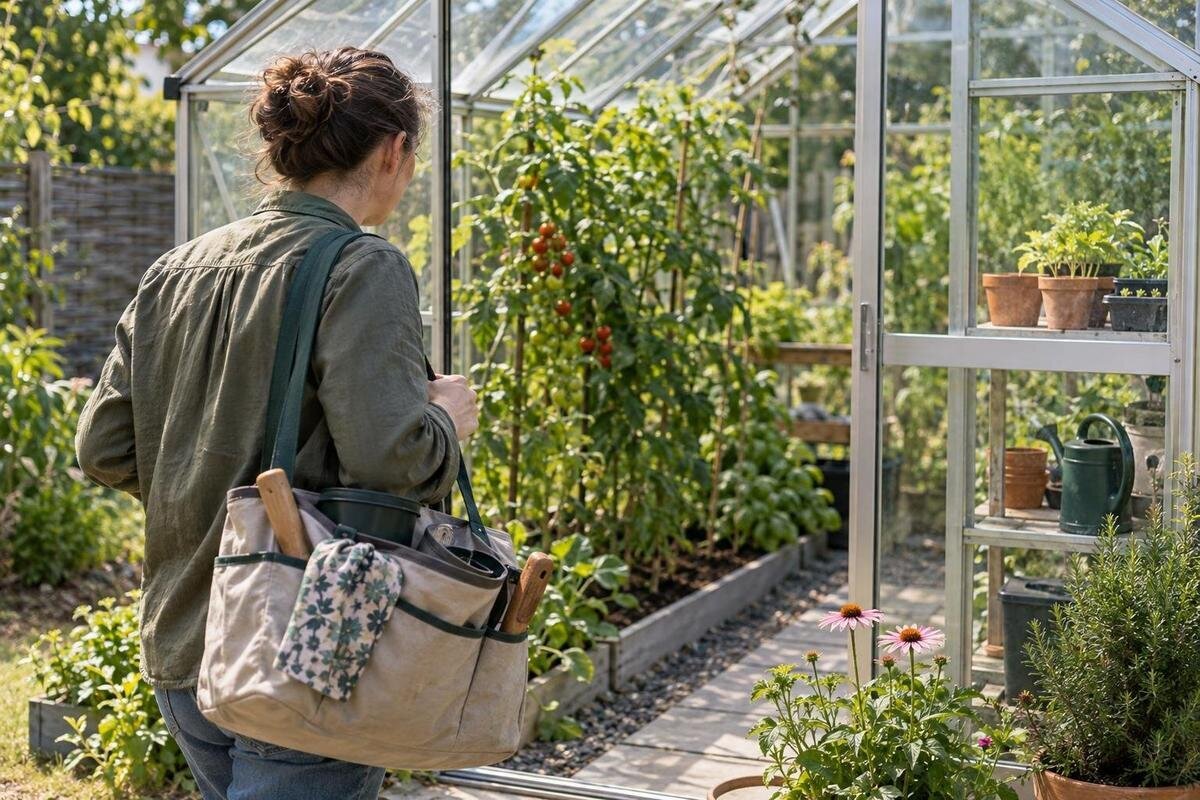
Greenhouse workload and planning
A greenhouse can be managed with weekend visits only in some circumstances, but it is not a set-and-forget arrangement. The decisive issue is what may happen between visits: a dry root ball, a blocked watering outlet, a warm spell with closed vents or crops that need picking and attention. A workable plan matches the longest gap to your plants, your watering and ventilation setup, and a realistic backup. It should also change as the growing season and crop load change.

Care that cannot wait until the weekend
Weekend-only care can work when the plants and greenhouse setup can cope with the full interval between checks. The same routine may be fine for established plants in a cool spell and insufficient for seedlings, newly planted containers or a sunny, warm period. Rain outside cannot be relied on to water plants under cover, and the air inside can become warm even when the day outdoors does not feel hot. Moisture, plant size, root space and ventilation all affect what happens while you are away. The question is not simply whether you can do a week’s jobs at the weekend; it is whether anything essential might need a response before you return.
Separate jobs you can choose when to do from tasks with a deadline. Tidying pots or cleaning tools can usually wait; a dry plant, failed irrigation line, ripe crop or obstructed vent may not. At each visit, inspect plants and equipment rather than topping up water on autopilot. Note anything that could worsen before you return, and decide who can respond. If there is no way to deal with a fault and no one can get to the greenhouse, reduce the crop plan or arrange a weekday check. The aim is not zero maintenance, but a routine that does not depend on luck.
Count the days between visits
Write down your real visit pattern and calculate the longest unattended spell. A Saturday visit followed by the next Saturday can leave most of the week without a check; missing one weekend can make the gap nearly twice as long. Count from the moment you leave after a visit to the earliest time you can return, rather than counting calendar days loosely. Include work, travel, illness and holidays, and allow for a visit that slips by a day. If the greenhouse is nearby but you only plan to go at weekends, use that planned routine as your test. Consider whether you could make an emergency weekday visit, even if it is not part of normal care.
Keep a simple log for a few weeks: the time of each visit, weather, watering, vent adjustments, harvesting, problems and how long the jobs take. Note which tasks could wait and which could not. This record can reveal busy periods and make it easier to brief someone who might help. The lean-to greenhouse range covers areas from 3.69 m² to 14.34 m², but floor area alone is not a time estimate. Pair the size you are considering with the plants and growing methods you intend to use. Keep one-off setup tasks separate from recurring care so your log reflects an ordinary week.
Choose crops around the care they need
Plant stage matters as much as plant type. Seedlings, freshly transplanted plants and small pots have less soil around their roots and can be more vulnerable to drying than established plants in a larger bed. Container-grown plants may need more frequent attention than plants in the ground, depending on their size and growing conditions. A bench of seedlings also needs checks for growth, airflow and crowding. Avoid sowing, potting-on or planting a large batch just before a long gap unless you have tested the watering and backup arrangements for those young plants.
Choose a manageable mix rather than filling every shelf with crops whose needs peak together. Fruiting plants such as tomatoes and cucumbers can bring regular watering, training and harvesting; leafy crops and herbs may be simpler in some plans but can still wilt or bolt if conditions change. Stagger sowing and consider whether produce can wait until your next visit. When comparing Limited Edition aluminium greenhouse sizes, use your crop list to decide how much growing space you need. The listed range is 3.77 m² to 28.08 m²; you do not have to fill the entire available area with plants from the outset.
Test watering across the full absence
Treat irrigation as a system to validate, not a device to buy and forget. Hand watering, a timer-controlled drip line, a soaker hose or a capillary mat all behave differently with pots, beds and growing media. Water that reaches one plant may not reach the next. Group plants with similar needs where practical, and check that the planned water source can supply the arrangement for the full gap. A timer cannot help if a reservoir runs dry, a line is kinked or an outlet is blocked. Rain outdoors cannot be counted on unless it is collected and available to the system.
Test the setup with the same pots, plant spacing and water source you intend to use, and leave it running through your longest likely gap while you can still check the result. Check moisture around the roots at several points, not only the surface nearest an outlet. Look for leaks, dry containers, standing water, blocked outlets, a depleted source or a timer that has stopped. Repeat as plants grow or conditions change. If you are considering the T-shaped orangery greenhouse, map the watering points onto the exact layout you select from its listed 16.52 m² to 30 m² range. Include every bed and container you intend to water.

Arrange a genuine backup
A backup is useful only if it can address the failure you are worried about. A spare timer connected to the same empty tank or blocked pipe is not an independent solution. Work through likely weak points, including the water supply, power or batteries, tubing and emitters, as well as whether someone is available to respond. You do not need a complicated duplicate system, but you do need to know what you will do if the main arrangement stops. For many weekend growers, a person who can visit is the most practical fallback during a problem or a spell of high demand.
Ask a neighbour, friend or family member in advance rather than assuming someone will notice. Agree when they may need to visit, how they can reach the greenhouse, what to water, how to contact you and what to do if something looks wrong. Leave instructions that match your plants and layout, not a general note saying to water everything. Make sure the person is comfortable with the access arrangements and knows whom to contact if they cannot resolve a problem. If nobody is available, keep the planting small enough that a failed system is manageable. Include holidays in the same plan.
Plan ventilation for days you are away
Water is only half of the unattended-care problem. A closed greenhouse can warm rapidly in sunshine, so leaving vents shut until your next weekend visit can put plants under stress even if the soil is moist. Manual venting works only when someone can open or close the vents at the right time. Automatic openers may reduce routine adjustment, but they need to suit the particular vent and move freely. They are not a notification service and cannot tell you that a mechanism has stuck. A forecast can help you plan, but it cannot guarantee the conditions inside for the whole gap.
Before choosing a structure, confirm which vents and controls are included in the exact configuration and how they can be checked between visits. For the Prestige greenhouse, ask about the vent arrangement and whether an automatic opener is included in the option you are considering. These details matter more to unattended ventilation than the model name. At each visit, check for obstructions and confirm that moving parts operate as intended. Consider shading or changing plant positions only as part of a tested plan; do not depend on leaving a door open if security, wind or access make that unsuitable.
Make checks quick and repeatable
Make a weekend inspection straightforward enough that you will do it consistently. Keep paths clear, label crops, group plants with similar watering needs, and leave access to the back of beds and containers. Avoid crowding plants so tightly that a yellowing leaf, pest or blocked outlet is hard to spot. Keep watering equipment within easy reach and arrange hoses or tubing so they do not become a trip or snagging hazard. Labels with sowing or planting dates can help you remember which plants are still at a vulnerable stage. A layout that is easy to scan reduces missed jobs; it does not remove the need to do them.
If storage is part of your layout, compare the exact option rather than assuming every greenhouse includes it. The greenhouse range with built-in storage gives you an option to consider alongside the tools you plan to keep and the space they need. Having labels and small tools to hand can shorten a visit, but storage does not replace watering, ventilation or someone who can respond to a fault. Keep the watering instructions easy to find so another person can follow them if they cover a visit. Make sure stored equipment does not block the route through the greenhouse or access to plants and watering connections.
Keep the planted area within your capacity
Size the planted area to the work you can keep up with, rather than to the whole floor area available. Every extra bed, shelf or row of pots adds plants to water, inspect, train, harvest and clear at the end of a crop cycle. Leave enough access to reach roots, vents and irrigation connections without disturbing plants. If you are new to greenhouse growing, using only part of the available area gives you room to learn how quickly your crops dry and how much routine care they need before planting more. Count pots and beds as well as the greenhouse footprint.
The spacious greenhouse options cover areas from 47 m² to 70 m², making it particularly useful to distinguish the total floor area from the area you intend to plant. Pair your chosen size with a crop map and an estimate of the recurring tasks. Decide which part you intend to plant in the first season, what access you need and what you will leave clear for moving around. A larger space may offer room to organise, but every area you choose to grow in still adds work. The useful measure is the planting plan you can supervise between visits, not the maximum area you could fill.

Check access and layout before choosing a site
Location affects how easy it is to respond, not just how pleasant the greenhouse is to use. Consider whether you can get to it in poor weather, carry water or tools along the route, and reach it promptly if a backup visitor needs to come in. Check where the water source is, whether the path is clear and whether nearby trees or buildings affect shade during the day. Think about who can access the site if you are away. The goal is not to predict every condition, but to avoid a setup where a simple check depends on moving plants or equipment.
Ask to see the drawing for the exact configuration and compare its footprint with the available access route, working space and water point. When considering the pyramid greenhouse range, listed from 5.53 m² to 18.9 m², use the drawing to check how your chosen size would fit the site. Allow for reaching the entrance and carrying tools or watering equipment, rather than looking only at the space occupied by the structure. Check the proposed door position, path clearance and the locations of beds, pots and watering lines before settling on a crop layout. Keep a back-up visitor’s route in mind as well.
Trial the routine before adding more plants
Run a small trial before relying on weekends alone. Plant a limited number of established crops, use the irrigation and ventilation arrangements you intend to rely on, and test the longest gap you can realistically expect. Record conditions when you leave and what you find on return: soil moisture, plant condition, vent position, equipment faults, harvest and time spent on care. If you can arrange a weekday check during the first trial, use it to find problems before making the gap longer. A successful weekend in cool conditions is not proof that the routine will work in every season.
Review the log and change one factor at a time, such as the number of crops, watering delivery, layout or visit frequency. If you are comparing the classic aluminium greenhouse range, listed from 3.77 m² to 28.08 m², use what you learn from the trial to plan the planted area and access within your chosen size. Repeat the trial as plants mature and conditions change, rather than assuming one test settles the question. If a crop needs weekday attention you cannot provide, choose another crop or arrange cover instead of expecting an untested system to make up the difference.
Frequently asked questions
Can I leave a greenhouse unchecked all week?
There is no single answer for every crop or week. It depends on plant stage, weather, watering, ventilation and what you would do if equipment failed. If a plant or vent might need attention before your next visit, arrange a check or change the plan.
Which crops are easiest to manage at weekends?
Choose crops whose watering, harvesting and other care fit a routine you have tested. Established plants may be easier to plan around than seedlings or newly transplanted plants, but no crop is automatically low-maintenance in every greenhouse.
Will automatic watering make weekend visits enough?
It can reduce hand-watering, but it cannot guarantee that water reaches every plant or that the supply will last. Test the system with your actual plants and layout, and arrange a fallback for an empty source, blockage or other fault.
Do automatic vent openers remove the need for checks?
No. An opener may reduce the need for manual adjustments if it suits the vent and works as intended, but it does not report a fault or respond to every change in conditions. Check its movement and keep a plan for problems.
What if I am away for more than a week?
Treat that as a separate, longer absence. Arrange a willing person to check the greenhouse, or reduce the planting and harvesting demands before you go. Do not assume a system tested for an ordinary weekend gap will cover a holiday as well.
Weekend-only greenhouse growing is most realistic when the crop list is deliberately limited, watering and ventilation have been tested for the longest gap, and a named person can respond when conditions change. Keep a log through the season and let it guide decisions about adding plants or adjusting visits. If it shows that a crop needs weekday attention, changing the crop plan or arranging cover is more dependable than hoping an untested system will bridge the gap.
