
Is an Old Aluminium Greenhouse Worth Refurbishing?
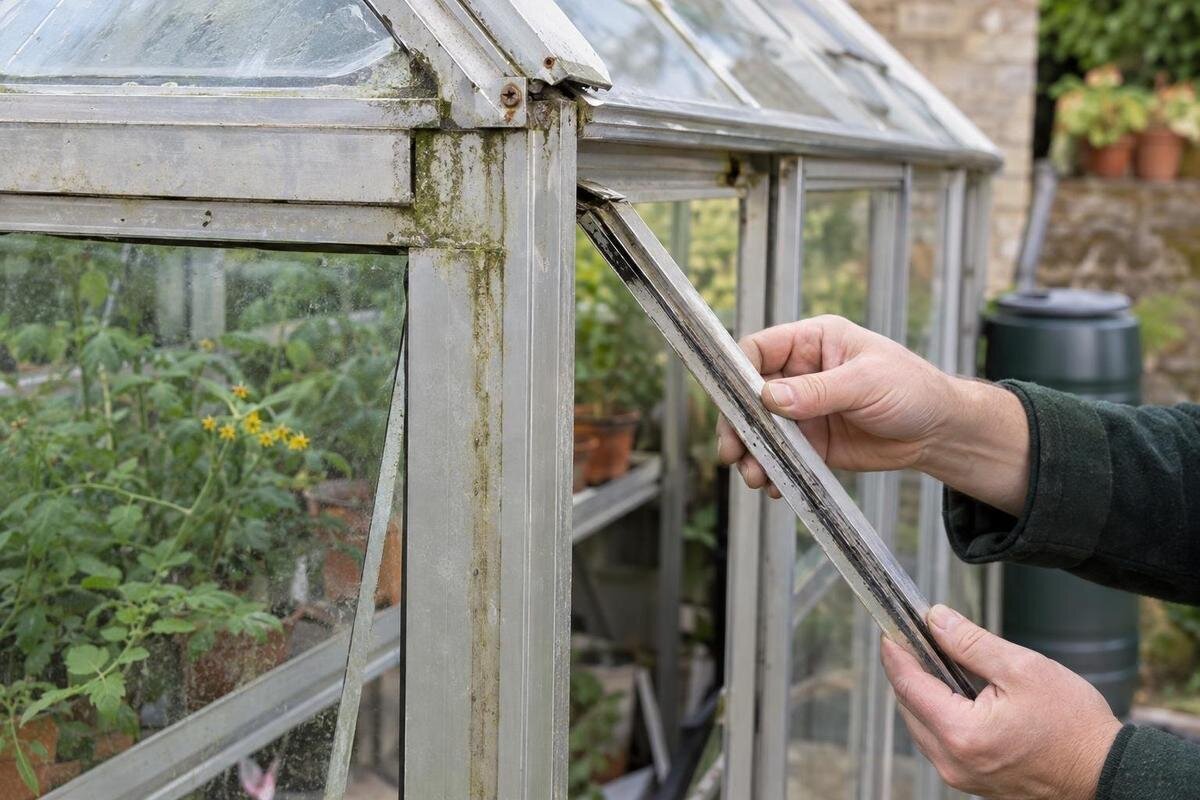
Greenhouse repair guide
An old aluminium greenhouse is not automatically worth restoring, and age alone does not make it a lost cause. The decision turns on the main frame and base, the extent of glazing damage, the state of doors and vents, and whether the right parts can be identified and sourced. A structured condition check helps distinguish manageable repairs from an uncertain rebuild.

Recording the greenhouse’s condition safely
Before cleaning, dismantling or ordering parts, write down what is wrong and where. Walk around the outside and, only if it is safe to enter, note the roof, sides, door end, vents, base and internal frame. Photograph each affected area from a safe position and take a wider image showing where it sits in the structure. Record whether a fault is isolated or repeated: one missing clip is a different scope from looseness across several bays. Add the greenhouse's approximate age only if known; a seller's estimate or a recollection is not a model record. Note whether each fault affects access, water entry, ventilation or appearance, but do not assume that a drip identifies its source.
Separate issues that make access unsafe from ordinary repair planning. Cracked or loose glass, a visibly leaning or moving frame, sharp edges, or a door or roof section at risk of coming loose are reasons to keep people clear and seek a greenhouse installer or glazing professional. Do not climb in, push members back into place or handle broken panes. A visual survey cannot certify structural safety. If there is no immediate concern, the record becomes a baseline for a parts enquiry and quote, rather than relying on memory or describing the whole greenhouse as simply worn out. Mark uncertain observations as unknown, not sound; if a detail is hard to view, leave it for an installer.
Check the aluminium frame and its joints
Inspect the main frame in a consistent order: vertical posts and side rails, then eaves, ridge, roof glazing bars, corners and door frame. Look for bends, twists, cracks at joints, displaced connectors, missing fixings, pitting or visible corrosion, and members that no longer line up with their neighbours. Note whether similar damage appears in several places rather than treating each fixing as an isolated fault. Photograph changes before cleaning; dirt can hide details, while colour changes alone neither prove structural failure nor confirm that a member is sound. If you know of an earlier repair, note its location and who carried it out.
Pay close attention to connections, because a tidy-looking frame can still have a loose joint or fixing. Do not drill new holes, weld, splice, bend a member back or substitute fixings to make it seem rigid; changes can alter how parts fit and must not be improvised. Ask an installer to compare uncertain areas with the original manual or drawings and explain how local damage affects the frame as a whole. A scratched or faded finish is a separate question from frame geometry. If you are considering replacement mainly for its appearance, include Limited Edition Aluminium Greenhouses in your comparison of new designs, while keeping any cosmetic work on the existing greenhouse separate in the repair estimate.
Assess the glazing without handling unsafe panes
Count missing, cracked, loose or visibly displaced panes, and map their positions: roof, side, end wall, or near a door or vent. Note the glazing type only if the manual, label or supplier records confirm it; do not guess from appearance when an exact replacement is needed. A small number of damaged panes may be a narrower job than repeated losses or a retaining system that no longer holds panels, but a count alone cannot establish whether the frame is suitable for repair. Ask an installer or glazier to assess anything loose, overhead or difficult to reach. Include the retaining strips or clips in the inspection, as well as the panes themselves.
Do not remove a pane to identify it or take measurements by pressing against it. Keep people away from damaged areas and let a qualified person establish the safe method and specifications. Photograph labels, retaining parts and the affected location from a safe position; an old manual, order record or manufacturer drawing may identify the pane and its fittings. Similar-looking glass does not establish that a pane is the correct size or type. If extensive glazing damage makes replacement part of the decision, the Pyramid Greenhouse offers a different model form to compare with the existing structure. Keep the cost of reglazing the old greenhouse separate from the cost of installing a complete replacement.
Check doors, vents and operating hardware
Open and close doors and vents only when the surrounding frame and glazing appear safe and movement can be tested without force. Note whether a door catches at the top or bottom, a runner sticks, a latch fails to engage, a hinge looks loose, or a vent no longer sits in its usual position. These details can point to a worn fitting, dirt or misalignment, but they can also reflect movement in the frame; changing a latch alone will not correct a distorted opening. Do not force a jammed part or use an operating component to pull the frame back into shape.
Record each fitting's location, shape and any maker's mark, and photograph it in place from a safe position. A hinge, catch, clip, runner or vent opener that looks similar online is not necessarily interchangeable: fixing points, profile and model generation matter. Ask for an exact spare-part identifier and the relevant manual before ordering. Have an installer review any failed fitting that supports a door or vent or holds a pane in place. If a different layout is part of the replacement idea, the T-Shaped Orangery Greenhouse is one option to compare. Use the manufacturer's plan and opening details to assess access and the space around doors and vents, rather than relying on the model name.

Identify the greenhouse before ordering parts
Part availability can turn a repair that looks small into a project with a long list of unknowns. Look through the original manual, invoice, order confirmation, labels on the frame and paperwork kept by a previous owner. Record the maker, model or series, approximate purchase year if known, overall dimensions and any part numbers printed in the documentation. Do not treat a photograph or the greenhouse's overall width as enough to identify one profile, glazing panel or connector: similar-looking models can use different components. Keep the original information together rather than relying on a name remembered from a conversation.
When contacting the manufacturer or supplier, send clear photos of the whole greenhouse and the affected part, with its position noted. Ask for the exact part identifier, confirmation that it is compatible with that model, availability, installation instructions and whether a professional should fit it. If a label is missing, state what is unknown rather than guessing. Ask whether a manual or technical drawing is available and whether any proposed successor component is approved for the model. If a supplier requests measurements, ask which points matter and whether an installer should take them. Pause before buying a generic substitute if no exact part can be confirmed, and include that unresolved item in the refurbishment estimate.
Inspect the base and frame alignment
Inspect the connection between the aluminium frame and its base, along with the ground or foundation around the perimeter. Note visible gaps, movement, unevenness, a frame that appears out of square, cracked supports, water collecting at a low point, or fixings that appear missing or loose. These observations are useful for an installer but do not reveal the cause: a door binding could arise from its hardware, frame movement or support below. Do not raise the greenhouse, wedge the frame or adjust the base to make it look level. Record where the issue occurs and whether it is visible at more than one point.
Ask a qualified installer to assess support and alignment before spending on new glazing or fittings if movement, distortion or uncertain anchoring is present. The same review matters if you plan to reuse an existing base for a replacement. The Prestige Greenhouse with Metal Base is one option to include in that comparison, but a supplied metal base does not establish compatibility with an old foundation. Compare the selected model's requirements with the site conditions and include any necessary base work in the installation quote. Record the condition of the perimeter and the frame-to-base connections separately, so the assessment covers both the support beneath the greenhouse and how the structure is secured to it.
Compare the full repair scope with replacement
Write an itemised scope rather than comparing one repair figure with the price of a new greenhouse. Separate safety-critical work, glazing and retaining components, doors or vents, frame connections, any base work and cosmetic tasks. For each item, record whether the part has been identified, whether the quantity is known, and whether the quote includes labour, access arrangements and disposal. Ask for the assumptions behind the quote and how any hidden damage found during the work would be handled. Keep optional cosmetic work separate from essential repairs so you can see what retaining the greenhouse would actually cost. Do not fill gaps with a guess or treat an incomplete estimate as a firm total.
Then request a replacement comparison on the same basis: the greenhouse itself, fitting, site preparation, removal of the old structure and anything excluded from the quote. A new model such as the Aluminium Classic Greenhouse can serve as a comparison point. Select the size and layout you would actually consider, rather than comparing the repair with whichever new model has the lowest advertised price. Include reuse of an old base only if an installer has confirmed the proposal. Neither the lowest materials figure nor the number of parts to replace decides the case on its own; certainty of scope, intended use and the risk of repeat work matter too.
Check whether the existing position still works
Before choosing a replacement, record what the current position allows and restricts. Note the footprint, routes in and out, door swing, access around the sides, nearby walls, fences and trees, and whether the greenhouse blocks a path or conflicts with how you use the garden. Consider where shade falls at different times of day and whether water runs towards or away from the base, without assuming that moving the structure is the answer. A different design may need other clearances or site preparation, so selecting a model by its picture alone is not a reliable comparison.
If an attached layout is being considered instead of a freestanding greenhouse, the Lean-to Greenhouses listing provides a named option to compare. It does not confirm that a particular wall, position or foundation is suitable. Check the selected model's documented dimensions and clearances, and have a qualified professional review the proposed attachment and support before committing. Conversely, a freestanding model cannot be treated as interchangeable with an old lean-to just because the footprint looks close. Keep the existing measurements and the new model's technical drawings side by side, and note what still needs professional confirmation.

Match the greenhouse size and form to how you use it
Judge the greenhouse by how you expect to use it, not solely by the plants in it now or the fact that it occupies a familiar patch of ground. List the practical tasks: starting seedlings, raising crops, overwintering plants, or having room to move while tending beds. Consider where benches or larger containers sit and whether doors, paths and vents remain accessible. Think about the space needed for everyday work as well as the external footprint. A repair may preserve a layout that no longer suits you; that is a separate reason to compare a replacement, not proof that the old frame has failed.
If you are considering a different amount of space, the Spacious Greenhouse listing is one model to examine. Rely on its published footprint and the specific model details, rather than the word spacious, to decide whether it could fit your garden or your work. Extra area is not automatically useful if access or site constraints make it impractical. Compare dimensions and layout information for the chosen model with the space you can actually allocate, then check how that changes the scope of site preparation and installation.
When refurbishment is worth pursuing
Bring the audit together with four labels for each area: sound, repair identified, unknown or unsafe to assess. Refurbishment is more defensible when the frame and base have been professionally judged suitable to retain, damaged glazing and fittings are counted, the correct parts are confirmed, and the quote covers the work. Replacement deserves serious comparison when frame or base movement is unresolved, failures are widespread, or key parts and safe fitting methods cannot be established. A single old-looking member or missing accessory should not decide the whole project. Keep unknowns visible rather than quietly treating them as minor faults.
Include the greenhouse's future role before choosing either route. If storage is part of the brief, Limited-Edition Aluminium Greenhouses with Storage names a model with built-in storage; compare its documented layout and dimensions with your site and requirements rather than assuming the feature makes it the right replacement. For refurbishment, keep model details, photographs, part identifiers, installer comments and the final list of included work together. That record lets you revisit the choice if a quote changes, a part proves unavailable or a professional inspection reveals a condition that was not visible at first.
Frequently asked questions
How can I tell if the frame is too damaged to repair?
A bend, movement, displaced joint or repeated failure is a reason to pause, not a definitive verdict from a photograph. Keep away from unstable areas or loose glazing and ask a qualified greenhouse installer to assess the frame and base against the relevant manual. Do not straighten or reinforce the frame yourself.
Can I replace only the broken greenhouse panes?
A limited glazing repair may be possible, but the pane type, dimensions, retaining system and frame condition must be confirmed for the model. Do not remove or handle broken glass to identify it. Ask a glazier or installer to specify and fit the replacement safely, particularly for roof panes.
What information do I need to order old greenhouse parts?
Give the supplier the make, model or series, any part number, photographs showing the component and its position, and the manual or order record if available. Ask for confirmation of compatibility and installation instructions. If the model cannot be identified, say so and pause before buying a similar-looking generic part.
Is a greenhouse worth repairing if spare parts are discontinued?
Refurbishment may still be possible, but do not assume a substitute part will fit or be approved. Ask the manufacturer or supplier whether an identified successor is compatible and whether instructions are available. If no suitable part or safe fitting method can be confirmed, include that uncertainty in a comparison of the full refurbishment and replacement costs.
How do I compare refurbishment with buying a new greenhouse?
Get itemised repair and replacement scopes. Include glazing, fittings, any professional assessment, installation labour, site preparation and removal where relevant; check what each quote excludes. Compare footprints and base requirements before treating the options as like-for-like. There is no universal answer based on age, one part price or the greenhouse's original purchase cost.
Refurbishment is worth pursuing when you can identify the faults, confirm matching parts and establish that the frame and base can safely remain. Compare replacement when their condition or the compatibility of parts is uncertain, or when a repair has no clearly defined scope. Keep cosmetic preferences separate from structural concerns, and use the manual, exact part identifiers and an installer’s assessment to reach a decision you can stand over.
