
Keeping Oleanders in a Greenhouse over Winter
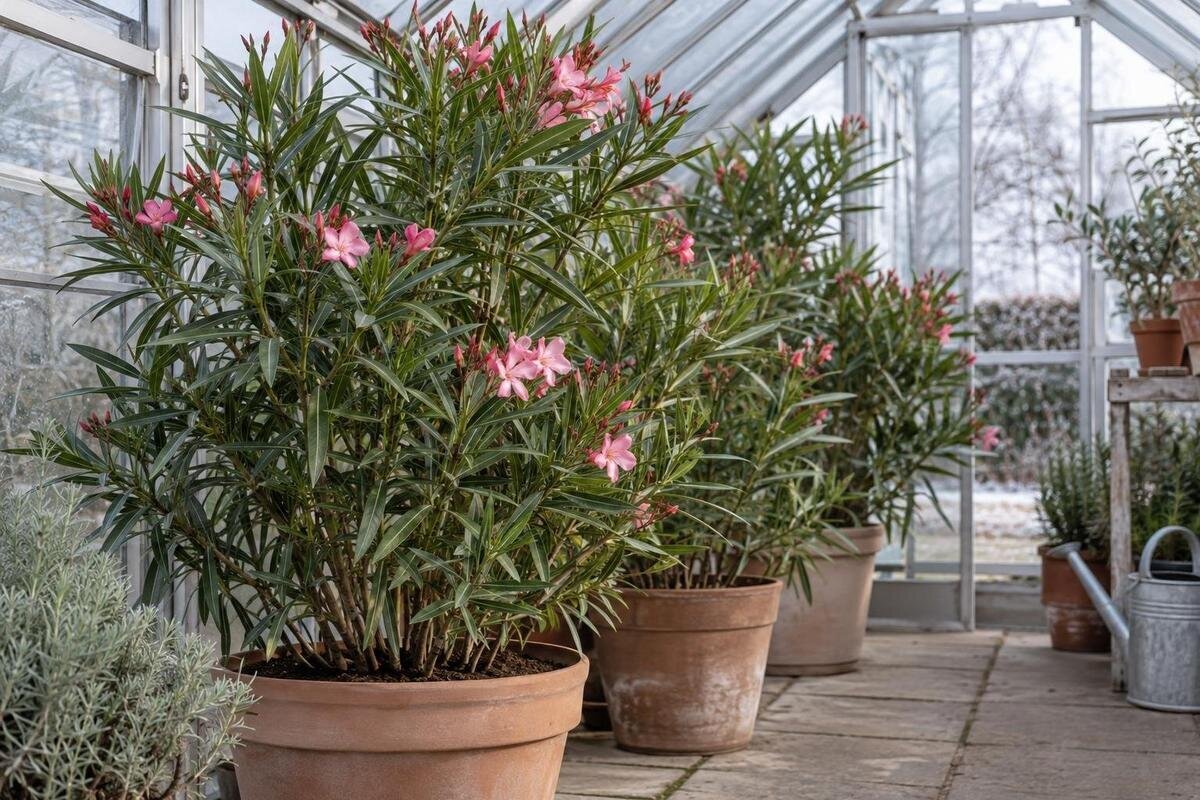
Greenhouse care
An oleander, Nerium oleander, is an evergreen Mediterranean shrub, so winter care is about keeping its foliage healthy while growth slows—not storing it in a dark shed as if it were dormant. A greenhouse can shelter it, but an unheated structure may still become cold enough to damage a potted plant and can warm rapidly in winter sun. Aim for a bright, cool, frost-free place with air movement, and water according to the compost rather than the calendar. Safe handling matters too: all parts are toxic, so moving, pruning and clearing leaves need care.

When to move an oleander into the greenhouse
Move the oleander into its winter position before persistent cold or a forecast frost reaches it; do not wait until the greenhouse has already chilled. Nerium oleander is evergreen, and cooler weather slows growth rather than making it suitable for a dark storeroom. Choose one bright, sheltered place and avoid repeated moves between a warm room and a cold greenhouse. Before it joins other plants, inspect leaf undersides, leaf joints and stems for scale, aphids or webbing, and clear fallen foliage from the pot. Leave healthy leaves alone: winter tidying is not a reason for a hard cut. If buds or seed pods remain, do not remove them automatically.
Check that the doorway and route are clear, the pot sits securely, and branches will not be crushed against glazing or a vent. Keep drainage holes unobstructed; repotting purely because winter is coming adds disturbance at an unhelpful time. Measure the plant’s height, widest canopy and pot diameter, then allow room to reach behind it for inspection. As a footprint comparison, Lean-to Greenhouses are listed from 3.69 to 14.34 m², but those figures do not show clear floor space, internal height or access. Check the chosen greenhouse’s dimensions and door opening, and avoid a position that only works by pressing branches against the frame. If the pot is awkward to carry, plan the route and ask for help rather than dragging or tipping it.
A practical winter temperature range
Use a thermometer with a minimum–maximum memory near foliage height, away from direct sun and cold glazing. A cool, frost-free range around 5–10°C is a practical working target for many container-grown oleanders; it is guidance, not a universal safety threshold. The length of a cold spell, the plant’s acclimatisation and how exposed its pot is all matter. Roots in a container have less protection than roots in open ground, so conditions that suit an established garden plant may not suit a potted one. Check overnight lows, not just the afternoon reading. A run of readings approaching freezing deserves attention, even if the plant looks unchanged.
Greenhouse air can heat quickly in winter sun and cool rapidly after dark. Read the minimum in the morning and the maximum after a bright spell, comparing both with your target rather than judging by feel. If readings repeatedly move outside the intended cool range, adjust daytime ventilation or choose a steadier winter site. If the structure cannot remain frost-free during a cold spell, move the pot to a bright, cool protected place instead of relying on glass alone. A fixed heater must be appropriate for the greenhouse and assessed or installed by a qualified professional; keep the oleander away from hot equipment.
Winter light and greenhouse position
An oleander keeps its leaves in winter and still needs good natural light. Put it in the brightest available part of the greenhouse, away from deep shade cast by shelving, stored pots or taller plants. A warm, dim corner can encourage soft, elongated growth and leave the canopy thin; cooler conditions slow growth but do not remove the need for light. Leave space between foliage and glass so you can inspect the leaves and keep branches from pressing against a cold pane. If one side is consistently shaded, turn the pot a little when practical rather than moving the plant between very different conditions. Do not try to compensate for a dark position simply by keeping it warmer.
Check the site at midwinter rather than relying on how sunny it looks in summer: nearby walls, fences and evergreen trees can block low-angle light. Observe the proposed position during daylight before settling on it, noting which parts remain shaded. For comparison, Limited Edition Aluminium Greenhouses are listed from 3.77 to 28.08 m²; consider how the chosen size would accommodate your plants, then check its glazing and internal height. Plan where benches and taller shrubs would stand as well as where the oleander would go. Placing its canopy behind a bench or another shrub can undo the benefit of an otherwise bright site.
Ventilation and condensation
Ventilation matters even when the greenhouse is cool. Occasional condensation is not by itself proof of a problem, but persistently wet foliage, stale air and a densely packed canopy make winter care harder and can favour pests and disease. On a mild, relatively dry day, open a vent or door briefly to exchange air, then close it before temperatures fall. Aim for gentle air movement, not a cold draught directed at the oleander. If sunshine warms the greenhouse, monitor the thermometer while ventilating; the right opening depends on that day’s temperature, wind and exposure. Avoid leaving a door or vent open overnight during cold weather.
Check where vents and doors are, and whether they remain reachable once pots are in place. The T-Shaped Orangery Greenhouse listing gives areas from 16.52 to 30 m²; compare the ventilation arrangements of the versions you are considering, with the oleander’s winter position in mind. You should be able to operate an opening without moving a heavy pot or catching its branches. In an existing greenhouse, do not stack trays or spare pots in front of openings. Keep the oleander out of the direct path of cold air from a vent, while leaving enough access to inspect the canopy and adjust ventilation as the weather changes.

How to water an oleander through winter
In cool conditions, an oleander uses less water than it does during summer growth, but the root ball should not dry out completely. Check the compost a few centimetres below the surface; water when it has begun to dry there, while the rest of the root ball is not saturated. Do not wait for wilting or water simply because a certain number of days has passed. Pot size and compost type affect how quickly moisture is lost, so another plant’s schedule may not apply. A pot that remains heavy and wet after several cool days needs time to drain, not another drink. Check more often after a mild, sunny spell, when the greenhouse warms.
Water the compost rather than the foliage, and let surplus drain freely through the pot. Empty standing water from a saucer or outer container so the roots are not left sitting in it. Avoid feeding an oleander that is barely growing in a cool winter position; resume feeding only when active growth returns and follow the product label. When planning watering access, the Pyramid Greenhouse listings offer a footprint comparison from 5.53 to 18.9 m². Use the actual floor plan to check where the pot would stand and whether you could reach its base. Leave access to remove a saucer or check drainage without having to shift the shrub.
Winter pest checks for oleanders
Inspect at least weekly, looking along stem joints, leaf midribs and the undersides of leaves rather than scanning only the top of the canopy. Scale insects may look like fixed brown or pale bumps; aphids often cluster on soft growth, while spider mites can leave fine pale stippling and delicate webbing. Sticky residue or sooty-looking growth may point to sap-feeding insects, although it does not identify the pest by itself. A hand lens can help distinguish pests from ordinary marks. Check nearby plants as well, and inspect again after moving the oleander indoors or bringing another plant into the greenhouse.
Keep an affected plant separate from neighbouring plants while you identify the problem. Remove badly affected material only when you can handle it safely, and use a treatment labelled for the pest and greenhouse situation; follow the directions and any restrictions around other plants, people or pets. Do not mix products or rely on improvised sprays. Continue checking for new signs rather than assuming that cleaning one leaf has solved the problem. For a layout that includes storage, the Limited-Edition Aluminium Greenhouses with Storage listing spans 5.52 to 28.08 m². Check how much growing space remains beside the storage area and whether you could separate an affected oleander without crowding it against other plants.
Safe handling of oleander sap and cuttings
All parts of oleander are toxic if swallowed, and its sap can irritate skin and eyes. Wear gloves and long sleeves when moving, pruning or clearing fallen leaves; avoid touching your face, and wash your hands and tools after the job. Keep the plant, removed leaves and cuttings away from children and pets, and do not place it where people may brush against it. Treat even a small pruning job with care, since broken stems can release sap. If someone swallows any part of the plant or there is significant exposure, contact local poison information or emergency services promptly.
Prune only what is needed to remove dead or damaged material, using suitable tools and avoiding bare-hand contact with sap. Hard pruning is not a harmless way to make an oversized shrub fit: it creates more toxic waste and can reduce or delay flowering. Gather fallen leaves as well as cuttings, bag the waste securely, do not burn it, and follow local guidance for disposal. If considering a Prestige Greenhouse, listed from 3.77 to 28.08 m², check the selected version’s doorway against the plant’s full canopy. Use its drawing to assess access rather than assuming that a larger floor area means you can carry the shrub through without breaking branches.
How to interpret leaf drop and yellowing
Some leaf loss can follow a change of position, and a few yellowing older leaves do not diagnose a problem. Look for a pattern: widespread drop after a cold night means checking the recorded minimum and the pot; pale, stretched shoots point back to light and excess warmth; persistent yellowing while compost stays wet calls for a drainage and watering review. Sticky leaves, tiny moving insects or fine stippling make a close pest check sensible. Notice whether the pot is unusually heavy or very light as well as looking at the foliage. Change one factor at a time where possible, so you can tell whether an adjustment helped instead of adding water, heat and feed together.
Keep a short note of minimum and maximum temperatures, watering dates and changes in the foliage; a simple record can separate a one-off cold spell from a recurring problem. Observe the response to an adjustment before making another, except when frost or a spreading pest calls for prompt action. If those observations lead you to consider a different greenhouse, Aluminium Greenhouses are listed from 3.77 to 28.08 m². Assess a possible replacement against the problem you need to resolve: winter light, temperature fluctuations or access to vents. Compare the exact glazing, ventilation and proposed position rather than assuming that more floor area alone will improve the plant’s condition.

Room for the plant, pot and inspections
A mature oleander needs more than the footprint of its pot. Its winter position must leave room for routine watering and inspection without blocking doors, vents or a walkway. Consider the whole arrangement once the other winter plants are in place: a shrub that fitted comfortably when brought inside may become difficult to reach as more pots are added. Avoid neighbouring plants pressing against its leaves, and leave space to inspect the back of the canopy without brushing against the foliage. Include some room for growth rather than packing containers tightly around the plant’s current outline.
For a larger collection, the Spacious Greenhouse is listed at 47 to 70 m². Use that range to compare overall scale, then consult the actual plan to arrange the oleander alongside other plants and work areas. A photograph cannot reliably show the clearances needed to turn or lift a pot, or reach a shrub behind a bench. Keep regularly used routes clear and avoid a layout that requires shifting several containers for every inspection. Extra floor area is useful only if the arrangement makes care manageable; it does not establish winter temperatures or frost protection.
Moving an oleander outdoors again in spring
Do not move the plant outdoors on a calendar date alone. Wait until frost risk has passed for your location and nights are suitable, then acclimatise it to brighter outdoor conditions over several days or longer. Start in a sheltered, lightly shaded position and increase exposure gradually; greenhouse-grown leaves may scorch if moved straight into strong sun, while wind can dry or damage tender growth. If possible, choose mild weather for the first move and avoid a sudden change from still greenhouse air to an exposed position. Bring the oleander back under cover if cold weather returns. The aim is to ease the change in temperature and light, not to keep it indoors indefinitely.
Once new growth is evident and conditions are warmer, resume a growing-season watering routine gradually; continue to check the compost rather than saturating a cool root ball after one sunny afternoon. Feed only when the plant is actively growing and follow the product label. Inspect for pests before moving it near other plants, and clear fallen leaves and debris from the greenhouse so problems are easier to spot. If it has been pruned or damaged over winter, let its condition guide further work rather than cutting back automatically. Keep checking the forecast and the plant’s response as it settles outdoors.
Frequently asked questions
Can an oleander overwinter in an unheated greenhouse?
It can, but only if the overnight minimum stays within a suitable frost-free range. An unheated greenhouse may fall below freezing, so monitor its minimum temperature and move the plant to a bright, protected place if the structure cannot provide suitable conditions.
What temperature should I aim for?
Around 5–10°C is a useful winter target for many potted oleanders, but it is not a universal safety limit. The length of a cold spell, the plant’s condition and the temperature around its pot all matter.
How often should I water an oleander in winter?
There is no reliable fixed schedule. Check the compost below the surface and water when it has begun to dry, provided the root ball is not already saturated. Cool, dull weather usually means watering less often than during a mild, sunny spell, but let the compost guide you.
Why is my oleander losing leaves?
A change in position, cold, low light, wet compost and pests can all be involved. Check the temperature record, compost moisture and leaf undersides before changing care. A few older leaves dropping do not, by themselves, identify the cause.
How should I handle oleander cuttings?
Wear gloves and long sleeves, keep cuttings and fallen leaves away from children and pets, and do not burn them. All parts of oleander are toxic if swallowed. Contact local poison information or emergency services promptly if ingestion or significant exposure occurs.
Successful greenhouse overwintering is a balance: keep the oleander cool but frost-free, give its evergreen leaves good light, let excess moisture drain and ventilate when conditions allow. A regular look at the minimum temperature, compost and leaf undersides can catch changes early. Handle the plant with gloves, contain clippings safely and plan its gradual return outdoors as carefully as the move into winter shelter.
