
How to Organise a Community Greenhouse
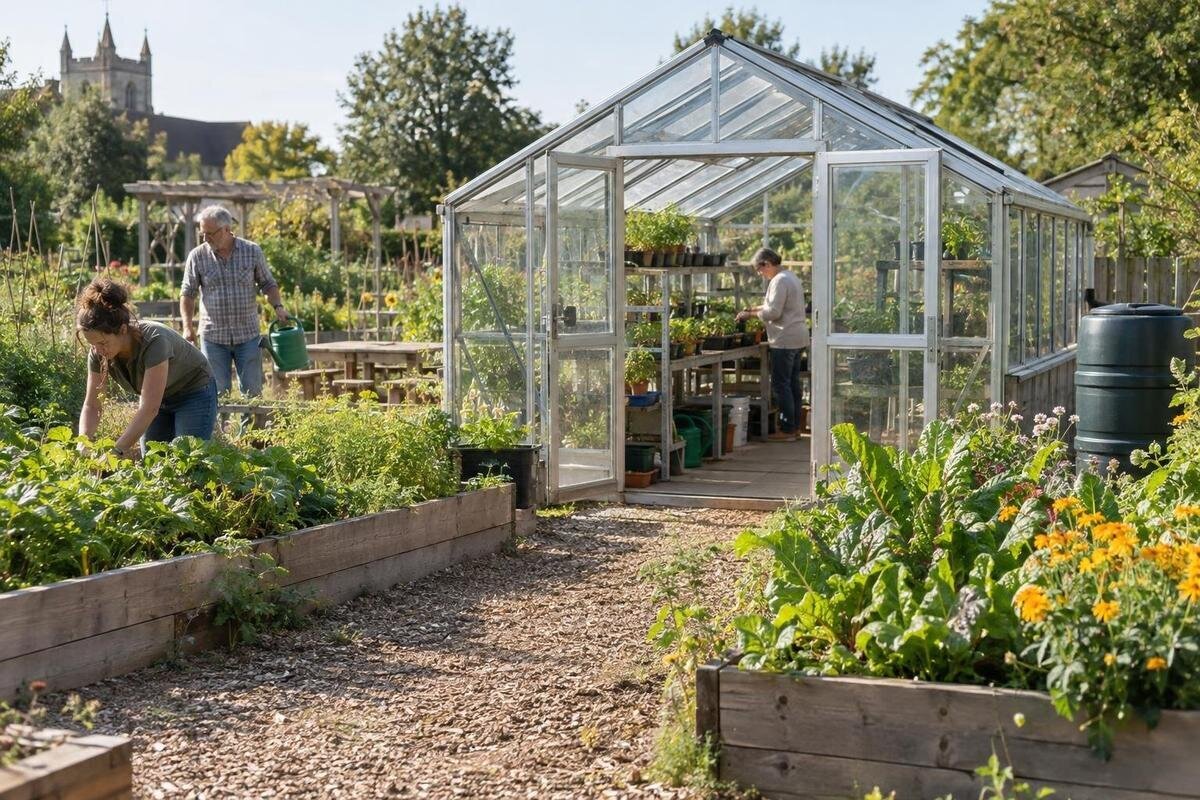
Community greenhouse planning
A community greenhouse is harder to manage when members are unsure which space they may use, what shared tasks are due or who follows up when something is missed. Put the agreement in writing before the beds fill up. A workable plan covers individual and communal growing, watering, shared equipment, maintenance, access and decisions about spending or changes. Keep it simple enough to update as membership and crops change, but specific enough that routine jobs do not fall to whoever happens to arrive first.

01
Agree the greenhouse’s purpose and membership
Before allocating a bed, decide what the greenhouse is meant to do and who it serves. A group growing produce for members may use individual plots; a project centred on a shared harvest needs communal beds and a distribution rule. Members may also need room for propagation or demonstrations. You can combine these activities, but mark which beds and jobs are shared. Choose a crop list and seasonal growing plan that fit the hours people can actually offer. Record who owns each harvest, what happens to surplus and how the group will handle a plot that is left unplanted or neglected. Agreement now can prevent a later argument about whether a crop belongs to one grower or everyone.
Name who can make routine decisions, approve spending and deal with the site owner or sponsoring organisation. A coordinator can keep the records without becoming responsible for every task; give the role a review date and name a backup. Set membership terms: how someone joins, what contribution is expected, how absences are covered and how members propose changes. Contributions need not all take the same form, provided the group agrees what counts and each job has an owner. Confirm any access or operating conditions set by the landowner or host organisation before publishing the group rules. Keep one current copy where every member can find it, rather than relying on a collection of messages.
Map usable growing space before allocating beds
Measure the interior and draw a simple plan before dividing it. Mark entrances, routes, fixed benches or shelves, water points, work surfaces and areas reserved for potting or seed trays; then identify only the space available for growing. Overall floor area and bed area are different figures because people need room to reach plants and move equipment. The Spacious Greenhouse listing gives an area range of 47–70 m²; use this as a footprint reference, not as a count of beds or member plots. If you are comparing structures, ask for the layout of the exact option under consideration.
Number each bed and use the same numbers on the plan and on labels in the greenhouse. Show shared beds, temporary propagation space and equipment storage as well as individual plots. Check that routes to the entrance and water points remain clear, and avoid assigning every spare corner as growing space. If the structure has not been chosen, compare its actual dimensions and door positions with the site plan before confirming allocations. Ask intended users to review the layout, including anyone with access needs. A drawing that looks spacious on paper may not work well once people are carrying trays or tending plants.
02
Choose a fair method for allocating plots
Decide whether beds will be assigned for a full season, allocated by a draw, shared by several members or divided between personal and communal growing. Set the method before taking requests, so early arrivals do not claim the most convenient space by default. A useful capacity check starts with measured bed area and the number of people seeking space, rather than the greenhouse footprint alone. The Classic Aluminium Greenhouses listing gives an area range of 3.77–28.08 m²; those figures describe listed area, not the number or size of usable plots.
Write down how members apply, whether they may share or swap a plot, and how you will deal with a waiting list or a change in membership. If a draw is used, say when it happens and how unclaimed space is handled. Consider reserving room for communal crops or new members rather than dividing everything among current participants. Fairness does not always mean identical bed sizes: access, crop choices and the group’s purpose may matter too. Whatever method you choose, use the same published rules for everyone and keep a dated plan showing who is responsible for each plot.
Set a practical communal watering routine
A watering rota should assign checks, not prescribe the same amount of water for every bed. Plant needs vary with the crop, its stage of growth, the container and the conditions inside the greenhouse. Name a person to check the plants during each agreed period and a backup for absences. Keep a short record of which areas were checked, what was watered and any issue that needs follow-up. This helps the next person distinguish an area that has been checked but does not need watering from one that has not yet been checked.
Map the route from the water source to each growing area and decide where shared cans, hoses or other equipment belong. The Lean-to Greenhouses listing covers 3.69–14.34 m². For any option under consideration, draw the route to each watering zone on the layout and include where equipment is collected and returned. This gives members a clear picture of the work involved in their watering turn. Do not assume outdoor rain has watered pots or beds sheltered by the greenhouse. Agree how to report an unavailable water source, a leak or a plant that needs attention, and who is authorised to change the routine. Keep records simple enough that members will use them.

03
Organise shared tools and consumables
Make an inventory of the tools the group actually needs for its agreed tasks, rather than accumulating duplicates without a plan. Label shared items, choose a consistent return place and decide whether anything needs to be signed out. Keep personal tools distinct from group equipment so members know what is available to everyone. The Limited-Edition Aluminium Greenhouses with Storage listing gives an area range of 5.52–28.08 m² and includes storage in the product description. Check the precise layout and storage details against your equipment list before deciding whether that option meets the group’s needs.
Track consumables such as labels, ties, compost or seed separately from durable tools. Agree who checks stock, where members record items that need replacing and who can authorise a purchase. A small inventory can show what is shared, what belongs to an individual and what should be returned after a session. Set a routine for putting away equipment and reporting damage; otherwise, the next volunteer may lose time searching or discover that an item is unusable. Keep the storage arrangement clear of routes and work areas, and review it when the crop plan or membership changes.
Give routine maintenance clear owners
Separate regular housekeeping from repairs that need specialist attention. Routine jobs might include keeping routes clear, cleaning shared work surfaces, checking doors and any fitted opening mechanisms, and noting visible damage. Use the supplier’s care information for the chosen structure, and do not assign volunteers work that is beyond their experience. The Limited Edition Aluminium Greenhouses listing gives an area range of 3.77–28.08 m². When comparing options, identify the areas and components that members would need to look after in each selected layout. Use that task list, rather than floor area alone, to discuss how maintenance would be shared.
For each task, record what needs doing, the due window, a named owner, a backup and how completion or a problem will be noted. Rotate work where practical, but take account of members’ availability and the time a job requires. Avoid vague entries such as “check greenhouse”; name the task so the person on duty knows what to look at and when to report an issue. If a fault needs a repair, record it and pass it to the person authorised to arrange suitable help. Review the rota when the growing season or use of the space changes, so old tasks do not remain on the schedule by habit.
04
Agree access, visitor and shared-use rules
Decide when members may use the greenhouse, who manages keys or access codes, how visitors are admitted and who is responsible for closing up after a session. Make the process clear enough that members know whether the space is in use and how to report a problem. If you are comparing a T-shaped layout, the T-Shaped Orangery Greenhouse listing gives an area range of 16.52–30 m². The listed area does not show how routes will work in your chosen plan, so use the actual drawing to check how people reach each working area before allocating beds.
Set straightforward shared-use rules: keep routes clear, return equipment, label work in progress and let the group know about spills, damage or an item left out of place. If people with different mobility or reach needs will use the greenhouse, invite them to review the layout and discuss any proposed physical changes with a suitable professional. Agree how group sessions and visitors fit around members tending individual plots, so one activity does not block access for another. Keep contact details for the person responsible for the site available to members, and make sure the rules follow any conditions set by the host organisation.
Plan shared crops and seasonal work together
Choose communal crops with the group’s capacity in mind. For each shared bed, agree what will be grown, who will sow or plant it, who will monitor it and how the harvest will be divided or used. Record the crop and its location on the bed map, with labels in the greenhouse so members can identify what is growing and who is responsible. The Pyramid Greenhouse listing gives an area range of 5.53–18.9 m². Before assigning communal crops to a proposed layout, mark their beds alongside individual plots and propagation space. Base the planting plan on those measured growing areas.
A shared calendar can show sowing, transplanting, harvesting and handover tasks without pretending every job happens on an exact date. Leave room to adjust it if a crop develops differently from expected or a volunteer is unavailable. Agree how to handle a harvest that arrives when the usual grower is away, and what to do with surplus before it is picked. Keep a brief record of what was planted and what worked for the group’s time and space. That record helps members plan the next season and reduces accidental duplication between individual plots and communal beds.

05
Make spending and group decisions transparent
Agree how the group will pay for seeds, compost, replacement tools and repairs before members start buying items themselves. Record one-off and recurring costs, donated supplies and any reimbursement so the group can see what resources it has. Decide who may approve purchases and how members propose a larger expense. If the group is comparing structures, the Prestige Greenhouse with Metal Base listing gives an area range of 3.77–28.08 m². Record the exact option being considered alongside its purchase information and the group’s separate plans for running costs and volunteer work. This keeps the spending decision tied to a specific proposal rather than a model name or area range.
Set a simple route for raising concerns about plot boundaries, shared harvests or tasks that have not been completed. State who should hear the issue first, how a decision is recorded and how members can ask for it to be reviewed. When someone leaves, agree how their plot, crops and any borrowed equipment will be handed over. Keep brief notes of decisions and update the map, rota or rules when they change. Clear records make it easier for new members to understand what was agreed and reduce the chance that a past arrangement is mistaken for a current one.
Review the plan and hand over responsibilities
Treat the first season as a chance to test the arrangement, not as proof that every rule will work indefinitely. At a review, ask whether plots were used, whether watering and maintenance checks were completed, which shared crops were harvested and which tasks took longer than members expected. Invite feedback from people who use the greenhouse and those who cover the rota. If jobs repeatedly go undone, reduce the workload, change the owner or remove the task if it is no longer needed. Update the map and rota together, so a change to one does not leave the other out of date.
Before a new season or coordinator takes over, hand over the current bed map, crop record, equipment inventory, rota, spending record and any unresolved maintenance issue. Confirm who holds access details and who can make routine decisions. A handover should explain what is still in progress, not just pass along a folder of old notes. Review the group’s rules when membership or the greenhouse’s use changes, and expand the growing plan only when the shared work can be covered. Clear ownership and useful records let the group adapt without losing track of its daily responsibilities.
Frequently asked questions
Should every member get the same amount of growing space?
Not necessarily. Agree a method that reflects the group’s aims, available beds and number of members. You might offer equal plots, a seasonal draw or a mix of individual and communal beds. Publish the rules before assigning space, and provide a way to review them when membership changes.
How often should a community greenhouse be watered?
There is no single schedule that suits every crop, container and growing stage. Assign someone to check the plants and water according to their condition, with a named backup and a simple record. Do not assume outdoor rain has watered pots or beds sheltered by the greenhouse.
How can we cover watering and maintenance when someone is away?
Give each routine job a primary owner and a backup, and make swaps visible on the rota. Ask members to flag absences early where possible. If a task is missed, the backup can act and record any problem, rather than leaving the group to guess whether it has been done.
What should go in a shared greenhouse tool kit?
Base the kit on the tasks members have agreed to do. Keep an inventory, label shared items, set a clear return place and record breakages or missing tools. List consumables separately so the group can track what needs replacing and who can approve a purchase.
What should happen if a member leaves a plot unused?
Set a process before plots are allocated. It might include a private check-in, an agreed period for the member to respond, and a way to offer the space to someone on a waiting list. State who makes the decision and what happens to existing crops; do not assume another member may harvest them.
A well-organised community greenhouse does not depend on one person remembering everything. Keep the bed map, crop records and rota together, give routine work a named owner and backup, and review the arrangement with the people who use the space. When a rule no longer fits the group’s time or growing plan, update it openly. That keeps shared space, water and maintenance part of one workable agreement.
