
Overwintering Geraniums in an Irish Greenhouse
Greenhouse plant care
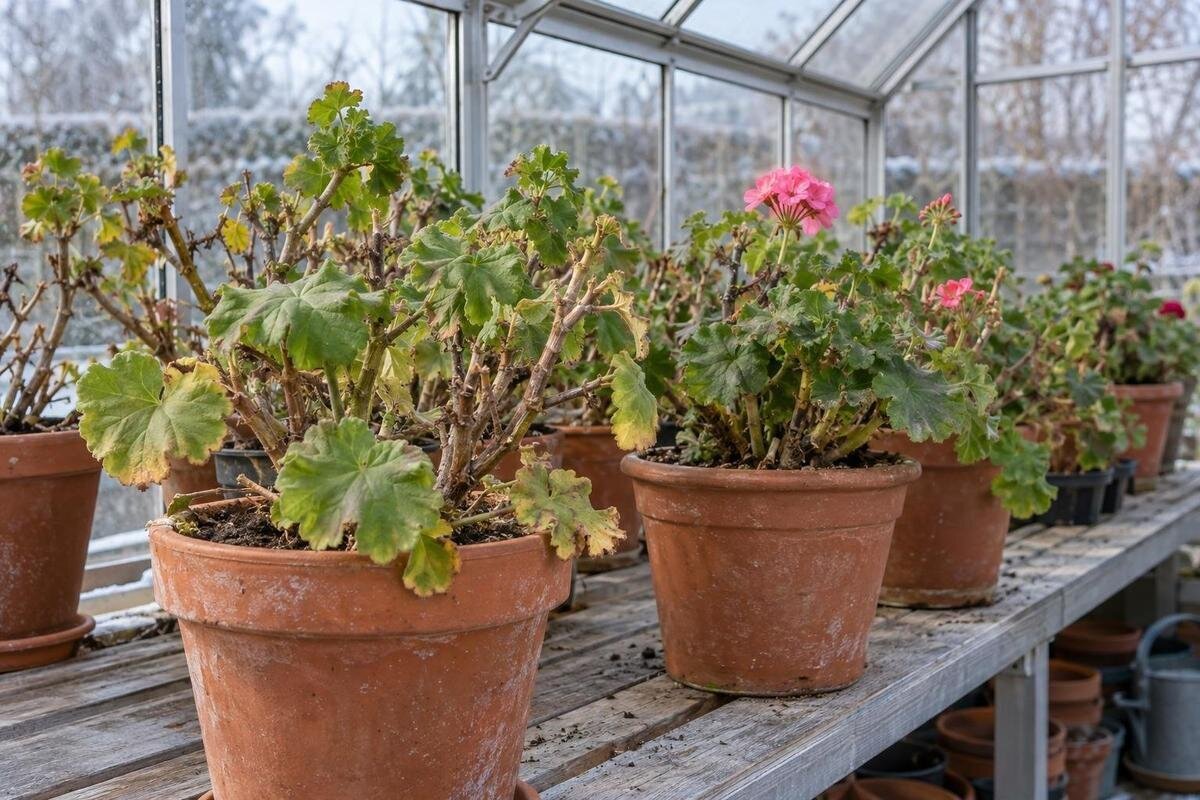
Garden geraniums in Ireland are usually tender pelargoniums, so an unheated greenhouse is a place to manage winter risk, not a guarantee against frost. You can let plants rest with little growth or keep them active, but those choices call for different temperatures, light and watering. A cool, bright rest is a useful middle option. This guide explains how to identify the plants, prepare them, monitor conditions and bring them back into growth without keeping compost wet through the darkest months.

Greenhouse planning 1
First identify the plant: pelargonium or hardy geranium?
On Irish garden-centre labels, “geranium” often refers to Pelargonium, the tender bedding plant grown in pots, window boxes and hanging baskets. Zonal pelargoniums, such as Pelargonium × hortorum, have rounded leaves; ivy-leaved types, often based on Pelargonium peltatum, have a trailing habit. Both are frost-tender, although their different shapes affect how you arrange them. Hardy geraniums, also called cranesbills, are a separate group of perennial plants, many of which can remain outdoors in suitable ground. They are not the focus here. Check a plant label for the botanical name, rather than putting every plant called a geranium into the same winter regime.
If labels have gone astray, compare the leaves, flower stems and upright or trailing habit with a reliable nursery description. Flower colour alone is not enough to identify a plant or its winter needs. Cultivars can also differ in growth and pruning response, so keep any remaining labels with the pots. This guide is about tender Pelargonium in containers. Even within that group, a compact plant being rested and a leafy plant being kept for spring cuttings need different positions. Make the choice plant by plant, especially if your collection includes several types.
Choose between a dormant rest and winter growth
A dormant or near-dormant winter is the lower-input choice when you can provide a cool, frost-free place but not long, bright days. Growth slows and some leaves may drop; the aim is to keep plants alive, not to encourage flowers. Active winter growth is a different plan: pelargoniums need a bright position and enough warmth to keep making leaves, with watering adjusted to that growth. A cool, bright, semi-dormant rest sits between the two and suits many home collections. It can preserve some foliage without encouraging soft shoots in poor light. Whichever method you choose, plants still need protection from frost.
Base the decision on conditions you can maintain, not how warm the greenhouse feels during a sunny afternoon. If light is limited but the space remains frost-free, choose a cooler rest rather than trying to maintain active growth. If you cannot keep it reliably frost-free, use another frost-free place for vulnerable pots. Resting plants may take up less room than leafy ones, but they still need air and access for checks. For a large collection, the Spacious Greenhouse range is listed from 47 to 70 m². Use area figures like these only after counting pots and allowing for a working aisle; more floor area does not itself improve winter care.
Greenhouse planning 2
Keep tender pelargoniums above frost
Glass warms quickly in winter sun and loses heat after dark, so an unheated greenhouse can swing from mild daytime conditions to a cold night. It is not a dependable frost barrier, particularly during a clear, cold spell. Put a minimum/maximum thermometer at about plant or pot height, out of direct sun, rather than relying on a reading near the door or roof. Check the minimum after cold nights and notice which areas of the greenhouse run coldest. If frost is forecast or readings threaten the plants, move small pots to a reliably frost-free place where possible. Do not wait for leaves to blacken before changing your plan.
Common bedding pelargoniums are frost-tender. For a cool winter rest, around 5–10°C is a practical reference range often used for these plants, not a universal survival limit; cultivar, moisture and plant condition all matter. Active growth calls for brighter and warmer conditions than a rest, but warmth cannot replace daylight. The Classic Aluminium Greenhouses listing covers 3.77 to 28.08 m²; that footprint is not evidence of a frost-free minimum temperature. Check the exact configuration and decide in advance how you will protect plants through a cold spell.
Prepare healthy plants before bringing them in
Choose firm plants without soft, blackened stems or persistently wet compost. Remove dead leaves, spent flowers and debris from the pot surface. Inspect the undersides of leaves, growing tips and stem joints for aphids, whitefly, mealybugs or webbing that may indicate mites. Keep newly moved plants apart from clean stock until you have checked them again. If you find a pest, isolate the affected pot and identify the problem before treating the collection. Plants kept close together are harder to inspect, and an unnoticed pest can spread. Wash reusable pots and clear old compost from benches or trays so new debris is easier to spot.
Do not move healthy plants into the greenhouse with leaves and compost dripping wet. Let excess water drain, remove damaged growth, and shorten only stems that are too long to handle or store safely. A severe cut is not essential for every cultivar; plants kept for active growth need enough healthy leaves to use the available light. Leave space to reach every pot rather than lining them up in a dense, inaccessible row. If comparing a compact structure, the Lean-to Greenhouses range is listed from 3.69 to 14.34 m². Check the exact door and internal layout against the access you will need for inspections.

Greenhouse planning 3
How to store pelargoniums in a dormant state
For a potted rest, remove flower stalks and damaged leaves, then keep the plant cool and frost-free without encouraging new growth. Water less than in summer: roots use moisture slowly in cool compost, so wait until the mix has dried appreciably instead of following a weekly routine. Do not leave a pot standing in a full saucer, or let its compost become a hard, completely dry block. Some lower leaves may yellow or fall as growth slows. A soft stem, unpleasant smell or persistently wet mix suggests a problem rather than ordinary leaf loss. Check the plant, stem firmness and compost together before watering.
Some gardeners lift pelargoniums, remove loose compost and store them bare-root in a cool, frost-free, airy place. This can save pot space, but it is less forgiving: roots may shrivel if too dry, while damp, stagnant storage can lead to rot. Use this method only if you can inspect plants regularly and keep them away from both frost and persistent moisture. When estimating room for dormant pots, the Limited Edition Aluminium Greenhouses listings range from 3.77 to 28.08 m². Floor area does not tell you how many containers or shelves will fit, so sketch the pots, access and air gaps before relying on the listed footprint.
A cool, bright rest for potted plants
This middle course keeps a plant leafy enough to monitor without encouraging rapid winter growth. Put pots in the brightest practical part of the greenhouse, spaced so daylight reaches the leaves and air can move between them. Do not use a shaded corner simply because the plants are resting: a cool, bright rest and dark storage are different methods. Remove a few yellow lower leaves if needed, but preserve healthy foliage. If shoots become long, pale and weak, the plant is probably getting more warmth than usable light. Move it to a brighter, cooler position if possible; extra water or feed will not correct that imbalance.
Check compost with a finger or by lifting the pot, then water only when the upper mix has dried and the container feels lighter. Let surplus drain fully. The interval varies with pot size, compost, temperature and ventilation, so a fixed calendar is unreliable. Keep labels with their plants and do not leave pots in standing water. The T-Shaped Orangery Greenhouse range is listed from 16.52 to 30 m². Use the plan for the chosen option, not its total area alone, to judge whether you can give pots a bright position and still reach them for checks.
Greenhouse planning 4
Keep actively growing plants bright
Active growth is a deliberate choice, not simply a warmer version of storage. Place plants where they receive as much natural daylight as the greenhouse allows; short winter days and cloudy spells can leave shoots weak even when the air feels warm. Zonal and trailing ivy-leaved pelargoniums both need good light to stay compact, although their eventual shapes differ. Rotate pots occasionally if one side faces the light, and move a plant from a dark shelf rather than trying to keep it flowering there. Winter flowers are not guaranteed; the aim may simply be to preserve a leafy plant. If growth becomes thin and stretched, provide better light and less warmth, or return the plant to a cooler rest.
Actively growing plants need more water than dormant ones, but let the compost surface dry between waterings and empty trays afterwards. A plant that is not making new growth does not need routine feeding; wait until it is clearly growing, then follow the fertiliser label. The Pyramid Greenhouse range is listed from 5.53 to 18.9 m². That does not establish usable height, light or ventilation. Check those details for the exact configuration if you need room to reach leafy plants and keep openings accessible.
Control watering, condensation and ventilation
In a damp winter, the main risk is not simply humid air; it is compost and foliage staying wet while temperatures are low. Water at the base where possible, early enough for splashes to dry, and remove yellow leaves or fallen petals before they decay. Clear pooled water and keep pots out of trays of runoff. On mild, reasonably dry days, ventilate the greenhouse to exchange stale, damp air. Close it again before temperatures fall sharply. Do not leave doors or vents open overnight in a cold snap, and arrange plants so they do not block the openings that provide airflow.
Condensation on glass is a useful prompt to review airflow and watering, not proof that every pot needs water. Check lower leaves and stems for soft patches or grey mould, remove affected debris promptly and separate a badly affected plant from healthy ones. If storage equipment or spare pots are part of your plan, the Limited-Edition Aluminium Greenhouses with Storage range is listed from 5.52 to 28.08 m². Check the exact configuration and keep stored items away from plant access and ventilation openings.

Greenhouse planning 5
Plan the greenhouse layout around access
Before moving the collection, count the pots and measure the largest containers, including hanging baskets and saucers. Allow a route to the door and enough room to inspect stems, water accurately and reach vents without shifting every plant. Keep dormant plants together if they share similar cool conditions. Put plants being grown on in a brighter, warmer zone only if you can maintain that difference. Do not crowd foliage against glass or neighbouring plants: touching leaves are harder to inspect and can stay damp for longer. Position the thermometer where it reflects conditions around the plants, not in a sunny pocket.
Make a greenhouse decision from measured requirements: pot count, internal height, door opening, ventilation positions and usable bench or floor area. A named shape or headline floor area cannot show how a particular layout works. The Prestige Greenhouse range is listed from 3.77 to 28.08 m². Use the selected option’s full dimensions to draw a simple plan before buying, and confirm there is room to monitor plants without blocking access. A well-organised collection in conditions you can check is more useful than unused area with no frost plan.
Bring plants back into growth gradually
As days lengthen, look for firm new buds before increasing water or feeding. Remove dead leaves and trim damaged stems back to healthy growth with clean tools. If plants have been kept cool, move them into brighter, warmer conditions gradually; a sudden change from dim storage to strong sun can scorch or stress new leaves. Repot only where roots have filled the container or the compost has deteriorated. A larger pot holds more wet compost and is not automatically helpful during a cool spell. Increase watering as new leaves develop, letting the mix drain between waterings.
Keep plants protected while frost remains a risk, even if they have begun growing. Before moving them outdoors, acclimatise them over several days to brighter light and more variable conditions, bringing them back under cover if cold weather threatens. Wait until local conditions are suitable rather than relying on a fixed calendar date. Once growth is established, remove weak or crowded shoots and resume feeding according to the product label. If a plant has not survived winter, discard it without placing suspect material beside healthy stock. The aim is a sound, compact plant ready for the season, not an early flush of soft growth.
Frequently asked questions
Can geraniums stay in an unheated Irish greenhouse?
They can only stay there safely if the space remains frost-free for the plants. An unheated greenhouse can become very cold overnight, even after a sunny day. Check minimum temperatures at plant level and have a frost-free alternative ready for cold spells.
Should I store pelargoniums in the dark?
A dormant, bare-root method can use little light, but potted plants kept in a cool, semi-dormant state need a bright position. Plants kept actively growing need good natural light. Choose one approach rather than combining darkness with warmth and expecting compact growth.
How often should I water geraniums over winter?
There is no reliable weekly schedule. Cool, resting plants use little water; check the compost and pot before watering, and let excess drain. Plants actively making leaves need more, but their compost should still dry somewhat between waterings.
Why are my winter pelargonium leaves turning yellow?
Some lower-leaf loss can happen as growth slows. Check whether the compost is staying wet, the plant is too cold or too dim, or pests are present. Look at the stems and the overall plant as well as the yellow leaves before deciding what to change.
Should I prune pelargoniums before winter?
Remove dead leaves, spent flowers and damaged growth. Shorten stems only as much as needed for handling or your chosen dormant method; a major cut is not necessary for every plant. Keep healthy leaves on plants you intend to grow actively.
Successful winter care depends on matching the plant to conditions you can maintain. For many potted pelargoniums, a cool, bright rest with careful watering is simpler than trying to sustain growth through short, cloudy days. Keep frost protection, access and ventilation in view, and check plants regularly rather than relying on the greenhouse alone. As light returns and growth resumes, increase watering gradually; the result is more likely to be a compact, healthy plant ready for the next season.
