
How to Choose Peat-Free Media for Greenhouse Crops
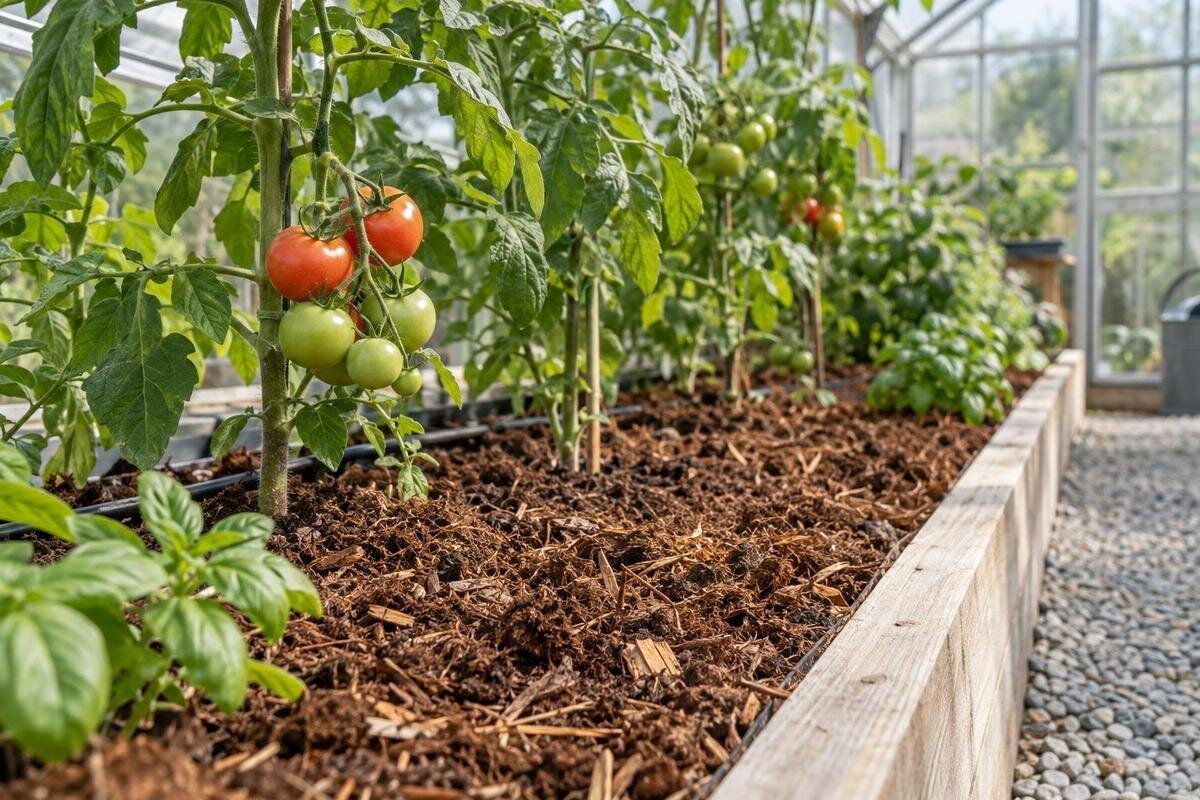
Greenhouse growing guide
Peat-free is a description of what a growing medium excludes, not a guarantee that every bag behaves alike. Greenhouse mixes differ in how they hold and release water, how much air remains around roots after watering, and whether they include nutrients. The right choice depends on the crop, whether roots are in a bed or container, and how you will monitor moisture and feeding under cover. Compare the product’s intended use and technical information, then try a small quantity in the same type of container or bed before changing a whole growing area.

What peat-free means for greenhouse growing
Peat-free describes an ingredient that is absent; it does not describe one standard recipe or guarantee a particular level of quality. Ready-to-use mixes may contain coir, composted bark, wood fibre, other plant-based composts or mineral components, in blends that differ by brand and grade. Some products are formulated for seed sowing, others for potting, grow bags or soil improvement. Those uses are not interchangeable just because the front of the bag says peat-free. Treat the stated purpose and full product information as your starting point, rather than expecting every alternative to behave like the peat-based compost you have used before.
Identify where the roots will grow before choosing a bag: in existing greenhouse soil, a raised bed, a grow bag or a pot. A medium intended to fill containers should not automatically be treated as an amendment for in-ground soil. For beds, distinguish between improving soil already present and filling a new growing area; these are different purchases, even when both products are peat-free. For a broad footprint comparison, the T-Shaped Orangery Greenhouse is listed from 16.52 m² to 30 m². Use the selected model’s detailed dimensions to identify the actual growing area, excluding paths and other spaces that will not contain soil or containers.
Match the medium to the crop and growing system
Start with the crop and the product’s stated use, not the ingredient that sounds most familiar. Seed-sowing mixes are often finer and may contain less initial feed than a medium for established container plants, but formulations differ. A product for grow bags may have different moisture and feeding instructions from a general potting medium. Check that the label names the crop or crop group you intend to grow, and follow its planting and feeding guidance. Also distinguish between sowing seeds, potting on young plants and growing an established crop: suitability for one stage does not answer every question about another. If the packaging only says peat-free, it has not yet answered whether the product suits your use. Where a label describes several uses, read the instructions for the relevant one rather than combining guidance from different applications.
A greenhouse may hold seedlings, leafy crops and fruiting plants at the same time, but one medium may not meet every need. Separate beds, pots or bags can keep different products and routines distinct; label them so their instructions are not confused. Plan for the containers you intend to use at each stage, rather than counting only the small pots occupied at sowing time. The Pyramid Greenhouse is listed from 5.53 m² to 18.9 m². Compare the chosen model’s dimensions with this container plan and leave working space around each group; the area figure alone does not establish crop capacity.
Compare water retention, drainage and air space
A useful growing medium needs to hold water that roots can access while allowing excess water to drain and air to remain around the roots. After watering, some water drains away, some is held in pores and some pore space remains air-filled. Roots need both water and oxygen; a mix that stays saturated can leave too little air, while one that dries too quickly can leave plants short of moisture. A label saying ‘good drainage’ does not tell you how often to water or how much water remains available. Consider water retention and aeration together, in the container or bed you will actually use.
Particle size and structure matter as much as the ingredient name. Coarser fibres or bark may leave larger pores, while fine fractions can hold moisture differently and may compact if handled roughly. The result also depends on how ingredients are processed, blended and packed. Two products that list a similar ingredient can therefore behave differently. Avoid adding extra materials simply because a general recipe recommends them: changing the blend may alter its water behaviour and nutrient supply. If the product information does not explain its intended structure, ask the supplier how it is meant to be used.
Compare product information and suppliers
Look beyond the product name and broad claims. Check the intended crops and growing system, ingredient information, and any details supplied about particle size or fibre grade. Note the stated pH, whether starter fertiliser or lime is included, and the instructions for initial wetting and feeding. Not every supplier provides every measure, so do not fill gaps by guessing; ask for a technical sheet or a clear answer. A phrase such as natural or organic does not, on its own, tell you how a medium holds water, what nutrients it contains or whether it suits a particular crop. When comparing suppliers, check that their information refers to the exact product and grade being offered. Similar names or bag designs can make comparisons confusing. Keep the product description with your order details so that a later purchase can be matched to the mix you actually assessed.
Keep a short comparison record for each candidate: crop, bed or container type, bag volume, ingredients, feeding instructions and any published pH or electrical conductivity (EC) figure. EC indicates soluble salts, not a full nutrient analysis; readings are most useful when you know the test method. Record unanswered questions as well, rather than treating a missing value as equivalent to another supplier’s published result. When choosing the growing space, the Bloomcabin Prestige Greenhouse is listed from 3.77 m² to 28.08 m². Add the selected model’s dimensions to your comparison record so that the medium quantity and container arrangement relate to a specific size, not the whole range.

Test how evenly the medium wets
Follow the product’s directions for wetting a new mix before use. If it is very dry, add water gradually, mix it through and check whether moisture reaches all parts instead of judging by the surface. The amount that drains out is not the whole story: water can run through evenly, or bypass dry pockets. Check the medium at root depth to distinguish between those outcomes. Do not change the recipe with extra ingredients during the test, as that would make it harder to tell how the product itself behaves.
For a practical wetting comparison, fill identical containers with equal amounts of the candidate and your current medium, following each product’s preparation instructions. Apply water in a consistent way and note whether it reaches the full depth, drains promptly and leaves any dry pockets. Keep container size, position and exposure similar; otherwise differences may come from the setup rather than the mix. Record what you did, including any gradual pre-wetting, so you can repeat the preparation when planting. This check addresses how the medium takes up water, not how a crop will perform over time. Use it to establish a workable preparation method before moving on to a planted trial.
Adjust watering under greenhouse cover
Beds and pots under a greenhouse roof do not receive direct rainfall, while sunlight, ventilation, temperature and plant size affect how quickly moisture is lost. A calendar used for a previous medium may therefore be unreliable. Check below the surface where roots are active, not only the top layer: the surface can look dry while the medium beneath remains moist, or the reverse. In pots, lifting a container can help you build a consistent sense of its weight. In a bed, check more than one point, particularly where crops or growing conditions differ.
After changing medium, make regular checks and use what you find to adjust, rather than applying the same volume on the same schedule by default. Water evenly in line with the product instructions, and allow excess to drain from containers. If water runs straight through a very dry sample, check for dry pockets or channelling before simply watering more often; gradual pre-wetting may be needed. The Aluminium Greenhouses are listed from 3.77 m² to 28.08 m². When comparing sizes, consider how you will reach the pots and beds with your watering equipment. A layout that allows planting but makes root-zone checks awkward will be harder to manage consistently.
Check nutrient supply before adding fertiliser
Water behaviour and nutrient supply are separate properties. Some mixes include an initial dose of fertiliser, some do not, and a product may be intended for a particular crop or stage of growth. Check what is included and when supplementary feeding is expected for the crops named on the label. Peat-free does not mean either nutrient-poor or nutrient-rich. Adding feed immediately can duplicate nutrients already present, while a medium with little initial feed may need a different plan. Follow the product instructions and crop requirements rather than relying on the medium’s colour or a single sign of plant growth.
Rain does not fall directly into a covered bed or container, so salts from feed and water may accumulate depending on how the crop is managed. Do not diagnose a leaf symptom on its own or respond automatically with more fertiliser. If you measure pH or EC, follow the test method and consider the source water: pH relates to nutrient availability, while EC estimates dissolved salts rather than identifying a missing nutrient. Keep a record of feeds already applied before deciding on a change. The Limited Edition Aluminium Greenhouses are listed from 3.77 m² to 28.08 m². If your crops need separate feeding routines, check whether the selected size allows clearly identified growing areas that you can manage without confusing their instructions.
Estimate the quantity and plan storage
Measure the volume you need rather than estimating from the greenhouse area. For a rectangular bed, multiply its length, width and intended fill depth in metres to get cubic metres, then multiply by 1,000 to convert to litres. For pots, use the volume you intend to fill in each and add the amounts together. Check the bag’s stated volume and use the actual dimensions of the growing area; paths and unfilled spaces do not need medium. Keep quantities for different products separate, especially if you are ordering a seed-sowing mix as well as a potting or grow-bag medium. Convert each requirement into the relevant bag size before combining the order. Ask the supplier if you are unsure how to allow for settling or a particular product’s handling instructions.
Store bags as directed on the packaging, with opened contents closed and protected from rain and contamination. Keep product labels or batch details so you can identify the mix used in each area. Mark opened bags clearly if several products are stored together, and retain their preparation instructions rather than relying on memory when you use the remainder. Plan storage around the quantity you will actually order, including any bags reserved for later potting. If storage is part of a greenhouse decision, the Limited-Edition Aluminium Greenhouses with Storage are listed from 5.52 m² to 28.08 m². The listing identifies a storage option, but does not give its capacity or storage conditions for growing media; check the product details rather than assuming it will suit the bags you plan to keep.

Trial a new mix before changing the whole growing area
A small, representative planted trial can show whether a medium works with your crop and watering routine. Use the same crop, container type and planting stage in the candidate and comparison areas, and change one factor at a time. Record watering, drainage and root-zone moisture alongside the plant’s progress. Repeat observations through more than one watering cycle, as a single wetting may not reveal how the medium behaves as it dries. Keep notes specific: record which container you checked and what you observed rather than simply writing that one mix was better. If you test a different crop or container at the same time, note that the result may reflect those differences rather than the mix alone. The aim is to find a manageable routine for your chosen crop, not to rank every peat-free ingredient.
Only scale up when the trial gives you a routine you can maintain. Keep the product name, grade and batch details with your results so that you know what to order again. If the trial leaves a question unresolved, repeat that part of the comparison rather than changing the medium, feeding and container together. For separate trial and comparison areas, the Spacious Greenhouse is listed from 47 m² to 70 m². Mark both areas on the selected model’s plan, including access for observations and watering. That range is a footprint reference, not a description of an interior layout; the useful question is whether your comparison can be maintained without one group receiving different treatment simply because it is harder to reach.
Plan the greenhouse layout for daily care
The most suitable medium is only practical if you can check and water it consistently. Arrange beds, pots or grow bags so you can reach the growing area without moving other crops each time. Before finalising the layout, trace a normal round of watering, moisture checks and feeding through it. Identify any containers that would be difficult to inspect, and allow working space rather than counting every square metre as planting area. Place labels where you can read them during these tasks. If two products need different routines, their positions should make that distinction easy to maintain, not merely look tidy on a plan.
Compare the greenhouse dimensions with the growing system you have chosen, including any area needed for stored supplies and access to containers. The Lean-to Greenhouses are listed from 3.69 m² to 14.34 m². Use the range to shortlist a size, then draw in the actual beds, pots and working routes using the selected model’s dimensions. Review the arrangement as a whole: a convenient storage position should not obstruct a route needed for daily care. This brings the medium choice and greenhouse choice together without assuming that a product listing provides a particular interior layout.
Frequently asked questions
Does peat-free mean one standard kind of growing medium?
No. It means peat is not included, but ingredients, particle sizes, nutrient content and intended uses vary. Read the full product information and compare what the medium is formulated for rather than choosing on the peat-free claim alone.
Can I use one peat-free mix for seeds and mature greenhouse crops?
Only if the product information lists both uses. Seed-sowing media are often formulated differently from potting or grow-bag products, particularly in texture and nutrient supply. For mixed crops, follow the relevant instructions and keep different batches identifiable.
Will I need to water a peat-free mix more often?
Not as a rule. Water-holding and wetting behaviour varies between products, and the container, crop and greenhouse conditions also affect moisture loss. Check within the root zone and adjust from what you observe rather than adding a fixed number of waterings.
Do peat-free growing media need fertiliser straight away?
Check whether the product includes an initial nutrient charge, which crops it suits and how long any stated feed is expected to last. Do not add fertiliser automatically; follow the product guidance and consider measured conditions before changing your feeding routine.
What should I ask a supplier before ordering?
Ask which crops and growing systems the product is intended for, what it contains, whether nutrients or lime are added, and how it should be wetted, watered and fed. If the label leaves gaps, request available technical information and batch or traceability details.
Choosing well is less about finding one ideal ingredient than matching the product’s purpose, physical behaviour and nutrient information to your crop and growing system. Test a small amount under the same covered conditions where the plants will grow, and record what happens at root depth. Once you have a medium and watering routine that work together, use that experience to guide a larger purchase rather than changing several parts of the system at once.
