
Using a Greenhouse to Start Plants for Outdoor Raised Beds
Greenhouse growing guide
Use the greenhouse as a temporary nursery for plants that will finish growing in outdoor raised beds. It gives you a place to sow and raise young plants, but it does not remove the need to match each batch to bed space, prepare the outdoor growing area and allow for hardening off. Plan the whole process, from sowing to establishment in the bed: germination is only the first stage.

01
The greenhouse's role as a temporary nursery
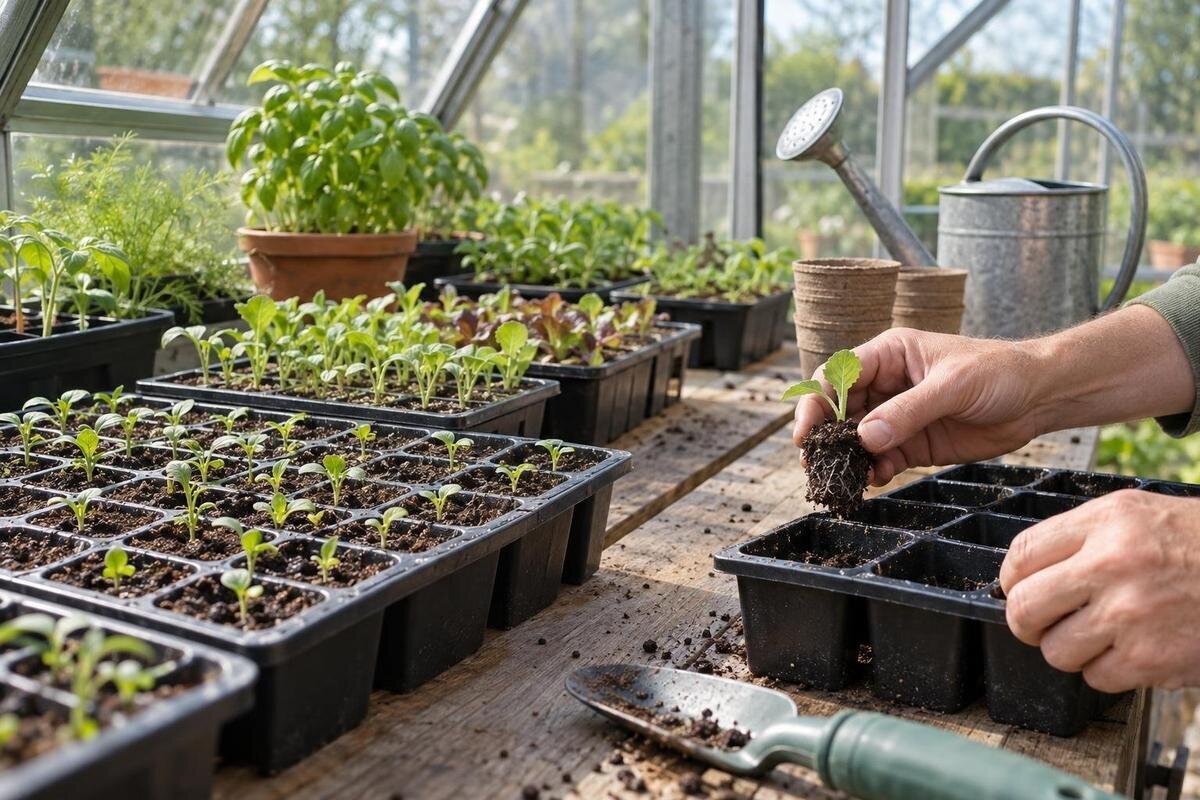
Treat the greenhouse as a nursery stage for plants whose planned destination is an outdoor raised bed. The sequence is sowing, early growth, potting on if needed, hardening off and planting into prepared soil. Each stage has a separate purpose: the greenhouse gives you a place to manage young plants, while the bed is where the crop is intended to grow. A seedling that looks healthy under cover is not automatically ready for outdoor exposure, and simply keeping it in the greenhouse is not the same as establishing a bed crop. If the greenhouse also contains plants that will remain under cover, reserve a clearly defined area for trays and note when each batch should leave it. That boundary makes it easier to notice when nursery plants are taking space needed for other work.
That distinction should shape the crop list. Check whether each chosen crop is normally started in modules or sown directly into the bed; this guide concerns transplants and does not assume a greenhouse start is useful for every crop. Label trays with the crop, variety, sowing date and intended bed so each batch has a clear destination. For scale, the Spacious Greenhouse range is listed from 47 to 70 m²; that area does not tell you how many benches or seedlings fit. When considering a structure of this size, distinguish the area you need for raising transplants from any space intended for crops that will remain under cover. Plan the nursery as a defined part of the layout, with access for tending plants and moving batches outside.
Plan bed capacity before sowing
Before sowing, draw a simple plan for each raised bed and note its usable planting area, current occupants, supports and access space. Use crop- and variety-specific guidance for mature size and spacing; a seed tray can hold far more seedlings than a bed can accommodate. Assign a destination to each batch and calculate a realistic number of plants for that space. If you want spares in case a few fail, decide on that allowance in advance rather than keeping every extra seedling. Mark where taller or climbing plants will go so their supports and shade do not block the rest of the bed. Include crops that will still be growing when the new plants are ready, and note when any existing space is likely to become free.
Once outdoor capacity is known, estimate nursery space from the trays you will need at their busiest point, not from the first sowing alone. The Pyramid Greenhouse range is listed from 5.53 m² to 18.9 m²; those figures describe overall area, not tray capacity. Compare the footprint of the specific size with the bench arrangement, clear access and space to carry trays. If the bed plan changes, revise the sowing target before adding more modules: extra covered floor space cannot expand the outdoor planting area. Avoid treating the maximum number of trays you can fit as a target. A raised-bed planting plan is realistic only when greenhouse capacity and bed space agree.
02
Work backwards from a suitable planting window
Choose a realistic planting window for each crop using its seed packet or a dependable crop-specific guide, then work backwards. The window depends both on the plant reaching its recommended stage and on the outdoor bed being ready; a date on a generic calendar is not a guarantee. Note the advised sowing period, expected time to reach transplant size, any potting-on stage and time for hardening off. These timings vary by crop and variety, so one sowing date for the whole bed can leave fast-growing plants waiting while slower ones are not ready. Check that the guidance suits your growing conditions rather than transferring dates from a different region.
Put those steps in a calendar with a flexible window rather than one immovable deadline. Include time to prepare the bed, check the local forecast and respond if cold, wet or windy conditions delay planting. If one batch develops more slowly, adjust a later sowing or use a different bed slot where possible; do not keep sowing automatically because the next date has arrived. Mark when each batch needs more space as well as its intended outdoor window. A little flexibility is more useful than sowing extra plants as insurance. This turns packet guidance into a sequence for your garden without pretending every season follows the same schedule.
Measure usable bench space, not just floor area
Count usable work surface, not just greenhouse floor area. Lay out the trays you expect to use for germination, growing on and potting up; the busiest point is when older and new batches overlap. Allow for pots that take more room as plants develop, space for labels and tools, and practical access to water. Keep a walkway clear so you can inspect and carry trays without moving neighbouring plants every time. If you use a bench, measure its surface and note whether shelves above could limit growth or light for plants below. Check the layout at different stages: small seedlings and potted-on plants do not occupy the same space.
Storage also competes with propagation space, so decide where compost, pots and hand tools will go instead of placing them wherever a tray fits. The Limited-Edition Aluminium Greenhouses with Storage range is listed from 5.52 to 28.08 m²; consult the chosen option's layout to see what remains for accessible work and trays, because a headline area is not a bench measurement. Keep a simple scale sketch with the bench, path and storage marked. Include a place to set down a batch while you prepare it for the bed. That is more useful than estimating capacity from the outside dimensions alone, and it can reveal whether the workflow still works when plants need larger containers.

03
Organise trays around a simple nursery routine
Set up a routine that makes small problems visible. Group trays by crop or sowing date and use labels that stay with the tray rather than relying on memory or a loose note. Keep a record beside the growing area for sowing, germination, potting on and planting, updating it whenever a batch moves. Check plants systematically for moisture, growth and damage instead of watering every tray on the same day simply because it shares a bench. Follow crop-specific guidance on watering and feeding, and remove dead or mouldy material promptly. A consistent order helps you notice changes and reduces the chance of a tray being overlooked when several sowings overlap.
Leave a small surface for pricking out, potting on and sorting plants, and keep the route to trays clear. Separate the handling task from the main growing surface so finished pots can be labelled and returned to the right group without disturbing neighbouring seedlings. The Bloomcabin Prestige Greenhouse range is listed from 3.77 to 28.08 m²; check the plan for the specific size under consideration and work out where a bench and working access would sit. The area figure alone does not tell you how much usable surface you will have or whether your routine fits. Include room to turn and set down a tray, not just somewhere to place pots.
Manage the difference between greenhouse and outdoor conditions
Young plants experience a different environment under glass from the one they will meet in a raised bed. A greenhouse can warm quickly in bright sunshine, while conditions may change again as light fades; protection from rain or wind does not reproduce outdoor exposure. Observe the space through the day rather than relying on one reading, and use a thermometer if you need to track temperature trends. Ventilate in line with the structure's design and the plants' requirements, avoiding an abrupt draught across tender seedlings. Check compost moisture as well: shallow trays can dry at a different pace from a bed. Notes about conditions at tray height can help explain how a batch responds.
Before choosing a structure, check the exact specification for its openings and how you will manage ventilation. When comparing the Aluminium Greenhouses range, consider how you would reach and operate those openings with your proposed benches in place. Think about where you can monitor conditions at tray height without blocking the route through the greenhouse. Your routine should also allow you to tend seedlings that must remain under cover when outdoor planting is delayed. The aim is to manage the conditions plants actually experience, rather than assume they stay constant throughout the day. Use your observations alongside crop-specific guidance when deciding whether a batch is ready to begin hardening off.
04
Sow in batches that match bed turnover
Sowing in more than one batch can spread the work and reduce the chance of every plant reaching the bed at once. Base each batch on a definite bed space and a likely planting window, not on how many seeds remain in the packet. Before the next sowing, check how many plants from the previous batch are growing well, how much bench room they need and whether the beds will be free. If no slot is available, pause rather than adding a queue that needs watering and potting on without a clear destination. This is particularly useful where one raised bed holds several crops or where harvest and clearance dates are uncertain.
During peak overlap, count both young trays and plants already potted on. When considering the Limited Edition Aluminium Greenhouses range, use the exact model layout and your tray measurements to map where each batch would sit. Include the handling space needed when an older batch is being moved out while a new sowing is already growing. A schedule is only workable if you can inspect and move each group without repeatedly shifting neighbouring trays. Before sowing again, record what was actually planted and what remained unused, then adjust the next batch size. This keeps the sowing schedule tied to available bed space rather than letting successive batches accumulate under cover.
Harden off young plants before planting out
Hardening off is a gradual change from sheltered greenhouse conditions to outdoor exposure before planting. Begin when seedlings are close to the stage recommended for transplanting and the bed is likely to be available; there is little benefit in starting a long transition while plants are still too small or their destination is blocked. Use a sheltered outdoor position first, then increase exposure to the site's normal light and air at a pace suited to the crop and weather. Bring plants back under cover or protect them if conditions turn unsuitable. Follow crop-specific guidance rather than using a fixed number of days for every tray.
Keep the process manageable by hardening off labelled groups, checking each one and making sure the compost does not dry while plants are outside. Avoid moving delicate seedlings straight from a sheltered bench into intense sun, strong wind or a cold night; a gradual transition lets you observe how they respond. If the greenhouse and beds are separated, plan the carrying route and a sheltered staging spot so trays are not left exposed while you prepare the bed. The Lean-to Greenhouses range is listed from 3.69 to 14.34 m². When comparing an option, consider its position in relation to the hardening-off area and whether you can move trays between the two comfortably, including when plants need to be brought back under cover.

05
Prepare the beds before seedlings leave the greenhouse
Prepare the raised bed before the plants leave the greenhouse. Clear space from any crop that has finished, remove weeds, check that planned supports can be installed and make sure the soil and conditions suit the crop being planted. Follow species-specific spacing and planting-depth guidance rather than setting every transplant at the same distance or depth. Water the modules as needed before moving them, and handle seedlings carefully rather than pulling at a delicate stem. Choose a suitable spell of weather and avoid leaving plants waiting in trays while the bed is being cleared. A ready destination makes the handover shorter and reduces the chance of a last-minute change of plan.
Carry plants in manageable batches and place them into their assigned positions, then water and provide any support recommended for that crop. Keep labels or a bed map until you are sure each group is correctly planted. Afterwards, check for signs of wilting, damage or disturbance and respond according to the plant's needs; an isolated setback is not necessarily a reason to replace the whole batch. The T-Shaped Orangery Greenhouse range is listed from 16.52 to 30 m². If you are considering it for your nursery, include the transfer to the beds in your layout plan: identify where a batch can be set down before carrying it outside and keep that space clear when planting day arrives.
Record each handover to improve the next plan
Keep a concise record for each batch: crop and variety, sowing date, number sown, germination observations, any potting-on date, planned bed and actual planting date. Add notes on tray type or container size only when they help explain the result. Record how many plants were used, left over or lost, and whether a bed was ready when expected. Separate what you observed from what you guessed; note that a batch was delayed and the conditions you saw rather than assuming the greenhouse alone caused it. A few consistent fields make comparison more useful than a long diary with no repeated details.
At the end of the growing period, compare the plan with what happened. Did batches arrive at the bed together, run short or remain in the greenhouse? Was the limiting factor tray space, bed availability, weather, labour or an inaccurate estimate of crop demand? Change one part of the plan at a time where possible, such as sowing fewer plants or leaving a longer buffer before planting, and record why. These notes help you decide next season's quantities and dates from your own results. They also keep the greenhouse's purpose clear: a temporary nursery that supports a workable raised-bed plan, rather than a place to keep surplus plants indefinitely.
Frequently asked questions
Does every crop for a raised bed need a greenhouse start?
No. Some crops are intended for direct sowing outdoors, and others may not suit transplanting. Follow the guidance for each crop and variety, and use greenhouse-raised plants where they fit your growing plan. The aim is not to raise every seedling under cover.
When should I plant greenhouse-raised seedlings outside?
Plant when the crop has reached its recommended transplant stage, has been hardened off, and the bed and weather are suitable. Use crop-specific guidance and the local forecast rather than applying one calendar date to every plant.
What does hardening off involve?
It means gradually getting young plants used to outdoor light and conditions before planting them in the bed. Start in a sheltered spot, increase their exposure over time, and protect them if conditions become unsuitable. The pace depends on the crop and the weather.
How much greenhouse space do I need for seedlings?
Work from the number and size of trays you need at the busiest point, allowing for potting on, a clear route and space to work. Check the usable layout of a specific model; its total floor area does not tell you how much bench space you will have.
Can seedlings stay in the greenhouse after the bed is ready?
They can stay briefly if the crop, conditions and available space allow, but this plan treats the greenhouse as a nursery rather than the final growing place. A delay may mean potting on and can hold space needed for the next batch.
Successful transplant production is less about filling every tray than keeping the nursery, beds and timetable in agreement. When each batch has a destination, space to grow, time to adapt outdoors and a prepared bed, the greenhouse can do its job and release that space for the next sowing. Keep the plan flexible enough to respond to plants and conditions; notes from each handover will make next season's decisions more precise.
