
How to Tell When Greenhouse Soil Needs Replacing
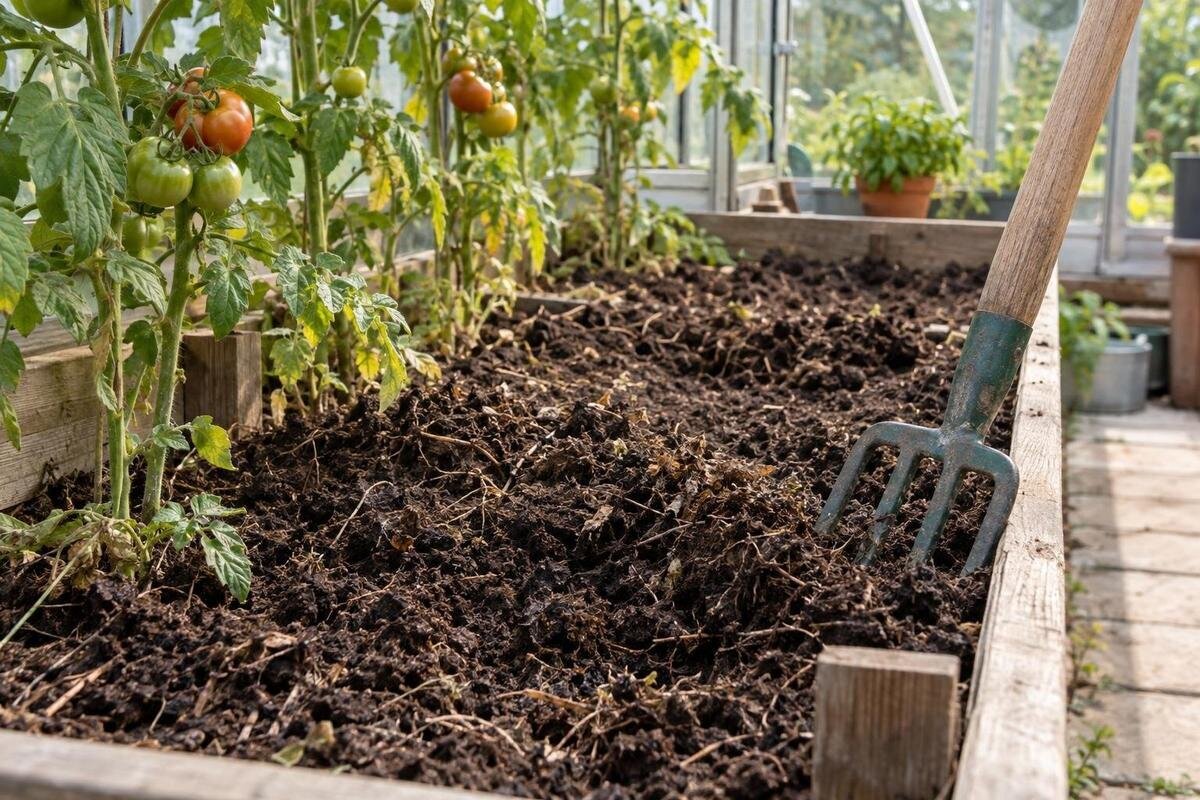
Greenhouse soil guide
Greenhouse soil can decline, but a tired crop does not automatically mean the whole bed is spent. Nutrients may be low, the soil may be compacted or poorly drained, or a crop problem may need diagnosis before any soil is moved. The useful question is not how many years the bed has been in place; it is whether the cause can be corrected safely and reliably. This guide helps you distinguish those possibilities and choose between testing, improving, partial replacement and a full reset.

Greenhouse layout check 1
Greenhouse soil does not need annual replacement
An established greenhouse bed can grow crops for years without being emptied each winter. Plants use nutrients, but that does not mean the whole soil has become unusable: fertility may be restored, while poor structure and crop-health concerns call for separate investigation. Make replacement a response to a diagnosed condition, not a calendar task. Before changing anything, record the crops grown, amendments used, watering pattern and any past trouble. Soil age alone is a weak guide. If the bed has continued to support healthy growth and drain normally, its history is not, by itself, a reason to remove it. A heavy-feeding crop can leave a different nutrient balance from other crops, so the planting record matters.
The growing system matters too. In-ground beds have a continuing soil profile; pots, trays and grow bags hold a limited quantity of growing medium that can settle, break down or accumulate salts. Assess those separately rather than applying one rule to the whole greenhouse. A tired potting medium is not evidence that the ground beds need the same treatment. If you are choosing a greenhouse while planning permanent beds, compare the Oasis Pyramid Greenhouse listing, which covers stated areas from 5.53 m² to 18.9 m², with your bed-and-path plan. Total floor area is not plantable soil area, so verify the selected model's dimensions before fixing beds in place.
Map crop symptoms before changing the bed
Map the problem before digging. Note whether symptoms affect one plant, one crop, one bed edge or several unrelated crops across the greenhouse, and whether the same pattern returns each season. Compare healthy and affected plants growing under similar conditions. Leaf colour, stunting and wilting can reflect nutrition, watering, temperature, pests, root damage or disease; none proves that the soil should be replaced. Record when symptoms began and which parts of the plants are affected. A recurring patch in a fixed place deserves a different investigation from a brief problem limited to one crop. Check nearby plants too; a pattern can be more informative than the worst-looking leaf. Note whether trouble began after applying fertiliser or changing the irrigation.
Sketch the beds and mark symptoms, crop history, irrigation points and recent inputs. Keep unlike areas separate when collecting samples; mixing them can hide a local problem in an average result. The map also helps show whether trouble follows a bed or a crop. Mark any planters that use a different growing medium, and give each area a simple name so that photographs and test results can be matched to it later. If you are considering the Limited-Edition Aluminium Greenhouse with Built-In Storage, include the storage area on your proposed layout. Distinguish growing space from places used to keep tools and materials, rather than treating the entire footprint as one sampling area.
Greenhouse layout check 2
Check soil structure and water movement
Inspect the soil where roots grow, not only the dry surface. Choose several representative spots and examine them when the soil is moist but not saturated; recently watered soil can seem heavier, and freshly disturbed soil may look looser than it is. Note whether it breaks into aggregates, forms a hard crust, smears into dense clods or contains a compacted layer. Check whether roots pass through the soil and whether they look healthy or restricted. Some clods or firm patches may simply reflect soil texture, so compare different parts of the same bed rather than judging from a single trowel sample. Include points near and away from symptoms, and note whether roots stop at a distinct layer.
Watch how water moves during normal watering. Persistent puddling, runoff, channels that bypass dry patches or a bed that stays wet point to different possible constraints; check watering practice, compaction and the bed's drainage route before blaming the soil itself. If a blocked outlet or underlying barrier is involved, replacing soil and putting it back over the same problem may change little. Observe after ordinary watering rather than flooding the bed to test it. Keep access beside permanent beds so you can inspect without repeatedly stepping on them. When planning beds for a Bloomcabin Prestige Greenhouse with Metal Base, check whether your proposed paths let you reach both healthy and affected areas for comparison.
Test nutrients, pH and salts before feeding
Poor growth is a reason to investigate, not proof of nutrient exhaustion. A soil test can help distinguish nutrient levels from an unsuitable pH, and it is useful only if the sample represents the affected growing area. Follow the laboratory or test-kit instructions for locations and handling. Take separate samples from beds with different histories or symptoms instead of blending them, and ask for interpretation suited to the crop and soil. If a result identifies a shortage, correct that shortage; if pH is unsuitable for the crop, adding more general fertiliser may not address the cause. Do not infer a deficiency from leaf colour alone. Where possible, sample before adding more feed, rather than testing only the surface material.
Where fertiliser or irrigation water has been used repeatedly, ask whether electrical conductivity (EC), a measure related to soluble salts, should also be assessed. An elevated reading needs interpretation alongside the test method, soil and crop; do not flush or amend a bed by guesswork. Record results and sampling locations so a later test can be compared fairly. Note recent fertiliser or other amendments too, as they affect what a sample represents. In a greenhouse with distinct growing zones, separate samples are more informative than one blended sample. If you are considering the Spacious Greenhouse, whose listings span 47 m² to 70 m², plan those zones around soil history and management rather than overall floor area.

Greenhouse layout check 3
Investigate possible soil-borne disease first
Repeated wilting, stunted growth, root decay, lesions or unexplained crop losses can point to a soil-borne problem, but the same signs can have other causes. Waterlogging, pests and damaged roots may look similar at first, so do not diagnose a pathogen from leaf appearance alone. Note the crop, timing, distribution and root condition, then seek help from a plant-health laboratory or suitably qualified horticultural adviser if trouble keeps returning or affects valuable plants. They can advise what material to submit and whether testing is worthwhile. The aim is to identify the cause before moving soil, not to label every tired bed as diseased. A diagnosis may point to hygiene or crop choices rather than soil removal.
While investigating, avoid carrying suspect soil, roots or dirty tools into unaffected beds, and do not put affected material on the compost heap until you have advice appropriate to the suspected problem. Replacing soil without finding the source may not help if it remains in plant debris, containers, tools or incoming plants. A confirmed pathogen's persistence varies, so one removal rule cannot be applied to every disease. When drawing a bed layout for an Aluminium Classic Greenhouse, consider where tools and containers from an affected area could be kept apart during an investigation. This is a practical handling arrangement, not evidence that separate beds will prevent a disease from spreading.
Correct recoverable problems in place
Many fertility problems are repairable without removing soil. Use test results and crop needs to choose an appropriate amendment, and avoid adding extra fertiliser merely because growth looks slow. Reassess how much water reaches the bed and whether it is distributed evenly; correcting an irrigation fault may resolve patchy growth more effectively than changing soil. If structure has declined, a suitable clean organic material may help over time, but the right choice and amount depend on the existing soil and crop. Do not treat one product as a cure for compaction, poor drainage and low fertility at once. Extra feeding will not solve a problem if roots cannot take up nutrients.
Make one correction at a time where practical, keep a note of what was done, and watch the next crop before adding another input. That makes it easier to judge whether the change worked and avoids overlapping amendments obscuring the original problem. Match any recommendation to the test result and crop rather than combining products by guesswork. If you move some crops into pots or other containers, check that the medium is intended for that system and record it separately from bed soil. For a mixed bed-and-container arrangement, compare the Lean-to Greenhouses options with a plan showing where each crop would grow. Allow access to tend the containers without standing on the remaining bed.
Greenhouse layout check 4
Use partial replacement for a defined problem
Partial replacement can make sense when a problem is clearly confined to a defined area and investigation supports removing that portion. Examples include a localised spill, a section affected by a confirmed crop-health problem, or a patch whose physical condition cannot be corrected in place. Set the boundary using evidence, not a convenient skim of the surface: an issue may extend beyond the visible symptoms. A small sample of clean-looking soil does not prove that the edge of an affected area is safe. Keep suspect soil separate and do not spread it to fill low spots or blend it into a healthy bed. If contamination or a persistent pathogen is suspected, ask a qualified adviser how to handle the material before disturbing it further.
If only one bed has a problem, protect unaffected areas during removal and check what lies underneath before refilling; otherwise the same cause may remain. Replacement soil should suit the crop and bed, with a known source and clear information about its composition. Do not choose on the word 'topsoil' or 'compost' alone. If the affected bed's history is unclear, include that uncertainty when seeking advice, particularly where contamination is a concern. If you are redesigning a section, use the Limited Edition Aluminium Greenhouse listing to compare the proposed arrangement with the selected model. Show which bed will change and how you will reach it without disturbing neighbouring growing areas.
When to replace the whole bed
Consider replacing a whole bed only when the issue is widespread and testing or professional diagnosis indicates that in-place correction is not dependable. A confirmed contaminant, a persistent soil-borne disease for which a specialist recommends removal, or severe and uniform structural decline that cannot be corrected may justify a full reset. The evidence should relate to the bed as a whole, not just the worst plant. Low nutrient readings on their own rarely do; they usually call for a targeted amendment. If the diagnosis is uncertain, pause before removing anything. Stripping a bed can be costly, disrupt the soil community and still fail to address water, hygiene or crop-management causes.
Before a full change, decide whether the bed will remain in-ground or whether a different growing system would solve the practical difficulty. Check the new material's source, composition and suitability for the crops; ask the supplier or an independent adviser if its description is unclear. Keep suspect old soil separate until you have appropriate handling advice. If a new structure is being considered at the same time, review the T-Shaped Orangery Greenhouse options alongside your removal and refilling plan. Consider the route between the entrance and the beds, and where material will wait while work is under way. Plan how new soil will reach the bed without mixing it with soil being removed.

Greenhouse layout check 5
Plan a layout that keeps growing areas distinct
A manageable layout makes it easier to treat a local soil problem without disrupting every crop. Keep the boundaries between permanent beds and container groups clear, and leave access to inspect soil and roots without walking across growing areas. Foot traffic can compact soil and make an already difficult patch harder to interpret. If you rotate crops, plan the sequence by bed rather than treating the greenhouse as a single growing area. Rotation can help manage some crop-specific risks, but it will not correct every soil or water fault. Give each bed enough accessible space for routine work, including removing crop remains or tending plants while another area is being investigated.
Dividing a bed into sections can make crops easier to manage separately, but the arrangement must suit the available space and the crops. Draw the full extent of the planted areas, not just their outlines, and check whether you can reach the middle as well as the edges to water, inspect and take samples. Include places occupied by containers or equipment so that a nominal path remains usable in practice. Do not assume that a particular greenhouse shape or advertised floor area will accommodate your arrangement; check the detailed dimensions before buying. A suitable layout does not guarantee healthy soil, but it gives you practical access when a section needs attention and helps keep work away from unaffected beds.
Review the next crop and keep a record
After testing or making an amendment, observe the next crop under comparable conditions. Note what was planted, when, how it was watered and fed, where symptoms appeared and whether they improved or returned. Record major changes in conditions inside the greenhouse as well; these can alter plant response and make comparisons less straightforward. If you want to learn what worked, avoid changing several factors simultaneously when practical. Keep test reports and labels for inputs alongside the bed sketch, so you can compare results rather than relying on memory. A simple record of the test date, change made and crop response is often enough. If an amendment did not help, revisit the diagnosis instead of automatically adding more.
At the end of the next crop, compare its performance with the problem you originally recorded. Did growth improve throughout the bed, only near an irrigation point, or not at all? Did the same symptoms return in the same place, or did they follow the crop into another area? These distinctions help you decide whether the original explanation still fits. If conditions continue to decline despite a reasonable correction, revisit the diagnosis rather than repeating the same treatment. Keep observations from healthy areas as well as affected ones: they provide a useful comparison and help show whether a later problem is local or greenhouse-wide.
Frequently asked questions
Should I replace greenhouse soil every year?
No. A permanent bed does not need emptying just because a growing season has ended. Check its structure, crop performance and test results, then correct a confirmed nutrient or water issue. Reserve replacement for material that is seriously affected and cannot be restored reliably.
Can leaf colour tell me that soil is depleted?
Not reliably. Pale or distorted growth can result from nutrient availability, pH, watering, temperature, pests, root damage or disease. Compare affected plants with healthy ones, map the pattern and test a representative soil sample before adding fertiliser or removing soil.
Does poor drainage mean I should replace the bed soil?
Not automatically. Check watering, compaction and the route water takes beneath or around the bed. If an underlying drainage problem remains, fresh soil may behave the same way. Replace it only if evidence shows that the soil itself cannot be corrected in place.
Can I reuse soil after a diseased crop?
It depends on the diagnosis; different crop-health problems behave differently. If a persistent soil-borne disease is suspected, do not move the soil or affected roots into another bed or onto the compost heap while you investigate. Seek advice from a plant-health laboratory or qualified horticultural adviser first.
Is removing the top layer enough?
There is no universal layer to remove. Symptoms above ground may not match the extent of a problem below it, and a drainage or contamination issue may extend beyond the surface. Identify the cause and extent first; if you are unsure, seek advice before disturbing the bed.
Healthy greenhouse soil is valuable, so renew it only when the evidence shows that improvement in place is unlikely or unsafe. Map the problem, examine how water and roots behave, and test before adding nutrients. Get recurring crop-health issues identified before moving soil. Correct a known cause, replace a clearly affected section where appropriate, and reserve a full reset for a diagnosed bed-wide reason. This avoids needless soil removal while leaving room for a decisive change when one is genuinely needed.
